





 English
  Francês
  Alemão
  Italiano
  Japonês
  Norueguês
  Portuguese
  Spanish
  6 min of reading


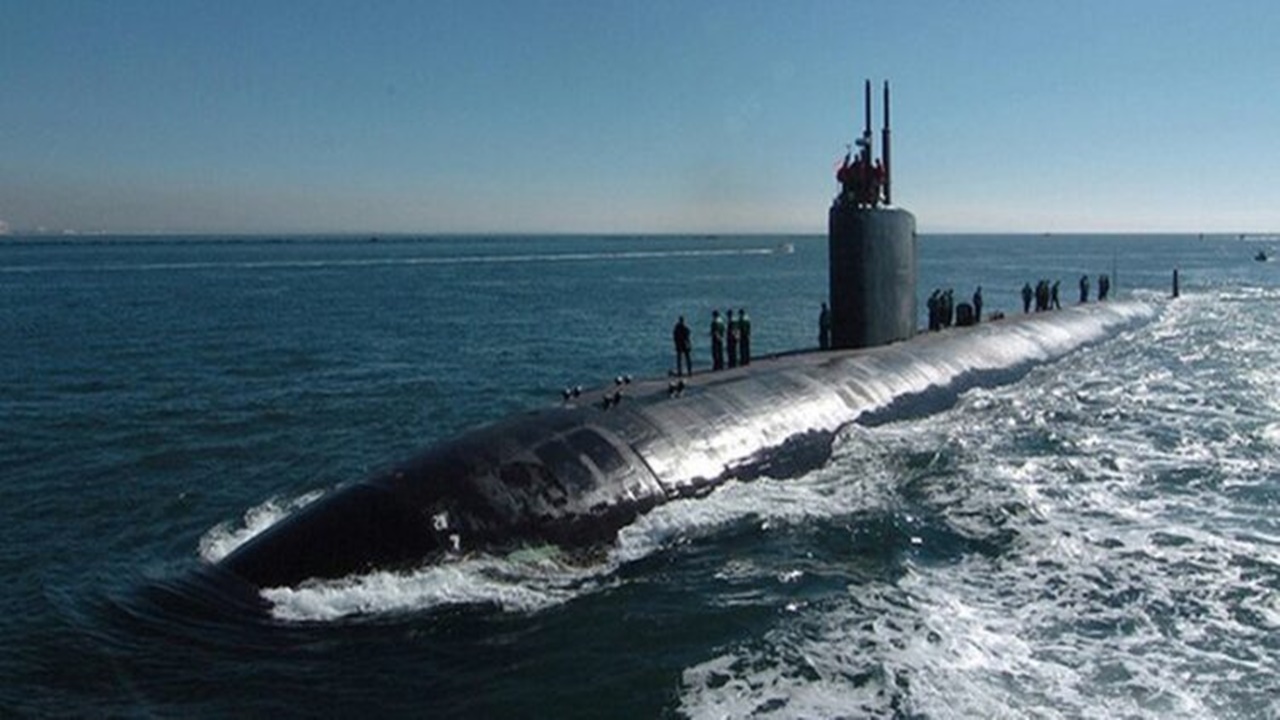
Submarine Disappeared On Wednesday With 53 Crew Members On Board. The Navy Declared The Submarine Officially sunken, With No Hope Of Finding Survivors.
This Saturday (24/04), the Indonesian Navy found wreckage believed to be from the German-built submarine KRI Nanggala 402, which had been missing since Wednesday, with 53 crew members on board, in the waters off Bali, involved in military exercises, said the country’s military chief this Saturday.
Read Also
- Petrobras Is Required To Remove ‘Submarine Warehouse’ With Tons Of Equipment And Tubing From Oil Platforms Dumped In The Campos Basin
- Brazilian Navy Inaugurated Today At The Naval Complex Of Itaguaí (CNI) In Rio De Janeiro, The Madeira Island Submarine Base (BSIM)
- Bradesco Calls For Candidates With No Experience Seeking Their First Job Throughout Brazil For The Young Apprentice Program
- Naval Industry Multinational Wilhelmsen Calls For Onboard Workers; Job Openings Announced Yesterday (21/04)
The Navy thus declared the submarine officially sunk, with no hope of finding survivors. According to authorities, the oxygen reserves for the crew ran out early this Saturday.
According to a report by the Associated Press (AP), the head of the Indonesian Navy, Yudo Margono, stated that rescue teams found several objects from the submarine, including parts of a torpedo stabilizer, a grease bottle used to lubricate the periscope, and prayer mats. “With the evidence we discovered to be from the submarine, we have now moved from the submerged phase to sunk,” Margono stated.
-
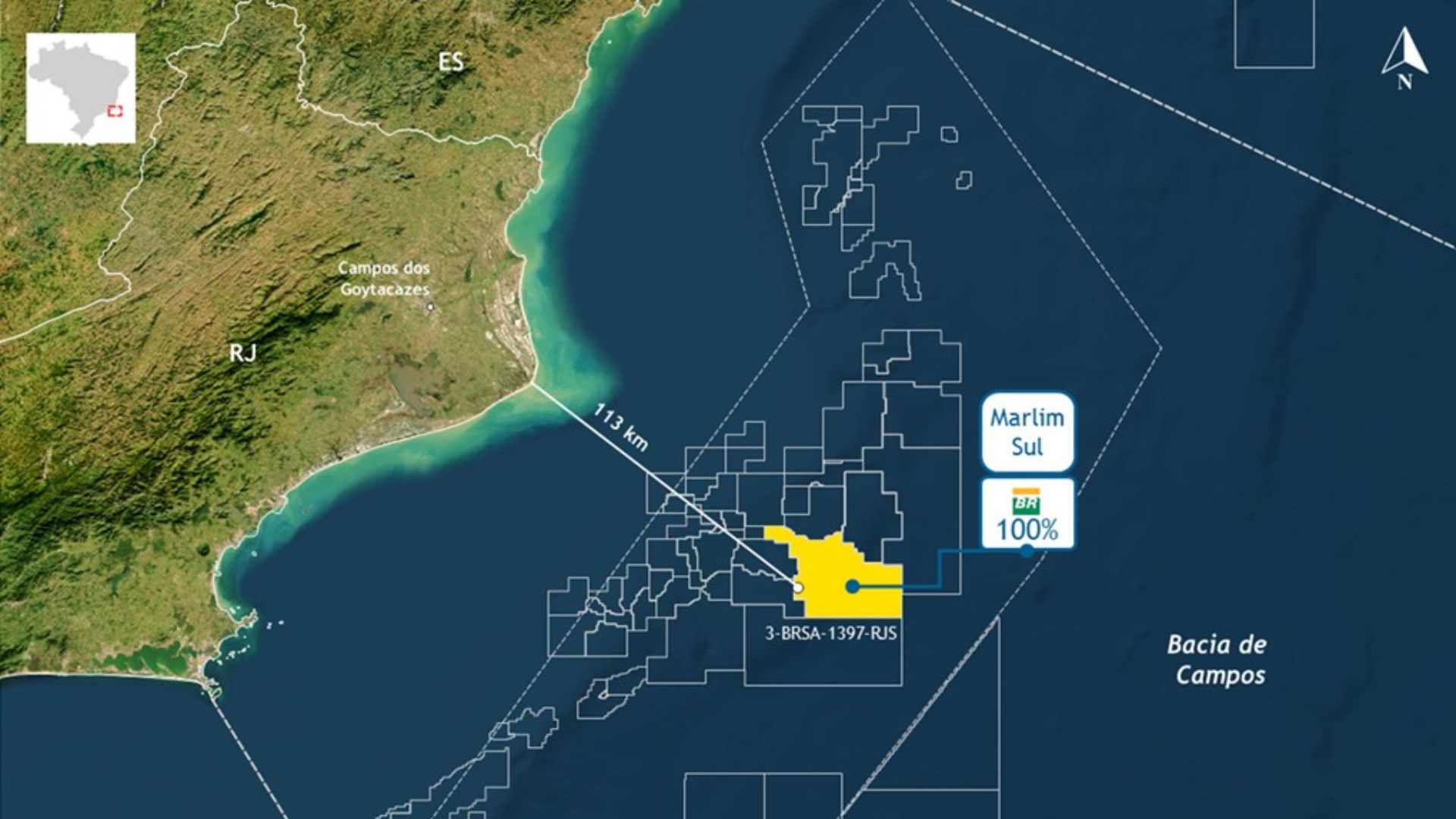
Petrobras finds high-quality oil in the pre-salt at 113 km from RJ and reignites expectations about strategic reserves in the Campos Basin.

-
Ocyan opens registrations for startups focused on innovation in the oil and gas sector and will select projects for Innovation Day with the support of Nexio.

-
Petrobras announces new oil discovery in the pre-salt of the Campos Basin and reinforces Brazil’s prominence with high-quality reserves that can increase production and energy revenues.
-
Alert in the fuel market: Analysts and a former director of ANP warn that oil prices may worsen in the coming months due to global instability.


On Wednesday, the commander of the Indonesian armed forces told the press that he suspected the submarine may have run aground or gone too deep, below the limit at which it could be reached or recovered — possibly lying at over 700 meters depth.
Submarine KRI Nanggala 402 That Went Missing Had Capacity For 72 Hours Of Oxygen
On Thursday, the head of the Indonesian Navy stated that the missing submarine had the capacity for 72 hours of oxygen.
In a press conference, Yudo Margono also mentioned that search teams found a strong magnetic source at a depth of 50 to 100 meters, which could provide clues about the submarine’s location.
More than 400 people, in addition to five vessels and one helicopter, have been participating since Wednesday in the search and rescue of the KRI Nanggala-402 submarine, manufactured in Germany in 1977.
The submarine disappeared after losing contact with the ship at the end of exercises off Bali.
A spokesman for the Navy confirmed that the KRI Nanggala 402 did not establish contact after the military exercises it was involved in. “It is true that the submarine lost contact from 03:00 (19:00 on Tuesday in Portugal),” indicated Admiral Julius Widjojono. The military stated that despite having extensive knowledge about the area, the seabed is very deep in the Bali archipelago, which made the search difficult.


Several Countries, Such As Australia, Singapore, And The USA, Assisted In The Search
Several countries, such as Australia, Singapore, and the USA, have been involved in the search efforts. The Indonesian military spokesman, Djawara Whimbo, stated this Saturday that the country’s hydrographic vessel had not yet been able to detect an unidentified object with high magnetism, which was detected at a depth of 50 to 100 meters.
The search has not found signs of the submarine, but families were hopeful that the enormous search effort would find the vessel in time. Search efforts focused on an area close to the submarine’s last known position, where a fuel slick was found. However, there was no conclusive evidence that the slick was a sign of the submarine.
Other Tragedies Involving Other Submarines
The disappearance of the KRI Nanggala-402 parallels other submarine disasters in history. As with the disasters involving the Kursk in 2000 and the San Juan in 2017, there is anguish in rescuing the crew while the submarine may have survivors.
/s.glbimg.com/jo/g1/f/original/2018/11/17/submarino-ara-san-juan.jpg)
Country: Argentina; Disaster Location: South Atlantic, 600 km from Comodoro Rivadavia, Argentina; Cause: Implosion; Number of Victims: 44
The ARA San Juan disappeared on November 15, 2017, while returning from the port of Ushuaia, where it had conducted military exercises to the naval base of Mar del Plata. The submarine was found a year later, more than 900 meters deep.
Hours before its disappearance, the commander had alerted about a failure caused by the entry of water through a ventilation duct, which leaked into the electric battery compartment and produced the beginning of a fire.
Although the Argentine Navy assured on several occasions that this failure was “corrected” and that the San Juan continued to navigate to Mar del Plata, the fact is that its track was lost, and it never reached the port of that city, where it was supposed to dock on November 19, 2017.
Kursk (2000)
/i.s3.glbimg.com/v1/AUTH_59edd422c0c84a879bd37670ae4f538a/internal_photos/bs/2018/k/b/8lA12HSe6AMGDKzEevCQ/ap17326212089403.jpg)
Country: Russia; Disaster Location: Barents Sea (Northwest Russia); Cause: Torpedo Explosion
Number of Victims: 118.
Considered a pride of the Russian Navy, the Kursk set sail from Murmansk, in the far north of Russia, on August 10, 2000. The submarine was equipped with 24 Granit cruise missiles and considered indestructible by Russian sailors.
The explosion occurred in a missile chamber during a maneuver in the Barents Sea, two days after the Kursk set sail. Of the 118 crew members, 23 survived the explosion and awaited rescue, but ended up dying later. Russian forces released letters written by this group, recounting the most tense moments of their wait, when these crew members had little hope of returning to the surface alive.
The Kursk was located at 108 meters depth in the early hours of August 13, when it was still possible to save the 23 crew members. However, the Kremlin only approved the international rescue operation a week after the accident.
As became known later, the military leadership hid the true dimensions of the catastrophe and rejected offers of help from other countries to rescue the crew members of the submarine, who did not die immediately in the explosion.
Admiral Gennady Suchkov — after a trial deemed by the press as “unfair” — and 14 other officers of the Russian Navy were chosen as “scapegoats” and expelled from active service in the corporation.
Nerpa (2008); Country: Russia; Disaster Location: Sea of Japan; Cause: Gas Leak; Number of Victims: 20
On November 8, 2008, in the Pacific Ocean, 20 people aboard the Russian submarine “Nerpa” died from asphyxiation after inhaling freon gas released by the fire system, mistakenly activated.
The accident occurred in the Sea of Japan, where the K-152 “Nerpa” was being tested before being leased to India. More than 200 people were aboard in an area planned for 80.
Among the victims were 17 civilians from the shipyard where the nuclear-powered attack submarine had just been built.
Komsomolets (1989); Country: Soviet Union; Disaster Location: Barents Sea, 500 km from the coast of Norway; Cause: Fire; Number of Victims: 42
On April 7, 1989, a short circuit caused a fire aboard the Komsomolets, a nuclear-powered attack submarine with a titanium hull that was sailing in international waters, 500 km from the Norwegian coast. Considered a pride of the Soviet navy, the submarine nicknamed “Mike” was equipped with missiles with nuclear warheads.
After activating the emergency surfacing procedure, the 110-meter-long submarine reached the surface, and several dozen crew members managed to leave the burning ship by throwing themselves into the icy waters. Forty-two sailors died, and 27 were rescued.









Seja o primeiro a reagir!