





 Portuguese
  English
  Spanish
  6 min of reading
  0 comments


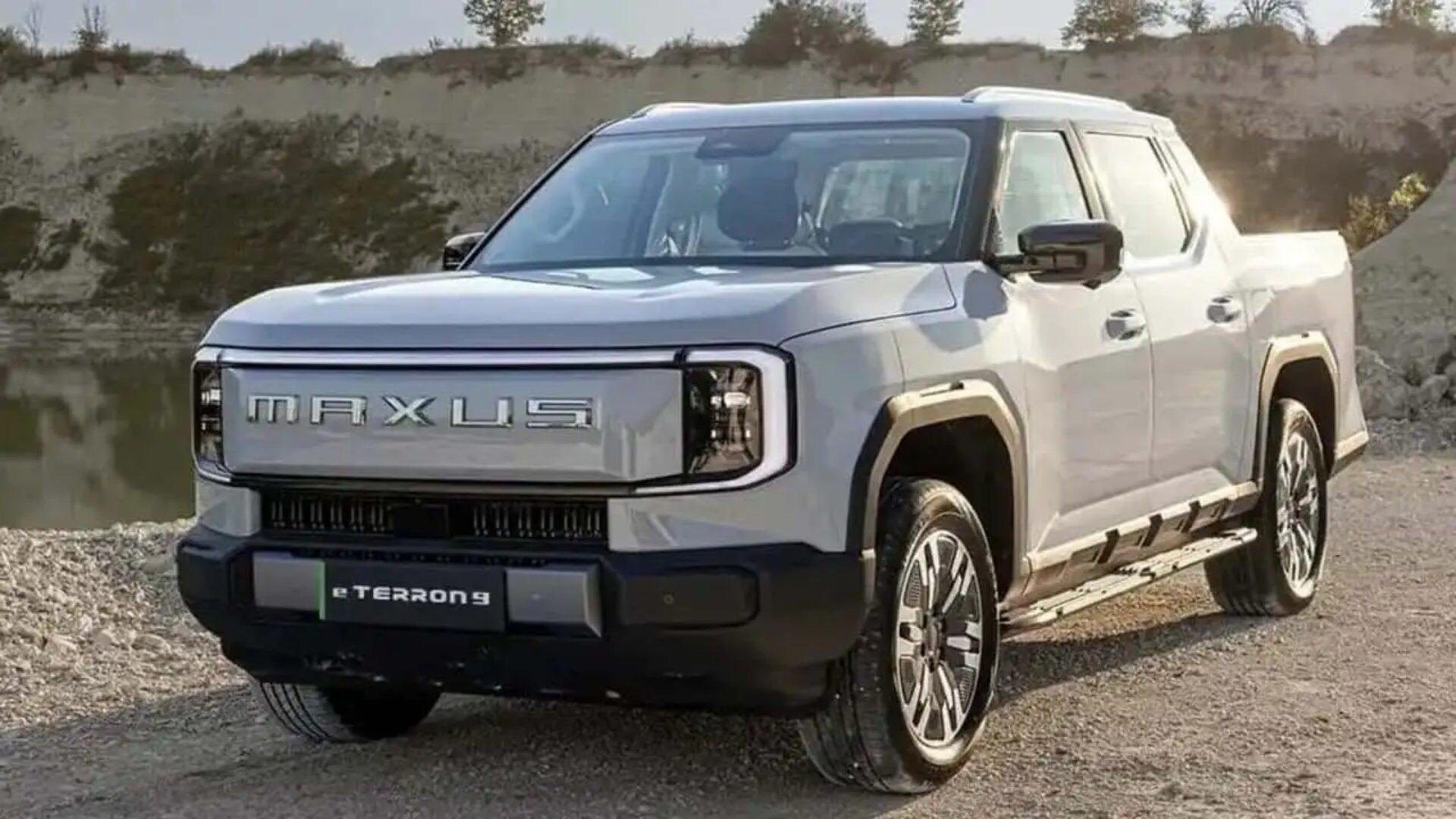
With 224 HP Turbodiesel Engine and 5G Connectivity, the New Pickup from Saic Challenges Giants Like Toyota Hilux and Ford Ranger!
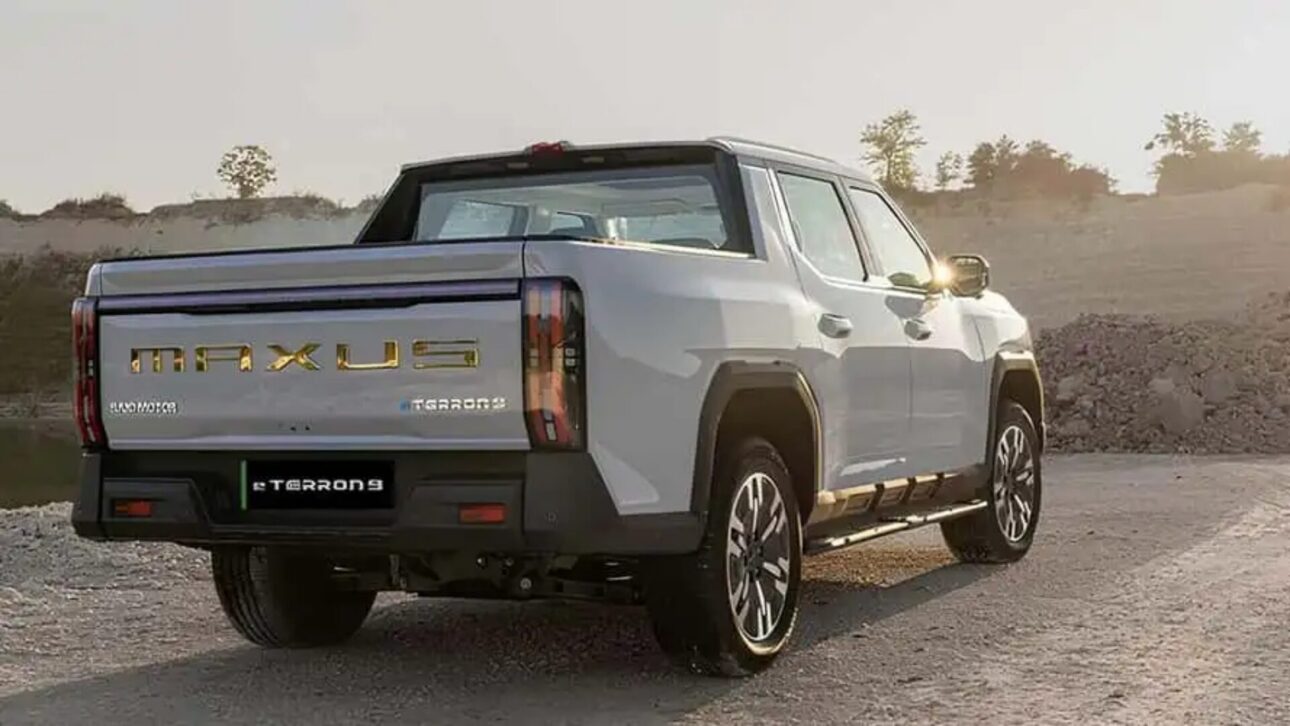
The arrival of the Maxus Terron 9 in 2025 promises to shake up the Brazilian pickup market, bringing a new protagonist manufactured by the Chinese automaker Saic. With a 2.5 turbodiesel engine producing 224 HP, the pickup stands out as a direct competitor to established giants, such as Toyota Hilux, Ford Ranger, and Chevrolet S10.
The launch is scheduled for the second half of 2025, and the brand is betting on the growing demand for utility vehicles in Brazil, driven mainly by the agribusiness and the expansion of the logistics sector.
A New Competitor in the Medium Pickup Segment
The Maxus Terron 9 was unveiled at the Shanghai Auto Show 2025 and has already undergone rigorous testing in Brazil in 2024 to meet safety and emissions standards.
-
OMODA & JAECOO grows in Europe in 2026 with an integrated strategy of sales, innovation, local production, and technological advancement in the United Kingdom, Italy, and Spain.
-
OMODA & JAECOO expands after-sales service in Brazil with competitive maintenance, a 7-year warranty, and high availability of parts for technological SUVs.
-
OMODA & JAECOO appoints Alessandra Souza as executive marketing director in Brazil and accelerates brand expansion with a focus on innovation, networking, and hybrid portfolio.

-
Jaecoo 7 with super hybrid SHS system exceeds 1,200 km of combined range with a 1.5 turbo engine, high-density battery, and intelligent energy management.

With robust dimensions of 5.5 meters in length, 2 meters in width, and a wheelbase of 3.3 meters, the pickup stands out for its large size, surpassing competitors like the Hilux and the Ranger.
Its payload capacity is up to 1,030 kg, ideal for meeting the demands of agribusiness.
In addition, the Terron 9 will come equipped with 4×4 traction and an interior filled with technology, including 5G connectivity and advanced driving assistance features.
Saic plans to establish a network of dealerships in the South and Central-West regions of Brazil, where the demand for pickups is significant, especially in states like Mato Grosso, Goiás, and Paraná.
Embedded Technology and Comfort
The interior of the Maxus Terron 9 follows the trend of modernity and ergonomics, featuring a large screen that integrates the instrument cluster and the multimedia center.
This intuitive interface allows for real-time updates and integration with mobile devices, a feature that may attract fleet operators.
The advanced driver assistance systems (ADAS) include features such as autonomous braking, lane-keeping assist, and 360° cameras, elevating safety standards in the segment.
The quality of the finish is a strong point, combining soft-touch materials with sturdier plastics, remaining competitive in the market.
The adjustable air suspension, available in some versions, offers the possibility of adapting the vehicle’s height for different load and terrain conditions, making the Terron 9 a versatile and innovative option.
Strategic Partnership with Volkswagen
One of the pillars of the Maxus Terron 9 project is the collaboration between Saic and Volkswagen, which began in China in 1984.
The pickup will share its platform with the next generation of the Volkswagen Amarok, which will be produced in Argentina starting in 2026.
Although the Amarok is scheduled to launch in 2027, Saic decided to accelerate the arrival of the Terron 9 to the Brazilian market, demonstrating confidence in its competitive proposition.
The new Amarok, internally referred to as Project Patagonia, will receive a significant investment of US$ 580 million at the General Pacheco plant in Argentina.
The model will feature exclusive design and technological innovations aimed at ensuring safety and durability, aligning with the demands of the South American market.
Competition and Market Strategies
The medium pickup market in Brazil is highly competitive, with the Toyota Hilux leading sales in 2024, closely followed by the Ford Ranger and the Chevrolet S10.
The entry of the Maxus Terron 9 intensifies this competition, bringing a 2.5 turbodiesel engine with 224 HP and a torque of 53 kgfm, combined with an eight-speed automatic transmission.
Although only the Ranger and Amarok offer V6 engines exceeding 250 HP, the Terron 9 compensates with its robust torque and efficient 4×4 traction.
Saic is betting on competitive pricing to attract consumers, following the example of Chinese brands that have established themselves in Brazil, such as BYD and GWM.
There is an expectation that the Terron 9 will arrive at lower prices than the top-of-the-line versions of the Hilux and Ranger, aiming to win over both rural producers and logistics companies.
Complementing the Strategy with the Maxus Deliver 9
In addition to the Terron 9, Saic is planning to launch the Maxus Deliver 9 van, a medium-sized van that will compete with models such as Ford Transit and Renault Master. With a 2.0 turbodiesel engine and options for rear or all-wheel drive, the Deliver 9 will meet the growing demand for transport vehicles, especially with the growth of e-commerce in Brazil.
Prototypes of the van have already been tested locally, focusing on durability and efficiency over long distances. Saic plans to offer customizable configurations to meet the various load needs of the logistics sector.
Impact on Agribusiness and Logistics
The Brazilian agribusiness, responsible for about 25% of GDP, is one of the main drivers of pickup demand. In 2024, the sector accounted for 60% of pickup sales, with a highlight on states like Mato Grosso, Goiás, and Paraná. The Maxus Terron 9, with its payload capacity and 4×4 traction, is designed to meet this demand, offering durability on rural roads and versatility for transporting agricultural inputs.
Logistics, in turn, is also a crucial focus in Saic’s strategy.
The growth of e-commerce and the need for last-mile deliveries have created a demand for reliable and efficient vehicles, which the Deliver 9 can meet.
With maintenance packages and extended warranties, Saic aims to earn the trust of Brazilian fleet operators.
Sustainability and Future Innovations
The Maxus Terron 9 platform has been designed to support hybrid and electric powertrains.
Although the Maxus e-Terron version, with 442 HP and a range of 430 km, has already been unveiled in China, its arrival in Brazil has yet to be confirmed.
On the other hand, Volkswagen plans to introduce a hybrid Amarok in 2027, aligning with environmental regulations that require lower emissions.
In Brazil, the adoption of hybrid or electric pickups faces challenges such as the lack of charging infrastructure and the high cost of batteries.
However, Saic and Volkswagen are attentive to these trends, investing in technologies that can be adapted to the South American market.
Preparation for Launch and Future Outlook
Saic is structuring a dealership network in Brazil, initially focusing on the South and Central-West regions, and has already begun training technical teams to ensure post-sale support.
The Terron 9 will be offered in various configurations, from basic versions to top-of-the-line models with premium finishes and air suspension.
Meanwhile, Volkswagen is preparing for the new Amarok with a significant investment in Argentina, modernizing its plant to produce the pickup.
The partnership with Saic will ensure that both brands can share components and reduce production costs, but the early arrival of the Terron 9 allows Maxus to establish itself ahead of the Amarok’s debut.
The Evolution of Pickups in Brazil
The Brazilian pickup market has evolved rapidly, driven by the growing demand for versatile vehicles that meet both urban use and rural demands.
The Maxus Terron 9 fits into this context by offering a combination of robustness and technological innovation, characteristics that are increasingly valued by consumers.
With the rising interest in pickups, especially among rural producers and logistics companies, the arrival of models like the Terron 9 helps diversify the options available in the market.
The growing concern for efficiency and sustainability also shapes the development of new models, aiming to meet the expectations of modern consumers.
Challenges and Opportunities
Despite the promising potential, the Maxus Terron 9 and other new models will face significant challenges, such as fierce competition and the need to comply with Brazilian regulatory standards.
Adapting to local preferences, including specific characteristics for use in rural and urban areas, will be essential for the pickup’s success.
Moreover, the charging infrastructure for electric and hybrid vehicles is still limited in Brazil, which could affect the acceptance of these technologies.
However, Saic and Volkswagen are investing in solutions that can mitigate these challenges, including partnerships with infrastructure companies and incentive programs for adopting more sustainable vehicles.
The arrival of the Maxus Terron 9 represents a transformation in the medium pickup segment in Brazil, combining robustness, technology, and competitive pricing.
With its proposal, Saic is well-positioned to face established competitors and establish itself in the Brazilian market, offering more modern and accessible options for consumers.
SOURCE: MIXVALE





-

Uma pessoa reagiu a isso.