





 Portuguese
  English
  Spanish
  5 min of reading
  0 comments


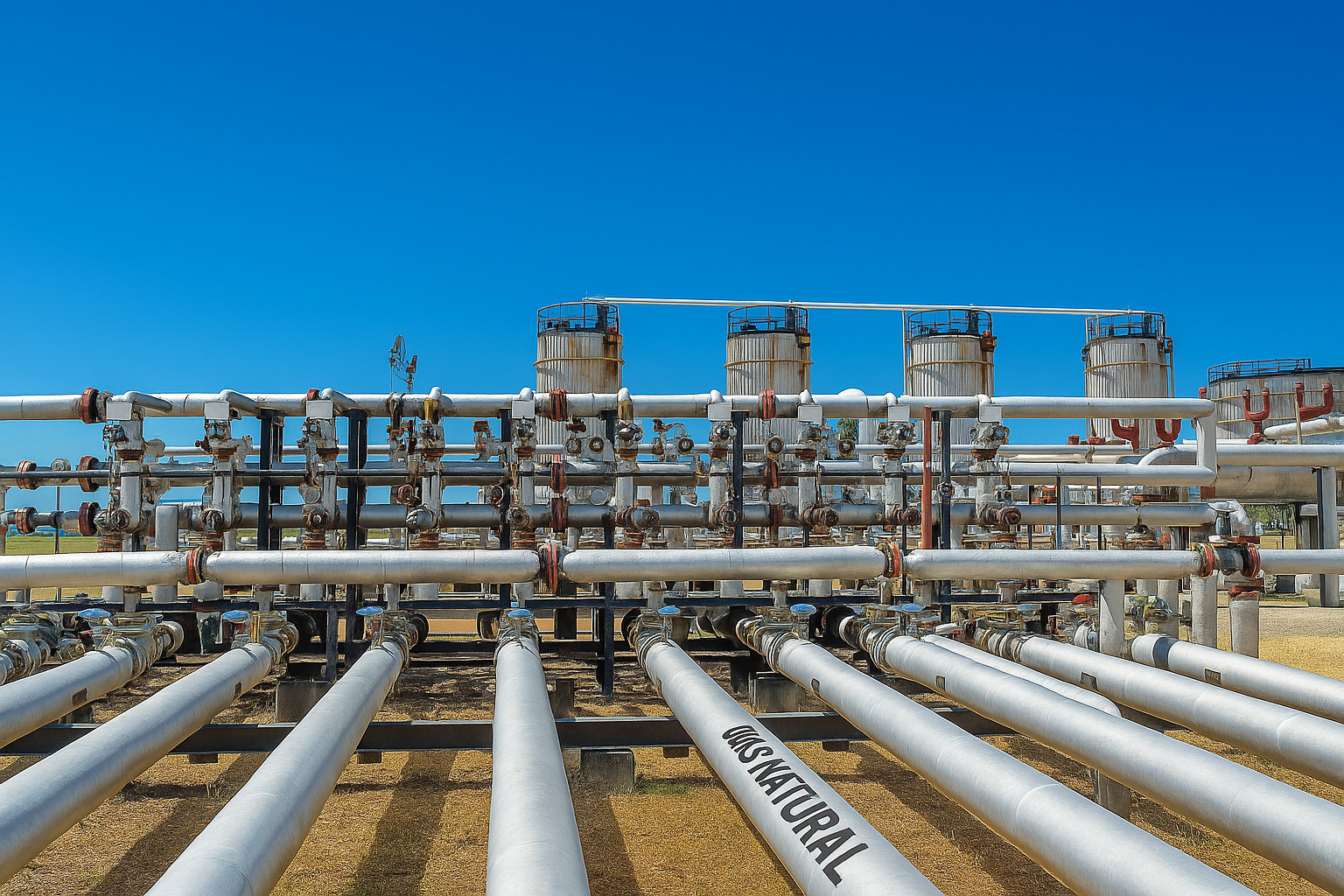
Despite Advances in Market Liberalization, High Natural Gas Prices Remain a Challenge for the Brazilian Industry and Limit Competitiveness.
The natural gas sector in Brazil is undergoing a phase of important transformations. However, high natural gas prices continue to pose a significant barrier to the competitiveness of the national economy.
The Brazil Competitive Movement (MBC), in partnership with the Ministry of Development, Industry, Commerce and Services (MDIC) and with support from the Ministry of Mines and Energy (MME), launched the Natural Gas Observatory.
This unprecedented platform, executed by the Center for Studies in Regulation and Infrastructure at Fundação Getulio Vargas (FGV CERI), aims to analyze the sector and provide clarity on its advancements and obstacles.
-
Lula reveals a masterstroke by Petrobras to undo a deal made by Bolsonaro, which involves the return of an important refinery that currently produces less than half of what was expected and makes Brazil dependent on international diesel.
-
A study confirms that the natural gas sector will reduce greenhouse gas emissions in Brazil by 0.5% and accelerate the energy transition by 2026.

-
Petrobras implements a severe adjustment and confirms a 55% increase in the price of aviation kerosene with a proposal for installment payments for the companies.

-
The rise in oil prices could ensure an extra revenue of R$ 100 billion for the Federal Government, indicates a recent economic study.


Sector History and Recent Changes
Over the past decades, natural gas in Brazil has been marked by the strong presence of Petrobras, which controlled almost all supply contracts.
According to data from the Observatory, the state-owned company’s share of long-term contracts with distributors fell from 100% to 69% by the end of 2024. This figure shows a gradual market opening.
Despite this progress, competition has not effectively reached the end consumer. Thus, prices remain high and limit the economic benefits for the country.
The Observatory also showed that the number of companies authorized to trade gas grew, on average, 15% per year, reaching 226 in August 2025.
However, even with more players in the sector, many of them still cannot operate effectively. This is due to operational obstacles, lack of scale, and regulatory barriers.
Competition Challenges and Regulatory Barriers
The number of agents authorized to contract transport in the gas pipeline network also increased by 19% per year, reaching 149 in August 2025. Furthermore, the free market showed even greater progress.
The number of free consumers grew 70% per year. In February 2025, there were 74 consumers, increasing to 90 by June of the same year.
Still, the sector remains restricted to large industries that have greater negotiating power and own infrastructure. This reinforces market concentration and the difficulty of expansion for smaller companies.
Although many agents are authorized to contract transportation, only a portion actually utilizes the gas pipeline network. This indicates that the limits are more related to commercial and operational issues than to regulatory aspects.
The contracting model for the network is considered complex, opaque, and with low interoperability. As a result, the entry of new participants is hindered.
Moreover, Petrobras continues to play a central role as operator and intermediary, which maintains significant barriers to real competition advancement.
The Impact of High Natural Gas Prices
Rogério Caiuby, executive counselor of the MBC, emphasizes that although the number of agents has grown, real competition has not yet consolidated.
He explains that the barriers are regulatory, operational, and commercial. Additionally, logistical bottlenecks such as the absence of regasification terminals and low internal infrastructure integration exacerbate the problem.
These factors prevent natural gas prices in Brazil from following the declining trend observed in other countries. The prices here remain well above the OECD average.
In the Northeast, for example, gas is about 20% cheaper than in the Southeast. This difference reflects more flexible state regulations, which favor access and stimulate competition.
States that allow migration to the free market starting from 10,000 cubic meters per day can include small and medium enterprises.
On the other hand, states that require much larger minimum volumes end up restricting the participation of other consumers, which maintains the concentration.
Costs for Industry and Economic Impact
The lack of effective competition means that the Brazilian industry pays, on average, R$ 43.65 more per million BTUs than in the United States.
In 2021 alone, this difference represented an impact of R$ 2.48 billion on the Cost of Brazil. This means less competitiveness and higher production costs for companies located in the country.
According to projections from the Cost of Brazil Observatory, a complete market opening could generate an annual savings of up to R$ 21 billion.
This savings would have direct positive effects on the industry, stimulating new investments, generating jobs, and increasing Brazil’s international competitiveness.
However, for this to become a reality, it is essential to advance on concrete measures. These measures include the implementation of recent legislation, the expansion of the gas pipeline network, and investment in regasification terminals.
Paths to a More Competitive Future
Additionally, it is necessary to ensure equal access to available infrastructure. Without this, sector concentration will continue, and prices will remain high.
The balanced development of the natural gas sector depends on a clear and harmonized regulation among states. This regulation must avoid regional distortions and guarantee fair conditions for all participants.
Another key point is the modernization of the gas pipeline network. With greater integration and transparency in the contracting model, it will be possible to reduce costs and expand the participation of new players.
The diversification of supply, through increased imports and stimulation of competition, will also help to reduce prices. This will have positive impacts not only for large industries but also for small and medium consumers.
Conclusion: Prices Are Still the Biggest Obstacle
The natural gas sector in Brazil is undergoing a phase of important changes. However, high natural gas prices remain the main challenge.
Despite advances in market liberalization and the increase in new agents, competition has not yet translated into real benefits for end consumers.
Until there is greater infrastructure integration, network expansion, and firm enforcement of new rules, the potential for cost reduction will not be fully realized.
Therefore, unlocking this potential requires more than good intentions. It demands investment, political will, and coordination among government, private initiative, and society.
Only then can the country turn advances into concrete reality, making natural gas a competitive and accessible energy source for all.










-

Uma pessoa reagiu a isso.