





 Portuguese
  English
  Spanish
  5 min of reading
  0 comments


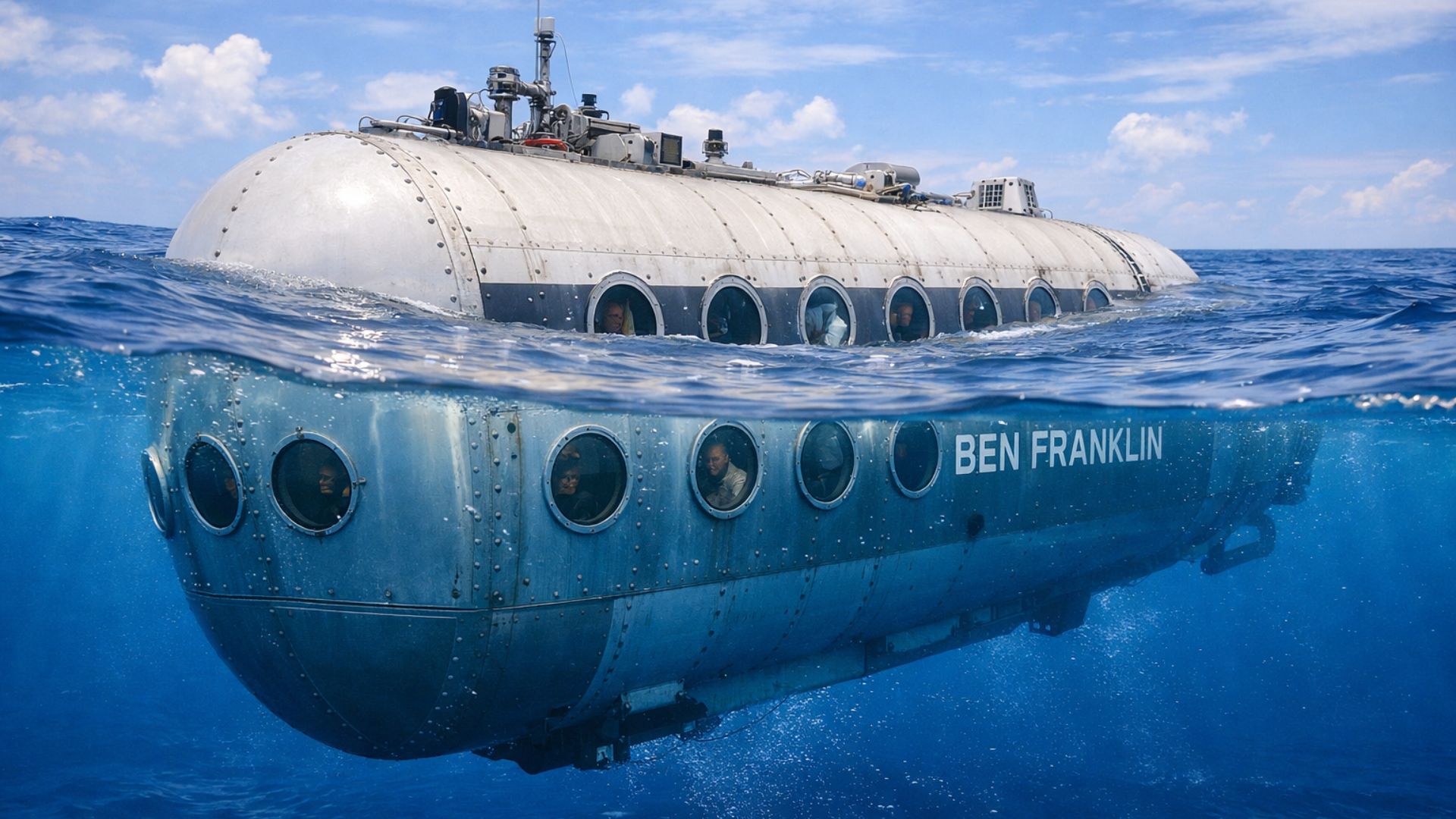
Historical submarine mission gathered extreme isolation, ocean science, and human testing that caught NASA’s attention as a model for future space stations, while monitoring the Gulf Stream for more than 30 days without emerging and under controlled conditions.
In July 1969, while the space race focused attention on man’s arrival on the Moon, another extreme experiment began far from the spotlight, in the Atlantic.
The submersible Ben Franklin dove off Palm Beach, Florida, to traverse the Gulf Stream in controlled drift and only returned to the surface 30 days and 11 hours later, already south of Nova Scotia, after covering 1,444 nautical miles.
The vessel was designed to investigate the ocean from within, without the routine of surfacing daily.
-
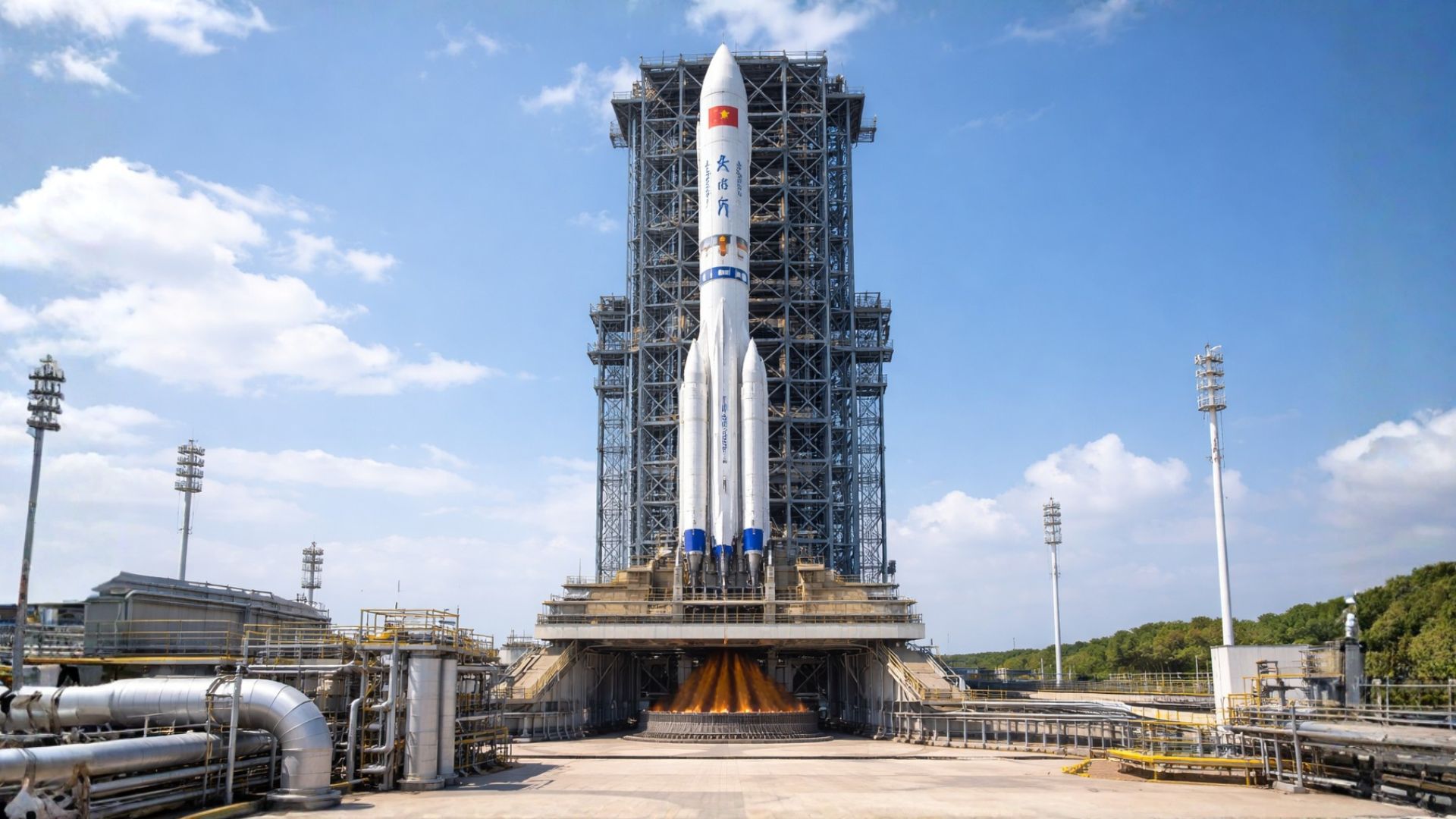
China debuted a new platform at its first commercial spaceport, a structure 83 meters tall designed to launch rockets at a high cadence, divert flames without an underground trench, and dump 500 tons of water in 15 seconds.
-
Brazilian family transforms old boathouse in Paraty and creates a refuge with glass walls, private beach, and three suites in a property that combines Atlantic Forest, exclusivity, and sophistication.

-
A crane with a reach of 69.5 meters and a lift of 53 meters unloads the largest container ships on the planet and accelerates the invisible machinery of global trade.

-
Diapers are being turned into solid fuel in Japan: an ambitious project could forever change the way cities deal with one of the most difficult types of sanitary waste to process.

At the same time, it transformed the crew itself into an object of observation, as it combined biological isolation, restricted space, continuous coexistence, and total dependence on onboard systems, conditions that led NASA to study the vehicle as a plausible analog for a space station.
Submersible monitored the Gulf Stream from within

Instead of operating like a conventional submarine in permanent displacement, the Ben Franklin was designed to follow the flow of water in buoyancy neutrality.
The proposal was to remain at depths between 600 and 2,000 feet, observe the behavior of the Gulf Stream, and produce oceanographic data on a scale rare for the time.
This choice gave the mission a unique profile.
The vehicle not only followed the current: it functioned as a closed research station, compressed within a hull of 130 tons, with a crew living and working in a pressurized environment for weeks, under strict rules of operation, maintenance, and resource use.
The dimensions help explain why the project attracted so much attention.
The submersible measured about 14.85 meters long, had a beam of 21 feet and 6 inches, a height of 20 feet, an operational depth of 2,000 feet, and a collapse depth calculated at 4,000 feet.
Its life support system was sized to sustain six people on board for up to six weeks.
NASA’s interest in prolonged confinement missions
The interest of the space agency appeared even in the planning phase.

Technical documents prepared for NASA and the Marshall Space Flight Center record that the similarities between a prolonged submarine mission and a long-duration space mission became evident during the project’s development, especially on topics such as habitability, human-machine interface, complete isolation, and crew response to confinement.
This was not a rhetorical comparison. The report “Use of the Ben Franklin Submersible as a Space Station Analog” formally describes the vehicle as a study base for problems that would also arise in orbital habitats.
Among the points observed were workload, privacy, communication, provisions, internal microbiology, and system maintenance.
In practice, the submersible offered NASA something difficult to reproduce on land.
There was a diverse crew, complete physical separation from the outside world, a need for self-sufficiency, and an uninterrupted operational routine, with no possibility of simply opening the hatch and leaving.
Scientific experiments and routine under pressure
The central objective of the drift was to explore the Gulf Stream from Florida to the Nova Scotia region through visual observations, background photography, biological surveys, and acoustic studies.

Additionally, the journey served to test concepts of prolonged operation in submersibles and assess the endurance of crew members confined in a small space for several weeks.
The results were extensive. The mission’s technical report states that the Ben Franklin operated at an average depth of 650 feet and made excursions to ranges between 1,200 and 1,800 feet.
There were also hundreds of hours of direct observation of marine life, in addition to supplementary measurements made by support vessels and other instruments activated along the route.
The routine on board required continuous discipline. The study documentation cites topics such as water management, waste, clothing, environmental contamination, and daily maintenance, showing that the challenge was not only to remain submerged but to preserve technical performance and functional coexistence in a closed environment.
Structure with 29 ports marked the project
One of the most striking features of the Ben Franklin was the presence of 29 ports distributed throughout the hull.
In structures subjected to high pressure, openings usually impose severe design restrictions, but the vessel was designed specifically to enhance direct visual observation of the ocean.
This design helped transform the vehicle into a rarity among research submersibles of the period.
Historical records describe it as a mesoscaphe conceived by Jacques Piccard and developed with the participation of Grumman.
The origin of the project reinforces this international character. The PX-15 was built in Monthey, Switzerland, between 1966 and 1968, and then sent to Florida for the final assembly phase.

The name Ben Franklin was chosen in reference to Benjamin Franklin, associated with the identification of the Gulf Stream.
30-day journey marked submarine record
The journey began on the night of July 14, 1969, when the submersible sank off the coast of Palm Beach.
The operational cycle of the mission shows slight variation between the initial immersion and the formal start of the drift, explained by the technical chronology used in the reports.
After more than a month, the Ben Franklin emerged on August 14, 1969, hundreds of miles south of Halifax.
Historical sources classified the operation as the longest private submarine experiment of its kind to date.
Although the feat was overshadowed by the symbolic calendar of that year, the episode preserved a rare value.
The Ben Franklin demonstrated that a compact human laboratory could generate marine science and, at the same time, serve as an operational trial for problems that would later gain scale in long-duration space programs.





Seja o primeiro a reagir!