





 Portuguese
  English
  Spanish
  4 min of reading
  0 comments


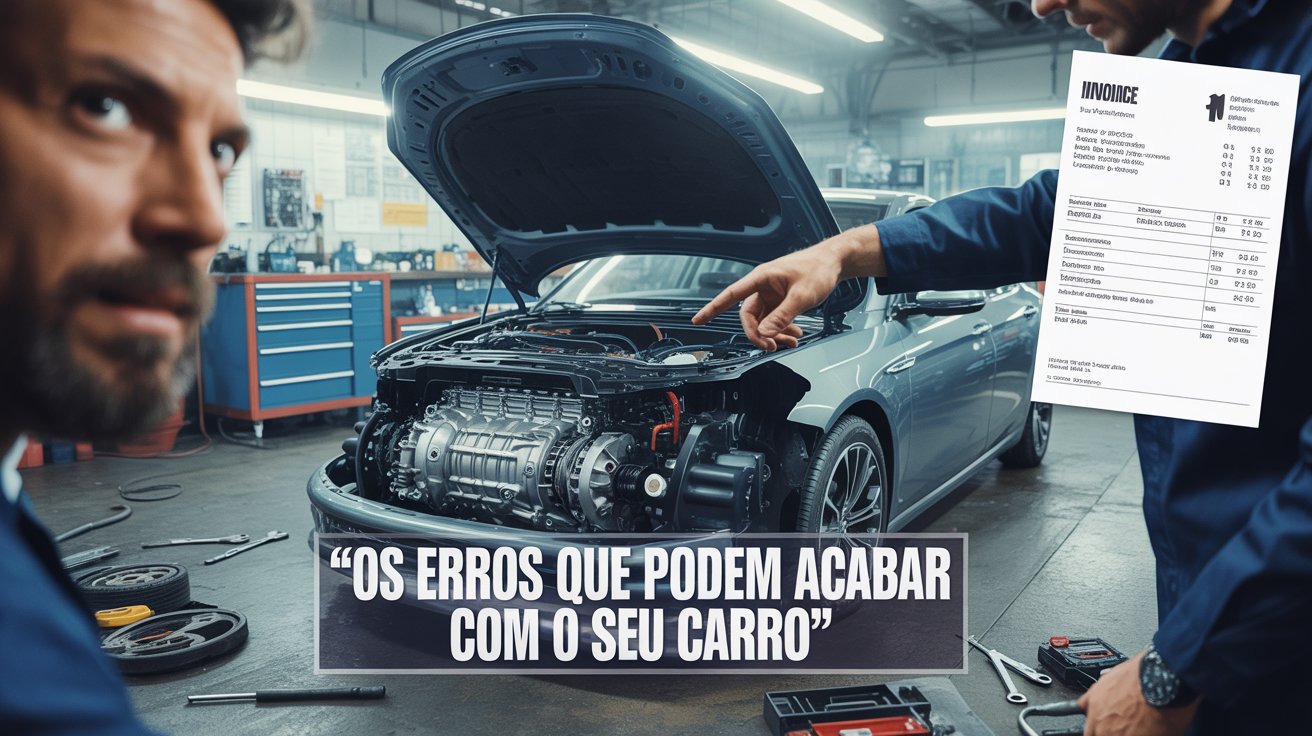


Simple Maneuvers And Common Habits In Traffic Can Cause Serious Damage To The Automatic Transmission, Increasing Repair Costs And Reducing The Lifespan Of Your Car’s Transmission.
The automatic transmission is increasingly present in vehicles sold in Brazil, especially among zero-kilometer models.
The convenience that this type of transmission offers is undeniable, but it also requires specific care to ensure durability and avoid high maintenance costs.
According To Specialists Heard By UOL Cars, incorrect usage and lack of attention to preventive maintenance are among the factors that most compromise the proper functioning of the automatic transmission.
-
How to build a floating island from scratch with reeds, giant blocks, and stakes in the lake in a process that needs to be repeated almost every day.

-
A 250cc motorcycle that can reach 560 km with a 14-liter tank, features disc brakes on both wheels and is among the most well-known in Brazil.
-
Man finds over 200 rare cars abandoned on a lot and tries to do the impossible in 8 hours with a surprise at the end.
-
A forgotten cord on the floor of a basement in Vienna leads a plumber to a box containing 30 kilograms of gold with Mozart’s face, hidden before World War II. The treasure, worth 2.3 million euros, was just centimeters away from a worker who ignored the sign a day earlier.


When neglected, small operational errors can turn into complex and very expensive problems to repair.
Now, see five mistakes that destroy the automatic transmission, increase fuel consumption, and in serious cases, force the driver to face repairs that compromise the budget.
1. Engaging Reverse Or Parking With The Car In Motion
When maneuvering quickly, many drivers make the mistake of selecting reverse (“R”) or parking (“P”) while the vehicle is still moving.
Even if the car is at low speed, this action seriously harms internal components of the automatic transmission, such as gears and shafts.
According To Cláudio Castro, Engineer And Advisor Of SAE Brazil, this habit is especially damaging in older transmissions with mechanical engagement.
In modern models, there are electronic systems that inhibit premature shifts to these positions, but they do not always work in all situations.
Avoiding this practice preserves the integrity of the transmission and prevents damage that may require part replacement.
2. Trying To Jump-Start The Engine
The attempt to “jump-start” with a dead battery is common among drivers but extremely dangerous for vehicles with automatic transmissions.
As Explained By Edson Orikassa, Former President Of AEA (Brazilian Association Of Automotive Engineering), To UOL, this procedure can render the transmission system inoperative.
In addition to being inefficient, it poses a high risk of breaking the timing belt — a vital part that synchronizes valves and pistons.
Engineer Erwin Franieck, Also From SAE Brazil, warns that the impact can bend valves, especially in diesel engines, where the compression rate is higher.
The consequence may include the need for a complete engine overhaul.
The recommendation in these cases is to use a jump starter or portable charger.
If the battery cannot hold a charge, replacing it is the only safe solution.
3. Ignoring The Automatic Transmission Oil Change
Many drivers still believe that automatic transmissions do not need oil changes, which is a technical misconception with the potential to generate high costs.
The transmission fluid has fundamental functions: it lubricates, cools, and reduces friction between internal components.
According To Guidance From Experts Consulted By UOL, even if some manuals indicate that the fluid is “lifetime,” the safest approach is to monitor the oil condition during inspections.
Color changes, strong odor, or presence of residues indicate that the fluid has lost effectiveness and should be replaced.
The standard recommendation is to change the oil every 60,000 kilometers or three years, depending on the vehicle’s usage.
Overheating of the transmission is one of the main villains when the fluid level is below the ideal or contaminated.
4. Holding The Car On Inclines With The Throttle
Another common practice, inherited from those who drive manual cars, is using the throttle to keep the car stationary on hills.
In automatic vehicles, this technique seems effective but poses a risk to the system.
Even though the transmission uses a torque converter — which replaces the traditional clutch —, using neutral gear or applying pressure on the throttle to “hold the car” causes overheating of the automatic transmission fluid and increases fuel consumption unnecessarily.
According To Cláudio Castro From SAE Brazil, the correct way to keep the vehicle stationary on inclines or in traffic is to press the brake.
This uncouples the converter and allows the engine to run without overloading the transmission.
5. Putting The Transmission In Neutral At The Stoplight
The temptation to leave the automatic transmission in “N” (neutral) while waiting at the stoplight seems harmless, but it can affect the lubrication of the transmission.
In many models, the hydraulic pump relies on contact between the transmission and the wheels to keep the fluid circulating properly.
According To Camilo Adas, An Advisor Of SAE Brazil, Consulted By UOL, the ideal is to keep the lever in “D” and foot on the brake.
This keeps the hydraulic system active and ensures that the internal components are properly lubricated during the stop.
The “N” function should only be used in specific situations, such as maintenance or towing the vehicle when it is necessary to free the drive wheels with the engine off.
How To Preserve Your Automatic Transmission For Longer?
Adopting correct habits and following the maintenance indicated by the manufacturer are actions that prolong the lifespan of the automatic transmission and avoid costly repairs.
See some practical tips:
- Change the transmission oil according to the manual.
- Always use the brake when stopping, avoiding using the throttle on inclines.
- Never engage reverse or parking with the car in motion.
- Do not attempt to start the car “by jumping”.
- Regularly check the fluid and be alert to noises or jolts during shifts.
What Is The Cost Of Not Following These Recommendations?
Replacing an automatic transmission can cost between R$ 10,000 and R$ 20,000, depending on the model and complexity of the transmission.
Avoiding simple mistakes can result in savings of thousands of reais over the years.
Do You Have The Habit Of Committing Any Of These Mistakes While Driving? Have You Faced Problems With The Automatic Transmission Of Your Car? Share Your Experience And Join The Conversation!





Meu carro é da Ford Focus ano 2017 2018…vai fazer 5 ano que tenho faço a manutenção preventiva ….graça Deus nunca tive problema dirijo com cuidado porque falam tanto é problemático mas todos cuidado é poucos….quanto ao óleos de câmbio eu troquei me disseram que é de cada 40.000 k… será que estar certo…como eu vou saber….