





 English
  Francês
  Alemão
  Italiano
  Japonês
  Norueguês
  Portuguese
  Spanish
  2 min of reading


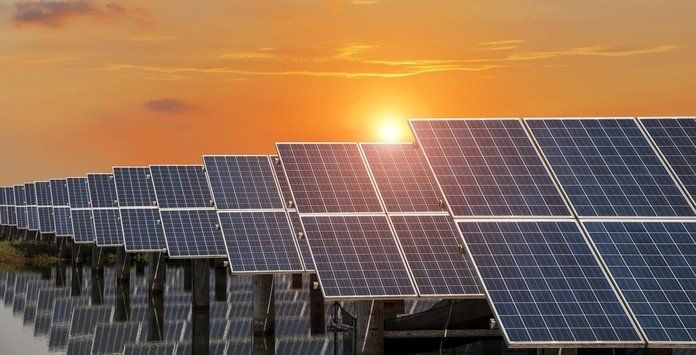
When Real Depreciation Against the U.S. Dollar Increases Costs, Such Measure Will Help Promote Business Development in the Solar Energy Sector
According to the publication in the Official Gazette on Monday, the Brazilian government decided to include several sets of solar energy equipment in its list of capital goods until the end of 2021 with zero import tax.
See Other News:
- Resume submission for various roles in civil and industrial construction for contracts with the Brazilian Company of Infrastructure Services in Minas Gerais
- Marte Engenharia is hiring a maintenance mechanic for Macaé, Rio de Janeiro
- GE (Renewable) has openings for interns on this 22nd
When real depreciation against the U.S. dollar increases the cost of parts and components that use technology to generate electricity, the measure should help promote business growth, and the technology mainly relies on imports from China. On the other hand, the few companies that manufacture solar equipment in Brazil may find that their competitiveness surpasses that of importing companies, which traditionally have cost advantages.
On the list called “ex-tariffs,” a good amount of photovoltaic modules for solar energy, as well as inverters and other accessories, such as components of the so-called “trackers,” were added by the Foreign Trade Chamber (Camex), which is part of the Ministry of Economy. These accessories can also make the panels of the plants follow the sun’s movement throughout the day to maximize output.
-
Renewable energy advances over protected areas in Brazil, and a survey by the Energy Transition Observatory reveals silent impacts that challenge environmental conservation and pressure sensitive traditional territories.

-
Rio Grande do Sul accelerates energy transition: State invests in renewable technologies and consolidates decarbonization strategies and pathways to attract billions in new industrial investments.

-
With 160,000 m² of collectors, an area larger than 20 football fields, Silkeborg, in Denmark, hosts a solar thermal plant that heats 19,500 homes and could become the largest solar heating plant in the world.

-
A study reveals the expansion of renewable energy procurement in Brazil and shows how companies are taking advantage of opportunities to reduce expenses, ensure energy efficiency, and strengthen strategic environmental commitments.


Besides certain types of three-phase inverters used in photovoltaic systems and components used in “trackers,” dozens of models of solar modules have also benefited, including monocrystalline and bifacial. Rodrigo Sauaia, president of the Brazilian Photovoltaic Solar Energy Association (Absolar), told Reuters that the import tax on solar modules is generally 12%, while inverters are subject to a 14% tariff. However, the entity is still assessing the impact of these measures on the market, emphasizing that these measures involve many different projects.
He also added that the association generally does not take a stance with the government on this matter because it has local manufacturers and companies that import equipment as partners.
As of August 1st, these new products will be included in the list of tax-exempt products as “ex-tariffs.”
In recent years, solar power generation installations in Brazil have developed rapidly and already account for about 3GW. Even so, according to the National Electric Energy Agency (Aneel), this source currently represents less than 2% of the country’s operational capacity and has enormous potential for expansion in the coming decades.








Seja o primeiro a reagir!