





 Portuguese
  English
  Spanish
  6 min of reading
  0 comments



The New Provisional Measure by Lula Deeply Alters the National Driver’s License, Reduces the Cost of Exams, Eliminates the Fee for Issuing the Physical Document, and Creates the Figure of the “Good Driver” with Right to Automatic License Renewal.
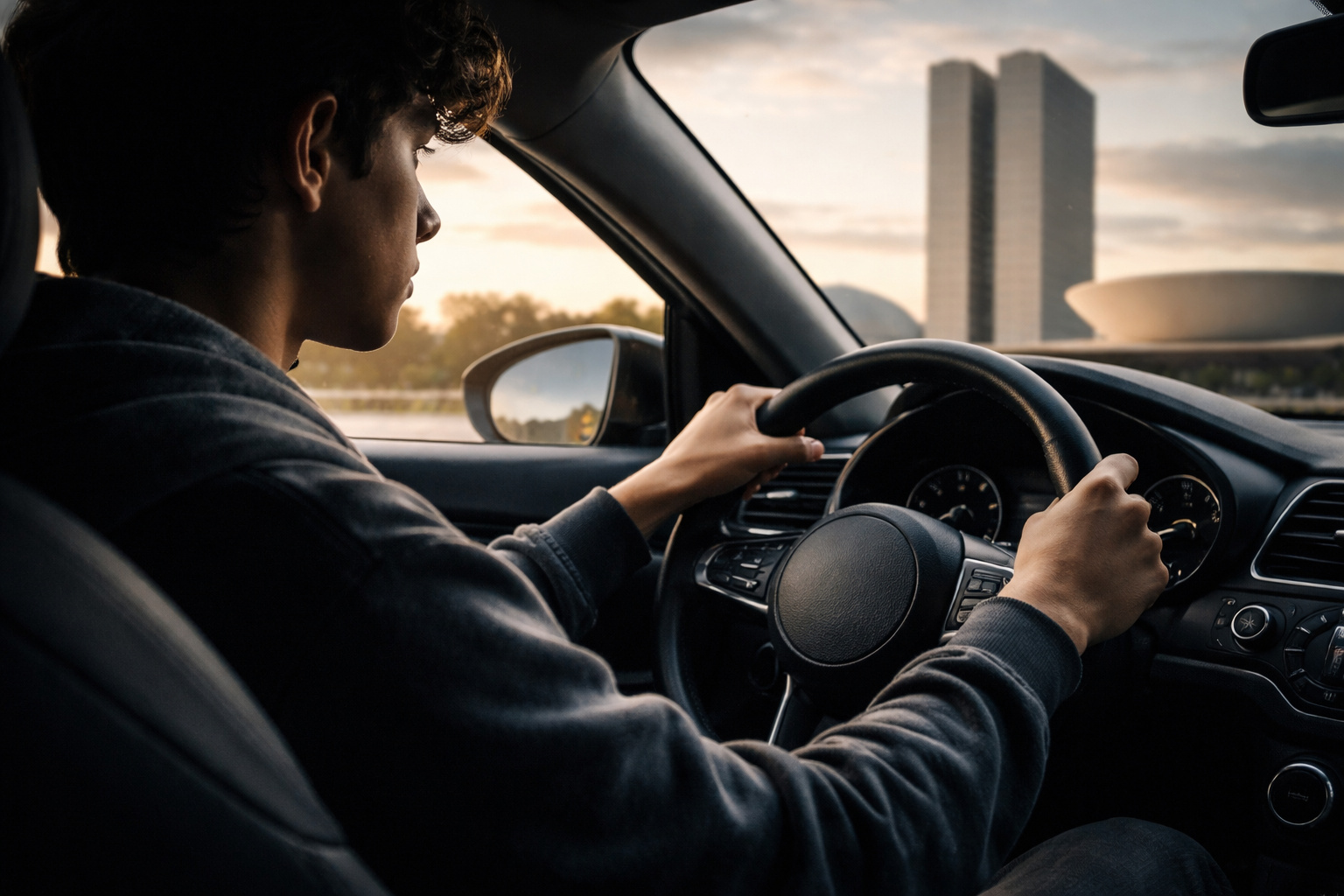
While part of the public expected only changes in driving school lessons, the government surprised by announcing a provisional measure with a direct impact on all Brazilian drivers. The national driver’s license is now at the center of a reform that affects the renewal of the CNH, the price of exams, and even the way the document is issued and presented by the driver. And all of this will take effect as soon as the MP is published.
In the announcement, President Lula and Minister Renan Filho presented what they called the “good driver provisional measure,” linking the driver’s history to renewal conditions.
On one hand, the proposal promises to simplify the life of those who drive without infractions, but on the other hand, it raises questions about safety, criteria, and the real impact on the health of drivers.
-
The noise law will no longer be in effect at 10 PM starting in June with a new rule valid during the 2026 World Cup.

-
The Chamber opens a debate on driver’s licenses at 16 years old as part of a reform that includes around 270 proposals to change the Brazilian Traffic Code and may redesign rules for licensing, enforcement, and circulation in the country.
-
The new Civil Code could revolutionize marriages in Brazil with “express divorce” and changes that could exclude spouses from inheritance.
-
Banco do Brasil sues famous influencer for million-dollar debt and intensifies debate on delinquency, risks of seizure, and direct impact on Gkay’s credibility.


Until the MP is published and regulated in detail, the scenario is one of transition and heightened attention.
Changes in Training and the Background of the Provisional Measure
Even before the provisional measure, the driver training system was already on a path of change. Resolution 1020, soon to be published, relaxes the theoretical course, which no longer has a fixed minimum workload and can be offered by driving schools and other entities, either in person or through recorded and live classes.
At the same time, the practical lessons for the first license move from a rigid model to a more flexible format, allowing for a reduction in workload at the driving school and the use of independent instructors accredited by the Detrans.
However, those intending to upgrade from category B to C, D, or E are still required to go through a driving school, precisely due to the higher risk involved in driving cargo and passenger vehicles.
This background helps to understand the government’s movement: while the resolution addresses the entry of new drivers into the system, the provisional measure focuses on how the national driver’s license is renewed, charged, and maintained throughout the life of those already licensed.
Automatic Renewal of the National Driver’s License for “Good Drivers”


The most controversial point of the announcement is the automatic renewal of the national driver’s license for those classified as “good drivers.” According to Minister Renan Filho, these drivers will be able to renew their license without needing to undergo physical, mental, and, eventually, psychological fitness exams.
In practice, this means that the history of infractions will be used as a filter to define who deserves a simplified renewal.
The minister himself has not yet detailed what the exact criteria will be to define a good driver, opening up space for debate on fairness, safety, and transparency. A person may, for example, not have recent fines and still drive little, have vision problems, or undiagnosed health issues.
Another sensitive point is that the Brazilian Traffic Code has always linked the validity of the CNH to the physical and mental fitness exam.
The provisional measure adjusts this logic, allowing that, in certain cases, the national driver’s license can be renewed based only on driving behavior, without new clinical evaluation.
Until the text is published, the discussion remains open: necessary simplification or excessive flexibility of road safety.
Cheaper Exams by Up to 40% for Those Needing to Renew with Medical Evaluation
The second major change directly hits drivers’ pockets. According to the minister, the medical and psychological renewal exams should become up to 40% cheaper. Today, in many states, the cost is around 300 reais; with the MP, the estimated ceiling drops to something close to 180 reais.
This reduction is said to have been negotiated with professional associations of doctors and psychologists, indicating an attempt at coordinated adjustment and not just a unilateral decree.
In practice, those who do not qualify as “good drivers” and need to renew their national driver’s license with a complete exam will have a lower cost than what they pay today, which is likely to reduce delinquencies and delays in renewal due to lack of funds.
The announced design suggests a division of drivers into two major groups: those who will have automatic renewal based on their infraction history, and those who will continue in the traditional flow, but with more affordable exams.
Still, even with the discount, the driver will continue to bear a significant part of the renewal cost, which maintains the importance of financial planning for those who depend on the CNH in their daily lives.
End of the Issuance Fee and Strengthening of the Digital Driver’s License
The third aspect of the provisional measure targets the issuance of the document. Today, even with the digital license available on the official app, drivers still pay a fee for issuing the CNH, especially when they want the physical version.
With the new rule, they will no longer have to pay for the issuance of the national driver’s license when opting to use only the digital document.
The old app Digital Traffic License has been renamed “CNH of Brazil,” but continues to house both the driver license and the vehicle document in a digital environment. This reinforces the trend of using the electronic version as the standard and pushes the physical plastic to a role of option, not obligation.
Those who wish to have the physical document will still be able to request it, but will again have to pay a specific fee for this service.
The message is clear: the digital national driver’s license becomes the natural and free pathway, while the paper CNH becomes an extra for those who want to carry the document in their pocket.
What Takes Effect and What Still Depends on Congress
Like any provisional measure, the package announced by Lula and Renan Filho takes effect as law as soon as it is published, with an initial validity of 60 days, which can be extended for another 60, until it is analyzed by the National Congress.
During this period, the new rules for the national driver’s license can already directly impact renewals, exams, and the charging of fees, although operational details depend on Detrans’ regulations.
At the same time, the text will be under examination by deputies and senators, who can maintain, alter, or even reject specific points.
It is in this process that issues such as criteria for a good driver, balance between safety and simplification, financial impact on traffic professionals, and fiscal effect for states and Detrans should be discussed in greater depth.
For the average driver, the initial message is simple: those classified as good drivers are likely to have simplified renewal, and those who are not should still benefit from cheaper exams and the end of the mandatory issuance fee, provided they accept to use the digital version.
And you, what do you think about these changes in the national driver’s license: is it a necessary advancement to simplify the life of those who drive well or should exams remain mandatory for everyone at the time of renewal?









-

-

3 pessoas reagiram a isso.