





 Portuguese
  English
  Spanish
  3 min of reading
  10 comments


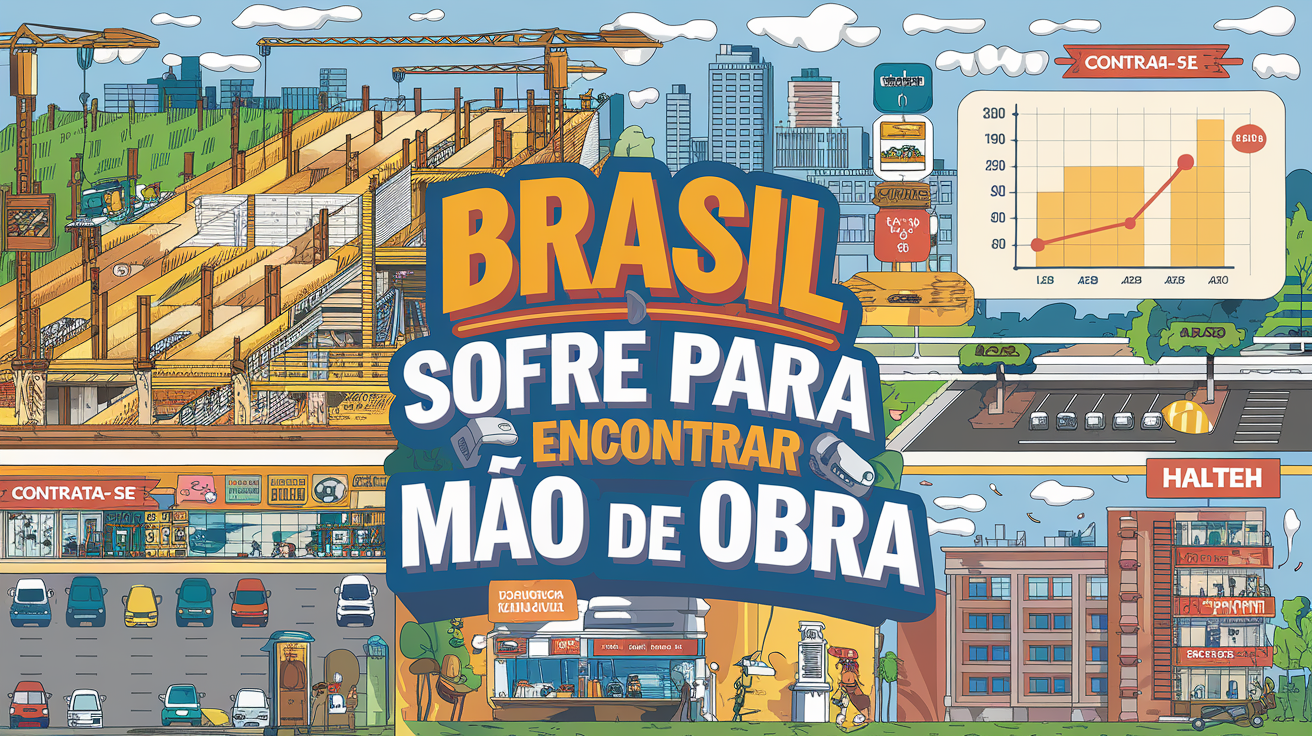


Despite the drop in unemployment, Brazil faces a crisis of skilled labor shortage. Sectors such as construction and retail suffer from the lack of qualified professionals. Experts warn of the urgent need for training programs and adjustments in assistance policies to reverse this scenario by 2025.
Brazil faces an economic paradox: despite the growth in employment, companies report difficulty filling vacancies in various sectors.
The shortage of workers affects everything from operational positions to specialized roles, creating a hurdle for business expansion in the country.
According to recent data, the unemployment rate reached 6.2% at the end of 2024, the lowest level since 2012, and the number of employed individuals rose to 104 million.
-
How investment in technology can revolutionize the national economy and enhance industrial gains, according to a study that highlights the direct impact on productivity, innovation, and wealth retention within Brazil.

-
The largest food company on the planet, JBS, has just opened a 4,000 square meter laboratory in Florianópolis to develop customized proteins that modulate muscle mass gain, immune response, and metabolic performance.

-
After nearly 30 bids and competition among industry giants, a Spanish company purchases one of the largest airports in Brazil for almost R$ 3 billion and takes over the management of Galeão in a concession that will last until 2039.

-
The Federal Revenue Service now automatically cross-references everything you declare with data from banks, credit cards, brokerage firms, and insurance companies, and any discrepancy between your income and your expenses triggers an alert in seconds.


However, many companies report difficulties hiring, indicating a structural problem in the labor market.
According to Revista Veja, the fear of losing the Bolsa Família and the lack of qualification are cited as some of the main reasons for this scenario.
Expansion of Social Programs and Their Impact on Work
The Bolsa Família, created in 2004, has undergone changes in recent years.
During the Bolsonaro administration, the program was reformulated as Auxílio Brasil and the average benefit amount surged from R$ 200 to R$ 600 per month.
The number of households served also increased, from 14 million to over 20 million.
Economists, such as Daniel Duque from the Getulio Vargas Foundation (FGV), point out that there is a relationship between the expansion of the program and the reduction of the labor supply, especially in low-paying sectors.
Data from FGV indicates that 19% of companies face difficulties finding workers for basic positions.
Sectors Most Affected by the Labor Shortage
The lack of workers impacts various segments of the economy. In the construction sector, 82% of companies report problems hiring or retaining employees.
The retail sector also suffers from the shortage, affecting 77% of businesses. Industry and the service sector follow a similar trend.
In Mato Grosso do Sul, for example, the Federation of Industries of the State (Fiems) estimates that there are 25,000 open positions, some for more than a year, due to a lack of qualified candidates.
According to Sérgio Longen, president of Fiems, “many factories have had to freeze expansion plans due to the difficulty in finding workers.”
Lack of Professional Qualification and Proposed Solutions
The low level of professional qualification is another significant challenge. Research from FGV reveals that 65% of companies have difficulties finding qualified workers.
The advancement of technology and changing consumer habits also impact the labor market, making certain roles obsolete and increasing the demand for new skills.
Experts suggest that the government should link the Bolsa Família to professional qualification programs to facilitate the transition of beneficiaries into the labor market.
Currently, 45% of companies invest in internal training to address the lack of skilled labor, according to the National Confederation of Trade (CNC).
Cultural Changes and New Work Formats
The profile of workers has also changed.
Many young people prioritize flexibility, remote work, and quality of life, which influences the labor supply for traditional jobs.
A survey by Instituto Ideia revealed that 30% of young Brazilians dream of starting their own businesses, and many have already opened their own companies.
The accelerated digitalization has also transformed sectors such as retail.
With the growth of e-commerce, the demand for salespeople has decreased, while the need for technology and logistics professionals has surged.
This contributes to the mismatch between available labor and market needs.
For experts, Brazil faces a double challenge: reducing dependence on assistance programs and qualifying the workforce to meet the new market demands.
The drop in unemployment is a positive indicator, but the shortage of qualified workers shows that much remains to be done.
To ensure sustainable growth for companies, it will be necessary to invest in vocational education and create policies that encourage the entry of beneficiaries of social programs into the labor market.






Nada mais de uma narrativa medíocre, a mão de obra está ai o que não tem mai são **** que trabalham por salários de fome, entregador ganha quase 3x do que um emprego normal isso é o problema
Bom dia a todos, sou técnico em eletrônica com ênfase em petróleo e gás.envio o currículo para as empresas e o que recebo é ficaremos com outro candidato. E quando vejo a oferta de trabalho na mesma empresa continua desde ano passado aí eu pergunto o problema está em quem ? Salários baixos muita exigência quase uma escravidão é só uma crítica em relação o que tenho passado.
Quando as empresas valorizarem os funcionários financeiramente, e parar de indicações aí o povo vai conseguir trabalhar ne