





 Portuguese
  English
  Spanish
  4 min of reading
  0 comments


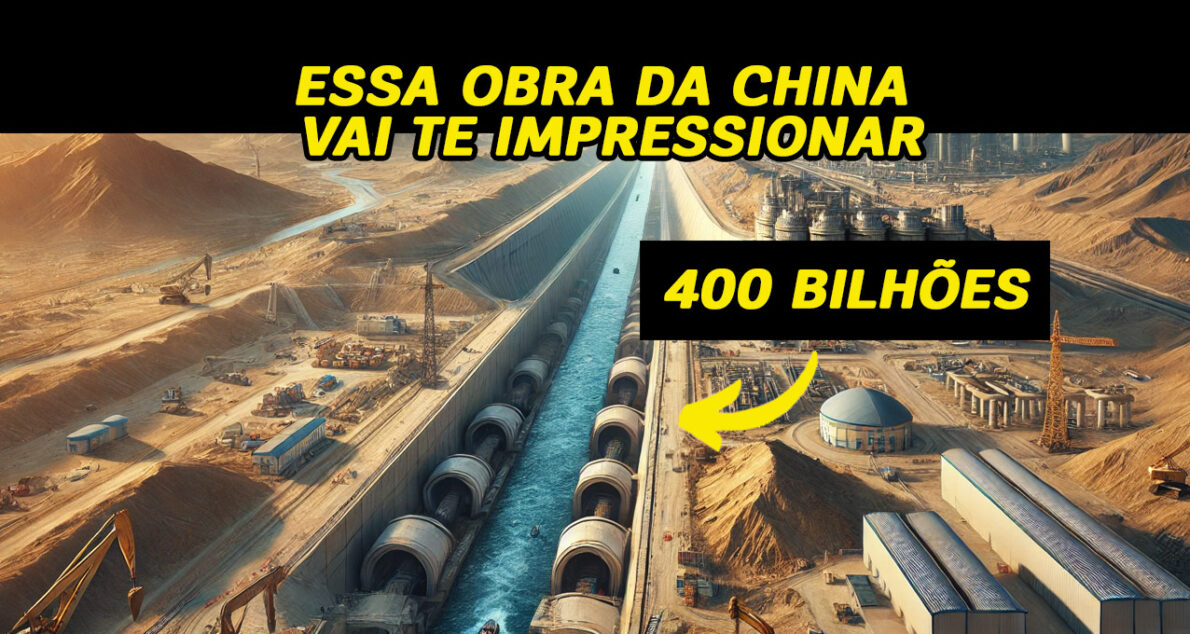
The Largest Water Transportation Project In The World Continues Underway In China, Redirecting 44.8 Billion Cubic Meters Annually To The Arid North. But Will This Billion-Dollar Project Really Solve The Water Crisis Or Create New Environmental Disasters?
If you thought that the São Francisco River transposition project was ambitious, get ready to learn about an even more impressive initiative. A mega engineering project that continues to challenge the limits of technology and nature.
What China is building goes far beyond any other project in the world, both in scale and impact, and the consequences can be unpredictable.
As presented by the Construction Time channel, the South-North Water Transfer Project in China aims to transport an impressive 44.8 billion cubic meters of water per year, redirecting the abundant water resources from the south of the country to the arid north.
-
Larger than entire cities in Brazil: BYD is building a 4.6 km² complex in Bahia with a capacity for 600,000 vehicles per year, but the discovery of 163 workers in conditions analogous to slavery has shaken the entire project.

-
With an investment of R$ 612 million, a capacity to process 1.2 million liters of milk per day, Piracanjuba inaugurates a mega cheese factory that increases national production, reduces dependence on imports, and repositions Brazil on the global dairy map.

-
Brazilian city gains industrial hub for 85 companies that is equivalent to 55 football fields.

-
Peugeot and Citroën factory in Argentina cuts production by half and opens a layoff program for more than 2,000 employees after Brazil drastically reduced purchases of Argentine vehicles.


This project, which spans over 2,400 kilometers, is divided into three main routes: East, Central, and West, and is considered one of the greatest engineering feats of our time.
According to the Chinese government, this mega-structure will solve the water crisis faced by regions like Beijing and Tianjin, as well as boost economic growth in the more industrialized northern areas. But the challenges and risks are proportional to the project’s magnitude.
The East Route: Utilization Of Ancient Structures
The first route to become operational was the East, in 2013. This line utilizes the historic Grand Canal of Beijing-Hangzhou, a waterway with over 2,500 years of history. Through modernized tunnels and channels, water from the Yangtze River is transported to the provinces of Shandong and Tianjin.
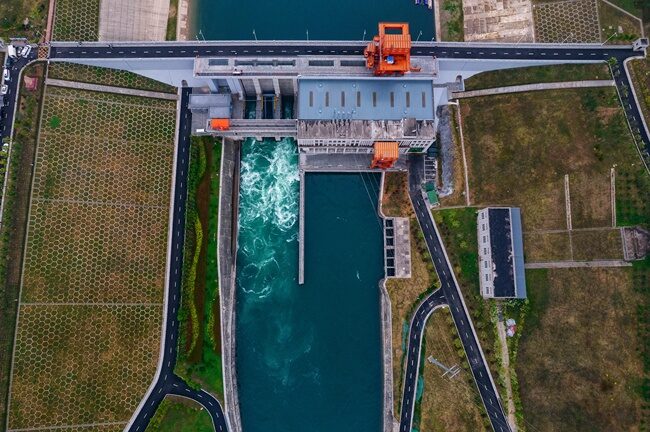
Although this route has already relieved part of the water scarcity, it has also faced issues such as water pollution, which needed to be circumvented. Even so, the operation of the pumping stations, with a capacity of 454 MW, shows the grandeur of the project.
The Central Route: Powered By Gravity
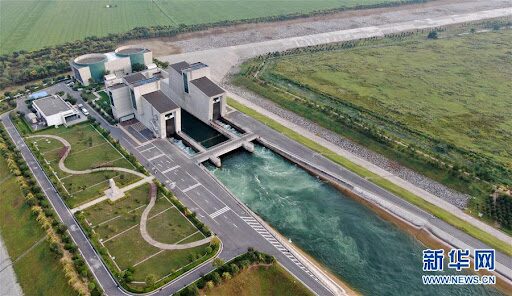
The Central Route, inaugurated in 2014, is the longest of the three, with 1,264 kilometers. It starts from the Danjiangkou reservoir in Hubei province and goes to Beijing and Tianjin. One of the main highlights of this route is the use of gravity to move the water, eliminating the need for pumping stations along the way.
Additionally, the enlargement of the reservoir allowed for an increase in storage capacity, essential for the continuous supply of the Chinese capital. Since its completion, this route has been transferring billions of cubic meters of water to the most populous northern regions.
The Controversial West Route In China
Still in the planning phase, the West Route remains the most ambitious and controversial. President Xi Jinping confirmed in 2021 that China would move forward with this project, which will capture water from tributaries of the Yangtze River to supply the western provinces.
However, environmentalists continue to warn about the risks of this project, which will pass through earthquake-prone areas and mountain ranges, increasing the risk of landslides.
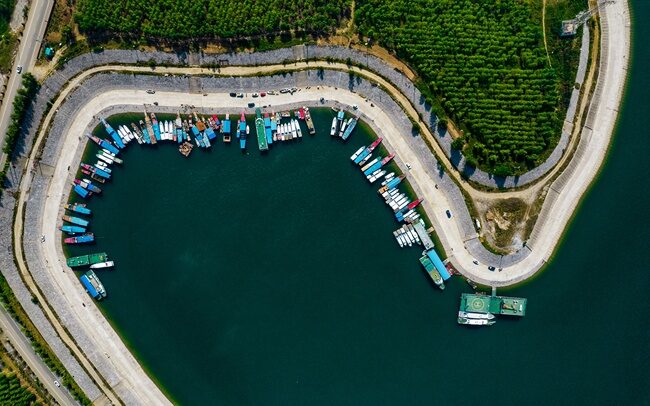
In addition to the technical challenges, the environmental and social impacts of this route are enormous, potentially leading to the resettlement of entire communities and the destruction of habitats. Despite this, the Chinese government insists that this is an essential solution to ensure the country’s water and food security.
Comparison With Brazil: São Francisco River Transposition
When we look at Brazil, the São Francisco River transposition project, initiated in 2007, also sought to address water scarcity in arid regions, such as the Northeastern states. Although similar in objective, the Brazilian project is incomparable in scale to the Chinese one.
While the São Francisco transposition cost about R$ 12 billion, the Chinese project has already surpassed US$ 79 billion, making it the largest water infrastructure project in the world.
Both projects, however, share similar challenges, such as environmental impact, resettlement of populations, and the need to mitigate water pollution.
Environmental And Social Challenges Of China’s Construction
The water transposition project in China continues to generate numerous concerns. Environmentalists and scientists warn that, in addition to landslides, the project could worsen water contamination and cause serious harm to ecosystems. The construction of the West Route, in particular, is seen as a potential threat to mountainous areas and local biodiversity.
Another challenge is the social impact. Tens of thousands of people have already been resettled for the construction of channels and reservoirs. The Chinese government has tried to minimize these impacts, but criticism remains, especially regarding potential long-term consequences.
Is The Project Sufficient?
The biggest challenge of the project is not just completing construction by 2050, but ensuring that this massive intervention is sustainable in the long term. The increasing demand for water in China, especially with the production of items that require large amounts of water, such as meat, continues to put pressure on the country’s water resources.
Although the project has the potential to alleviate the water crisis in northern regions, the environmental and social challenges remain immense. The sustainability of the project will depend on how the Chinese government manages to balance water supply and the environmental impacts resulting from this colossal intervention.
Will China be able to overcome all these obstacles to ensure the water security of its people without causing an environmental disaster? Only time will tell.





-

Uma pessoa reagiu a isso.