





 Portuguese
  English
  Spanish
  7 min of reading
  1 comment


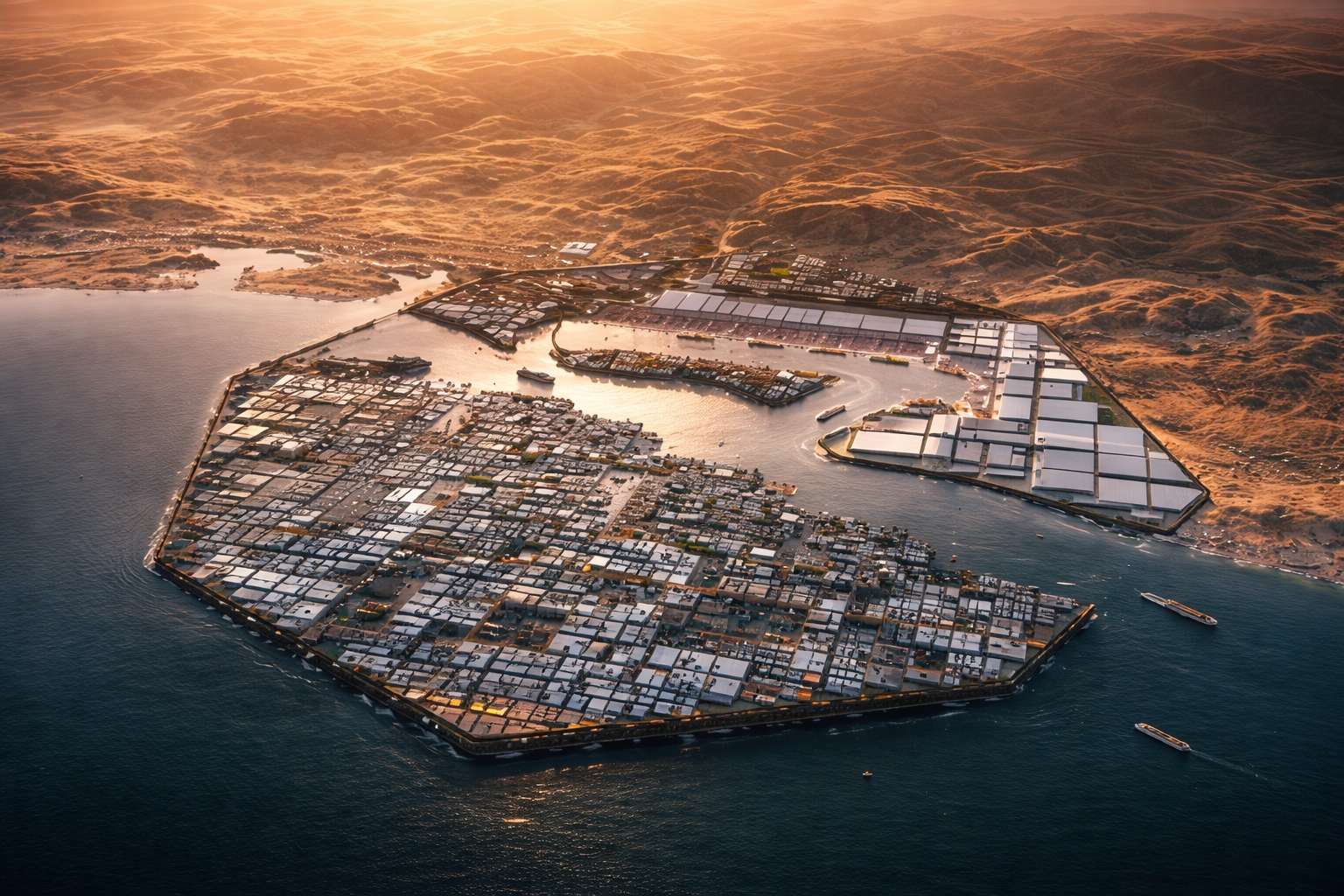

In Various Countries, Architects, Institutes, and Companies Have Presented Floating Cities with Modules for Thousands of People Around the World to Face Rising Sea Levels, Provoking a Reality Check About Cost, Governance, and Who This Ocean Future Really Serves.
In recent years, proposals for floating cities have begun to appear in various places around the world, always marketed as a solution to rising sea levels, which, according to cited estimates, is expected to affect about 40,000 people.
The promise seems perfect: a high-tech, self-sustaining city, where “every day is beach day,” everything eaten and drunk is recycled, and just living there means you’re “saving the planet.”
But the question that destroys the enchantment is quite simple. What if this idea is bad in real life? What if the goal is not exactly to house those in need, but to sell an expensive lifestyle disguised as a climate solution?
-
Italian researchers have detected what appears to be a second Sphinx buried under the sands of Egypt, and satellite scans reveal a gigantic underground megastructure hidden beneath the Giza Plateau for over 3,000 years.

-
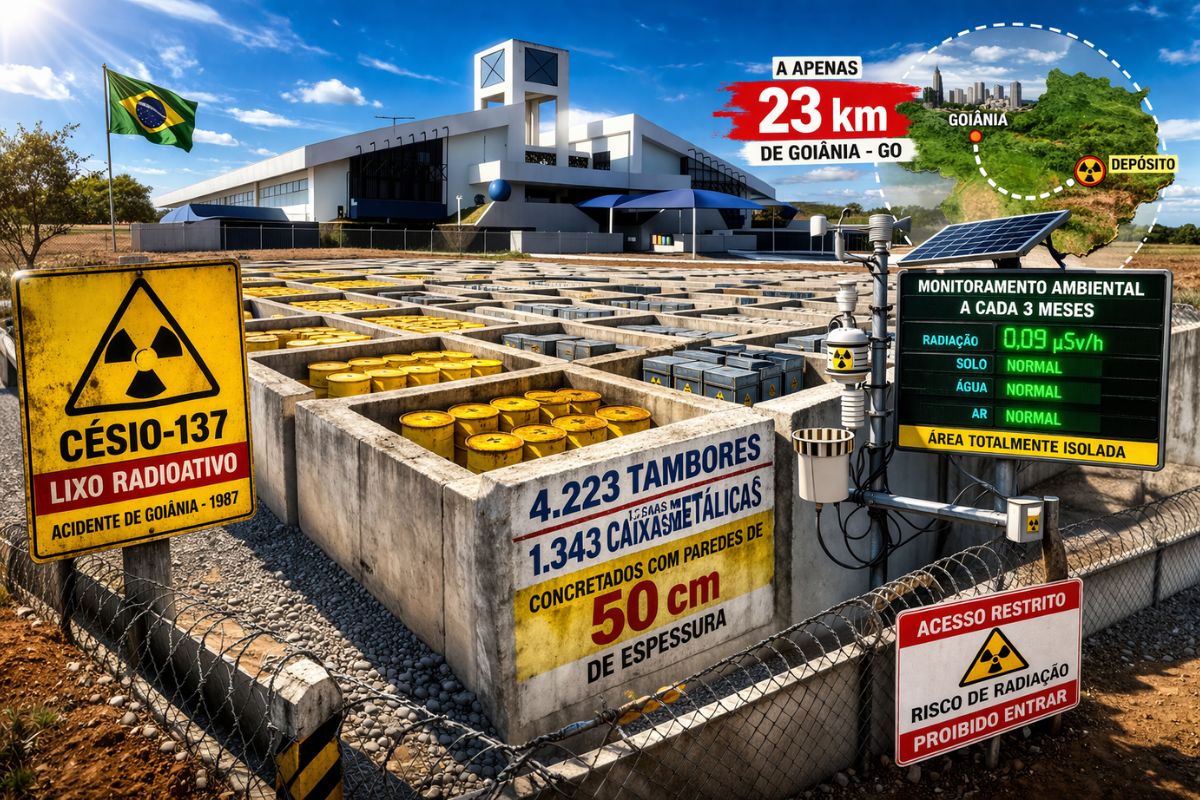
There are 4,223 drums and 1,343 metal boxes concreted with 50-centimeter walls that store the radioactive waste from Cesium-137 in the worst radiological accident in Brazil, just 23 kilometers from Goiânia, with environmental monitoring every three months.
-
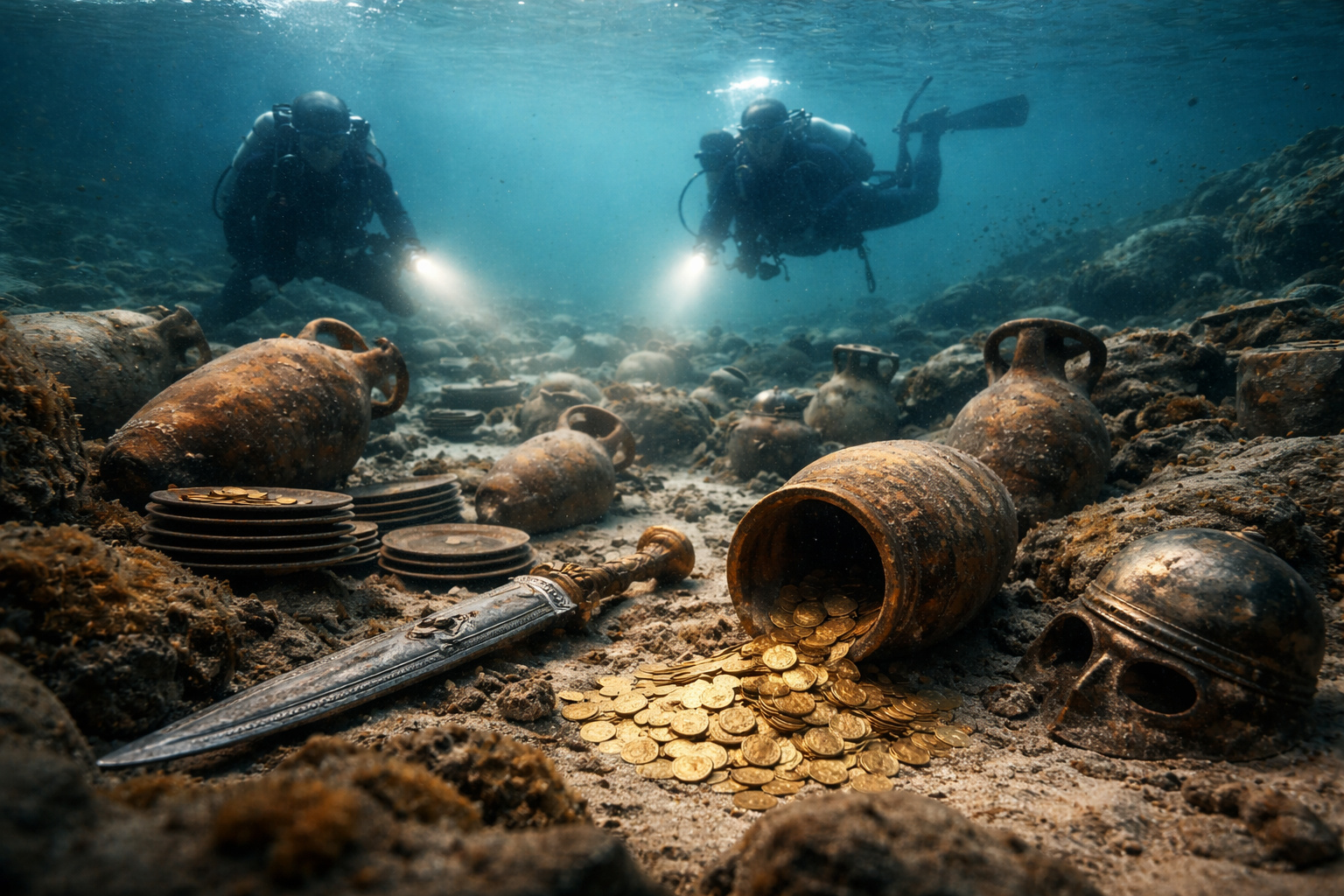
Giant Roman treasure found at the bottom of Lake Neuchâtel in Switzerland reveals an advanced trade system, circulation of goods, and armed escort in the Roman Empire about two thousand years ago.
-
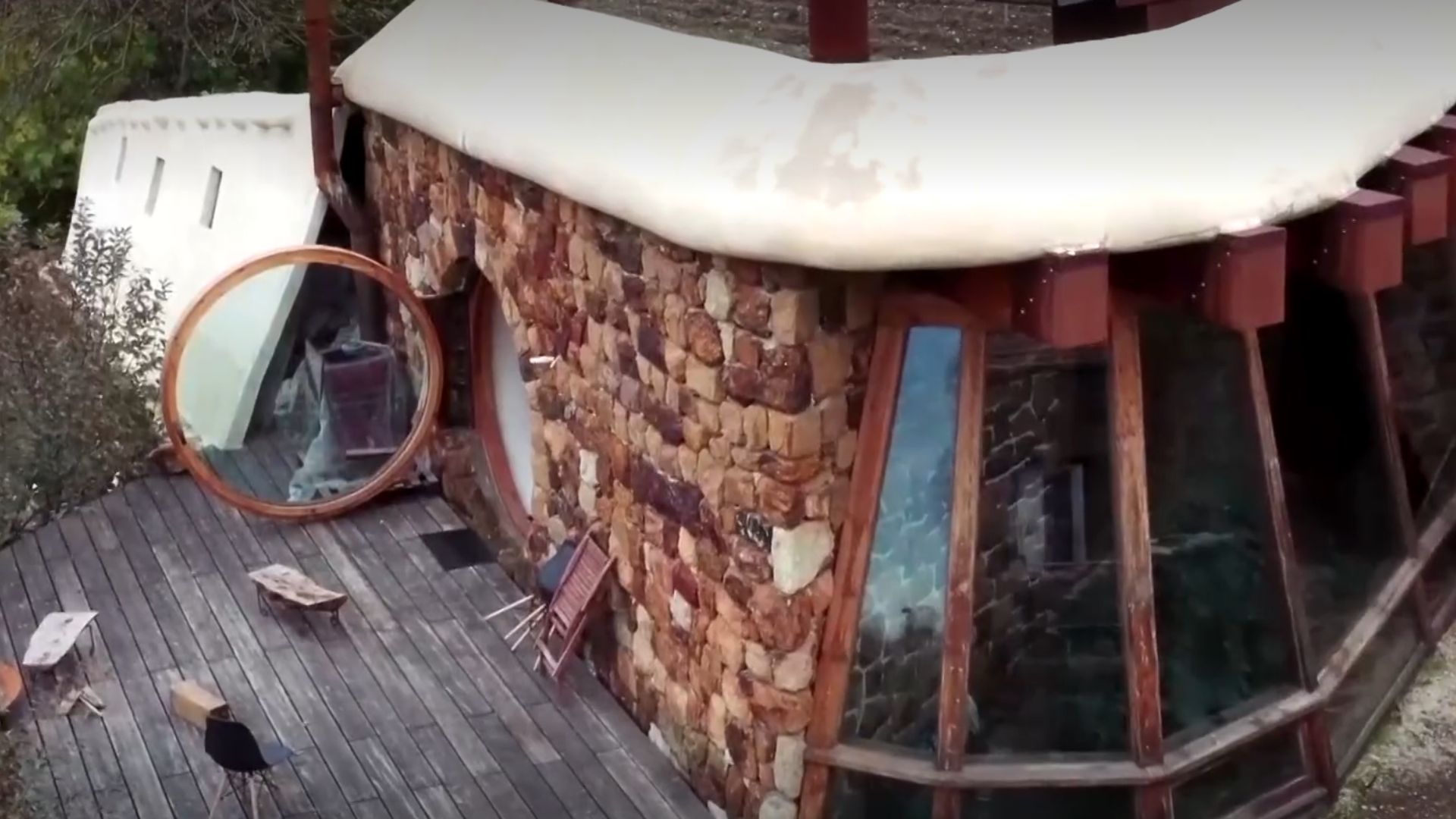
He buried 1,200 old tires in the walls to build his own self-sufficient house in the mountains with glass bottles, rainwater, and an integrated greenhouse.
Triton City Was Born in the 1960s with Modules for 6,500 People, but Died Due to Nonexistent Technology and Unviable Costs
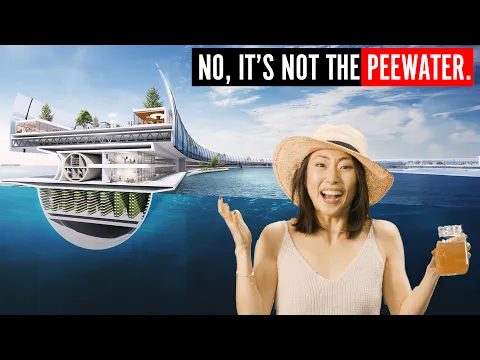

One of the first truly complete concepts of a floating city was Triton City, created in the 1960s by architect Buckminster Fuller.
The plan was to set up tetrahedral platforms anchored to the seabed, with technologies and social services to form a completely self-sustaining community. Apartments and offices would come in as prefabricated modules integrated into the structure.
Each platform could house up to 6,500 people and new platforms would be added as the population grew. However, the project lost momentum when the main investor died. Later, it was considered by the U.S. government, but ultimately got buried in bureaucracy.
The reason for the failure was straightforward: it was too futuristic for the time and depended on technologies that did not exist. Moreover, the proposal relied on a unique mega-structure, which was extremely costly. And the system of modules coming in and out required so much money and planning that it proved unviable.
Sixty Years Later, Current Projects Repeat the Pattern, Lots of People on Paper and Little Viability in the Cash
Fast forward about 60 years, the climate crisis has become a backdrop, and the showcase still looks similar, but the obstacles remain.
Dogen City is presented as a floating city for 40,000 people, using a “ring” of housing shaped like a ship to protect the inner part against currents and tsunamis within a bay. The buildings would be flexible, rearranged. Still, the founder considers completely shifting the direction to medical tourism, because the project is not profitable.
The list of eye-catching concepts doesn’t stop there. Pangeos is a mobile city shaped like a turtle for 60,000 people, with an estimated cost of US$ 1,000,000,000, sounding more like a luxury cruise than a city.
Lilypad caught attention in 2011, but never progressed beyond the conceptual stage.
And there’s Oxagon, a mega-city linked to the Neom project, estimated at US$ 1 trillion. This might happen precisely because it has funding concentrated in a single authoritarian regime, capable of pushing the project forward and crushing resistance.
The consequence appears as a pattern: many of these projects require a gigantic initial investment coming from billionaires or well-funded autocratic governments.
The question that arises is inevitable: what if, instead of a single mega-structure, the path was a set of smaller modules?
Maldives Bets on Tested Modules and Technology, with Completion Expected in 2027, but the Long Term Becomes a Doubt
In the Maldives, the proposal feels more viable because it avoids the unique mega-structure. The Maldives Floating City would be a set of individual units, using technology already tested in the Netherlands with smaller scale floating houses. The plan is to complete the city by 2027.
The buildings would be anchored to the seabed, creating artificial reefs that help stimulate coral growth. The urban idea revolves around a community of boats, with canals as infrastructure, prioritizing walking and biking.
Rather than building a giant structure to face the open sea, the proposal uses a natural lagoon as a protective barrier, creating a more controlled environment. As the lagoon water tends to be warmer and shallower, it fits the Maldivian lifestyle.
The project also includes docking points and part of the necessary infrastructure for a city of 20,000 people. And there are many similar lagoons in the region, raising the possibility of multiplying the model.
Maldives Could Disappear by the End of This Century, with About 80% of the Land Area Less Than 1 Meter Above Sea Level
If the trend of rising sea levels is not reversed, the Maldives could disappear by the end of this century. The country is described as the lowest region in the world, with about 80% of the land area less than 1 meter above sea level.
The floating city is anchored, so it wouldn’t be “floating” away. But the functioning and feeling would change significantly without the surrounding protection.
The uncertainty becomes a heavy hook: was it even designed with the long term in mind? If not, can this still be called a city?
The price adds another layer. One of the properties is estimated at about US$ 250,000, well above what an average Maldivian could afford. And the project website highlights the possibility of obtaining residence permits by purchasing a house.
This opens the door to a scenario where the units become vacation homes for foreigners, with a gated community vibe, even with the slogan claiming that the proposal would transform Maldivians from climate refugees into climate innovators.
Seasteading Institute, 200 Nautical Miles, and the Idea of Escaping Rules Make the “Real Goal” Clearer
The popularization of the theme also passes through the Seasteading Institute, which promotes “moral imperatives” such as feeding the hungry, enriching the poor, and healing the sick.
The founders wrote a book advocating for independent and self-sustaining communities in the ocean and received initial investment from Peter Thiel, founder of PayPal.
The cited conceptual basis comes from the UN Convention on the Law of the Sea: a country’s exclusive economic zone extends 200 nautical miles from the coast, and beyond that would not be subject to the laws or regulations of sovereign states, according to the explanation presented.
The promise is of privatized, competitive government structures chosen by the people. However, looking at the projects, it’s difficult to see how this would feed the hungry or enrich the poor. Many plans are expensive, incomplete, and unsustainable on their own.
Some require people to live in their own boats to create a sense of community before building.
Another practical barrier is that there are no jobs or economy in these locations, so individuals would need to work remotely or travel to nearby areas for work.
The case that came closest to happening was in French Polynesia, in lagoons, with local government partnership to create independent zones.
But there was strong rejection from residents, concerned about the environmental impact of a zone with no taxes and no regulation. The project eventually died.
In the end, the idea of a floating city seems less about “saving the planet” and more about “living outside the rules” and, possibly, outside of taxes.
Oceanix in Busan Promises City for 10,000, Category 5 Hurricane Resistance, and Modules Too Expensive for the Reality of Climate Refugees
In Busan, South Korea, there is a prototype plan for a floating city of 10,000 people. It would be part of a large exhibition, but after filming done in October 2023, South Korea lost the bidding, and the hosting went to Saudi Arabia.
Still, it was stated that investments would continue, and the country may try for the 2035 exhibition, so the project might happen there or elsewhere.
The city was developed by Oceanix, has support from the UN and is based on modules that can grow from a neighborhood to a city of 10,000 and, according to the proposal, scale indefinitely.
The goal is net zero emissions and closed-loop systems. Here, there is concern about jobs, schools, and what makes a society function.
The platforms would be anchored to an artificial reef made of bio rock, described as a durable concrete formed underwater. Even without barriers, the project claims to withstand category 5 hurricanes and tsunamis.
The buildings would be 4 to 7 stories, with more intimate streets and alleys generated by a hexagonal design, featuring shops and places to eat, all designed for walking and biking. The promise is to traverse the area from end to end in 10 minutes by bicycle.
Previously, the plan was to build three modules: hospitality, research, and housing. But there are differences between the original idea and the prototypes.
The scale has become denser, and while it is resilient and sustainable, it would not be self-sustaining. This appears as a structural problem: a self-sustaining city depends on a balance between technology, food production, and social, political, and economic systems functioning as an ecosystem, which is much more complex than diagrams suggest.
And there’s the cost. According to Oceanix, each platform would cost between US$ 150 million and US$ 200 million, and with new technologies and maintenance, that could rise. In other words, it still depends on large private investors.
The contradiction arises when the target audience cited is millions of climate refugees, many in developing countries, which does not seem like a naturally profitable investment.
In the end, the message is clear: floating cities seem to tackle everything at once—technology, aquatic lifestyle, self-sufficiency, and governance models—and that becomes part of the problem. The temptation is to treat it as a brilliant and simple solution to a gigantic challenge like the climate crisis, but this mental shortcut may hide complex and long-term consequences.
So what do you think? If you had to bet today, is this idea closer to an inevitable future or a neatly packaged escapist fantasy? Let us know your opinion.









A águ seja ” doce”, salobra ou salgada, deve ser respeitada. Segundo a PALAVRA Adão e Eva foram criados n terra.
O idealizador do protótipo para morada sobre âgua, 9
⁸⅝