





 Portuguese
  English
  Spanish
  3 min of reading
  44 comments


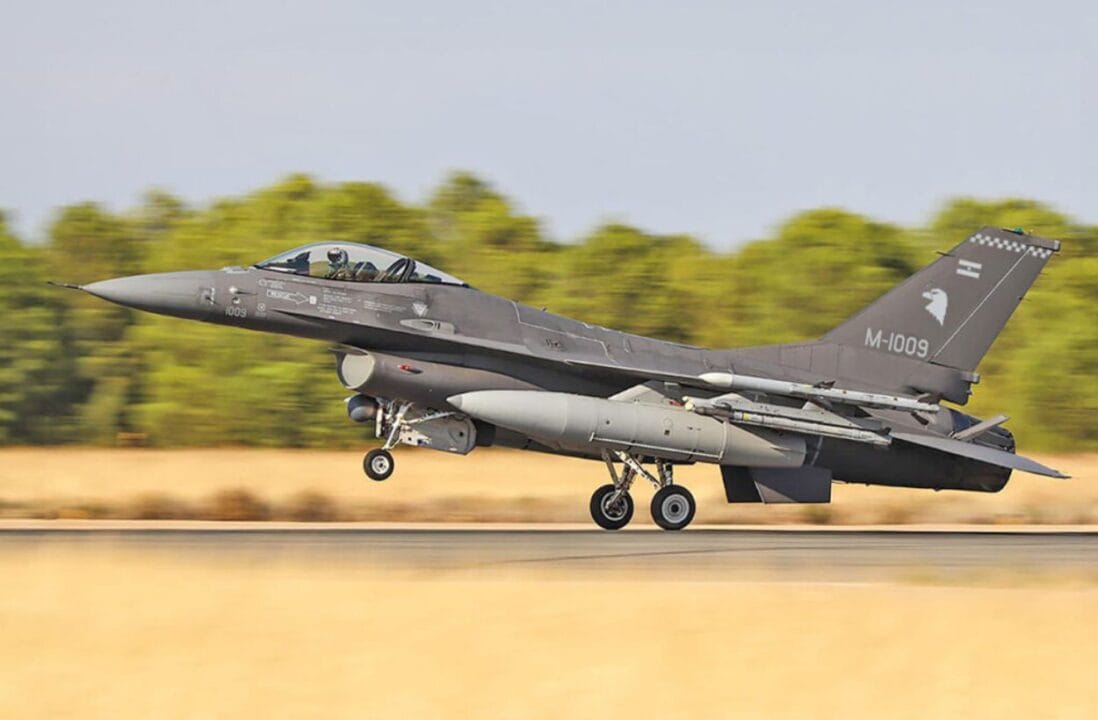


Argentina Strengthens Air Defense with Acquisition of 24 Modernized F-16 Fighters from Denmark, But Still Inferior to Brazil’s F-39 Gripens and Chile’s F-16s, Marking a Significant Advance Despite Future Upgrade Limitations.
Argentina takes an important step to modernize its air fleet with the purchase of 24 F-16 fighters, a necessary measure after years of reduced capabilities since the retirement of the Mirage 3 in 2015. These fighters, acquired from Denmark, represent not only a technological upgrade for the Argentine Air Force but also an effort to better position itself in South America’s defense landscape.
This transaction, the most significant since 1983 in terms of military air acquisition, aims not only to increase Argentine air power but also to balance military capabilities in the region, marked by the recent inclusion of more advanced fighters by neighboring countries.
Capabilities of the F-16 Fighters Acquired by Argentina


The F-16 fighters, specifically in the A/B MLU Block 15 version, received extensive upgrades in the late 1980s. Compared to the aircraft previously used by Argentina, such as the A4 Skyhawk and the IA 63 Pampa light attack and trainer, the F-16s represent a considerable advancement.
-
São Paulo surprises the world with a colossal railway network project that promises over 1,000 km of tracks, R$ 194 billion in investments, and 40 projects connecting the capital to the interior with fast and sustainable trains.

-
The world’s largest escalator, measuring 905 meters in China, reduces urban travel time from 1 hour to about 20 minutes and transforms mobility in mountainous regions with an engineering solution adapted to the terrain.

-
A R$ 300 million logistics giant is taking shape in Serra with over 100,000 m² and raises a question: how can this transform e-commerce and distribution in the state?
-
Could Uber Rides Lose Minimum Fare? Understand What’s Happening!


However, despite the improvements, these fighters are still classified as fourth generation, not matching the more advanced Chilean F-16s or the recently incorporated F-39 Gripen by the Brazilian Air Force – a 4.5 generation aircraft considered one of the most advanced in operation in the region.
Statements and Reactions
During the contract signing ceremony, Argentine Defense Minister Luis Petri emphasized the importance of the agreement: “Today we are completing the most important military aviation acquisition since 1983. There are 24 F-16 aircraft that have been modernized and equipped with the best technology, and that today are on par with the best aircraft flying in the skies of South America and the world.”
Arsenal
The deal Argentina made includes a package of notable armaments, highlighting the A9X and A10 missiles, the latter similar to those used by Chile with a range of about 110 km. However, due to the nature of the version acquired, future upgrades may be limited. Nonetheless, given the current context of the Argentine Air Force and the resources available, the purchase of the F-16 fighters is seen as a positive step for the country, even though it does not substantially alter the balance of air power in South America.
This move reinforces Argentina’s defense capacity but simultaneously raises questions about comparisons with the air assets of its neighbors, especially the modern F-39 Gripen operated by Brazil.
Why Are Argentina’s F-16 Fighters Inferior to Brazil’s F-39 Gripen?
The F-16 fighters acquired by Argentina are considered inferior to the F-39 Gripen operated by Brazil for several technological and capability-related reasons. The F-16s purchased by Argentina belong to the A/B MLU Block 15 version, one of the earlier versions of the F-16 that were upgraded in the late 80s. Despite the upgrades, they remain fourth-generation aircraft. In contrast, the F-39 Gripen is a 4.5 generation fighter, positioning itself between fourth and fifth generation aircraft, which provides it with significant technological advantages.
The F-39 Gripen is known for being a multifunctional fighter, capable of efficiently executing a variety of missions such as air superiority, ground attack, and reconnaissance. This versatility is a major advantage compared to the F-16s, which, while also versatile, do not have the latest updates found in more modern fighter models.
The Gripen incorporates more advanced technologies, including state-of-the-art avionics, electronic warfare systems, and superior networking and data capabilities. This allows for better situational awareness and combat effectiveness compared to the F-16s acquired by Argentina, which, due to their generation, have limitations in future upgrades due to their older design base.
The Gripen is notable for its operational efficiency and low maintenance costs compared to other fighters, which represents a significant economic advantage in the long run. Meanwhile, the F-16s, being older models, may imply higher operational and maintenance costs.









O F-39 Gripen do Brasil, um caça 4.5 geração, é tecnologicamente superior ao F-16 MLU da Argentina (geração 4), com melhor radar AESA, menor assinatura radar (stealth), capacidade de supercruise, e armas mais avançadas como o míssil Meteor, enquanto o F-16 argentino, apesar de modernizado (MLU), é mais antigo e limitado, mas representa um grande salto para a Argentina, recuperando capacidade supersônica e modernizando suas táticas, com vantagem para o Gripen em cenários BVR (Beyond Visual Range) devido à sua fusão de sensores e consciência situacional superior.
Quero ver a Argentina mantê-los no ar de forna operacional. Outra coisa, os americanos ñ transferem tecnologia e o Brasil através da Embraer em parceria c/a SAAB, está embarcado tecnologia nacional no Gripen
A foto de capa não é de um F-16, erraram ****.