





 Portuguese
  English
  Spanish
  5 min of reading
  0 comments


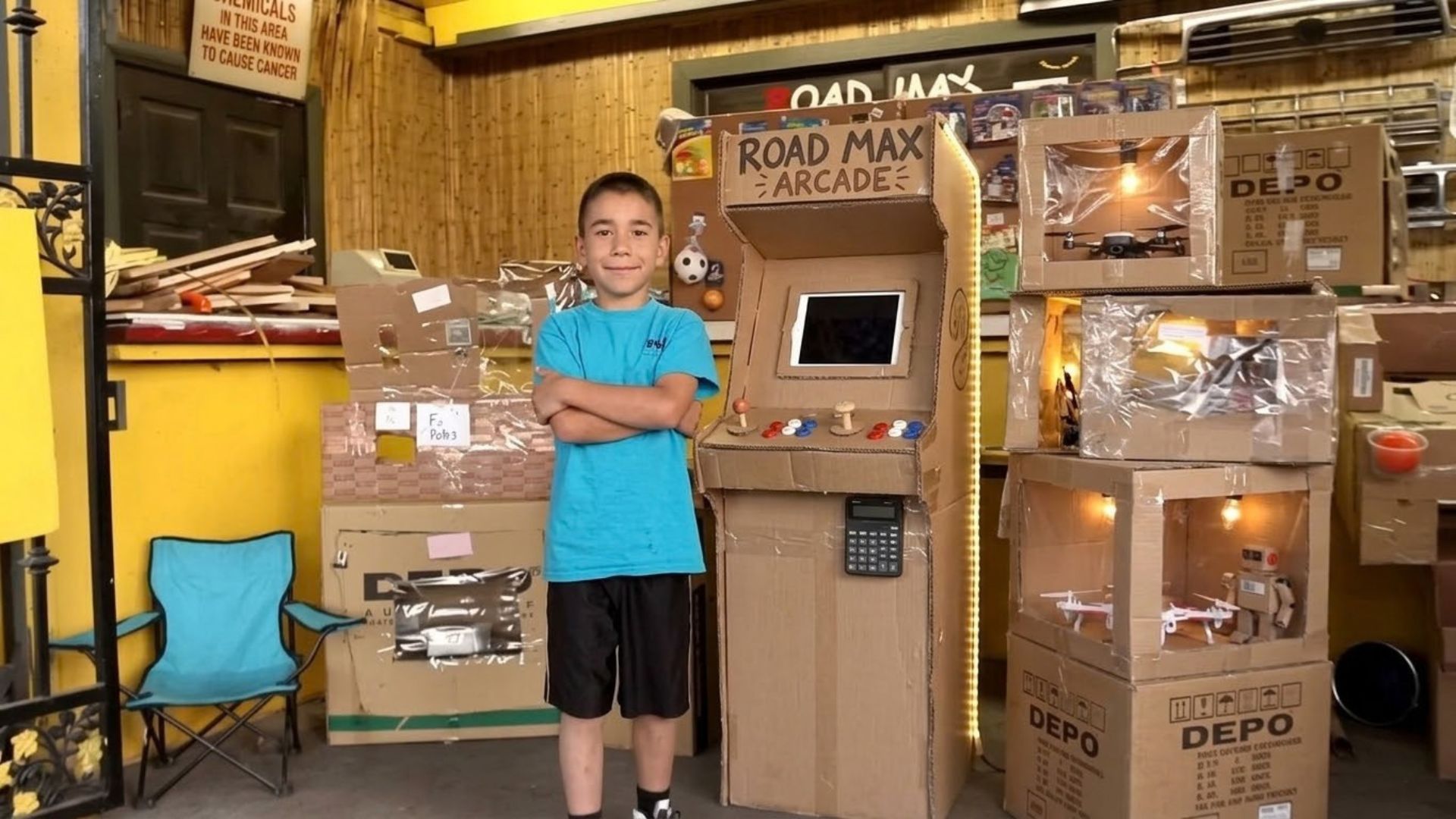
True Story Of Child Creativity That Turned Discarded Boxes Into A Functional Arcade Inside A Auto Parts Store In Los Angeles Gained Worldwide Attention After A Filmmaker Discovered The Project By Chance And Shared The Video That Revealed The Young Inventor’s Talent.
The story of Caine Monroy gained international fame after the boy, then 9 years old, built a cardboard arcade in his father’s used auto parts store, in the East Los Angeles area, and began to operate the games, tickets, and prize area by himself.
The project, created with discarded boxes and simple parts, came out of anonymity when filmmaker Nirvan Mullick entered the store to buy a car part, became the boy’s first customer, and recorded the experience in a short film that reached millions of views.
The strength of the case was not only in the boy’s age but in the structure he managed to build in an environment not typically associated with the realm of children.
-
He found the largest gold shipwreck in the United States with tons of the precious metal at a depth of 2,400 meters in the Atlantic and recovered a treasure that no one thought possible to reach, but 500 gold coins disappeared without explanation.

-
The United States has a serious problem with its F-35s: China is already producing fighters at a pace that exceeds American capacity and could manufacture up to 300 aircraft per year before the end of the decade, shifting the global military balance.

-
A retired IT professional built a 22-meter boat in his backyard in Oklahoma with a school bus engine, light pole masts, and handmade watertight doors to become the redneck version of Jacques Cousteau.
-
China is building a city in Brazil: a complex with an investment of R$ 5.5 billion comes to light, but allegations involving workers draw attention.


Instead of spreading makeshift toys, Caine organized attractions with their own rules, created a pass system, separated prizes, and designed a complete experience for anyone who entered the space.
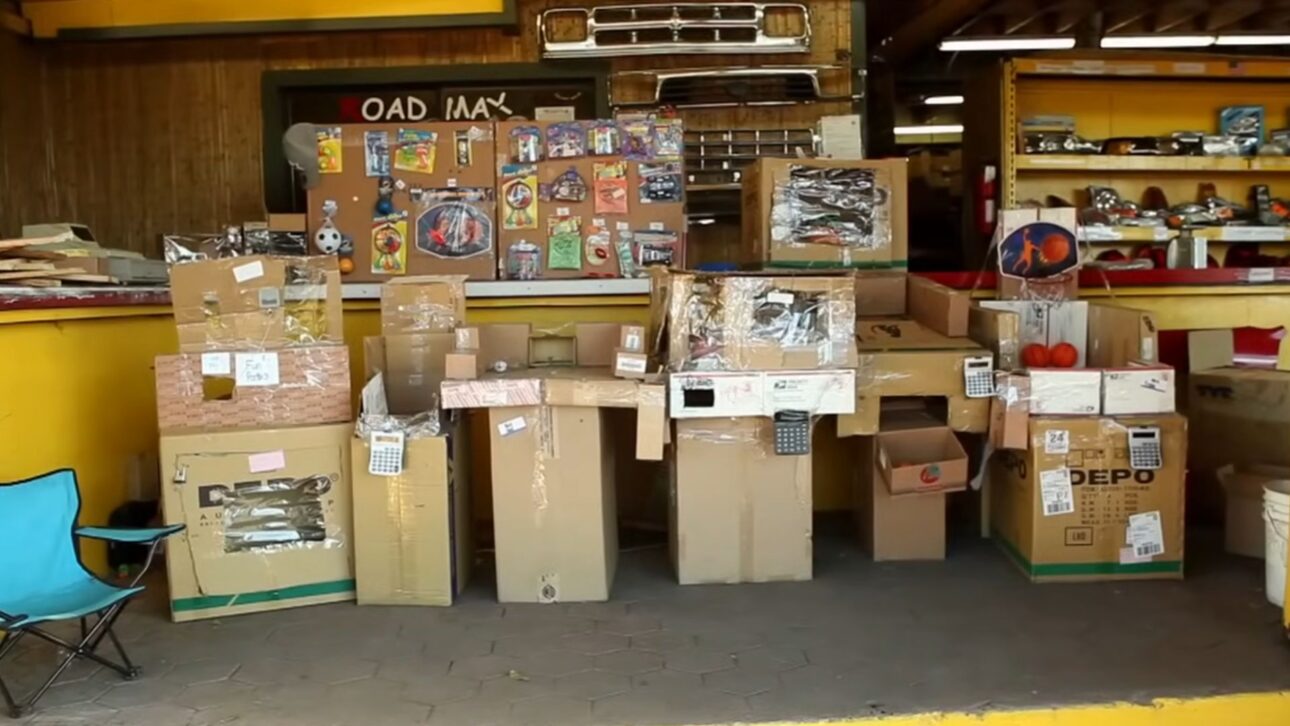
The proposal drew attention precisely for bringing together inventiveness, operational logic, and material reuse in an everyday setting.
How The Arcade Built With Cardboard Boxes Worked
The arcade was not just decorative.
The cardboard boxes were transformed into game machines, tunnels, targets, internal compartments, and panels, with openings through which balls, tokens, and tickets passed.
In some cases, the operation depended on cutouts, moving parts, and simple mechanisms triggered manually, which reinforced the handcrafted dimension of the project without compromising the audience’s experience.
Moreover, Caine considered typical elements of a traditional arcade.
According to reports published at the time, he sold single plays and also a “Fun Pass” for US$ 2, which entitled holders to 500 tries for a month.
When someone won, the boy himself handed out tickets through open slots in the cardboard structures and managed the exchange for prizes, including vintage toys and simple items bought for the awards.
This detail helped explain why the story spread so quickly.
What was there was not just a child playing at building, but someone who was already thinking about circulation, service, reward, and visitor return.
The manual operation, far from diminishing the impact, gave the arcade an even stronger authorial trait, because it made evident Caine’s direct participation in every stage of the experience.
Casual Encounter That Transformed The Project Into A Viral Phenomenon
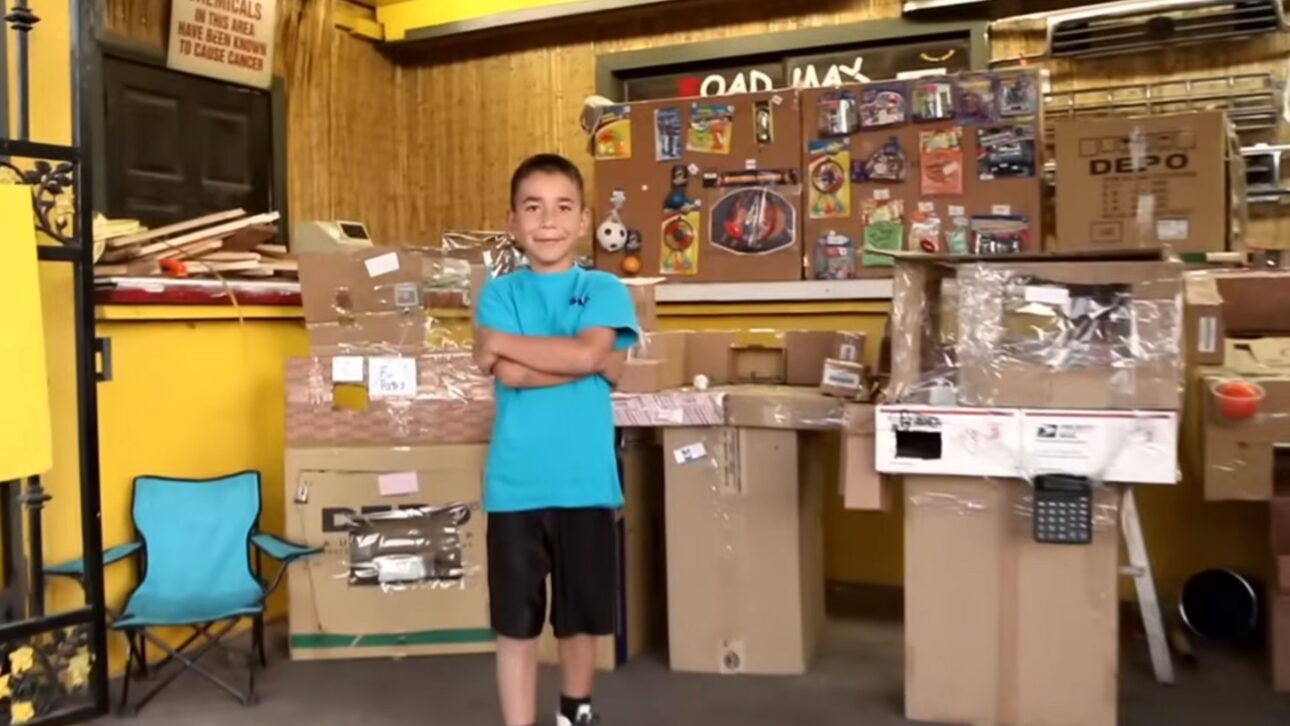
Nirvan Mullick stumbled upon the place while searching for a car part at Caine’s father’s store.
Upon realizing the size of the project, he bought a pass, played in the attractions, and then, with the family’s permission, decided to film the arcade.
The discovery had a decisive weight because it occurred when the boy practically had no audience yet, despite having dedicated a good part of his time to the setup and waiting for customers.
The filming was not limited to documenting the invention.
Mullick helped organize a mobilization to bring people to the arcade and surprise the boy, which amplified the emotional reach of the story.
The short film “Caine’s Arcade” was released online on April 9, 2012, and from then on transformed a local project into a phenomenon of global reach, with intense circulation on social media and coverage by major media outlets in the United States.
The repercussion sustained itself through a contrast easily understood anywhere in the world.
On one side, there was an auto parts store in an industrial area with no appearance of a recreational space.
On the other, there emerged a whole arcade created by a child with discarded materials, a unique business logic, and manual service.
The combination of the simplicity of the raw material and the complexity of the idea made the narrative immediately understandable and memorable.
From Viral Video To Global Impact Of Child Creativity


The case ceased to be just a viral curiosity when the film began to generate concrete developments.
On the official project website, Nirvan Mullick states that “Caine’s Arcade” surpassed 10 million views and helped raise a scholarship fund of US$ 240,000 for the boy.
This same space also notes that shortly after the video’s explosion, the organization Imagination.org was created to stimulate child creativity on a broader scale.
This expansion changed the public meaning of the story.
The arcade made of scrap stopped representing only individual talent and began to serve as a symbol of a form of creation based on observation, trial, adjustment, and accessible use of materials.
The organization linked to the project continues initiatives aimed at stimulating creativity, including promoting the Global Cardboard Challenge, presented as one of the fronts to mobilize schools, families, and communities.
Over time, Caine’s journey continued to be remembered as an example of how a very simple idea can scale when it finds documentation, circulation, and context.
The most striking aspect is not just the reuse of cardboard, but the ability to transform scrap into a coherent system with a beginning, middle, and defined function.
In an environment dominated by automotive parts and commercial routine, the boy saw a possible space to invent and ended up producing a vision that crossed borders without relying on sophisticated technology.
For this reason, the story continues to stir interest many years later.
It brings together childhood, manual construction, intelligent improvisation, and an immediate visual solution, but stands out by showing real organization where many would see only play.
Caine did not just assemble cardboard games.
He conceived an entire interaction environment, defined usage rules, structured rewards, and took charge of the arcade’s operation, converting waste into experience and routine into invention.






Seja o primeiro a reagir!