





 Portuguese
  English
  Spanish
  3 min of reading
  55 comments


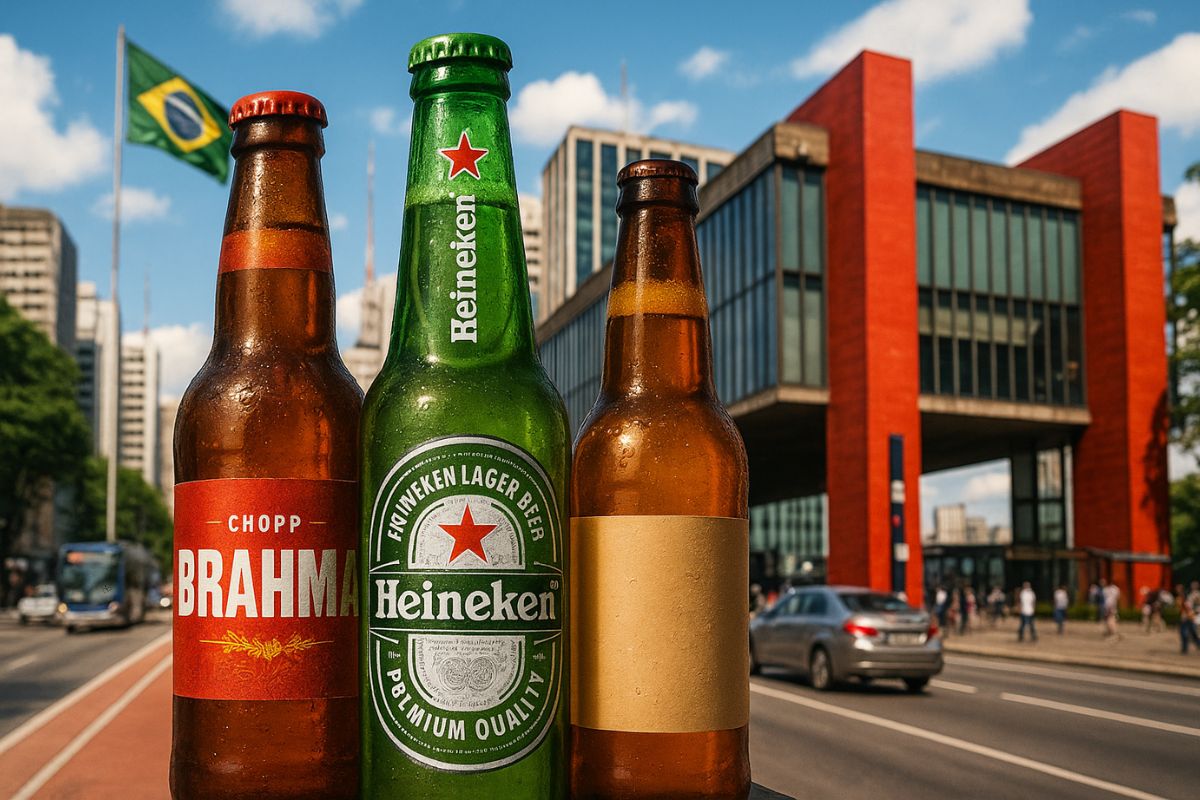


What Is Happening With The Beer Market In Brazil: Intense Competition, Changing Habits, And New Strategies Reshaping The Sector In The Country
The beer market in Brazil is undergoing a profound transformation, marked by new consumption habits, greater brand diversity, and increasingly fierce competition among industry giants. What was once dominated by a few popular labels is now divided among craft options, premium versions, and non-alcoholic beers.
According to Invest News, this shift is the result of more demanding consumers who no longer purchase on “autopilot” and choose beverages according to the occasion. This change has been altering the balance of power between the leaders and demanding constant innovation to keep the glass full — with or without alcohol.
From Absolute Domination To Consumption Fragmentation
Until the early 2000s, brands like Skol, Brahma, and Antarctica from Ambev reigned with a significant advantage, reaching over 70% market share. The strategy was clear: low prices, national distribution, and advertising campaigns that became part of popular culture.
-
Brazilian city bets on the business environment to generate jobs and attract investments in the energy sector — secretary reveals strategy at Macaé Energy 2026.

-
50 viaducts, 4 tunnels, 28 bridges, and 40 kilometers of bike paths: BR-262 in Espírito Santo will receive 8.6 billion reais for the largest engineering project in the state’s history, inspired by the Immigrant Highway in São Paulo.

-
Brazil produces too much clean energy and doesn’t know what to do with it: over 20% of solar and wind capacity was wasted in 2025 while investors flee and 509 renewable generation projects were abandoned in the last year.

-
Piauí will produce a new fuel that replaces diesel without needing to change anything in the truck’s engine and reduces pollutant gas emissions by half: truck drivers from all over the Northeast are already celebrating the news that will arrive later this decade.


In recent years, however, two movements have changed the landscape. On one side, the growth of craft beers in large cities has created a loyal audience. On the other, the aggressive expansion of Heineken has increased its share to about 25% of the market, with a strong presence in bars, brand activations, and association with a more sophisticated lifestyle.
The Bet On Premiumization And Innovation
The phenomenon of “premiumization” has turned beer from just a beverage into part of specific experiences. Consumers have begun to alternate between a regular Pilsner, a craft IPA, or a zero-alcohol beer in the same week — a practice known as zebra striping.
To face the new competition, Ambev has intensified innovation. It launched labels like Estella Pure Gold (gluten-free and lower in calories) and Corona Sunbrew (alcohol-free and fortified with vitamin D). It also used data from the Zé Delivery app to test products regionally, as was the case with Spaten, which gained scale after surpassing internal competitors in market tests.
Brand Cutting And Focus On “Mega Brands”
In addition to innovation, there was a simplification of the portfolio. Ambev decided to focus efforts on its “mega brands” — Brahma, Spaten, Budweiser, and Corona — leaving behind historical labels that did not meet expected performance, such as Bohemia and Antarctica.
This strategy follows the so-called “hourglass economy,” where both low-cost options and premium experiences grow, while the mid-range segment loses space. Thus, a Brahma Duplo Malte can be seen as both accessible and special at the same time, while IPAs and craft beers occupy the niche of accessible luxury.
Health, Moderation, And The Future Of The Sector
Another factor shaping the beer market in Brazil is the concern with health and moderation in alcohol consumption. Young people drink less, and there is a growing demand for lower-calorie labels and non-alcoholic versions. Abroad, the trend is similar: in the U.S., Michelob Ultra — aimed at consumers seeking a healthy lifestyle — has increased its sales, while traditional brands have lost ground.
According to Euromonitor, the expectation is that the Brazilian market will grow only 1% per year until 2029, indicating that the challenge for manufacturers will not only be selling more but also capturing the right consumer for each consumption occasion.
And you, have you changed your way of consuming beer? Do you prefer popular, premium, or non-alcoholic brands? Share your opinion in the comments — your experience can show where the market is heading.









Eu parei de tomar cerveja da Ambev por causa da água. Ou seja a Skol litrinho de 300ml. Uma hora vinha de Santa Catarina (água saloba) outra hora vinha de ponta grossa gosto horrível.sendo que a melhor e de agudos.
Podem fazer o que quiserem com os menos inexperientes com sabor, vamos dizer assim.
Agora só tomo amstel ou Petra.
Pra mim as cervejas tradicionais há tempos perderam espaço. Apos o conhecimento de novos sabores e marcas de cerveja levou a experimentar cada vez vez. Hoje em dia as sem álcool ocupam parte do espaço entre uma e outra. As ipas mais amargas, sabores frutados entre outras alçaram seu espaço. Novidades são sempre bem vindas.
Sou um apreciador de cerveja mas não dá para tomar Antártica, Brahma e similares, as quais não acrescentam nada; só filtram…