





 English
  Francês
  Alemão
  Italiano
  Japonês
  Norueguês
  Portuguese
  Spanish
  3 min of reading
  0 comments


Job Market Heats Up, Sets Record for Employment, and Boosts Brazilians’ Income with Significant Increase in Formal Employment
The unemployment rate in Brazil fell to 5.6% in the quarter ending in July 2025, marking the lowest level in the historical series that began in 2012, according to the Continuous National Household Sample Survey (PNAD Contínua), released by IBGE on August 27, 2025. Furthermore, this figure exceeded Bloomberg’s forecast, which projected a decrease to 5.7%. For comparison, in the previous quarter, between February and April, the rate had been 6.6%.
Record Occupation Driven by Formal Employment
The job market demonstrated strength by reaching 102.4 million people employed, the largest number ever recorded in the country. Additionally, of this total, 39.1 million are employed formally, consolidating a historic record.
Similarly, the number of self-employed workers also hit a record, reaching 25.9 million. This figure represents a 1.9% increase in the quarter, with an addition of 492,000 people.
-
Unemployment rises again to 5.8% at the beginning of 2026, raising alarms about the end of temporary positions and its impact on the Brazilian job market.

-
Document organization can cut invisible costs in small businesses, a simple step that prevents waste, rework, and losses in daily operations.

-
Chinese giant worth nearly R$ 4 billion that manufactures cables for electric cars, solar energy, and robotics wants to open a factory in SC.

-
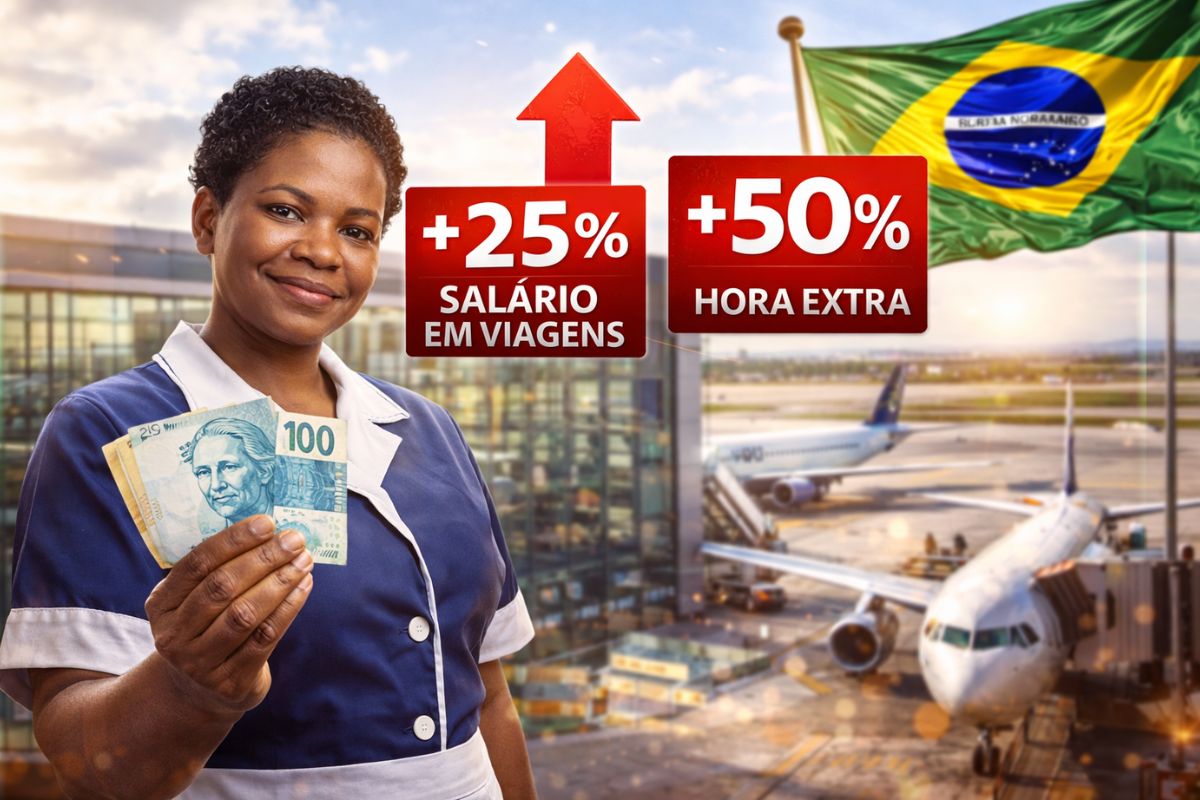
Many employers do not know, but the law guarantees domestic workers a 25% increase in salary during trips, 50% for overtime, 20% for night shifts, and 17 additional benefits that can lead to labor lawsuits if not paid.

As a result, the number of unemployed individuals fell to 6.1 million, the lowest level since the end of 2013. IBGE considers someone unemployed if they are not engaged in work while actively seeking employment during the reference week.
According to IBGE analyst, William Kratochwill, the data confirms that “the job market is experiencing a positive moment, with growth in employment and a reduction in the underutilization of the workforce”.
Income Grows Along with Job Creation
The hiring movement was accompanied by income growth. Thus, the average monthly income rose to R$ 3,484, representing an increase of 1.3% compared to the previous quarter and 3.8% compared to July 2024.
Consequently, the real usual earnings totaled R$ 352.3 billion, marking the highest volume recorded by IBGE in the entire series.
Despondency Drops at an Accelerated Pace
The total of discouraged workers fell to 2.7 million, a decrease of 11% in the quarter, equivalent to 332,000 fewer people, and a 15% drop compared to the previous year, that is, 475,000 less.
Thus, for Kratochwill, “the numbers show that Brazilians who left unemployment are indeed entering the job market, rather than giving up”, reinforcing the view of a more dynamic market.
Sectors That Drove Growth
The increase in employment was spread across strategic sectors of the economy. In this sense, the main highlights were:
- Public Administration, Defense, Social Security, Education, Health, and Social Services: up 2.8%, equivalent to 522,000 more people.
- Agriculture, Livestock, Forestry Production, Fishing, and Aquaculture: up 2.7%, with 206,000 more workers.
- Information, Communication, Financial, Real Estate, Professional, and Administrative Activities: up 2%, with 260,000 new jobs.
However, the population outside the labor force remained stable at 65.6 million, both compared to the previous quarter and in the annual comparison.
Informality Loses Ground
The informality rate fell to 37.8%, down from 38% in the previous quarter and 38.7% in July 2024. Nevertheless, the number of workers without formal contracts remained at 38.8 million, with slight growth in both comparisons.
However, for IBGE, the increase was statistically insignificant, as the growth of formal employment continues to prevail, driving the decline of informality.
Portrait of the Brazilian Job Market
Therefore, the data released by IBGE in August 2025 consolidates a clear picture:
- Unemployment fell to 5.6%, the lowest rate since 2012.
- The employed population reached a record with 102.4 million workers.
- Formal employment reached 39.1 million people with formal contracts.
- The average income rose to R$ 3,484, reflecting job openings.
- Discouragement fell to 2.7 million, a significant decrease in one year.
- The sectors of social services, agriculture, and financial activities were the main drivers of employment.
- Informality declined and remained below 38%.
Thus, the results confirm that the Brazilian job market has entered a strengthening phase, recording historical highs in both job creation and worker income.
In conclusion, the scenario reinforces that the national economy relies on a more active, formalized labor market capable of supporting domestic consumption.
And you, do you believe that this pace of unemployment reduction will continue in the coming months, or that the market could lose momentum with global slowdown?









Seja o primeiro a reagir!