





 Portuguese
  English
  Spanish
  5 min of reading
  8 comments


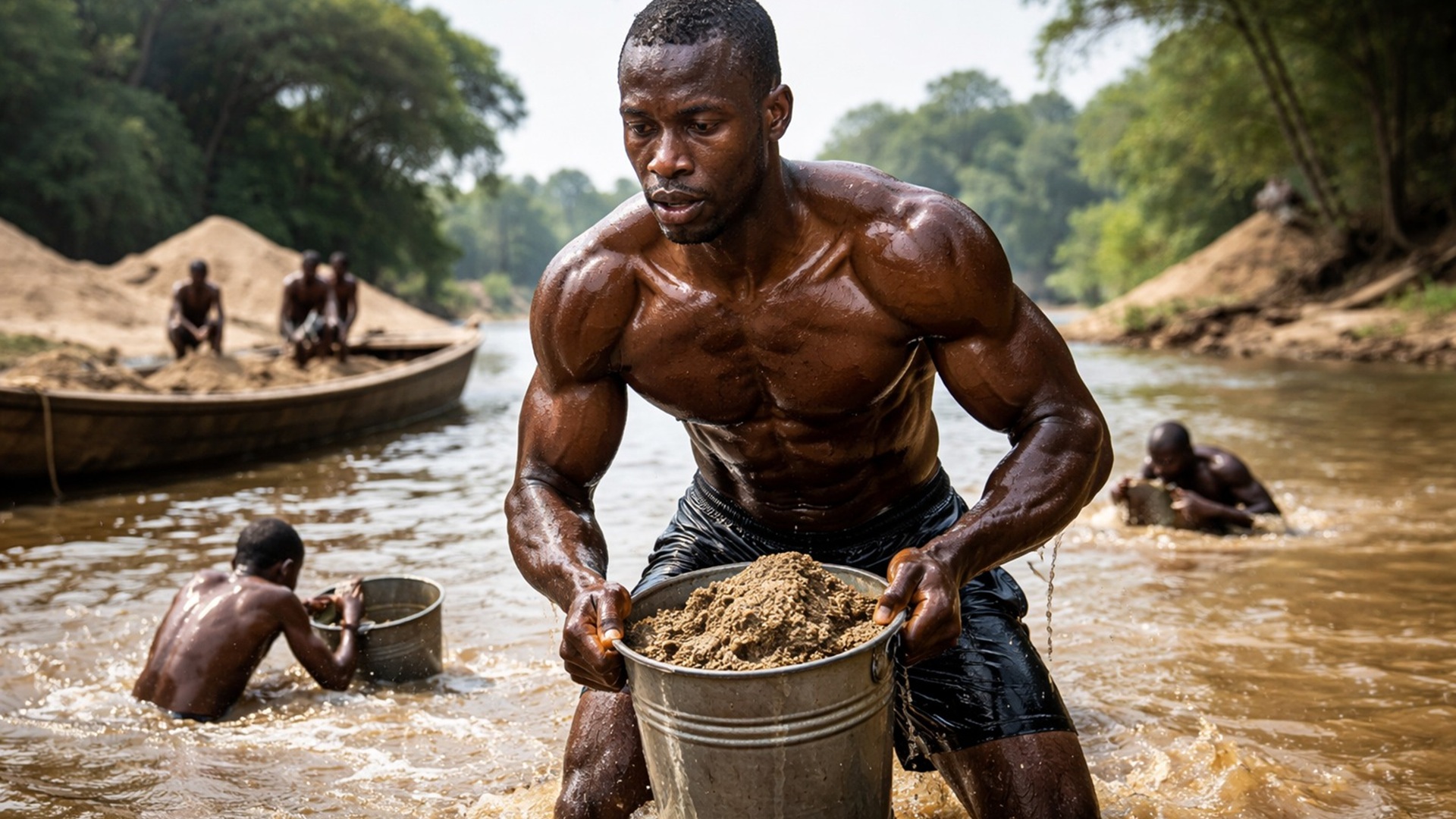


The Extreme Routine Of Divers Who Dive Up To 300 Times A Day In Dangerous Rivers To Extract Sand Essential To Concrete Reveals Physical Risks, Low Pay, Local Economic Dependency And The Impacts Of A Global Demand That Grows Faster Than Natural Replenishment
Sand, the most extracted material in the world, supports global concrete, with 50 billion tons annually, drives construction and exports, and pressures rivers in Cameroon, China, Cambodia, and India.
Sand is present in almost everything around us, from plastics to cosmetics and household appliances. Even toothpaste can contain up to 20%. Still, its main destination is the construction industry.
According to data from the United Nations, China accounts for almost 60% of global cement production.
-
Petrobras buys back fields for billions — what no one is talking about regarding this decision and how it could impact jobs and oil in Brazil.

-
Grande SP gains unprecedented technology to control water flow with installation in just 8 hours and a promise to reduce leaks without the need for human intervention.
-
With the new law, shopping malls will no longer operate on Sundays, similar to supermarkets; the rule imposes closure by 9 PM, foresees a fine of R$ 15,000, suspension, and even revocation of the license in Salvador.

-
Only 7 ships have crossed the Strait of Hormuz in the last 24 hours when the normal is 135 per day, and the United Arab Emirates confirms that 230 oil tankers loaded with oil are ready to depart but are prevented from leaving while Iran turns the waterway into a sovereign control post.


After the construction of the Three Gorges Dam, Poyang Lake, once a natural sanctuary, became a dry area exploited for the annual extraction of 236 million cubic meters of sand, while the United States extracts about 16 million per year.
Globally, the consumption of sand is already double the natural carrying capacity of rivers, being obtained through river dredging, beach mining and, to a lesser extent, from the seabed.
Artisanal Mining In The Rivers Of Cameroon

A report from Business Insider showed that in Cameroon, miners dive up to 300 times a day in riverbeds, removing buckets of 15 kg. The worker Yona Elvis works almost without clothing, relying on courage and says he is the only one in the family fit for the job.
Elvis’s house, in the southwest of the country, is built with the same sand he extracts daily. He lives with his family and a pet monkey just minutes away from the quarry.
The work requires partnership and constant vigilance. Elvis meets with Niombe, his diving partner, for mutual support in emergencies, reinforcing physical strength, courage, and perseverance as daily requirements.
The Wouri River, one of the largest in the country, stretches nearly 16 km. Known as the shrimp river, it has seen a decline in local fishing associated with the continuous extraction of sand.
Diving

Elvis dives in murky water, wearing only a short and a steel bucket. He claims to work like a blind man, relying on memorization of the bottom, a routine repeated daily.
After 12 years, Elvis masters his breath, holding more than a minute submerged. During the work, the pace is quickened to enter and exit the water swiftly.
The shift lasts about four hours. At the end, Elvis and his partner remove water from the canoe and collect nine tons of wet sand, equivalent to the weight of two African elephants.
The activity is unregulated. Residents report frequent deaths, with no official records. Elvis almost drowned while rescuing a colleague when the boat capsized and the other grabbed him.
The canoe owner sells the sand to local contractors and pays about 12 a day to each worker. This is more than fishing, but only ensures three meals a day.
Global Demand, Market And Properties Of The Material
Sixty percent of the sand used in worldwide concrete comes from riverbeds. Global demand has tripled in the last two decades, exceeding natural replenishment, according to experts.
River sand derives from rocks that have disintegrated over millions of years. Coarse, sharper grains retain moisture and serve as the ideal binder in construction.
In 2022, the global market for construction sand was valued at around 23 billion dollars. Projections indicate growth to 46.5 billion dollars by February 2031.
The United States leads global production. China is the largest consumer and also produces domestically, with large-scale operations monitored by satellite imagery.

China, Cambodia And The Hydrological Effects
In China, Poyang Lake, in the province of Jiangxi, is the largest sand mine on the planet. Excavation has more than doubled the surface area between 1997 and 2019.
The lake is a crucial outlet for floods to the Yangtze River and its tributaries. Excessive exploitation reduces water levels in winter, threatening dolphins and migratory birds.
In the Mekong River, in Cambodia, barges remove more sand than natural replenishment. In 2021, large-scale dredging caused bank collapses on two occasions.
Dams upstream have reduced sediment in the lower Mekong. Experts associate mining with coastal erosion, altering flows and the balance between floods and dry periods.
Local fishermen report lower fish catches and risks to family livelihoods. Sand trucks are driving a real estate boom in the Cambodian capital, filling in lakes since 2003.
Data from the UN indicates exports of 27 million dollars in sand over the last decade to Singapore, Thailand, and China, increasing local and regional pressures.
India, Manufactured Alternatives And The Future Of Work
Global urbanization drives demand. In India, 25 to 30 people migrate per minute to cities; by 2030, the urban population could reach 600 million.
Indian miners extract sand from the Beki River using basic equipment. The practice pollutes the water, destroys riverbeds and fish populations, but can yield up to 15 per load.
The gain reaches four times the average daily wage, encouraging illegal and dangerous work. For some, mining sand is akin to finding gold, despite the risks.
In response, companies are manufacturing sand by crushing rocks and demolition waste. The particles are filtered and washed to remove clay harmful to concrete.
Experts claim that manufactured sand can be better for construction. Producing it close to job sites reduces transportation costs, although it may pollute soil and water.
In Cameroon, human extraction continues. Elvis says that if technology replaced the worker, many would be left without income options, reinforcing local economic dependency.
After an exhausting day, he relaxes with colleagues and highlights the human environment of work. His favorite moment is arriving home and reuniting with his family safely.
The source of information for this article is: Insider Português









A reportagem é básica e vazia de informações. Não vincula o texto com a chamada e contém erros nas informações.
É uma pena que cada vez mais a qualidade dos textos na internet seja ruim, depreciando assim as fontes e produzindo uma sociedade cada vez mais “chula”.
Nunca imaginei pensar que teria saudade da imprensa escrita em jornais, com jornalistas, escritores, revisores e redatores.
É uma pena que um canal de informação com tanta capilaridade seja usado com tamanha pequenez.
Não sou de criticar, mas esta reportagem está muito ruim.
A começar pelo título, na qual entende-se que 60% do concreto feito no mundo, usa areia proveniente da África!!!! Isto é mentira!!!!
Erros de português, dados incompletos, erros de concordância, dentre outros, chamaram a atenção pela baixa qualidade de edição.
Parece um texto feito por IA, na qual o autor não revisou antes de publicar.
Concordo!
Por que a areia dos desertos não serve para este fim? Seria uma fonte inesgotável.
Deve ser porque é grossa.
Nenhuma noção, reportagem fora do contexto demais. Totalmente.
Houve um problema de escrita na manchete, de fato. Mas no demais, achei muito interessante a notícia, sem notar grandes absurdos.
Pesquisem
Barqueiros de Jaguarão,uma cidade gaúcha ontem toda a cidade foi construída com extração de areia manualmente.
Cidade de Jaguarão RS.
Vídeo barqueiros de Jaguarão.