





 Portuguese
  English
  Spanish
  3 min of reading
  0 comments


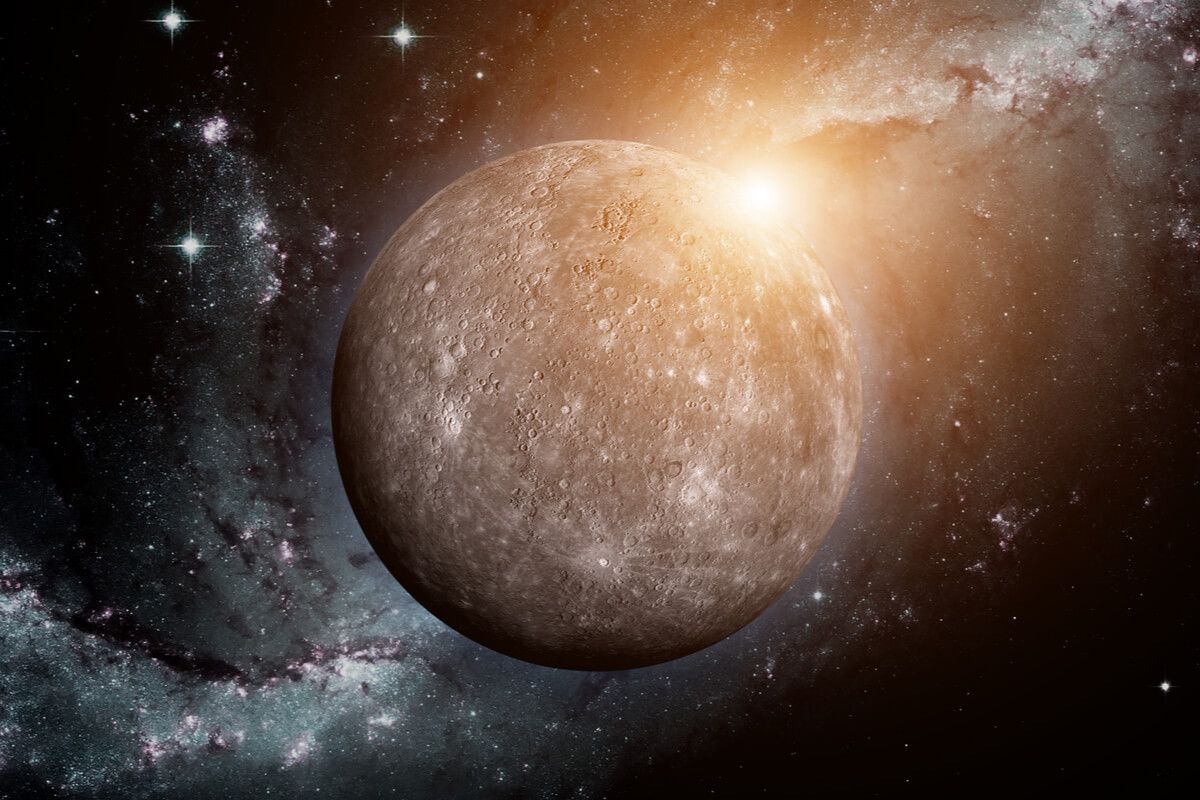
Scientists Find Meteorites in the Sahara That May Be Previously Unknown Fragments of Mercury, Revealing New Clues About the Planet.
Two rare meteorites, found in 2023 in the Sahara Desert, are stirring the global scientific community.
The fragments — named Northwest Africa 15915 (NWA 15915) and Ksar Ghilane 022 (KG 022) — are being analyzed by researchers from the Open University in the United Kingdom, who suspect that they may have come directly from Mercury, the planet closest to the Sun. The discovery was published in June in the scientific journal Icarus.
The exact identification of the meteorites’ origin has not yet been confirmed, but the study led by specialist Ben Rider-Stokes represents a significant advancement.
-
The bizarre train that uses Cold War jet fighter engines to blast air at over 1,000 km/h, melting ice walls and freeing frozen tracks in minutes where ordinary machines would take hours.

-
Japan is transforming dirty diapers from babies and the elderly into an ambitious and surprising project that could forever change the way the world deals with one of the most difficult types of waste to dispose of.

-
Goodbye to waste: a Brazilian created a revolutionary brick that uses construction debris, has already entered the markets of the United Kingdom and the USA, and promises to shake up the global construction industry.
-
China has created a mass-produced hypersonic missile that costs the same as a Tesla, and this is changing everything in modern warfare because the United States cannot defend itself without spending millions.


Based on detailed chemical and mineralogical analyses, the hypothesis that these rocks formed on Mercury has gained traction. Confirmation, however, depends on new samples or future space missions.
Meteorites in the Sahara: Findings That Could Change History
The meteorites were found in different regions of the Sahara, an area already known for hosting significant space discoveries.
But what truly surprised scientists was the chemical composition of the samples, which features iron-poor olivine and pyroxene — minerals already identified on Mercury by NASA’s MESSENGER probe.
Furthermore, analyses conducted using electron microscopy revealed an almost complete absence of iron, consistent with the characteristics of Mercury’s crust. These signs raise the possibility that the meteorites are, in fact, the first known pieces of Mercury to reach Earth.
Why Is Mercury So Difficult to Study?
Mercury is the rocky planet closest to the Sun and, therefore, poses a huge challenge for space exploration. To date, only two uncrewed missions have managed to study it: Mariner 10 (1973) and MESSENGER (2004).
The third mission, BepiColombo, is scheduled to enter orbit around the planet only in 2026.
With an extremely hot surface and high gravity, Mercury does not make it easy for fragments to be launched into space during collisions with asteroids — unlike the Moon and Mars, which already have over 1,100 identified meteorites on Earth.
This makes the discovery of a Mercury fragment something unprecedented and highly valued by science.
Does the Chemistry of the Meteorites Match Mercury?
What excited Ben Rider-Stokes’s team the most was the “practically perfect” chemistry of the rocks in relation to the information obtained by MESSENGER.
Still, there are points that raise doubts. One of them is the age of the meteorites, estimated to be 500 million years older than Mercury’s own crust.
According to the researchers, this apparent contradiction may stem from inaccurate estimates. Rider-Stokes is cautious: “Until we return material from Mercury or visit its surface, it will be very difficult to confidently prove or disprove a Mercurian origin for these samples.”
Previous Attempts to Link Meteorites to Mercury
This is not the first time scientists have suggested a Mercurian origin for a meteorite. In 2012, a fragment named NWA 7325 also drew attention, but later analyses revealed chromium levels incompatible with Mercury.
More recently, a class of meteorites known as aubrites was also investigated, but their divergent chemical composition excluded them from being linked to Mercury.
The difference now lies in the mineralogical coherence presented by fragments NWA 15915 and KG 022. The hope is that, with the arrival of the BepiColombo mission, it will be possible to directly compare samples collected with the meteorites found in the Sahara.
If confirmed, this discovery could represent a turning point in astrobiology and planetary geology.
With so few data about Mercury available, every new indication is valuable for expanding the understanding of the past of the Solar System and the formation of rocky planets.







-

Uma pessoa reagiu a isso.