





 Portuguese
  English
  Spanish
  2 min of reading
  0 comments


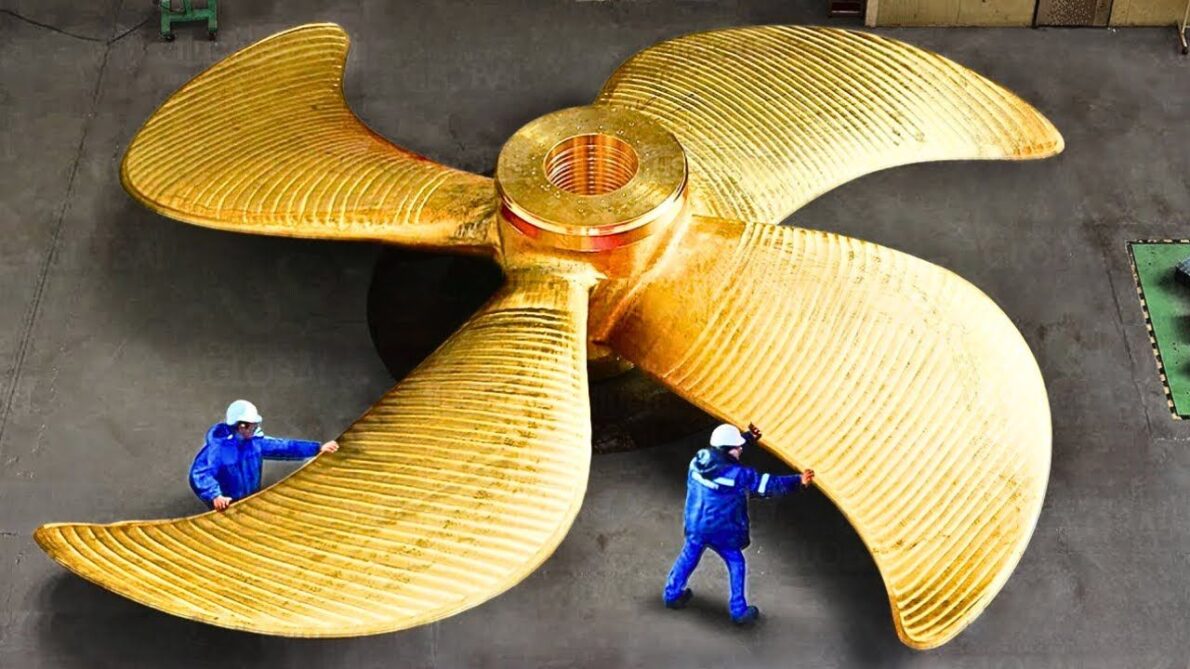
The Manufacturing of Ship Propellers Over 20 Meters Is a Complex Process That Involves Everything from Hydrodynamic Testing of Scale Models to the Casting of Advanced Metallic Alloys. The Meticulous Production Process Includes Detailed Design, Rigorously Testing in a Towing Tank, High-Temperature Casting, and Careful Manual Finishing, Ensuring That Each Propeller Not Only Meets Stringent Technical Requirements but Also Enhances Efficiency and Economy of the Maritime Giants.
The first step in manufacturing a marine propeller is creating a scale model. This model is tested in a towing tank to analyze the flow of water and collect crucial data for the final design of the propeller.
With the data in hand, specialists design the propeller, defining its dimensions, weight, and number of blades. A smaller model is then created and tested again to ensure its effectiveness. Once approved, the design is transformed into a mold made of cement and quartz sand, which is essential for the next step.
The Heart of the Process for Making a Ship Propeller Is the Casting
Metals such as copper, aluminum, nickel, and iron are melted at high temperatures to form a bronze alloy. Before being poured into the mold, the metal is tested to ensure it is free from impurities that could compromise the quality of the propeller.
-
Historic bankruptcy of Centauro shocks the market, and the century-old company puts more than 500,000 products, machines, and complete infrastructure up for online auction.

-
New shoe factory in Ceará is expected to create 400 jobs and strengthen the local economy.

-
No one imagined it, but a mixture of sawdust with a mineral that fights fires surprises scientists with a result that changes the course of fire-resistant construction.

-
From empty land to a high-end house, wooden construction uses a lightweight system, metal structure for the foundation, ventilated ceramic cladding, and special windows to create an efficient and comfortable living space throughout the year.

After casting, the mold is left to cool for two weeks. The extraction of the propeller follows, which is carefully removed to avoid damaging the mold. It then undergoes a grinding process to refine its profile and is polished manually. This step is crucial to ensure the quality of the propeller’s surface and to add the finishing touch that identifies the company’s products.
Importance and Complexity of Ship Propeller Manufacturing
The final step is technical inspection, where specialized tools are used to ensure that the propeller meets the necessary technical specifications. Only after passing this rigorous inspection is the propeller ready to be shipped to the shipyard that ordered it.
Ship propellers are not only monuments of modern engineering but also vital components that directly impact fuel economy and efficiency of ships worldwide. Over the years, the evolution of materials and manufacturing techniques has allowed these propellers to become increasingly efficient and reliable.
This fascinating journey from conception to the final product highlights the importance and complexity of ship propeller manufacturing, a component that, despite being below the waterline, is crucial for the viability and efficiency of the giants of the seas.








Seja o primeiro a reagir!