





 Portuguese
  English
  Spanish
  3 min of reading
  0 comments


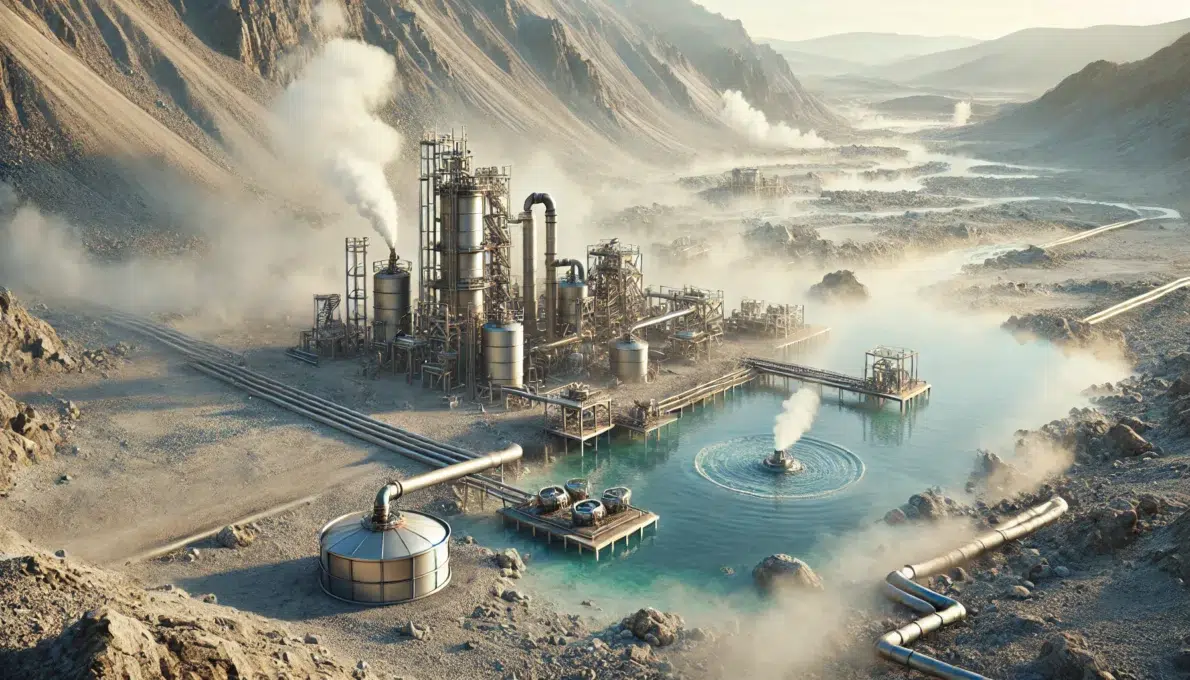
High-Purity Lithium for Batteries Is Extracted from Geothermal Water. New Sustainable Technique Promises to Revolutionize Battery Production with Lower Environmental Impact
The new process could provide an alternative to the more conventional “dirty” lithium extraction methods. EnBW announced that LevertonHELM and EnBW extracted battery-grade lithium from geothermal water. Using patented techniques, the German-British team produced lithium carbonate with a purity of >99.5%.
The energy group EnBW is entering the field of lithium extraction from thermal water. Following initial successes in a demonstration project at the Bruchsal geothermal power plant, the company is expanding its existing cooperation with chemical company Helm. The goal is to boost the production of battery-grade lithium carbonate and lithium hydroxide, the partners announced.
“The water we extract from the Bruchsal geothermal plant has a remarkably high lithium content. This opens the possibility of extracting lithium as a valuable regional byproduct using environmentally friendly methods.” – Laura Herrmann, project manager at EnBW.
ARTICLE CONTINUES BELOWSee also
Archaeologists find an intact tomb over 2,500 years old, with more than 100 preserved objects, weapons, jewelry, and human remains never touched.
Volcanic lava transforms into threads as fine as human hair that travel over 30 kilometers by wind and fall like cutting rain on roofs and backyards in Hawaii and Iceland.

NASA issues a warning for the feared Godzilla El Niño that could change the planet’s climate in 2026 with extreme warming of the Pacific capable of causing devastating droughts in some regions and historic floods in others simultaneously.

Archaeologists discover a 100-meter ship graveyard in a submerged Greek city, and what has appeared on the seabed of Libya could change what was known about this ancient port.

EnBW Wants to Extract Lithium from Thermal Water
Promising Deposits in the Upper Rhine Valley
Lithium is a raw material for batteries and energy storage systems and has primarily been extracted from salt flats in Australia and South America. The growing global demand has recently prompted several players to explore lithium extraction possibilities at the domestic level.

The deposits in the Upper Rhine Valley, where Bruchsal is also located, are considered promising. In Landau (Rhineland-Palatinate), approximately fifty kilometers west of Bruchsal, Vulcan Energy began extracting lithium from geothermal brine in April.
High-Purity Lithium Salt
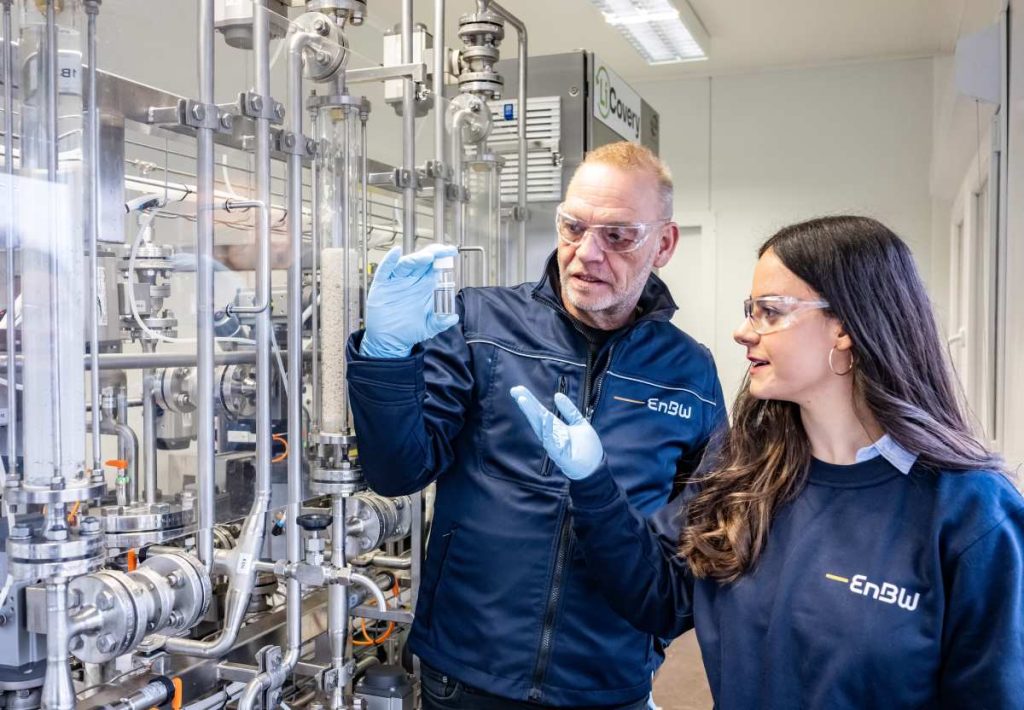
In the pilot project in Bruchsal, EnBW and Levertonhelm, a subsidiary of Helm AG, extracted a lithium chloride solution from the thermal water of the local geothermal plant. Levertonhelm specialists refined this solution into lithium carbonate at their facilities in Basingstoke (UK) – with a purity level exceeding 99.5%.
Due to its high quality, lithium salt can be used directly in the production of cathode materials for batteries, the partners emphasized. “Together with Levertonhelm, we want to harness this resource and create a sustainable source of lithium to meet the growing demand in Germany and Europe,” announced Thomas Kölbel, research and development specialist at EnBW.
Lithium Situation in Brazil: Perspectives and Challenges
Lithium, known as the “white gold” due to its strategic importance in battery production, is gaining prominence in Brazil’s economic and industrial landscape. With the growing global demand for electric vehicles and electronic devices, the lithium market is becoming increasingly attractive, leading Brazil to explore its reserves and potential.
Reserves and Production Potential
Brazil has significant lithium reserves, mainly concentrated in the state of Minas Gerais, in the Jequitinhonha Valley region. National and international companies are investing in exploration and production projects, aiming to transform the country into one of the leading suppliers of high-quality lithium. Brazilian lithium mines have the potential to supply the raw material needed for battery manufacturing, which is fundamental for the energy transition and electric mobility.
Challenges and Opportunities
Despite the potential, lithium exploration in Brazil faces significant challenges. Limited infrastructure, environmental issues, and the need for technological development are barriers that need to be overcome. However, the Brazilian government has shown interest in promoting the lithium industry, with public policies geared towards sustainability and technological innovation.
Moreover, international cooperation could be key to success. Partnerships with foreign companies may bring investments, advanced technologies, and sustainable practices to the sector. The integration of the production chain, from mining to battery production, is essential for Brazil to fully leverage its lithium reserves.
Future Perspectives
With strategic planning and adequate investments, Brazil has the potential to become an important player in the global lithium market. Sustainability and technological innovation will be crucial to ensure that lithium extraction contributes to the country’s economic development while preserving the environment and promoting social inclusion.


Via www.enbw.com





-

Uma pessoa reagiu a isso.