





 Portuguese
  English
  Spanish
  6 min of reading
  0 comments


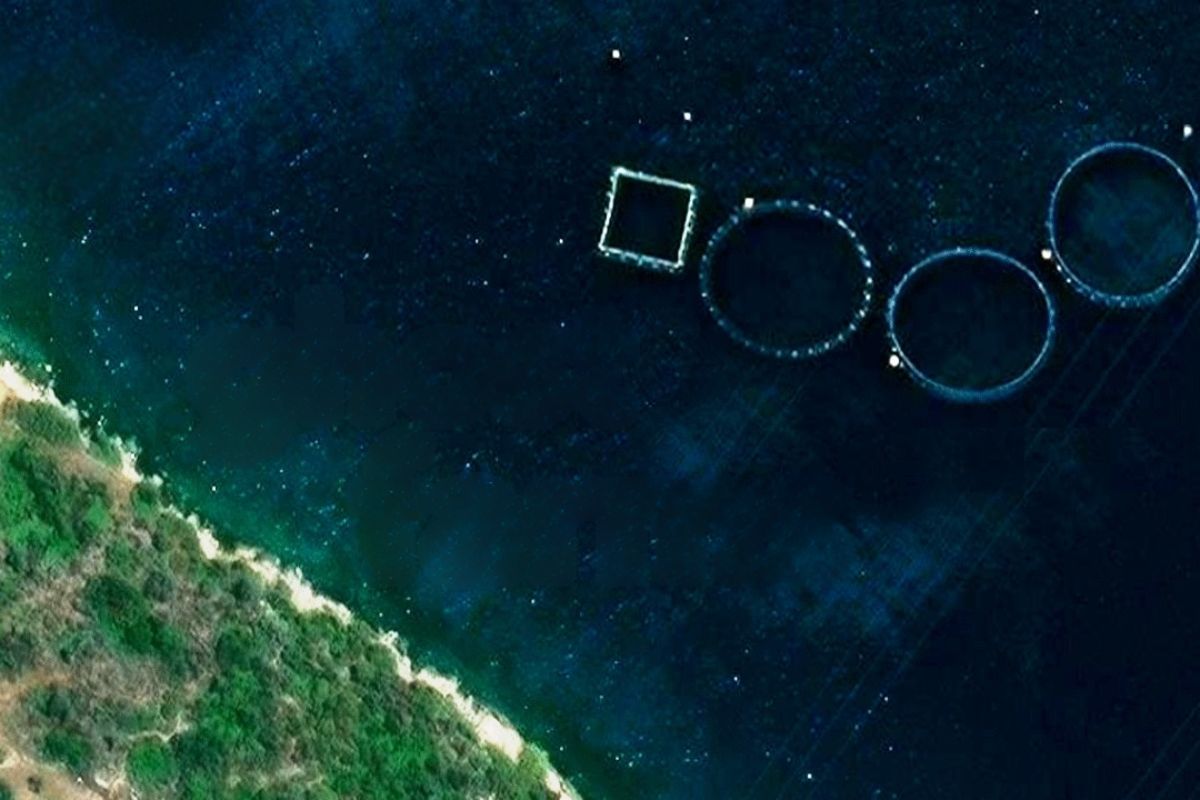
In Methana, Divers Disassemble Ghost Farms Created in 1993 and Abandoned After 2011; Rings at 40 Meters, Nets, Buoys, and Styrofoam Turn into Plastic Spread Over 5 Km. Fines Exist, but Enforcement Fails and Cleanup is Expensive. The Risk Generates Microplastics and Pressures Aquaculture to Change.
In Methana, a small town a few hours’ drive from Athens, I saw the giant rings that seem harmless on the surface. Below them, however, the ghost farms have been rotting for years, releasing plastic along the coast and offshore and creating invisible traps for marine life.
In the field survey, Veronika Mikos’s team describes the scene as tragic upon first glance. The installation has existed since 1993, produced sea bass and bream, and was abandoned when the company began having licensing issues from 2011. Since then, the ghost farms have become ownerless infrastructure, difficult to remove and easy to deny.
What is Disintegrating Below the Waterline

Viewed from above, the ghost farms may seem discreet, but they are large structures.
-
While the world looks at oil, the war with Iran is already disrupting helium supply from Qatar, affecting car and iPhone chips, threatening AI expansion, and putting pressure on aluminum packaging at the highest value in four years.

-
Global warming will expose a treasure hidden under the ice of Antarctica and may spark an international dispute over gold and valuable minerals.

-
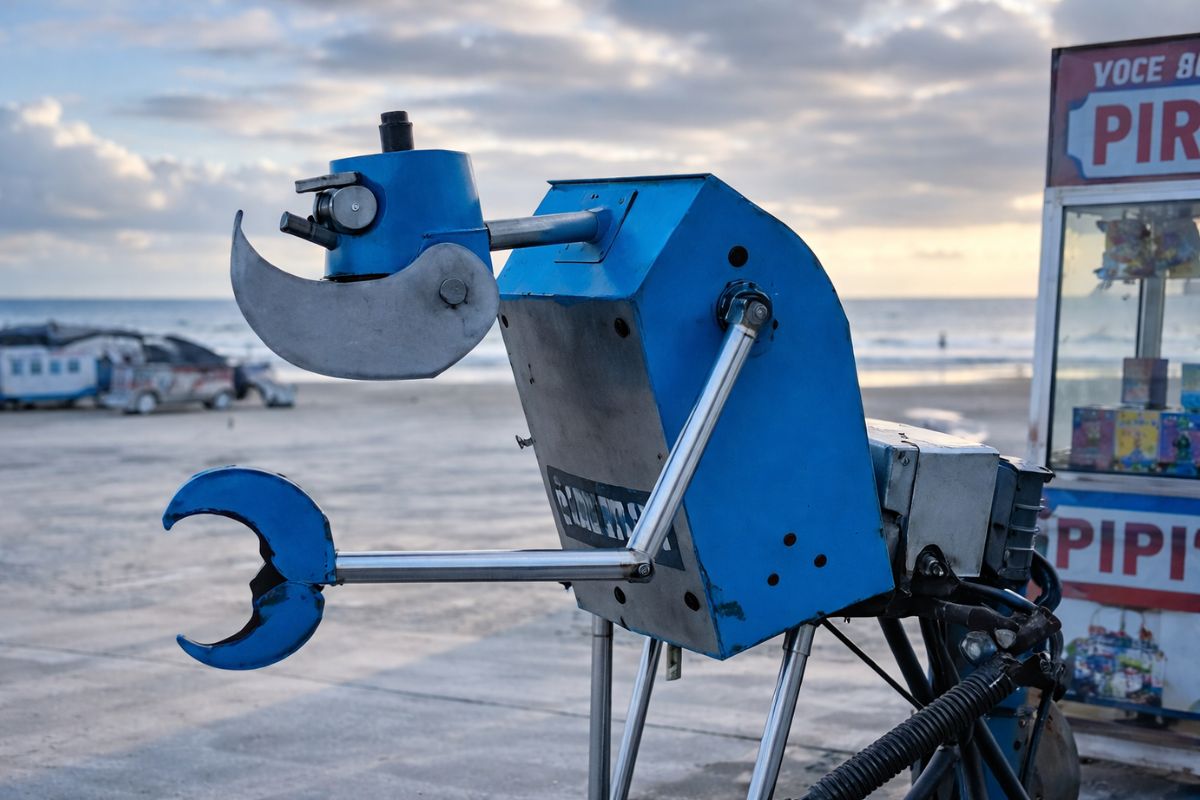
A street vendor from Praia Grande built a robot made of scrap from scooters and washing machines that pulls his popcorn cart on the beach, emits sounds, and interacts with customers, becoming an attraction on the coast of São Paulo.
-
The specifications of the Xiaomi 18 Pro Max have been leaked, and the highlight is a dual 200 MP camera with a new 22-nanometer technology that promises to consume less energy and capture details in shadows and bright areas using LOFIC HDR.


Some parts reach 40 meters deep.
As the structure is largely made of plastic, abandonment accelerates mechanical and environmental failures.
The nets begin to tangle and entrap wild fish, which die and attract other animals, repeating the cycle.
Over time, the round cages collapse or break apart.
The buoys crack and release the styrofoam that fills them, spreading particles that, to fish, resemble food.
This pathway of styrofoam into the organism is an open door to microplastics in the ecosystem.
Five Kilometers of Coast and a Styrofoam Trail

Tassos Philippides, who runs a Greek NGO and uses satellite images to locate ghost farms, showed me the kind of waste that appears repeatedly.
According to Tassos, part of the material consists of animal feed bags, fragmented along the coast.
He also collected a component identified as a connecting rod, used in the cages to connect tubes at the base of the ring.
“No one will ever collect them”, he summarized, explaining why these items remain in the environment for years and turn into microplastics that float, travel, and accumulate.
Satellite Mapping and the Size of the Problem

Tassos stated he has identified over 130 possible abandoned sites in the analyzed areas and has confirmed, so far, that at least 22 are ghost farms.
In several cases, the original owners are known, which shifts the debate from “no one knows who owns it” to “why is no one holding them accountable.”
The reach of the problem is not exclusive to Greece.
Reports indicate that the same type of abandonment has occurred in Chile and Canada, and there are suspicions that there are ghost farms yet to be identified.
The Law Exists, but Enforcement Fails at Sea
Under Greek law, companies that illegally abandon fish farms can be fined and face sanctions. To reduce the risk of abandonment, companies are required to make an upfront payment that is only refunded at the end of operations if cleanup is proven.
The original owners were instructed to remove the structure in 2022.
Two years later, they were fined 6,000 euros for not having cleaned up yet.
It is unclear whether this fine was paid.
Even when the state retains the initial payment, local assessments indicate that the lost value may be much lower than the actual cost to repair the damages of plastic, styrofoam, and microplastics.
Cleanup Starts with Diving and Ends with the Typhoon
Veronika was straightforward when I asked what can be done now: start the cleanup.
Divers go in first and deal with an unpredictable environment.
By the time the nets start to be pulled, visibility hits zero.
The submerged equipment is often buried under a layer of dirt and interwoven with marine life, including fish and mollusks, forming a labyrinth.
The team gathers the nets into a pile, disconnects the lines that hold the cages in place from the seabed, and attaches balloons to bring everything to the surface in stages.
In the final phase, the giant rings are slowly pulled into the Typhoon ship, which specializes in marine waste removal. In minutes, what has been abandoned for years is dismantled and discarded.
In total, it took five days of work to remove the 18 sections of this installation, reducing the direct source of plastic and styrofoam in the area.
Permission, Threat of Lawsuit, and a Year to Start
When questioned about government support, the response came with irony: the green light exists, but practical support is minimal.
“Basically, they don’t block us,” Veronika said, explaining that the biggest obstacle is obtaining a formal task from the government.
In the observed case, it took over a year to get authorization because without it, the team could be accused of stealing a working installation.
The risk is not theoretical. A year prior, representatives of Healthy Seas and Ozon were sued by the owner of another abandoned installation in Nafpaktos.
He claimed there was half a million euros in damage to equipment. The groups state that they received permission from the local government and had evidence of abandonment for over 10 years.
The legal process is ongoing, and this type of dispute raises the cost and time to remove ghost farms.
Healthy Seas relies on funding from Hyundai and other sponsors to finance operations that often cost hundreds of thousands of dollars.
Expansion of Aquaculture and the Shadow of Ghost Farms
Aquaculture in Greece is described as a growing industry, and the issue of ghost farms is still treated as relatively small.
Nevertheless, there are plans for expansion.
One NGO opposed to industrial aquaculture states that the government intends to expand, on average, 24 times the available aquatic areas for aquaculture, based on contracts and legislation they analyzed.
Chile as a Warning and the Cost of Cheap Plastic
Chile serves as an example of how expansion can come with debris.
Chilean aquaculture grew rapidly in the 1990s and, in 2007, briefly became the largest producer of marine aquaculture in the West.
Since then, the country has seen a huge increase in floating marine debris linked to aquaculture, notably styrofoam, and the industry continues to grow.
But the country has begun to recognize risks.
Styrofoam buoys have been banned, requiring larger air-filled alternatives.
Alternative materials, such as wood or even mushrooms, have also been suggested to reduce dependence on cheap plastic and, consequently, on microplastics in the sea.
The Legacy That Remains After Removal
The ghost farm that was monitored in Methana has left the physical map, but its legacy remains. Microplastics and debris already spread by fish and ocean currents travel far and can last for centuries, long beyond any licensing cycle.
“It’s the matter we breathe,” along with the reminder that we ingest this in water and food.
If you live in a coastal area, a concrete step is to document points with abandoned structures, contact local authorities, and monitor whether there is an order for removal and effective fines.
The sooner ghost farms are identified, the less stock of plastic and styrofoam will turn into microplastics in the ecosystem.
Have you found ghost farms, styrofoam, or plastic from aqua-culture near where you live?








-

-

-

-

4 pessoas reagiram a isso.