





 Portuguese
  English
  Spanish
  4 min of reading
  0 comments



Thousands of Kilometers of Oil Pipelines and Gas Pipelines Transport the Energy That Drives Brazil, but This Essential Infrastructure Operates Mostly Quietly and Underground, Hiding Dangers That Most of the Population Is Unaware Of.
Below the surface of Brazilian cities and in the seabed, a vast and complex network of oil pipelines and gas pipelines operates continuously. Daily, millions of cubic meters of oil, natural gas, and their derivatives flow through these pipelines, essential for Brazil’s economy and energy supply. However, these nation’s “hidden veins” remain largely invisible to the majority of the population.
This invisibility, although often a choice for safety and optimization, can mask significant risks and management challenges. See the reality of oil pipelines and gas pipelines in Brazil, exploring their vital importance, the associated dangers of their operation, and the necessary measures to ensure everyone’s safety.
How Oil Pipelines and Gas Pipelines Work and the Impressive Dimension of the Brazilian Network
Pipelines are long-distance transportation tubes. Oil pipelines transport oil and liquid derivatives, while gas pipelines carry natural gas. Mainly built from carbon steel with anti-corrosive coatings, they operate with pumping stations (oil pipelines) or compression stations (gas pipelines) to push the fluids.
-
Offshore industrial demand in Macaé skyrockets with the recovery of oil and gas and could grow by up to 396% by 2026 in the Campos Basin.
-
Offshore industrial demand in Macaé surges with the recovery of oil and gas and could grow by up to 396% by 2026 in the Campos Basin.
-
Brazilian giant expands borders in the Southeast: Petrobras confirms new oil discovery in ultra-deep waters in the pre-salt of the Campos Basin.

-
Alert in the global energy market: Severe tropical cyclone hits the coast and disrupts gas production at major plants in Australia, threatening global supply.


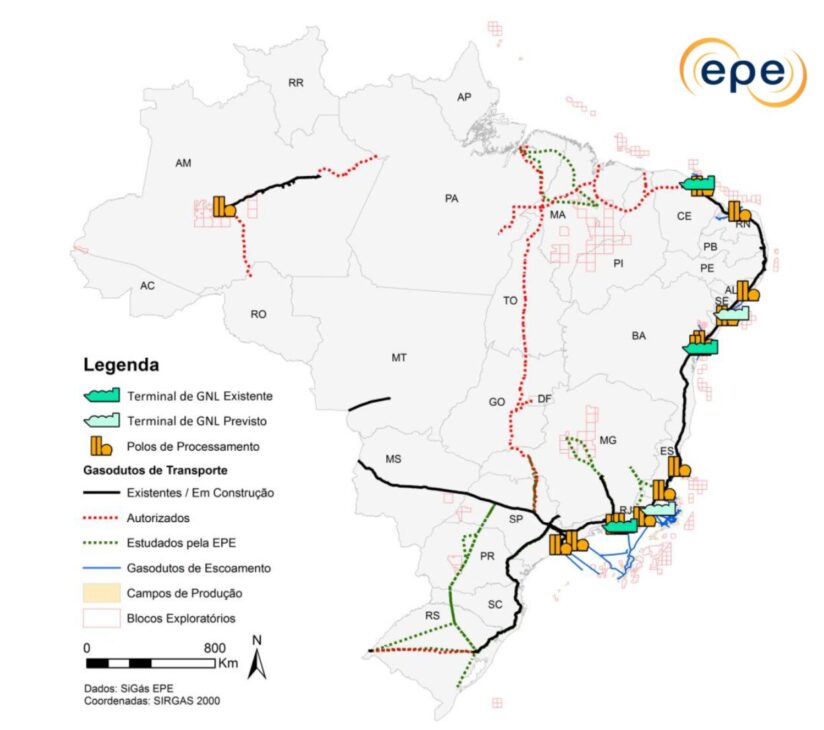
The Brazilian network is extensive: there are over 20,200 km of oil pipelines and gas pipelines, connecting offshore production platforms, refineries, terminals, and large consumers. Companies like Transpetro (a subsidiary of Petrobras), Nova Transportadora do Sudeste (NTS), Transportadora Associada de Gás (TAG), and Transportadora Brasileira Gasoduto Bolívia Brasil2 (TBG) are the main operators of this critical infrastructure.
The Environmental and Social Risks Inherent to Oil Pipelines and Gas Pipelines
Despite being essential, oil pipelines and gas pipelines carry risks. Leaks can cause severe soil and water contamination, affecting ecosystems and sources of drinking water, as occurred in historical incidents at Billings Reservoir and Serra do Mar. In urban areas, proximity to the population raises the risk of explosions and fires, especially with natural gas or LPG, as in the tragic accident in Vila Socó (Cubatão, 1984) that resulted in 38 deaths.
Common causes of accidents include corrosion of pipelines, operational failures, damage by third-party actions (such as machinery on construction sites), and, a growing issue, vandalism and fuel theft through clandestine taps.
The Safety Monitoring Systems and Regulation of Oil Pipelines and Gas Pipelines in Brazil
To ensure safety, operators use technologies such as PIGs (Pipeline Inspection Gauges) – “smart pigs” that inspect the interior of the pipelines – and Leak Detection Systems (LDS), as well as remote monitoring in control centers. Preventive and predictive maintenance programs are crucial, as is strict corrosion control.
The National Agency of Petroleum, Natural Gas, and Biofuels (ANP) is the main regulatory body, establishing technical standards (such as RTDT) and overseeing operational safety. Companies are also required to have Emergency Action Plans (EAP) for incident response.
Public Perception, the Necessary Transparency, and the Communication Challenges Regarding Oil Pipelines and Gas Pipelines
The “invisibility” of most oil pipelines and gas pipelines contributes to a low public perception of risks. The Access to Information Law and the New Gas Law seek to increase transparency in the sector, but the technical nature of the data can be a barrier for the average citizen.
Clear and proactive communication of risks by companies and the government is essential. The creation of a unified public information system that allows citizens to identify pipelines in their neighborhood, like the NPMS in the U.S., would be a significant step forward for awareness about oil pipelines and gas pipelines.
The Expansion of the Network, the Role in the Energy Transition, and the Safety of Oil Pipelines and Gas Pipelines


There are expansion plans for the oil pipeline and gas pipeline network in Brazil to meet demand and integrate new sources, such as gas from Vaca Muerta in Argentina and domestic biomethane. This infrastructure can also be vital in the energy transition, transporting CO₂ for Carbon Capture and Storage (CCS) projects and, in the future, hydrogen.
However, this requires strategic planning to avoid stranded assets in a low-carbon future. It is recommended to strengthen oversight, invest in technology and maintenance, and engage in transparent dialogue with society to ensure that oil pipelines and gas pipelines serve the country safely and sustainably.









Seja o primeiro a reagir!