





 Portuguese
  English
  Spanish
  5 min of reading
  0 comments


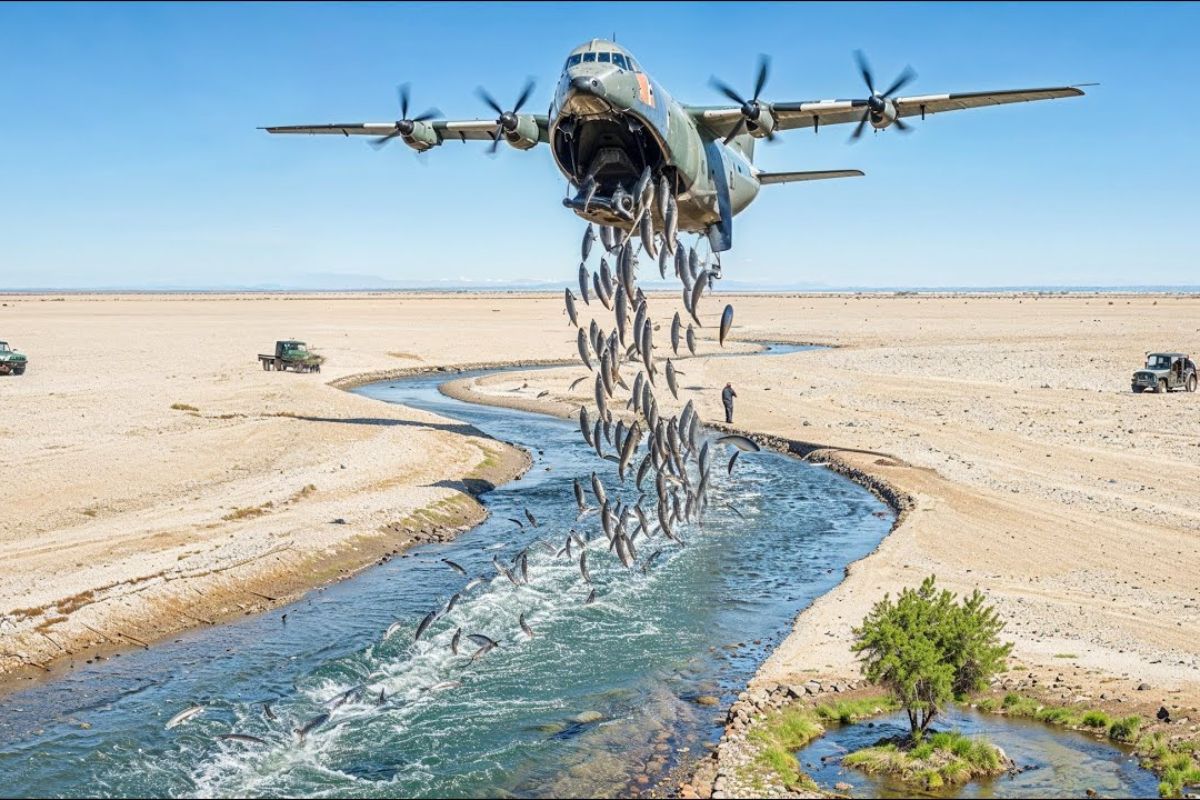
Thousands Of Salmon Were Reintroduced In The Upper Elwha On The Pacific Coast After The Dams Of 1910 And 1927 Blocked The River For Decades. With Complete Removal In 2011 And The Release Of 8,000 Juveniles In 2012, Returns In 2014 And 2015 Quickly Changed Fauna And Sediments There
In 2003, the Elwha River in Washington State was already treated as an ecologically collapsed watercourse after decades of blockage imposed by two dams built in 1910 and 1927. In this context, thousands of salmon lost access to about 113 km of the upper stretch, interrupting spawning, nutrients, and the associated food chain.
The change began in 2011 when the U.S. government initiated the complete removal of the two dams, described as the largest operation of its kind ever undertaken. In 2012, a field study accelerated restoration by releasing 8,000 juvenile Chinook in the upper Elwha; the first adults returned in 2014 and, in 2015, the return of thousands became a result that began to challenge traditional manuals.
Before The Dams: A Pacific River With More Than 400,000 Salmon Per Year

The survey describes the Elwha, before the dams, as one of the most productive rivers on the West Coast, with more than 400,000 salmon running every year.
-
Dozens of Chinese research ships are discreetly mapping the ocean floor in three oceans – and naval analysts see a military pattern.

-
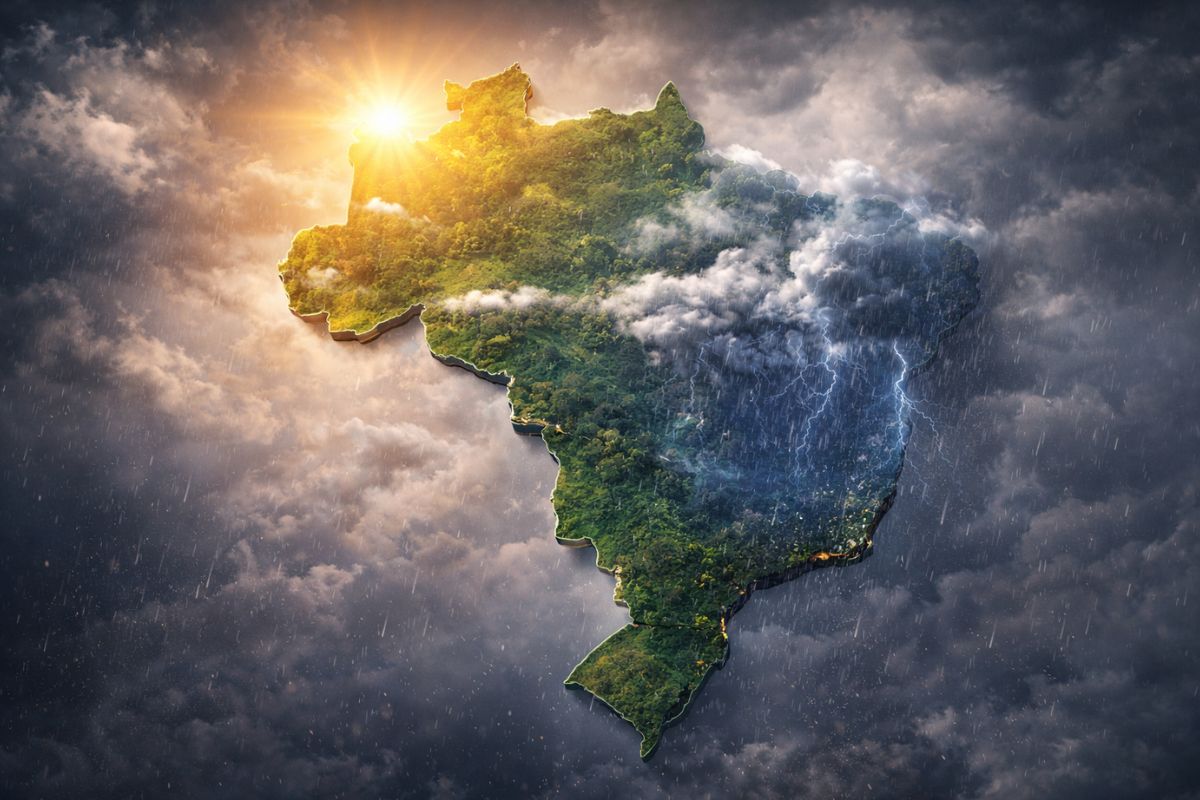
The winter of 2026 in Brazil will not be what you expect: meteorologists warn that the season will be warm and rainy at the same time due to the advance of El Niño, which is already warming the Pacific and changing the climate of the entire country.
-
For the first time, humanoid robots will compete in a full half-marathon without any human assistance in Beijing, with over 100 teams from China registering machines that need to complete the course with autonomous navigation on two legs.

-
Submarine cables installed to transmit the internet now also help scientists detect earthquakes.


Five Pacific species are mentioned, including Chinook, coho, sockeye, pink, and chum, with a highlight on Chinooks that reached over 100 lb.
The record also points to the cultural dimension of this flow: Indigenous peoples called these large Chinooks “Thai,” meaning “chief.”
When thousands of salmon stopped running, the loss was not only biological but also historical because the annual cycle was part of the social and environmental functioning of the valley.
1910 And 1927: The Blockade That Dropped Spawning And Dried Nutrients For Nearly A Century

With the dams of 1910 and 1927, migration became constricted and salmon runs collapsed.
The study indicates that in the 1990s, fewer than 3,000 fish returned each year and, even then, they did not surpass the first blockage.
The most critical impact was systemic: without thousands of salmon spawning in the upper reach, the river lost nutrient replenishment, and the ecosystem lost food in a cascading manner.
The prolonged absence reorganized the riparian corridor, impoverishing the base that sustains insects, birds, and mammals.
2011: Why The Complete Removal Of The Dams Changed The Restoration “Manual”

The 2011 decision was to remove the two dams, without fish ladders and without artificial bypass routes.
The study defines this as a milestone in scale and risk because the river had been without access to the upper stretch for about 90 years.
The dilemma was straightforward: even with the river released, how would thousands of salmon return to a territory that three generations had not known?
The classical hypothesis of chemical “imprinting” suggested rigidity, but the research also cites that Canadian scientists had already observed redundant navigation in salmon, including detection of the magnetic field and orientation by “solar compass,” with learning at stages.
2012: 8,000 Juveniles In The Upper Elwha And The Rate That Escaped The Patterns
In the spring of 2012, the experiment released 8,000 juvenile Chinook in the upper Elwha, using hatcheries supplied by stocks from Canada and the Pacific Northwest, chosen for genetic diversity.
The reported expectation was low, referencing 1% return, a level considered typical in restoration projects.
The result began to appear in 2014, when the first adults returned in the expected cycle.
The turning point came in 2015: more than 3,000 adults returned to the upper Elwha, associated with 37.5% return, a number compared to celebrated returns of 5% in hatcheries and 2% to 3% in wild populations.
At this point, thousands of salmon ceased to be just a goal and became the very evidence that reopened scientific discussions.
Marine Nutrients: How Thousands Of Salmon Pulled Birds And Mammals Back
The study explains the key mechanism: after spawning, Pacific salmon die and their bodies become “bombs” of nitrogen, phosphorus, and carbon brought from the ocean.
This “subsidy” feeds the terrestrial and aquatic ecosystem along the banks.
With thousands of salmon dying in the riparian corridor, the research reports rapid change in nitrogen signatures in vegetation in about three years, with isotopic analysis showing marine-origin nitrogen reappearing.
Subsequently, there was an increase in insects and a greater return of birds such as eagles, crows, and gulls, as well as mammals like black bears, otters, minks, and raccoons exploring the new food source.
The Riverbed Also Reacted: Spawning As “Engineering” And 40% More Complexity Until 2016
The study details that spawning is not just reproduction; it is physical work.
By digging nests, the “redds,” females displace gravel, open depressions, and reorganize sediments.
On a large scale, this effort functions as geomorphic engineering, capable of moving large volumes of material.
The research states that by 2016, the complexity of the channel increased by 40%, with the emergence of side channels and changes in gravel bars.
The described logic is of feedback: more complexity improves juvenile habitat, which increases returns, which intensifies complexity.
In this dynamic, thousands of salmon became agents of restoration, not just beneficiaries.
Evolution In Human Time And The Hard Side: 2017, Algae, Oxygen, And Conflicts
The study reports that returning fish began showing signs of rapid adaptation, with differences in markers and changes in the return calendar, spreading nutrient delivery over a longer season.
The central reading is of evolution in a few generations, on a scale observable by a research team.
But the accelerated recovery also brought friction.
In 2017, stretches with algal blooms and declines in dissolved oxygen were reported, associated with the abrupt pulse of nutrients.
There were complaints from fishermen about allocating salmon to restoration rivers and concerns from hatchery managers about mixing hatchery and wild fish.
Indigenous communities appear to be mostly favorable, but cautious, demanding ongoing commitment.
2024 And The Climate Limit: What Restoration Still Needs To Prove
The study points out that by 2024, populations were stable and growing, with salmon appearing in tributaries without records for over a century.
At the same time, the climate scenario is highlighted as a limit: the river receives fish in a world about 1.5°C warmer than the historical period mentioned, with ocean and heat waves affecting survival.
The main practical implication is that removing barriers and reintroducing thousands of salmon can generate rapid responses, but requires prolonged monitoring to separate structural recovery from side effects, and to assess resilience in an environment that continues to change.
If you follow river restoration, it is worth watching new dam removal projects and reintroduction studies because the results from Elwha are being used as a reference for decisions in other basins in the Pacific.
Do you think that releasing thousands of salmon after removing dams should become standard in Pacific rivers, or do the risks of algae, genetics, and conflict with fishing still weigh too heavily?







-

-

6 pessoas reagiram a isso.