





 Portuguese
  English
  Spanish
  5 min of reading
  12 comments


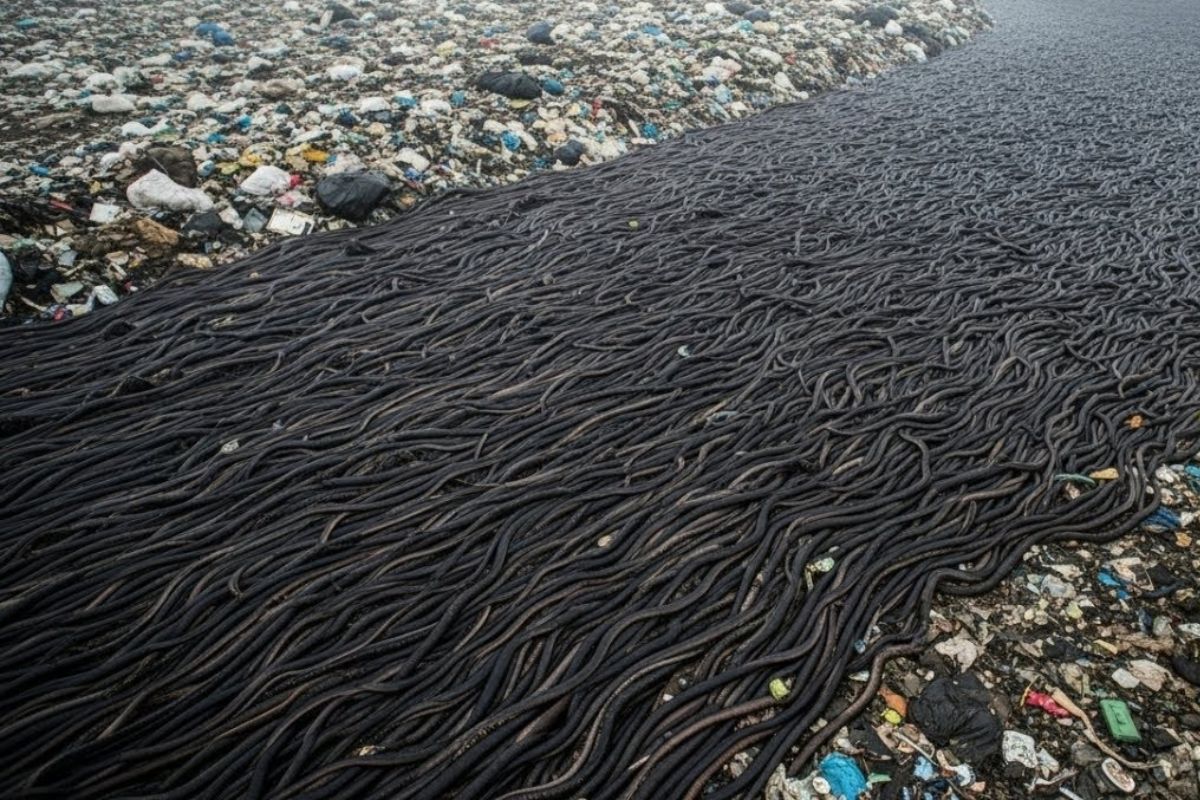


With 42 kg of food wasted per capita per year and 40% to 50% of waste being organic, Sydney accelerates its 2028 goal. Underground containers receive 10 to 15 million larvae, process waste on-site in 17 days, and have already treated 35,000 tons while reducing transportation costs.
In 2022, a week of heavy rains damaged the railway used to transport waste from Sydney, leaving over 20,000 tons of waste trapped within the city and forcing emergency spending to send the trash to other states. It is within this scenario that Australia accelerates its strategy to divert food waste from landfills by 2028, with larvae becoming the centerpiece of the plan.
In mid-2020, the first prototype of the robotic container from the startup mentioned at the outset emerged, designed to take larvae directly to the waste: the equipment can be installed in the basements of supermarkets, hotels, and shopping centers, housing 10 to 15 million larvae per unit. The operational promise is straightforward: treat waste on-site, without trucks, landfills, or incineration, and in 17 days transform the contents into protein, biological oil and fertilizer, with reported cases of 35,000 tons treated and reduced transportation costs.
Why Australia Is Racing Against 2028
The basis describes a national scale problem: Australia wastes an average of 42 kg of food per capita per year, and 40% to 50% of all the country’s waste is organic.
-
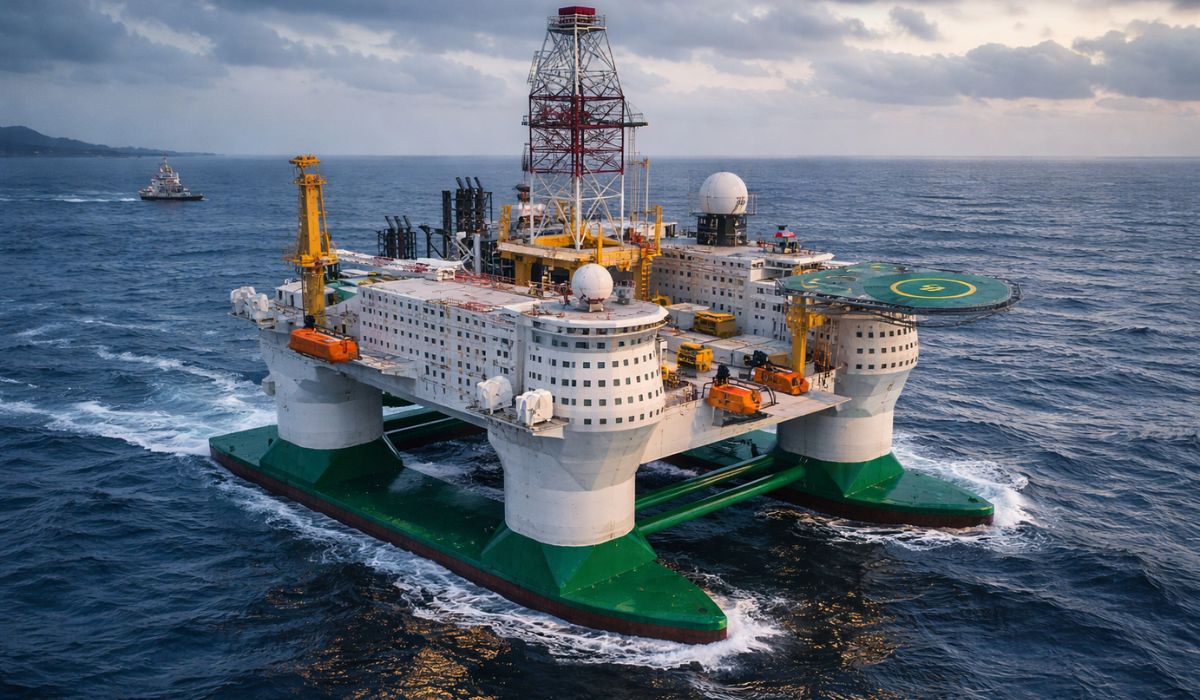
China has launched the world’s first floating artificial island, a scientific structure designed to face open seas, test equipment weighing hundreds of tons, and reach depths of 10,000 meters.
-
China accelerates global science and may surpass the United States in 2 years with increased public investment, continuous growth, and direct impact on the global technological competition.
-
Scientific studies indicate that drought may be strengthening a much greater silent threat: more resistant superbugs.
-
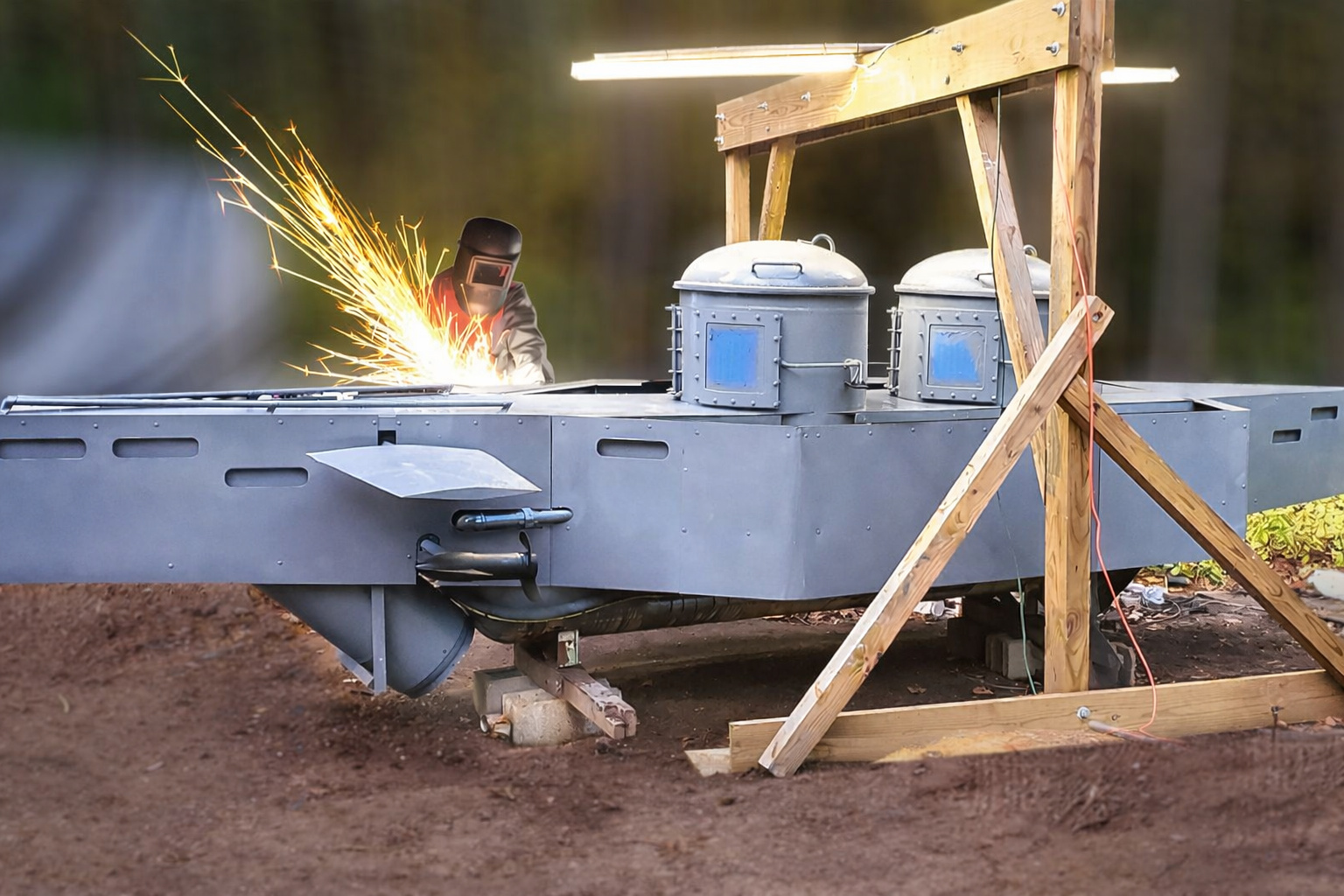
Man builds functional 5-meter submarine in his garage using gas cylinders, PVC pipes, and a refrigerator motor, and navigates with the vessel on a lake in Colombia.

Burial of this material seems to “make the problem disappear,” but in practice, it decomposes and releases methane, described as 28 to 34 times more potent than CO2.
The pressure is not just environmental; it is institutional. The text states that the United Nations warned of the risk of sanctions if emissions are not reduced, and that the UN has determined that, before 2030, Australia needs to reduce 50% to 70% of organic waste and completely ban its burial.
With this regulatory “siege,” the country begins to treat food waste as an urgency, not as routine.
The Approved Plan: Underground Containers Full of Larvae
The proposal described is one of structural change: millions of giant containers would be spread across the country, in places like supermarkets, hotels, and shopping centers, each housing 15 million larvae. The text states that the plan has been officially authorized by the Australian government.
In practice, the logic is simple and aggressive: place food waste processing “within the city,” underground where the waste is generated.
The basis describes that the containers can be installed in these locations and that the waste is treated immediately after being discarded, without generating methane.
How the Robotic Container Works Internally
The system is presented as highly automated: human work is limited to inserting the larvae, while robots separate the waste from the packaging, shred food scraps, and control temperature, humidity, and oxygen via sensors monitored 24 hours a day.
Each container houses 10 to 15 million larvae, functioning as a “living factory.”
The basis also points to results already reported: WWFs, described as the largest supermarket chain in Australia, announced that the technology helped treat 35,000 tons of waste and reduced transportation costs by 40%.
There is also mention of adoption by a hotel in Sydney and quiet operation in the underground of a shopping complex in Barangaroo.
The Biofactory in Numbers: From Egg to Risk of Collapse
The described cycle begins with adult flies: each female can lay up to 600 eggs, and in 48 to 72 hours hundreds of thousands of microscopic larvae hatch.
In the rearing phase, the larvae can gain 200% of their own weight per day and reach maximum size in 6 days, growing more than 5,000 times larger than when they were born.
This “explosive” growth has a cost: it generates a lot of heat.
The basis reports that in 2021, a farm in Queensland lost more than 2 tons of larvae when the temperature rose only 5°C for 20 minutes, illustrating how sensitive it is to control a biological mass at high density.
That is where the sensors and fine control come in: the basis cites continuous monitoring (temperature, humidity, oxygen, pH, and population density), as well as mechanisms to avoid “biological thermal asphyxiation.”
It also states that while in nature 99% of the larvae die, within the containers the survival rate exceeds 90%, precisely because “everything is controlled” continuously.
Why the Black Soldier Fly Was Chosen
The text asserts that the most important element is not the robots or artificial intelligence, but the species: the black soldier fly.
The basis claims that the adult fly is practically harmless, does not bite, and does not transmit diseases, living only to reproduce. It also states that it is recognized by the European Union and the FAO, among others, as a sustainable source of protein.
The technical argument reinforces the choice: the basis attributes lauric acid with antibacterial action to the larvae and claims that they inhibit harmful bacteria, making the ecosystem of the container safer.
In terms of efficiency, the text states that 1 kg of larvae can process up to 5 kg of organic waste, convert nutrients 20 to 30 times more efficiently than cattle, and emit 47 times less greenhouse gases than cattle.
Why Releasing Larvae in Landfills Fails in Practice
The basis anticipates the most obvious question and responds with three barriers. The first is climate: in summer, temperatures can reach 45°C, and in winter they can drop below 5°C, while larvae work well between 24°C and 30°C.
With small variations, they stop feeding; with larger variations, they die in open landfills.
The second is predation: landfills attract animals, and cited tests indicate that 80% to 95% of larvae can be eaten within hours.
The third is non-standardized waste: without shredding and control, plastic, metal, glass, batteries, and chemicals enter, and the larvae can become poisoned.
What Comes from Waste: Protein, Oil, and Fertilizer
The “final product” appears as an economic and environmental justification. The basis states that, in 17 days, everything inside the container turns into protein, biological oil, and fertilizer.
In another section, it states that within 12 days, waste that would be buried and release methane is transformed by the larvae into these same products, with efficiency 7 to 12 times greater than traditional composting.
The text also claims that treating one ton of waste with larvae reduces methane emissions equivalent to planting 40 trees, and that larvae protein costs almost half the price of fish meal, reducing 40% to 60% of feed costs.
The 2028 Goal and Redesigning Cities
The urban turnaround is explicit: by 2028, all food waste must disappear from landfills, with Sydney at the center of the transformation.
The basis states that the city created a “map of urban circularity,” tracking waste building by building, and started testing integrated zones where waste is treated within 500 meters of the generation point, reducing dependence on distant landfills.
The text also projects the impact of public policy: commercial buildings with more than 25 stories should have on-site waste treatment, and a cited report estimates that the change could reduce 8% to 12% of total greenhouse gas emissions in a decade in major cities.
If this is confirmed, larvae will cease to be a “repulsion” and become climate infrastructure.
Would you support having underground containers with larvae operating near your home to reduce waste and emissions by 2028?






Muito interessante, salutar e necessario para o mundo atual.
Aqui no Brasil deviam colocar os petistas dentro de containers pra comer ****
Tm 1 na cadei
Interessante, porém com esse volume de lixo basicamente orgânico, não seria mais inteligente usar esses mesmos containers como imensos biodigestores para captar esse grande volume de metano e gerar biogás a custos ínfimos? O único trabalho seria depois recolher o lodo resultante, que também pode ser utilizado como poderoso fertilizante e condicionador do solo. O metano gerado poderia ser utilizado pelo próprio comércio / hotel, etc…. Além disso, um biodigestor é barato de manter, não gerando custos adicionais. A economia com a geração do biogás seria imensa.