





 English
  Francês
  Alemão
  Italiano
  Japonês
  Norueguês
  Portuguese
  Spanish
  11 min of reading
  38 comments


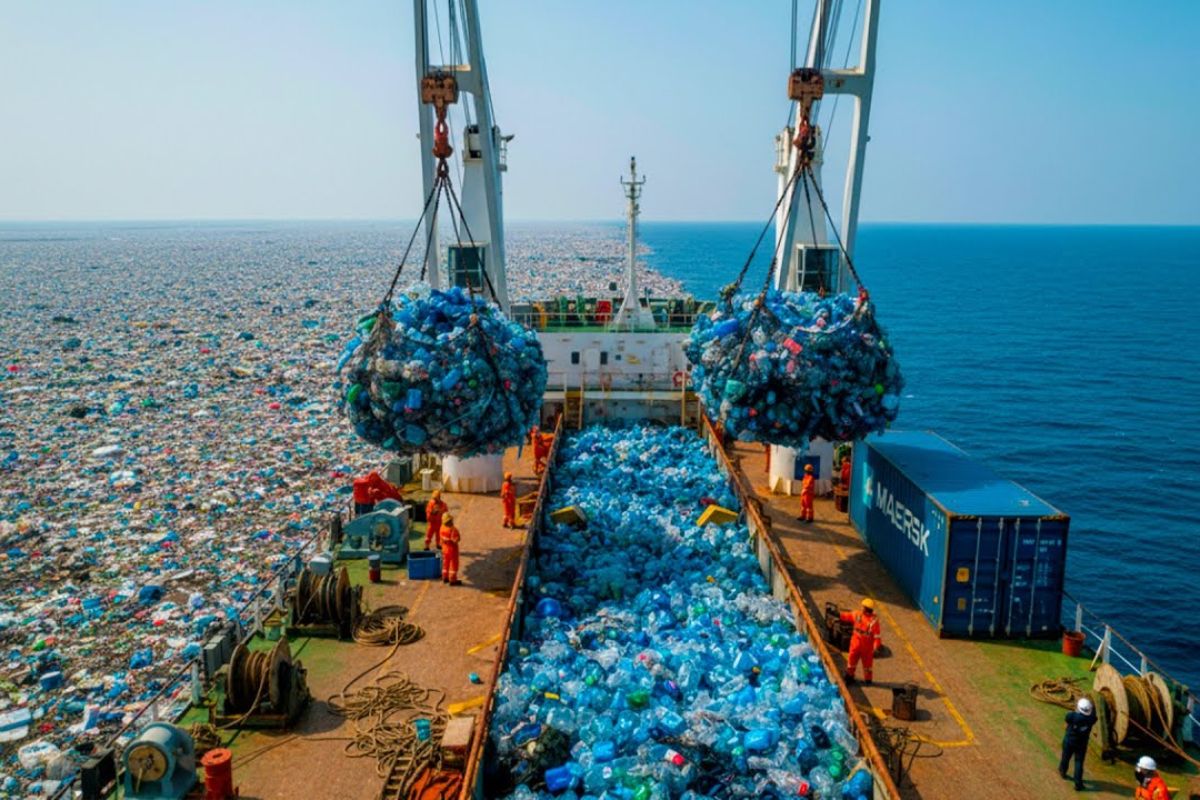


Millions of Tons of Plastic Waste Come from the Ocean to Land Every Year, in Missions That Collect 5 to 10 Tons Per Shift and Feed Plants That Wash, Separate, Grind, Extrude and Rebirth the Material into Pellets and Bottles.
Plastic waste has ceased to be merely a symbol of distant pollution and has begun to act as a force that invades entire production chains. It appears as floating fragments, accumulates in gyres, blocks rivers and channels, forms thick layers, becomes debris islands and, at the same time, infiltrates the food chain. The impact is not discreet: it affects more than 700 marine species and, in the end, reaches humans.
The response growing at the edges of the sea and in industrial ports is a race against time. Mega-operations collect, transport and process plastic waste on an increasing scale, trying to halt the advance of an environmental crisis while transforming marine waste into valuable raw material. It is a technological and physical pathway, with high energy consumption, that begins in the hostile ocean and ends at the almost microscopic precision of sensors that classify fragments at thousands per second.
From Water to Deck: The Collection of Plastic Waste in High Seas

The NGO The Ocean Cleanup is a Dutch non-profit organization that develops technologies to remove plastic from the oceans and intercept it in rivers.
-
Seen from space, a colossal ‘Y’ cuts through the largest desert in China, blending a jade-filled river, red and white mountains, and revealing the absurd scale of the transformation of the Taklamakan surrounded by a green wall with billions of trees.

-
The Pacific Ocean reveals what the cliffs of Big Sur have hidden for millennia: Pfeiffer Beach, in California, features swirling purple sand formed by garnet crystals and displays a stone arch that is illuminated by the sun in winter for just a few days each year.

-
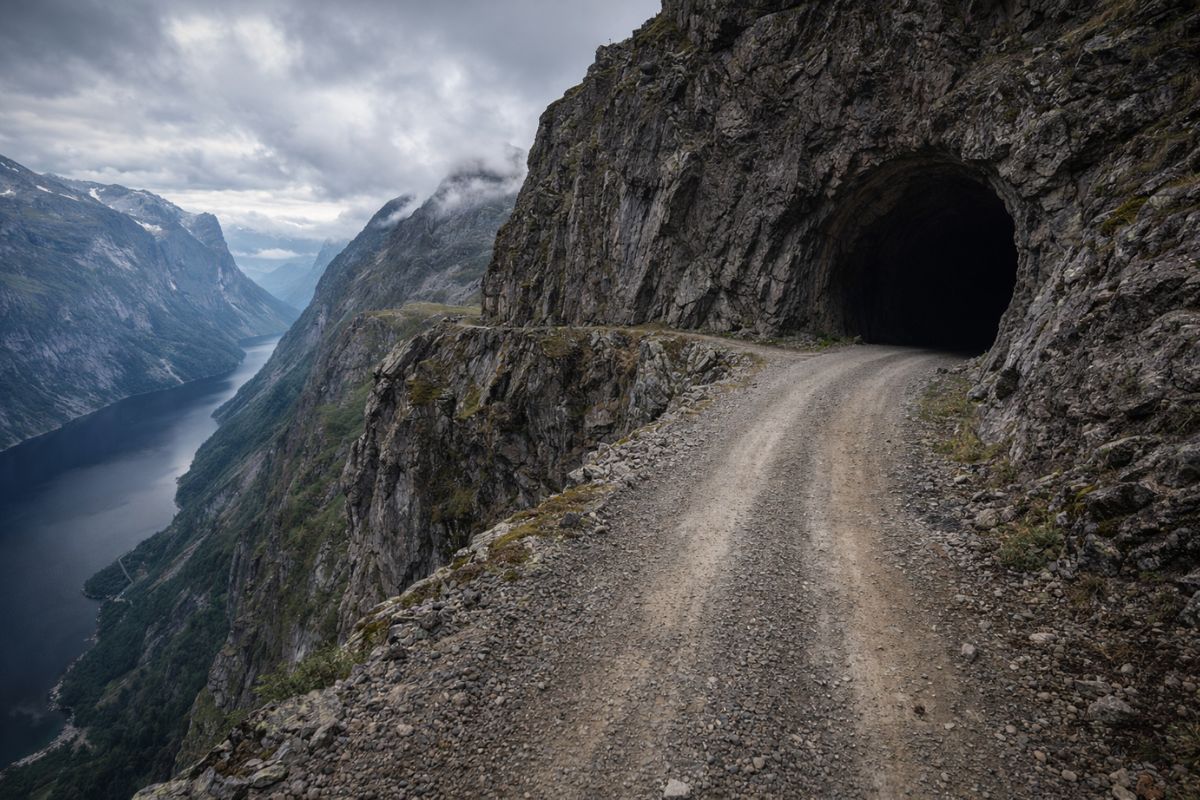
Aursjøvegen in Norway is a 100-kilometer gravel road that crosses chasms and dark tunnels carved into the rock at an altitude of 947 meters in the fjords and is only open for four months a year.
-
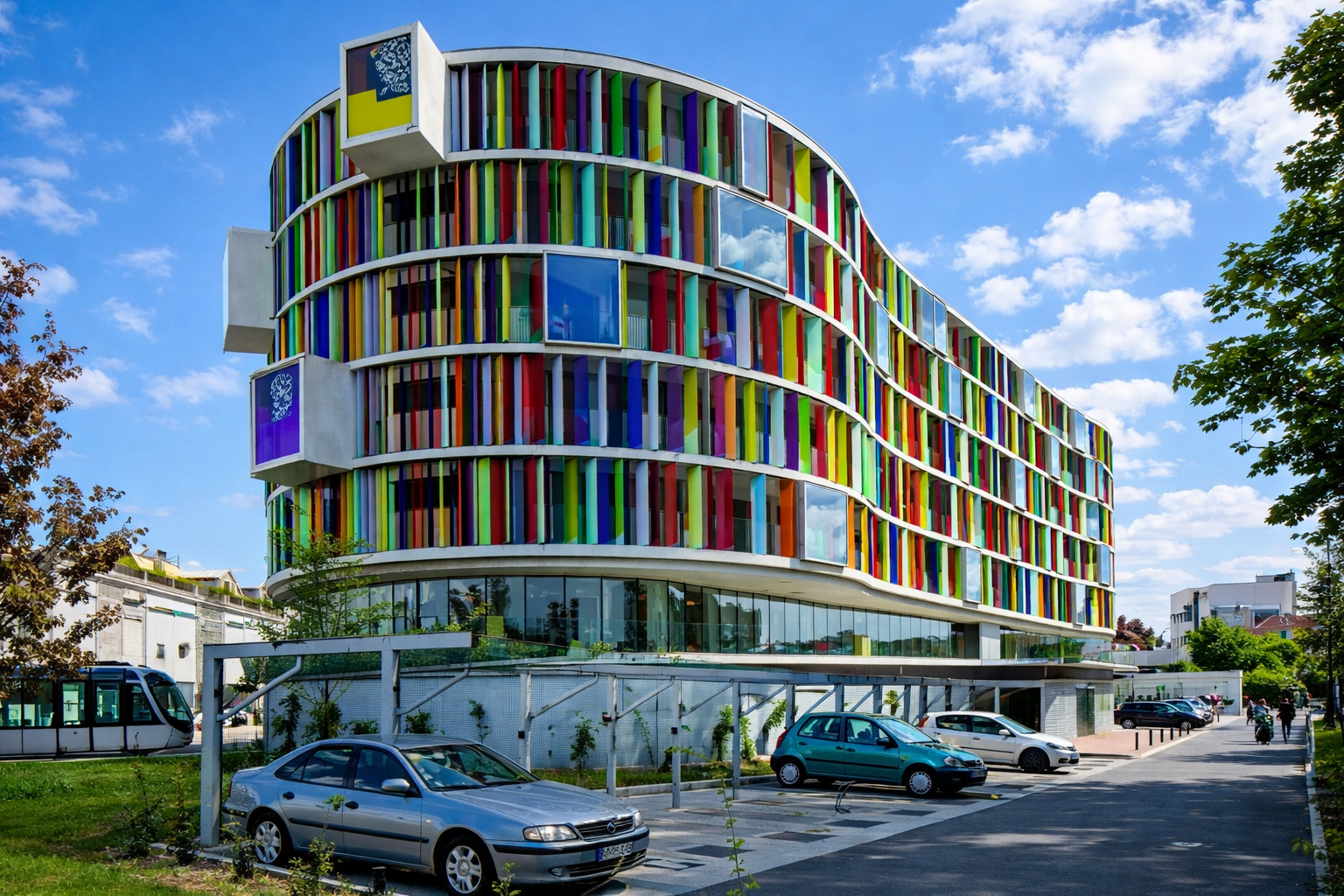
With about 4,000 m², the building constructed in a traditional neighborhood in France looks like a rainbow, has a colorful facade, mixes vibrant glass, and creates one of the most unusual visuals in Bordeaux.

The Dutch organization The Ocean Cleanup has already conducted and continues to carry out plastic waste removal operations in the North Pacific Gyre.
The journey of plastic waste begins where it seems invisible but concentrates brutally.
In large accumulation zones, such as the North Pacific Gyre and the Gulf of Thailand, dedicated cleaning vessels act as the frontline. It is an operation designed to capture floating waste without relying on improvisation.
Two hydraulic mechanical arms extend from the sides of each ship and sweep the water’s surface in a fan motion.
Plastic bottles, nylon bags, and abandoned fishing nets enter floating channels connected to the vessel and move onto stainless steel conveyors on deck.
There, the plastic waste is funneled and pushed into large storage compartments.
A cleaning mission lasts from 8 to 10 hours. The typical result is direct and measurable: collection of 5 to 10 tons of mixed waste in a single shift.
It is a pace that seems high, but it becomes small when confronted with the annual scale of the problem.
The Scale That Continues to Grow: More Than 20 Million Tons Per Year and 80% Plastic

As operations advance, the global volume continues to rise.
Each year, more than 20 million tons of waste are dumped into the ocean, and nearly 80% of that volume is plastic waste.
It is precisely this proportion that makes the material so dominant and persistent in the marine environment.
Plastic waste is so resistant that it survives for centuries underwater. Instead of disappearing, it fragments, changes shape, and spreads, creating a problem that is not only visual.
Fragments enter ecosystems, interfere with routes and behaviors of species, and push the impact into the food chain.
Rivers and Channels as Traps: When Plastic Waste Blocks Water Flow
A part of plastic waste does not remain loose in the open sea. It gets stuck in rivers, reservoirs, and channels, forming thick layers that block water flow.
At these points, the fight becomes a concentrated force operation, with compact mechanical equipment working to remove the tangled mess before it turns into a debris dam.
The typical scenario involves excavators with bucket jaws mounted on dump trucks.
Each steel jaw, weighing nearly 1000 pounds, plunges into the water and pulls a mixture of plastic waste, bottles, bags, branches, and even old tires. Each lift removes between 500 and 1000 pounds of debris.
The consequence is a productivity leap. A team can clean a stretch of river hundreds of feet long in a few hours at a pace about 10 times faster than manual labor.
Even so, this gain does not eliminate the need for other steps because the plastic waste removed still arrives mixed, contaminated, and salty.
Where the Machine Does Not Reach: Fishermen and Volunteers as the First Link in the Cycle
In many coastal areas, collection still depends on human effort. Local fishermen and volunteers work under intense sun, using small nets and hooks from their boats.
The pace is much more limited: each person recovers only a few hundred pounds of waste per day.
Even with the slowness, this step is described as indispensable. Without this initial action, plastic waste continues circulating, accumulating and migrating, and part of the material that could be recovered becomes more fragmented and harder to turn into something useful.
Trash Skimmers: From Floating Plastic Waste to Unloading on Land
After collection, the logistics of removing plastic waste from the aquatic environment comes into play. Boats known as trash skimmers are specifically designed to collect floating debris and transport the material to receiving areas on land.
A skimmer of 25 to 30 feet can accumulate approximately 5 tons of waste during an 8-hour shift.
When full, a hydraulic conveyor rises at the bow and unloads the material into the receiving area. It is at this point that plastic waste crosses the symbolic boundary from sea to industry.
Initial Sorting: Separating Plastic, Metal, Wood, Seaweed, and Sludge
The newly unloaded material is not “clean plastic.” It arrives as a heavy mixture: plastic, metal, wood, seaweed, and organic sludge.
Sorting begins with a quick removal of large or hazardous items, such as steel nets, oil booms, and tires.
Next, the remainder moves along a feeding conveyor to the screening section. A rotating screen separates the waste by size: sand, mud, shells, and small debris fall through the mesh while larger bottles and packaging continue.
Then, a manual sorting conveyor prepares the material into groups, leaving plastic waste and nylon ready for transformation.
Here, industrial logic appears strongly: plastic waste needs to become an ordered flow. Without order, there is no reliable recycling. Without reliable recycling, there is no valuable raw material.
Washing and Decontamination: Salt, Seaweed, Oil, and Microorganisms
Taken from the ocean, plastic waste carries what the sea imbues. Therefore, the washing section is treated as a fundamental stage. Marine debris is immersed in saltwater for long periods and arrives covered in seaweed, oil, and microorganisms.
The waste enters a mechanical washing tank. Rotating shafts with paddles agitate the water in a whirlpool to dislodge surface contaminants. The water contains mild detergents and a solution that neutralizes salt, removing chlorides and oil.
Some facilities use hot water between 160 and 180 Fahrenheit to enhance sterilization efficiency. The process lasts from 15 to 30 minutes, depending on the level of contamination.
After that, the material goes through a drum washer with high-pressure jets to remove sand and more resistant seaweed. A flotation and sedimentation tank separates plastics by density: PET sinks while HDPE and PP float, allowing precise sorting.
Finally, a centrifuge dryer removes residual moisture, and hot air drying occurs at around 170 Fahrenheit. Ozone deodorization systems treat emissions, eliminating organic odors and bacteria.
Pre-Selection: The Types of Plastic and the Focus on PET and HDPE
With the plastic waste gathered at the facility, pre-selection begins, a stage where plastics are separated by type and size so that the subsequent processing is not sabotaged by incompatibilities.
There are seven types of commonly used plastics, but PET number one and HDPE number two are identified as the most efficiently recyclable.
Therefore, the system focuses on isolating these two types and removing incompatible materials. The mixed plastic flow enters a large rotating steel drum.
Small perforations allow dust, sand, and smaller fragments to fall out while larger bottles advance. This initial separation by size prevents obstructions in the following phases.
On a manual sorting conveyor, operators remove unwanted items like metal cans, nylon, and cardboard. An automatic cap and label separator uses air vortex to highlight plastic components.
Magnetic sensors conduct continuous scanning and reject remaining metal fragments or staples. In the end, the flow mainly concentrates on clean and uniform PET bottles, ready for grinding.
Grinding: From Bottle to Flake and the Energy Gain of Up to 40%
When the mountain of bottles turns into continuous feed, the sound is not of destruction, but of transformation. Bottles enter a high-speed granulator.
Hundreds of metal alloy blades spin at thousands of revolutions per minute, shredding the plastic into fragments called flakes.
A single machine processes between 2000 and 3000 liters of plastic per hour, turning a large volume of bottles into uniform material in minutes.
The flakes, small enough to pass through thermal systems without clogging, also improve energy efficiency.
With crushed plastic, it melts more quickly in the extruder, saving up to 40% of electricity compared to melting solid plastic blocks.
Grinding, therefore, is not just volume reduction. It is a preparation that affects cost, energy, and stability of the subsequent steps.
Optical Sorting: 1000 Fragments Per Second and Accuracy Above 95%
After grinding, technology takes control at an almost imperceptible scale. Optical cameras and high-speed sensors scan each flake individually in milliseconds, analyzing color, transparency, and surface texture.
When the system identifies a clear PET flake, a green PET flake, a piece of white HDPE, or a foreign material like wood or glass, compressed air jets eject it from the main flow with precision.
A single machine processes more than 1000 fragments per second, achieving an accuracy rate exceeding 95%.
Each pulse of air acts on an extremely light fragment without disturbing the surrounding material. The result is a homogeneous flow of pure flakes, separated by distinct groups, ready to become industrial raw material.
Extrusion and Pelletization: Plastic Waste Turns into Industrial-Grade Pellets
The qualified flakes proceed to an extrusion machine. Under a temperature of approximately 520 Fahrenheit, the plastic melts and travels through a rotating screw shaft.
Increasing pressure forces the melted flow through an ultra-fine metal filter that retains remaining impurities.
The melted and purified plastic enters an underwater pelletizer, where it is instantly cut into millions of small particles known as pellets.
A closed-loop water cooling system solidifies the pellets immediately, ensuring uniform size and smooth finish.
These pellets become industrial-grade raw material for manufacturing packaging, synthetic fibers, and even new bottles, completing the waste-to-resource cycle.
The plastic waste, which was once a fragment without purpose, becomes standardized material that fits into production lines.
Pre-Form: Injection Molding and Efficient Logistics
From the recycled PET plastic pellets, the factory enters the pre-form molding stage. The pre-form is the semi-finished structure that will later be blown into a complete bottle.
The material is inspected for quality and fed into an injection molding machine heated to around 480 Fahrenheit.
The softened plastic flows into a steel mold and forms a thick-walled tube with a threaded neck already ready to receive a cap.
Each pre-form is built to withstand heat and pressure, ensuring stability during transport and re-heating for blow molding later.
The compact size allows for efficient storage and logistics. Some factories specialize solely in pre-form production and ship to bottling facilities near consumer markets.
Blow Molding: Compressed Air and Thousands of Bottles in Seconds
In the next stage, the pre-forms are heated until they become soft and flexible and enter the blow and stretch molding machine.
High-pressure compressed air is injected through the neck, expanding the plastic and pressing it against the inner walls of a metal mold shaped like the final bottle.
A pre-form 4 to 5 inches tall can expand to nearly four to five times its original size. Each automated production line manufactures thousands of bottles in seconds, with a near-zero error margin.
Laser sensors continuously inspect wall thickness, roundness, and transparency to maintain consistent quality.
The system also allows customization of capacity, body curves, and label positioning according to design requirements.
The plastic waste, now in the form of a bottle, returns to the consumer world under industrial rules of precision.
Cooling and Heat Recovery: Stabilizing the Shape with Controlled Consumption
Upon leaving the mold, the bottle remains warm and may warp. Therefore, a rapid cooling chamber with circulating cold air or water comes into play. The process lasts a few seconds but stabilizes the structure and preserves its shape.
Some factories recover the heat released by the bottles to reheat the cooling water, significantly reducing energy consumption.
The cooling rate is calculated to balance production speed with ideal clarity and rigidity.
Final Inspection: Cameras, Pressure, and Traceability Before Leaving the Factory
Before leaving the factory, each plastic bottle undergoes rigorous inspection. Optical sensors, cameras, and pressure measuring systems detect defects such as cracks, air bubbles, and dimensional deviations.
Samples are taken for mechanical tests of tension, compression, and impact to ensure durability. For bottles intended for food use, chemical analyses check for any toxic residues.
Only after meeting the criteria are the bottles grouped, stacked on pallets, and packaged with shrink film. Palletizing robots organize thousands of units and label each batch with a unique traceability code.
From the central warehouse, the products proceed to beverage factories, supermarkets, and sales points. Plastic waste completes a cycle that seeks to unite technology, logistics, and quality control to convert pollution into resources.
From Waste to Resource: When Plastic Waste Becomes Valuable Raw Material
There is a powerful symbol in this transformation. A vinyl record may seem common, but there exists a case where its raw material was waste.
An album from the band Coldplay, Moon Music, was produced as the first record pressed with recycled plastic taken from the ocean off the coast of Guatemala, with material collected from rivers and oceans.
This example helps explain why environmental organizations assert that, if properly collected, much of the pollution can be reborn as valuable raw material.
The result is not unique: recycled plastics, synthetic fibers for the textile industry, and even recovered metals.
The process also carries an argument for environmental efficiency. It saves thousands of kilowatt hours of electricity and reduces millions of tons of CO2 emissions, paving the way for a circular ocean economy where what has been discarded can return to use.
In the end, plastic waste is still out there, accumulating and threatening. But there is also a technological chain trying to pull it back to land, sanitize it, separate it, and return it to the world as industrial material.
In your opinion, does transforming ocean plastic waste into raw material justify the high energy consumption of these mega-operations, or should the focus be on another point in the chain?









CONCORDO ,UMA MEGATAREFA MUNDIAL DE GRANDE IMPACTO POSITIVO PRA NOSSO PLANETA.
Ocean cleanup is critical—but the real impact comes after the plastic reaches land. If recovered plastic can’t be reused at scale, the problem is only postponed.
At PalletsBiz, we work with manufacturers who convert recycled plastic— including mixed and post-consumer waste—into industrial pallets using compression molding technology. Pallets are one of the few products that can reliably absorb large volumes of recycled plastic while meeting strict strength and logistics requirements.
By turning waste plastic into long-life pallets, companies reduce disposal pressure, cut raw material costs, and close the loop within global supply chains. This kind of industrial reuse is what makes marine plastic recovery economically and environmentally sustainable.
Enquanto não podemos para de produzir o plastico, esse é o caminho.