





 Portuguese
  English
  Spanish
  2 min of reading
  3 comments



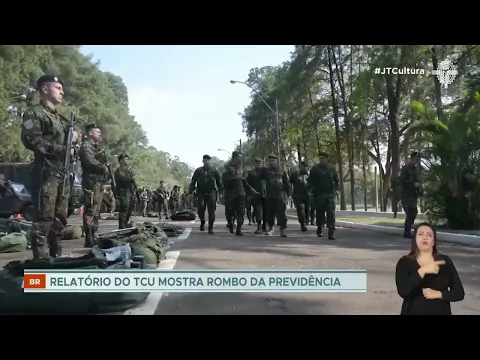
TCU Report Reveals That, in 2023, Spending on Retired Military Personnel Reached R$ 49.7 Billion, Surpassing Spending on Civilians and Public Employees.
A recent report from the Federal Court of Auditors (TCU) brought to light a significant revelation about spending on retired and pensioned military personnel. According to the study, military members, despite representing only 11.6% of the Union’s pension deficit, have an annual cost greater than that of retirees from the INSS and public employees.
Analysis of the Deficit and the Participation of Military Personnel
The total deficit in the Union’s pension system in 2023 reached an impressive R$ 428 billion.
Of this amount, spending on retired and pensioned military personnel amounted to R$ 49.7 billion.
-
Brazilian city bets on the business environment to generate jobs and attract investments in the energy sector — secretary reveals strategy at Macaé Energy 2026.

-
50 viaducts, 4 tunnels, 28 bridges, and 40 kilometers of bike paths: BR-262 in Espírito Santo will receive 8.6 billion reais for the largest engineering project in the state’s history, inspired by the Immigrant Highway in São Paulo.

-
Brazil produces too much clean energy and doesn’t know what to do with it: over 20% of solar and wind capacity was wasted in 2025 while investors flee and 509 renewable generation projects were abandoned in the last year.

-
Piauí will produce a new fuel that replaces diesel without needing to change anything in the truck’s engine and reduces pollutant gas emissions by half: truck drivers from all over the Northeast are already celebrating the news that will arrive later this decade.


Although this figure is lower than the R$ 54.8 billion spent on public employees and the R$ 315.7 billion allocated to INSS retirees and pensioners, the per capita spending for military personnel is notably higher.
Spending Comparison Between Military Personnel, Public Employees, and INSS Retirees
TCU data reveals that, last year, the average annual cost per retired military member or pensioner was R$ 158.8 thousand.
In contrast, the average spending per public employee was R$ 69 thousand, and the cost for INSS retirees was only R$ 9,400.
This substantial difference highlights the considerable financial burden that retired military personnel represent for the Union’s budget.
The Armed Forces reacted to the report, questioning the methodology used by the TCU to calculate these expenditures.
While they acknowledge the accuracy of the presented figures, they argue that the classification of the costs is inappropriate.
According to them, the indicated costs are part of distinct budgets and should not be directly compared.
The Need for Reform in the Pension System
This debate about the methodology and the interpretation of the data underscores the complexity of the Brazilian pension system and the need for a more detailed and transparent analysis.
The discussion surrounding spending on military retirees remains a sensitive topic, particularly considering the significant impact of these costs on the national budget.
The TCU report and the responses from the Armed Forces highlight a crucial point: the need for a review and possible reform of the pension system to ensure a more efficient and balanced management of public resources.







Deus é fé e vida e luz
Deus é fé e vida e luz
Deus é fé e vida e luz