





 English
  Francês
  Alemão
  Italiano
  Japonês
  Norueguês
  Portuguese
  Spanish
  5 min of reading
  0 comments


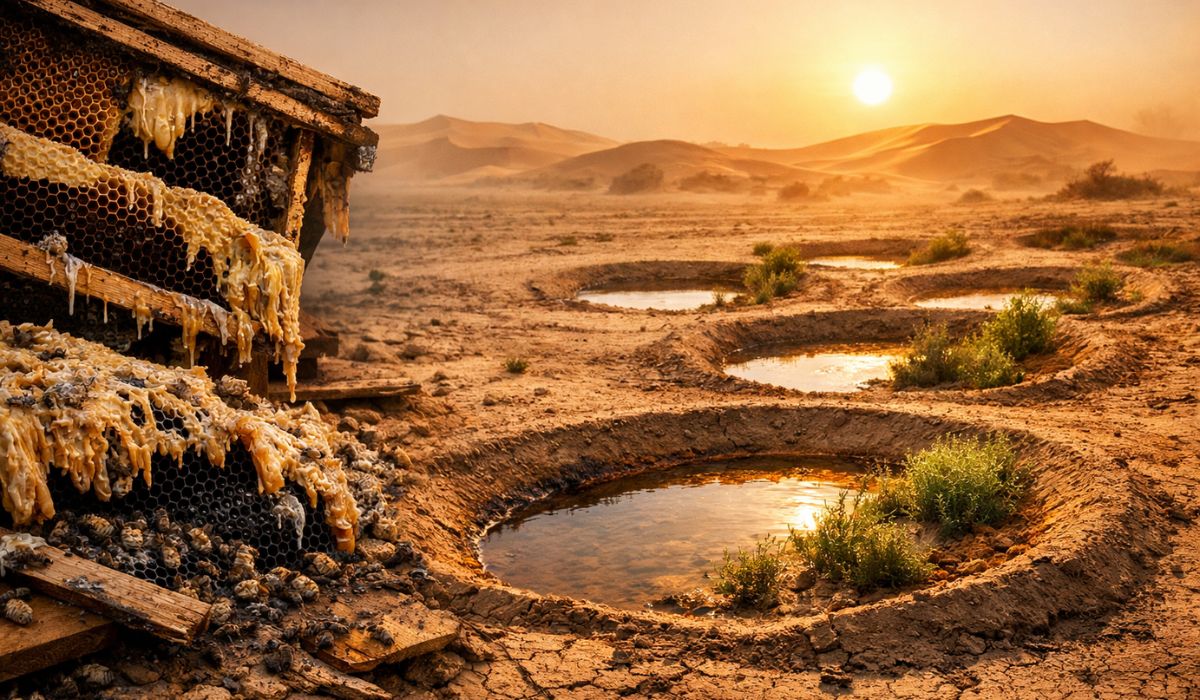
The advance of desertification around the Sahara exposes the limits of unproven solutions and re-centers a simple soil management technique adopted in the Sahel to improve water retention and favor the recovery of degraded areas.
According to the portal O Antagonista, scientific projects have already attempted to contain the advance of the Sahara Desert with bold solutions, including the use of millions of bees to stimulate vegetation.
Still according to the outlet, the initiative failed after extreme heat compromised the beehives in the desert environment.
At the center of environmental recovery experiments in the region, the goal is always the same: to create conditions for the soil to retain water again and support vegetation.
-
350-year mystery may have been solved: remains of a soldier who inspired the hero of The Three Musketeers found beneath a church in the Netherlands.

-
NASA photographed a nearly perfect square with 3 km sides on Mars, 13 times larger than the Great Pyramid of Giza, but the official explanation is natural erosion; still, no one has explained why the four sides have almost identical lengths.

-
Starlink breaks the barrier of 10,000 satellites in orbit and takes its expansion to an unprecedented level, with a direct impact on global internet, technological competition, and the race for space.

-
Japan finds an alternative to oil amid rising prices by transforming ocean balance into electricity with a new technology that maintains efficiency even when the sea changes.


Among the strategies with documented results, one of the most cited is the half-moon excavations, used to reduce surface runoff and improve the conditions of the land for planting.
The recovery of dry lands in the Sahel, a region bordering the Sahara, depends on a combination of environmental factors and techniques adapted to the terrain.
In this context, the so-called demi-lunes, or half-moons, come into play, structures excavated in the soil to capture rainwater and increase infiltration in areas hardened by degradation.
Organizations linked to agriculture and combating desertification cite this method as a practical tool for productive and environmental restoration.
Desertification in the Sahel and the obstacles to soil recovery
In semi-arid regions, the obstacle is not limited to low rainfall.
When the soil loses vegetation cover and becomes compacted, water tends to run off quickly across the surface instead of penetrating the ground.
As a result, available moisture decreases, nutrients are lost, and erosion advances.
This process compromises water utilization and hinders vegetation regeneration.
For this reason, restoration initiatives often prioritize rainwater harvesting techniques and gradual soil fertility restoration.
The logic adopted in these projects is to create minimum conditions for seeds, seedlings, and agricultural crops to develop.
How half-moons work against desertification
The half-moons are semicircular cavities opened with the face directed towards the area from which water flows during rain.
Upon encountering this design, the runoff slows down and remains trapped for a longer time, which favors infiltration.
In many cases, farmers also add organic matter, such as manure or compost, to increase the fertility of the land.
In practice, the shape alters the behavior of water on the surface.
Instead of rushing quickly and carrying particles of soil, the rain begins to supply small pockets of moisture.
This effect improves the immediate environment around the seeds and roots, reduces nutrient loss, and can increase the viability of cultivation in previously degraded areas.
In addition to half-moons, restoration programs in the Sahel also employ other local solutions, such as planting pits known as zaï.
The Food and Agriculture Organization of the United Nations describes the half-moon as a traditional planting method capable of containing runoff, improving infiltration, and keeping the soil moist for longer.
According to the organization, the method creates more favorable microclimatic conditions for the development of seeds and seedlings.
Great Green Wall and the challenge of containing the advance of the Sahara
The restoration of degraded areas at the edge of the Sahara is part of broader initiatives, such as the Great Green Wall, launched by the African Union in 2007 with the aim of recovering degraded landscapes, strengthening livelihoods, and containing the effects of desertification.

The effort brings together several African countries and involves reforestation actions, water management, soil recovery, and support for rural production.
Despite the scale of the project, implementation faces recurring obstacles.
In June 2024, Reuters reported that the initiative would hardly reach the target set for 2030 at the observed pace, citing difficulties in funding, coordination, and execution.
Still, the set of actions continues to rely on restoration solutions adapted to local contexts, rather than a one-size-fits-all response for the entire region.
In this scenario, the half-moons appear as a response to a physical problem identified in degraded areas: the difficulty of the soil in absorbing available water.
The issue, according to studies and international organizations, is not limited to the volume of rain or tree planting, but includes the capacity of the land to retain enough moisture to support regeneration.
In arid areas, this step is often treated as crucial for the success of subsequent revegetation actions.
The account of the bees
According to the portal O Antagonista, the proposal to bring bees to the desert stemmed from the role of pollinators in plant growth and ecosystem recovery. According to the text published by the outlet, the expectation was that the increase in vegetation would help stabilize the soil and slow the advance of desertification.
Also according to the portal, the project would have stumbled upon the extreme temperatures of the Sahara. O Antagonista reports that the intense heat made the survival of the beehives unfeasible, with melting wax from the combs and mass death of the bees.
In the text published by the outlet, the episode is presented as an example of the limits of interventions that do not consider the severe conditions of the desert environment.
The same report points out that, after this failure, researchers began to focus efforts on solutions related to the shape of the terrain and the behavior of water in the soil.
It is at this point that the geometry of the soil gains prominence. Instead of relying on a large-scale biological intervention, the strategy described more consistently in restoration projects in the region is based on opening simple structures capable of storing rainwater for longer and reducing erosion.
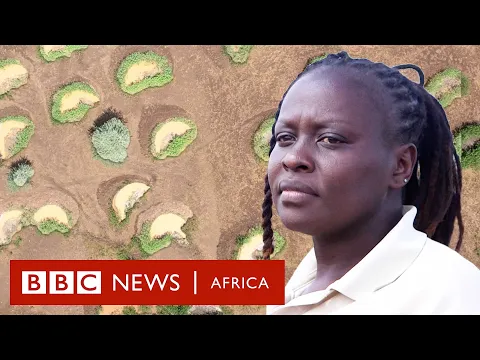

In the Sahel, retaining water in the ground can represent the first step to restoring productivity to degraded areas, reducing losses from runoff, and opening space for the gradual return of vegetation cover.






Seja o primeiro a reagir!