





 Portuguese
  English
  Spanish
  3 min of reading
  2 comments


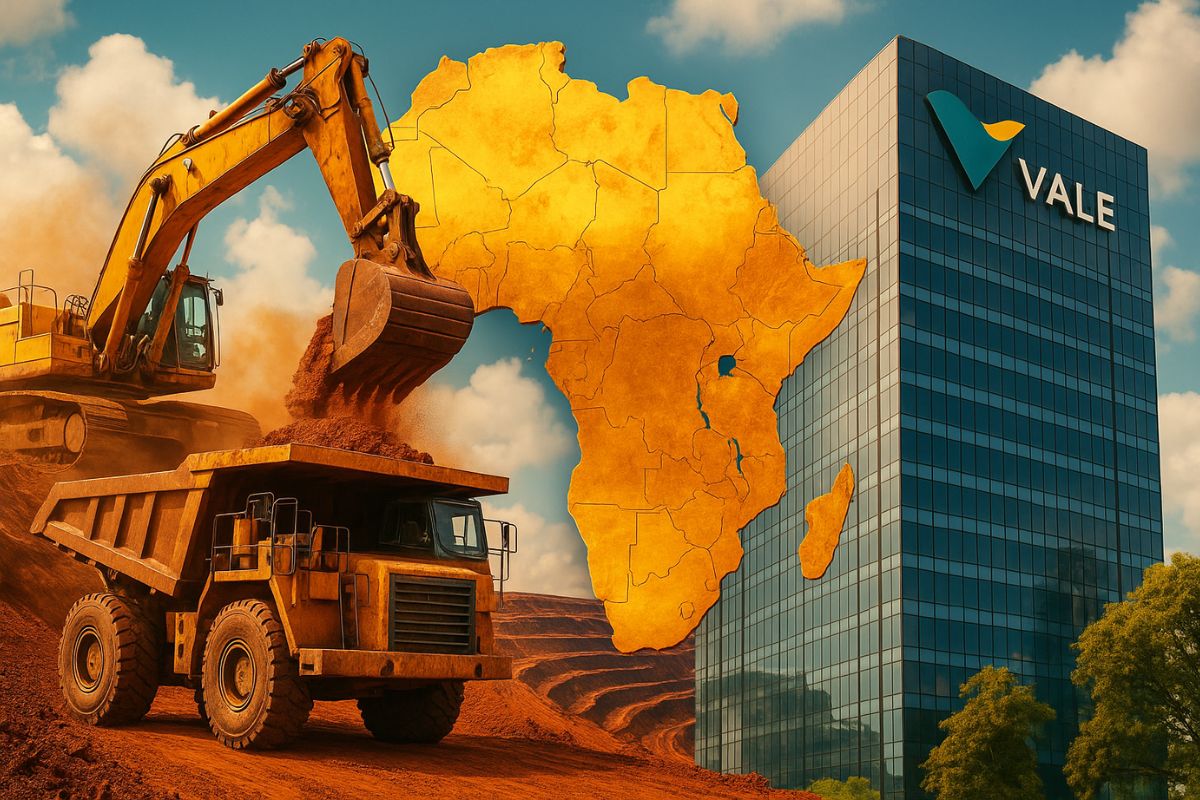


Why Could A Mine In Africa Threaten Vale’s Iron Ore Market? Start Of Operations Of The Simandu Project In Guinea Could Reduce Vale’s Leadership In The Premium Ore Segment
According to a survey by Invest News, half of Vale’s iron ore comes from the Carajás complex in Pará — and it is the best part. This is premium ore, with 65% iron content, compared to 62% of the global standard. Only in 2024, there were 177 million tons, equivalent to 44% of the world’s high-grade production. No other mine on the planet produces ore of this quality in comparable volume.
This dominance, however, could be threatened. The Simandu region in Guinea holds reserves with the same grade as Carajás and is about to become operational. The project, controlled by the Australian company Rio Tinto in partnership with Chinese consortiums, is expected to start producing in 2025, with an estimated capacity of 120 million tons per year. If it were operational today, Simandu would account for 23% of global premium ore production, reducing Vale’s share from 44% to 34%.
Why Is Premium Ore So Hotly Contested
The iron ore from Vale with 65% iron allows steel mills to produce more steel with less input, saving coke and emitting less CO₂ — a strategic advantage in a market increasingly pressured by decarbonization goals. Therefore, premium ore usually costs 10% to 15% more than standard ore (62%).
-
Brazilian city bets on the business environment to generate jobs and attract investments in the energy sector — secretary reveals strategy at Macaé Energy 2026.

-
50 viaducts, 4 tunnels, 28 bridges, and 40 kilometers of bike paths: BR-262 in Espírito Santo will receive 8.6 billion reais for the largest engineering project in the state’s history, inspired by the Immigrant Highway in São Paulo.

-
Brazil produces too much clean energy and doesn’t know what to do with it: over 20% of solar and wind capacity was wasted in 2025 while investors flee and 509 renewable generation projects were abandoned in the last year.

-
Piauí will produce a new fuel that replaces diesel without needing to change anything in the truck’s engine and reduces pollutant gas emissions by half: truck drivers from all over the Northeast are already celebrating the news that will arrive later this decade.


Despite this, the demand for high-grade ore is unstable. Part of the 65% ore becomes pellets with 67% iron, sold at even higher prices. But the global market prefers the cost-benefit balance of 62% ore, which represents 75% of global exports. Premium variants account for 15% and lower grades only for 10%.
The Weight Of China In Global Demand
The main customer of Vale’s iron ore is China, which buys three out of every four tons exported from Brazil. The crisis in the Chinese real estate sector reduced steel production and tightened the cash flow of local steel mills. This increased the demand for the cheaper 62% ore and diminished the appetite for premium ore.
In the first quarter of 2024, Vale sold 40% more of 62% ore, while sales of 65% ore fell by 51% and pellet sales by 19%. The premium paid for premium ore plummeted from US$ 14 to US$ 7 per ton in July. This drop coincides with a 30% decline in the price of coke, which reduced the economic advantage of high-grade ore.
What Changes With Simandu In The Game
If it comes into operation in a scenario of weakened demand, Simandu could further pressure premium ore prices. For Vale, this means facing a significant competitor in this segment for the first time. And, according to experts, the presence of a new player of this size will hardly raise prices.
Vale had exploration rights in Simandu in 2010 but abandoned the project in 2014, citing logistical and political challenges — including the need to build a port and 640 km of railway in a country with a history of instability and corruption. Instead, it focused investments on expanding Carajás, especially in block S11D, which alone already produces 77 million tons annually and has the capacity to reach 120 million.
Strategic Decision And Future Of The Market

By prioritizing Carajás, Vale reduced risks and logistical costs, remaining competitive even with the African threat. However, the entry of Simandu could redefine the global balance in Vale’s iron ore market, especially if Chinese demand continues to favor cheaper products.
Do you believe that Vale will be able to maintain its leadership in the premium ore market in light of Simandu’s entry? Or could the new competition change the game? Share your opinion in the comments — we want to hear from those closely following the mining sector.







A diferença é que Simandu é de propriedade dos Chineses, 50%, e fica mais perto da China, 50% menos custo de transporte.
Primeiro, o que Simandu produzir e depois vem a Vale. Não haverá competição.
Sim.
A Vale saberá como lidar com Simandu e permanecerá na liderança do mercado de minério de ferro 65.
Será um desafio que a fará crescer ainda mais.
Talvez a Vale não mantenha o market share atual no 65, mas tenho muita convicção de que terá a capacidade de manter ou até melhorar suas margens investindo na extração de outros **** com maior valor agregado, como já mostrou no 2T25.