






 Portuguese


Automation Advances in Heavy Mining: CiDi Already Operates over 1,700 Autonomous Vehicles Across Approximately 30 Mines and Quarries, Enabling One Operator to Monitor About 100 Trucks While Robots Are Being Prepared for Transporting Explosives and Drilling, with Electric Fleets Operating Driverless 24 Hours a Day.
The digital transformation of mines is advancing to a scale that only a few years ago belonged to pilot projects. In July 2026, Reuters reported that the Chinese company CiDi already had a global fleet of more than 1,700 autonomous vehicles distributed across about 30 coal mines and quarries, mainly in China. In some large operations, hundreds of driverless trucks must be coordinated simultaneously by dispatch and control software.
This leap is not limited to ore transport. The company is preparing robotic machines to handle explosive loads and rock drilling, while partially autonomous excavators are moving forward to operations outside China.
At the same time, CiDi reports that it can now operate with a remote intervention ratio of one professional for up to 100 trucks and that its autonomous equipment had transported more than 140 million tons by February 2026.
-
A Highway is in the Way of 20.8 Tons of Gold: BR-226 Will Be Relocated in Northeast Brazil to Unlock $1 Billion Mine and Expand Reserves by 82%

-
At 2,000 meters in the Andes, a city without streets for cars welcomed 15,000 residents, transformed a staircase into the main avenue, spread colorful houses across the hillside, and operated next to the largest underground copper mine in the world.

-
To sleep about 419 meters under a mountain in Wales, guests wear helmets, traverse tunnels of an old slate mine, and reach four cabins and a lit grotto deep underground.
-
Wall of one of the largest copper mines in the United States begins to give way, sensors sound the alarm and workers escape before colossal avalanche


More than 1,700 Autonomous Vehicles Are Now Spread Across Approximately 30 Operations
According to a report published by Reuters on July 24, 2026, the global fleet associated with CiDi’s systems surpassed 1,700 vehicles, mainly concentrated in China and distributed across approximately 30 quarries and coal mines. This scale places automation beyond the experimental phase.
The number has grown rapidly. In a report released by CiDi in March 2026, the company stated that it had surpassed 1,500 units deployed by the end of February. A few months later, Reuters recorded that the total had already exceeded 1,700 vehicles.
China has become one of the most aggressive markets in this process. According to Reuters, approximately 10% of trucks used in Chinese mining already operate driverless, while manufacturers compete for contracts to automate transport, excavation, and other high-risk activities.
One Professional Can Remotely Monitor About 100 Trucks
One of the most profound changes is in the ratio of machines to operators. CiDi’s CEO, Albert Hu, told Reuters that one professional can monitor approximately 100 autonomous trucks remotely, a ratio that he believes can still increase.
This information also appears in the company’s official results. CiDi describes a remote takeover ratio of 1:100, meaning one remote supervision professional for up to one hundred equipment units within the architecture developed by the company.

This does not mean that 100 trucks are simply abandoned without any human structure. Control centers remain essential for overseeing operations, exceptional interventions, maintenance, planning, and safety. The shift primarily involves removing the driver from the cabin of each individual vehicle.
Large mines now coordinate up to 500 autonomous vehicles simultaneously
The scale creates a technological challenge beyond just teaching a truck to follow a road. In large coal mines, according to Reuters, there are operations where up to 500 autonomous vehicles can be working simultaneously.
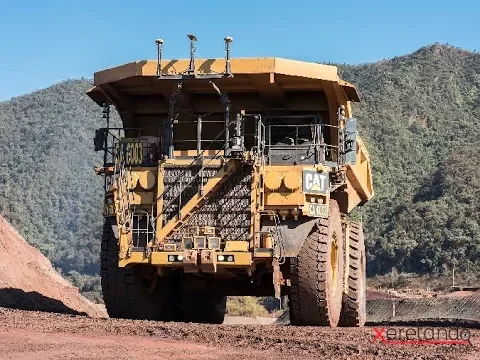

In this scenario, the software needs to coordinate routes, priorities, intersections, loading and unloading points, and potential interventions. Albert Hu specifically identified the coordination of large fleets as one of the biggest technological barriers in this market.
The challenge is akin to managing a closed logistics network, but it occurs in environments subject to dust, slopes, terrain changes, and heavy equipment movement.
CiDi claims its platform has been developed to progressively integrate drilling, blasting, excavation, and transportation into a single operational flow.
Quarry already uses electric trucks that transport limestone driverless
One of the most concrete examples is in Jurong, in the Chinese province of Jiangsu. In a visit reported by Reuters in July 2026, 12 fully electric and driverless trucks were autonomously transporting limestone between the extraction area and crushing facilities.
The official technical page of CiDi states that the complete project of the quarry operated by Taiwan Cement Corporation utilizes 14 autonomous electric trucks, initially deployed in November 2022. The vehicles conduct normalized commercial production without an operator onboard.

According to the manufacturer, the trucks can operate in a 24/7 mode, performing tasks such as approaching the excavator, moving through the mine, unloading at the crusher, and automatically scheduling recharges.
Trucks carry up to 100 tons and batteries reach 530 kWh
Automation is being applied to large machinery. The technical specifications published by CiDi show configurations with a nominal load capacity between 60 and 100 tons, depending on the model and propulsion system.
In the electric versions, the batteries have a capacity ranging from 350 to 530 kWh. Fast charging with two connectors can increase the charge state from 25% to 95% in less than an hour, according to the specifications released by the company.
The vehicles achieve a declared maximum speed of 45 km/h and can handle inclines of up to 30%.
Since operations take place in enclosed mining areas, the goal is not highway speed but to transport large volumes repeatedly between excavators, mining fronts, deposits, and crushers.
Automation eliminated operators from the cabins and the company reports an 88% reduction in labor costs
In the Jurong quarry project, CiDi states that the 14 autonomous electric trucks operate without onboard drivers and have resulted in over an 88% reduction in labor costs associated with transportation operations. This percentage is reported by the technology supplier itself and should be understood in that specific context.
In another coal mine in western China, the company claims to have achieved 100% efficiency of a manual operation but without drivers inside the trucks.
The same deployment works in a mixed environment, where autonomous machines must share the area with vehicles still operated by humans.
The change alters the profile of job positions rather than simply eliminating all human presence. Drivers no longer occupy individual cabins, while roles related to control centers, electromechanical maintenance, sensors, networks, software, fleet planning, and remote intervention gain importance.
Sensors need to see the mine even with dust and extreme conditions
Removing the driver requires that the machine can perceive its environment independently. The autonomous trucks use a combination of sensors and computational systems to identify routes, obstacles, equipment, loading areas, and unloading points.
The company states that its systems are designed for operation in extreme conditions and records reliable functioning in temperatures as low as -40 degrees Celsius. Open-pit mines can also impose heavy dust, uneven terrain, and constant changes in routes.
Autonomy also needs to manage energy logistics. In electric trucks, the system determines when the vehicle should stop operations to recharge, automatically drives to the necessary point, and seeks to fit this stop at the most economically advantageous moment.
CiDi’s Revenue More Than Doubled with Expansion of Autonomous Trucks
Automation in mining has also evolved into a large-scale business. According to official results released by CiDi, the company closed 2025 with a revenue of approximately 885 million yuan (about US$130 million), a growth of 115.8% compared to the previous year.
The autonomous driving segment accounted for 843 million yuan (about US$125 million) alone, an increase of 230.7%, making it 95.3% of the company’s total revenue. The company attributed the growth primarily to the deployment of autonomous trucks at open-pit coal mines.
The volume of deliveries of trucks and autonomous systems reached 630 units or sets in 2025, a rise of 317.22% in just one year. Later, Reuters reported that the company’s revenue had more than doubled and that its expansion in China was outpacing the local market’s pace.
Drilling Robots Expected to Expand Automation to Another Stage of Mining
After explosives, the company plans to automate drilling as well. Reuters reported that robots intended for this activity are expected to start being used in early 2027, initially in the same Chinese mining regions.
Drilling, loading explosives, detonation, excavation, and transportation form interdependent stages of open-pit mining. Automating only trucks reduces some human exposure but still leaves workers directly involved in other hazardous operations.
CiDi states that its goal is to connect data flows from these different activities to create a closed system of mine automation. The technological direction is thus moving from a simple notion of “driverless truck” to a fully coordinated digital extraction chain involving various machines.
Autonomous Excavators Begin to Export Chinese Technology to Other Countries
Internationalization is another phase of the project. Reuters reported that the company has already equipped partially automated excavators in Australia and was preparing for a larger rollout in the country throughout 2026.
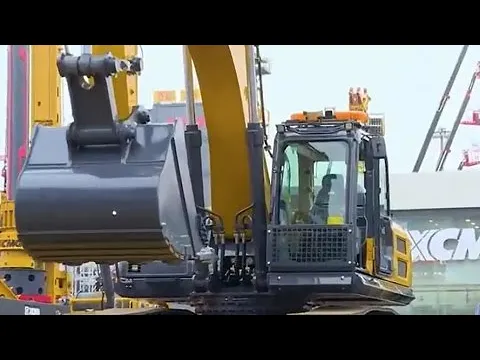
The company is also pursuing contracts in the Middle East, South America, and Europe. By 2027, Albert Hu expects that international markets will represent a double-digit share of revenue, compared to a still small contribution at present.
South America is particularly relevant to this strategy as it houses some of the world’s largest copper, iron, and other mineral operations.
CiDi officially cites Australia and South America among the mineral-rich markets where it intends to expand its smart mining solutions.

Graduated in Journalism and Marketing, he is the author of over 20,000 articles that have reached millions of readers in Brazil and abroad. He has written for brands and media outlets such as 99, Natura, O Boticário, CPG – Click Petróleo e Gás, Agência Raccon, among others. A specialist in the Automotive Industry, Technology, Careers (employability and courses), Economy, and other topics. For contact and editorial suggestions: valdemarmedeiros4@gmail.com. We do not accept resumes!


