





 Portuguese
  English
  Spanish
  5 min of reading
  0 comments


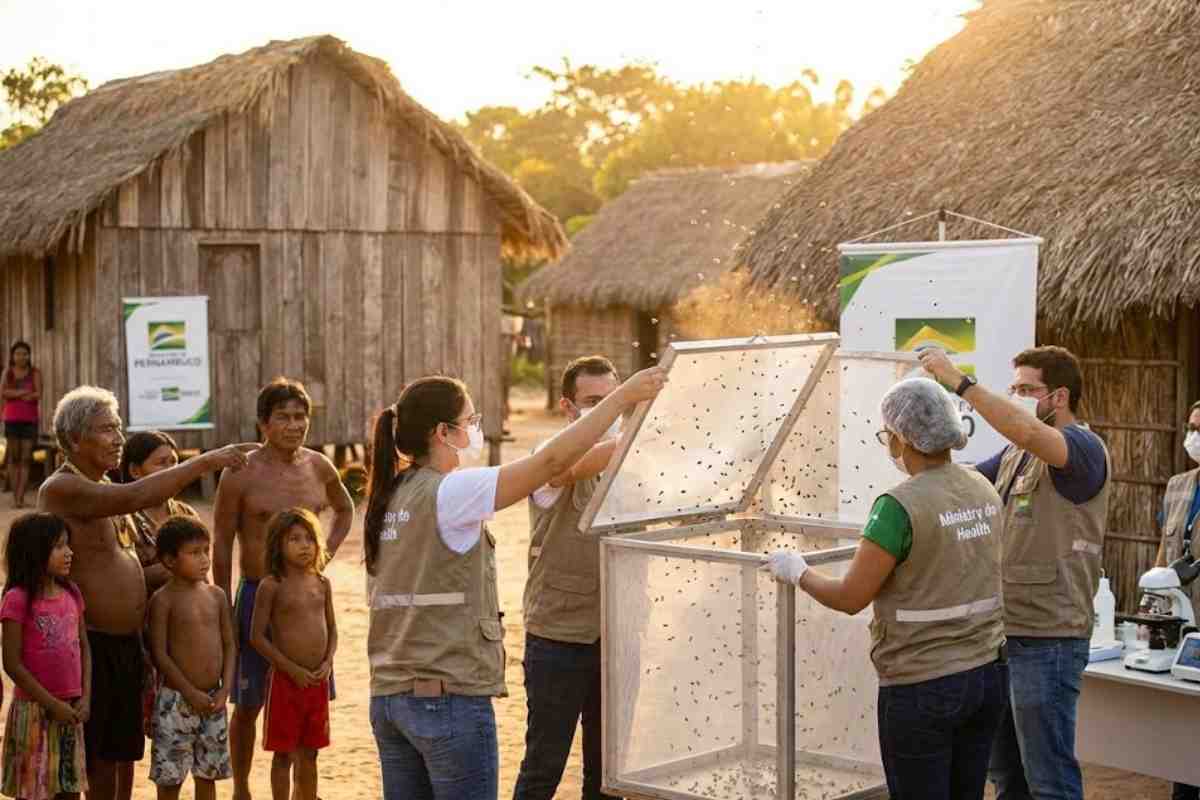
First Release of 50 Thousand Sterile Aedes in the Indigenous Village of Cimbres, in Pesqueira, Marks the Start of the Sterile Insect Technique by Irradiation, with an Investment of R$ 1.5 Million and an Expectation of 200 Thousand Weekly Mosquitoes in Other Indigenous Territories. Action Will Be Monitored to Measure Impact on the Transmission of Viral Arboviruses.
On Friday, December 12, 2025, the Ministry of Health began the release of sterile male Aedes aegypti mosquitoes in the indigenous village of Cimbres, in Pesqueira, Pernambuco. 50 thousand insects were released in a single operation, aimed at gradually reducing the population of the mosquito that transmits dengue, zika, and chikungunya in indigenous territory.
The announcement marks the beginning of the implementation of the Sterile Insect Technique by Irradiation (SIT) in indigenous areas, in an initiative considered unprecedented by the federal government. The action integrates a partnership between the Ministry of Health, the State Health Department of Pernambuco, the Special Indigenous Health District of Pernambuco, and the Municipal Health Department of Pesqueira.
Offensive Begins in Cimbres and Should Reach Other Indigenous Communities
In the initial phase, the indigenous village of Cimbres serves as a pilot area for the new strategy to control Aedes aegypti.
-
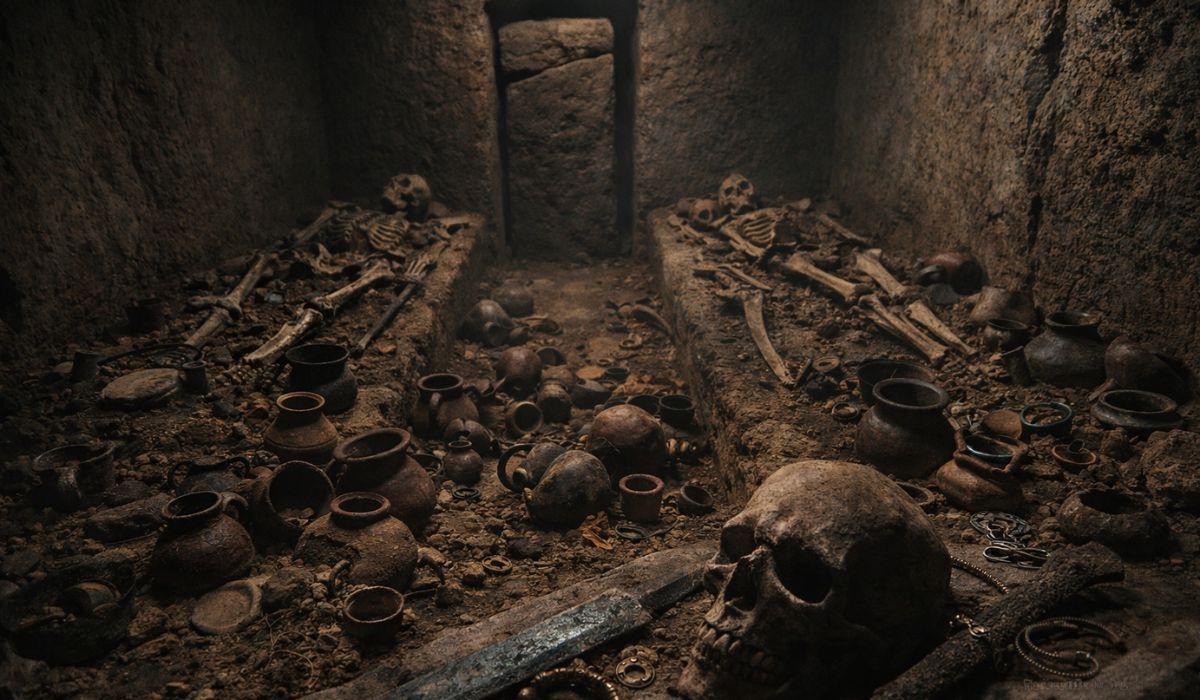
Archaeologists find an intact tomb over 2,500 years old, with more than 100 preserved objects, weapons, jewelry, and human remains never touched.
-
Volcanic lava transforms into threads as fine as human hair that travel over 30 kilometers by wind and fall like cutting rain on roofs and backyards in Hawaii and Iceland.

-
NASA issues a warning for the feared Godzilla El Niño that could change the planet’s climate in 2026 with extreme warming of the Pacific capable of causing devastating droughts in some regions and historic floods in others simultaneously.

-
Archaeologists discover a 100-meter ship graveyard in a submerged Greek city, and what has appeared on the seabed of Libya could change what was known about this ancient port.


The release of 50 thousand sterile male mosquitoes is the first step of a plan that, in subsequent stages, foresees the weekly release of more than 200 thousand insects in the regions covered by the initiative.
In addition to Cimbres, the technology will be implemented in other indigenous territories. The Ministry of Health plans to take the SIT to the Guarita territory in Tenente Portela, Rio Grande do Sul, and to indigenous areas in Porto Seguro and Itamaraju, Bahia.
The idea is to test the method in different realities, always in dialogue with local leaders and indigenous health teams.
The initial investment in the strategy is R$ 1.5 million, a value that includes the production of mosquitoes in the laboratory, the logistics of transport and distribution in the communities, and technical monitoring of results.
The continuity of the project, as well as a possible expansion to other regions, will depend on the performance measured in the field.
How the Sterile Insect Technique by Irradiation Works
The Sterile Insect Technique uses the mosquito’s own species to reduce its population. In the case of Aedes aegypti, the males are subjected to ionizing radiation, which makes them sterile, with no ability to produce offspring.
After this process, they are bred in the laboratory in large quantities and released in the target areas.
When the sterile males mate with the females present in the environment, no offspring are produced, leading to a gradual decrease in the number of mosquitoes over time.
The expectation of the teams involved is that, with fewer vectors circulating, outbreaks of dengue, zika, and chikungunya will consistently be reduced in the areas served by the technology.
One of the central points of this strategy is that it dispenses with the use of chemical insecticides, making it especially suitable for sensitive territories.
According to the Ministry of Health, the technique poses no risks to human health or the environment, as the released mosquitoes are not disease transmitters and carry no alterations that could harm local fauna or flora.
Why the Technology Is Indicated for Indigenous Villages and Conservation Areas
The choice of an indigenous village as a starting point is not just symbolic. Many of these territories are located in conservation areas and forest regions, where the use of chemical products is restricted or even prohibited due to the risk of contamination of rivers, soils, and native species.
In this context, the Sterile Insect Technique emerges as a considered alternative more compatible with environmental protection.
By using only sterile male mosquitoes, without insecticides, the government seeks to reconcile the control of arboviruses with respect for preservation rules.
The measure also addresses historical demands from indigenous peoples for health policies that consider the specificities of their territories.
For the residents of the indigenous village of Cimbres, the presence of technical teams, monitoring traps, and periodic releases of laboratory mosquitoes is expected to become part of the routine in the coming months.
The actions will be accompanied by indigenous health professionals, who will play an important role in guiding families about the initiative’s objectives and in collecting information on possible changes in the incidence of diseases transmitted by Aedes aegypti.
Monitoring of Results Will Guide the Expansion of the Strategy
According to the planning released, the continuity and expansion of the SIT in indigenous territories will depend on data collected in the field.
The teams involved will monitor indicators such as mosquito density, number of vector breeding sites, and records of cases of dengue, zika, and chikungunya in the areas covered by the technology.
The results obtained in the indigenous village of Cimbres and in other territories where the SIT will be applied will serve as the basis for deciding whether the offensive will be maintained, expanded, or adjusted.
The Ministry of Health aims to use the evidence generated to refine the design of the strategy and, eventually, propose the adoption of the technique in other municipalities with high transmission of arboviruses.
By investing in the Sterile Insect Technique by Irradiation, the government places indigenous communities at the center of an initiative considered innovative in the fight against Aedes aegypti.
And you, what do you think about the use of sterile mosquitoes in an indigenous village to combat dengue, zika, and chikungunya: should this technology be expanded to other Brazilian communities?







-

Uma pessoa reagiu a isso.