





 Portuguese
  English
  Spanish
  5 min of reading
  2 comments


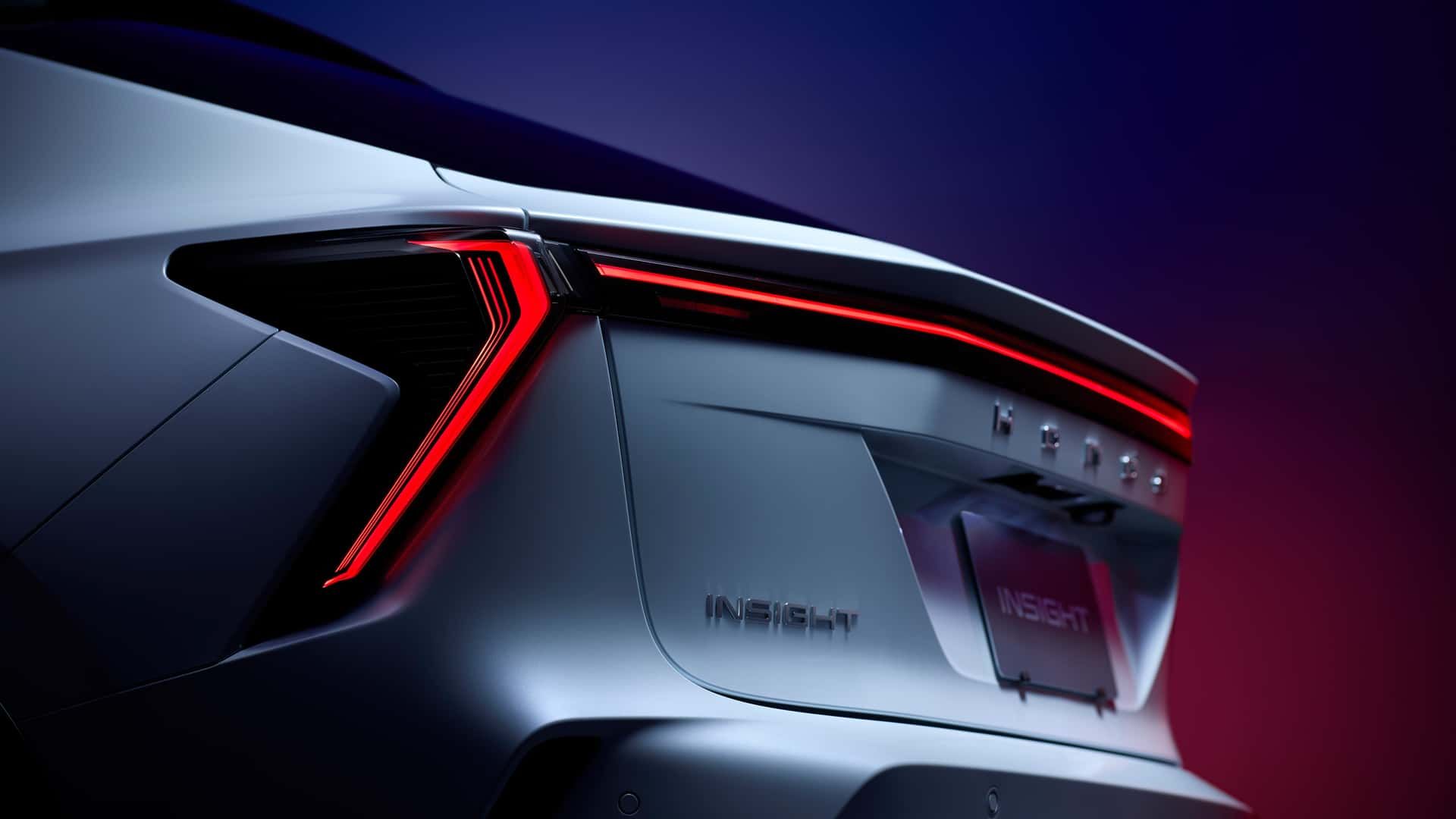


Return of the Insight Places a Historic Honda Name Back at the Center of the Competition for Space in the Electric Market, Now with an Unprecedented Proposal, Focus on Embedded Technology, and a Turn that Brings the Model Closer to the Strongest Trends Seen in Recent Asian SUVs.
Honda has confirmed the return of the Insight in Japan, now in an unprecedented configuration for the lineup: an Electric SUV.
The model was presented by the brand on March 5, 2026, with a launch planned for the Japanese spring and reservations opening on March 19.
In the official statement, the manufacturer highlights a range of over 500 km on the WLTC cycle, a new positioning as a crossover, and the definitive shift from a hybrid powertrain to fully electric propulsion.
-
The car stored for 38 years: when opening the barn door, what appears is breathtaking and looks like a scene from a movie!

-
Fiat works miracles in the Brazilian market, lowers the price of its 0 km hatch to R$ 69,990, reestablishes the model as the cheapest car in the country, and reignites the battle against Kwid and C3.
-
Chevette with cooking gas: How the gas cylinder ends up being used in cars clandestinely and why this makeshift solution can result in leaks, explosions, damaged engines, and seized vehicles.

-
Fiat launches the new 2027 Toro hybrid with 48V, 176 hp, an electric motor of 15.5 hp, a 0.85 kWh battery, up to 7% fuel savings, 8% fewer emissions, and possible exemption from IPVA.

The reappearance of the name is notable because the Insight was the first mass-produced hybrid by Honda and one of the most associated names with the beginning of the technological competition with the Toyota Prius.
Since its debut in 1999, the car has changed its proposal several times, evolving through coupe, hatchback, and sedan.
In its fourth generation, the shift is even deeper: the combustion engine is out, an electric platform is in, and the design adopts the visual language of medium SUVs.
Honda Insight Electric Marks a New Phase for the Line

Honda states that it chose the name Insight again because it believes the model has always kept pace with the changes of its time.
According to the company, the new generation maintains this idea by inaugurating another phase of the family, now as an electric sports utility vehicle.
The launch also expands the brand’s electric offerings in the Japanese market, where the manufacturer’s lineup is still more known for hybrids and a few volume EVs.
Visually, the new Insight departs significantly from its predecessors.
The front features a cut-out lighting signature, the rear repeats the horizontal LED line, and the design prioritizes clean surfaces, with an elongated profile and a higher stance.
Honda describes the design as an EV with a strong personality, with lines that seek to convey a sense of movement and presence on the streets.
It has also confirmed five color options for the body in Japan.
Inside, the brand speaks of a more engaging environment and a focus on comfort for all occupants.
The model features a cabin design with rounded shapes, soft-touch materials, wireless charging, and a console solution that allows passage between the driver and front passenger.
In the back seat, Honda promises ample legroom, reclining backrests, and a proposal aimed at longer journeys, while the trunk has been designed for daily use and leisure.
Range, Battery, and Power of Honda’s New SUV

In the official Japanese announcement, the manufacturer was careful to reveal only part of the technical package.
The direct confirmation involves the launch in spring 2026, the opening of reservations on March 19, and a range exceeding 500 km on the WLTC standard.
The company also highlighted unprecedented equipment for a Honda sold in Japan, such as an aroma diffuser with six fragrances and an intelligent heating system that coordinates the steering wheel, seats, and other internal elements to reduce energy consumption and increase thermal comfort.
Numbers like 201 hp, 68.8 kWh, 310 Nm of torque, and the 12.8-inch multimedia center appear in specialized publications and automotive reports that associate the Japanese Insight with the e:NS2, electric crossover launched by Dongfeng Honda in China in 2024.
These vehicles indicate that the package includes a front motor of 150 kW, a 68.8 kWh battery, and a range of 545 km on the Chinese CLTC cycle.
The relationship between the two models does not arise by chance.
The external design, the cabin, and the overall architecture indicate a strong kinship, something noted by specialized international vehicles as well.
Additionally, recent reports claim that the Insight sold in Japan directly derives from the Chinese e:NS2, which would explain the coincidence between the torque cited by Honda in the new model and the data already known for the utility sold in China.
Still, the complete specs for the car for the Japanese market have not been fully published in the brand’s official statement.
Embedded Technology Brings Insight Closer to Chinese SUVs
Even with the partial disclosure of specifications, the positioning of the new Insight is already clear.

The cabin prioritizes convenience and internal climate features, something reinforced by Honda itself when highlighting the intelligent heating system and aroma diffuser as unprecedented differentiators in the country.
The focus is less on the legacy of the former economical hybrid and more on a user experience akin to that of more recent Chinese electric SUVs, with a strong technological appeal.
Industry publications add that this package includes a vertical central screen, digital dashboard, premium sound system, ambient lighting, ventilated seats, and a head-up display, as well as a Sport mode for quicker throttle responses.
Some of these items have not yet been officially detailed by Honda Japan at the launch but frequently appear in the descriptions of the e:NS2 and vehicles that covered the revival of the Insight based on this project.
The change in concept also helps explain the magnitude of Honda’s move in reviving a historic name.
Instead of betting on pure nostalgia, the company is repositioning the Insight as a showcase of transition between its previous electrification phase and the new generation of dedicated EVs.
The use of a already known base in China reduces development time and allows the automaker to reintroduce the name into the market with a product aligned with the current moment of the industry, where connectivity, range, and internal experience have gained more weight than mere efficiency of the powertrain.
In the end, the return of the Insight stirs the memory of a model that was born as a bold response to the hybrid race but returns in a completely different scenario.
Now, the competition is no longer limited to Prius and fuel efficiency.
The battle involves space, digital interface, comfort package, and the ability to convince a more demanding market that a traditional name can still have relevance in the full expansion phase of Electric SUVs.








Ja cometeu um grande ERRO em parar a fabricação do CIVIC no Brasil. Vai cometer outro,o Brasil e a terra dos Hybrid,quem for por esse caminho e aprender o caminho das pedras, irá dominar o nosso mercado.Hybrid flex, é o futuro,com autonomia de longo alcance quilometragem alta por litro, esses DOMINARÃO o nosso mercado.Estão à tanto tempo aqui e ainda NÃO APRENDERAM? Para nós os Elétricos estão distantes,sem as estruturas necessárias,mas os hybrid já são uma REALIDADE aqui para nós.Abra os olhos japonesada.
Essas montadoras estão acabando com a reputação delas, lançando essas caixas de sapatos com os nomes de ícones automobilística, bando de sem noção, e o pior e o comprador, esse realmente não gosta de carro, e só um utensílio para levar do ponto A ao B.