





 Portuguese
  English
  Spanish
  3 min of reading
  0 comments



Researchers Confirm That Earth’s Moon Has a Solid Inner Core and a Fluid Outer Core Influencing Its Magnetic Evolution
A new study published in Nature Geoscience revealed previously undiscovered details about the Moon’s internal structure, solving one of the greatest mysteries regarding Earth’s natural satellite. Using seismic data from the Apollo missions conducted by NASA between 1969 and 1972 and advanced geophysical simulations, scientists confirmed that the Moon has a solid inner core and a fluid outer core, both predominantly composed of iron, characteristics similar to those of Earth, according to an analysis conducted by researchers from the University of Côte d’Azur in France.
The study determined that the Moon’s inner core has a radius of approximately 258 km, while the fluid outer core measures about 362 km in radius. This discovery reinforces the theory that the Moon once had a strong magnetic field, similar to Earth’s, which dissipated over time. According to NASA, the differentiated structure of the core may have been essential for the evolution of the satellite and its gravitational interaction with Earth over billions of years.
What the Moon’s Core Discovery Means?

The existence of a metallic core provides explanations for various lunar phenomena already observed. According to the study published by the European Space Agency (ESA), around 3 billion years ago, the Moon had a strong magnetic field created by the movement of the fluid core. However, the deceleration of this movement over time caused the field to weaken, leaving the lunar surface unprotected against solar winds and micrometeoroids.
-
In Mexico, a 3,000-year-old Maya site with the dimensions of an entire city may have been built as a colossal map of the cosmos, created to represent the order of the universe and reveal how this people organized space, time, and rituals.

-
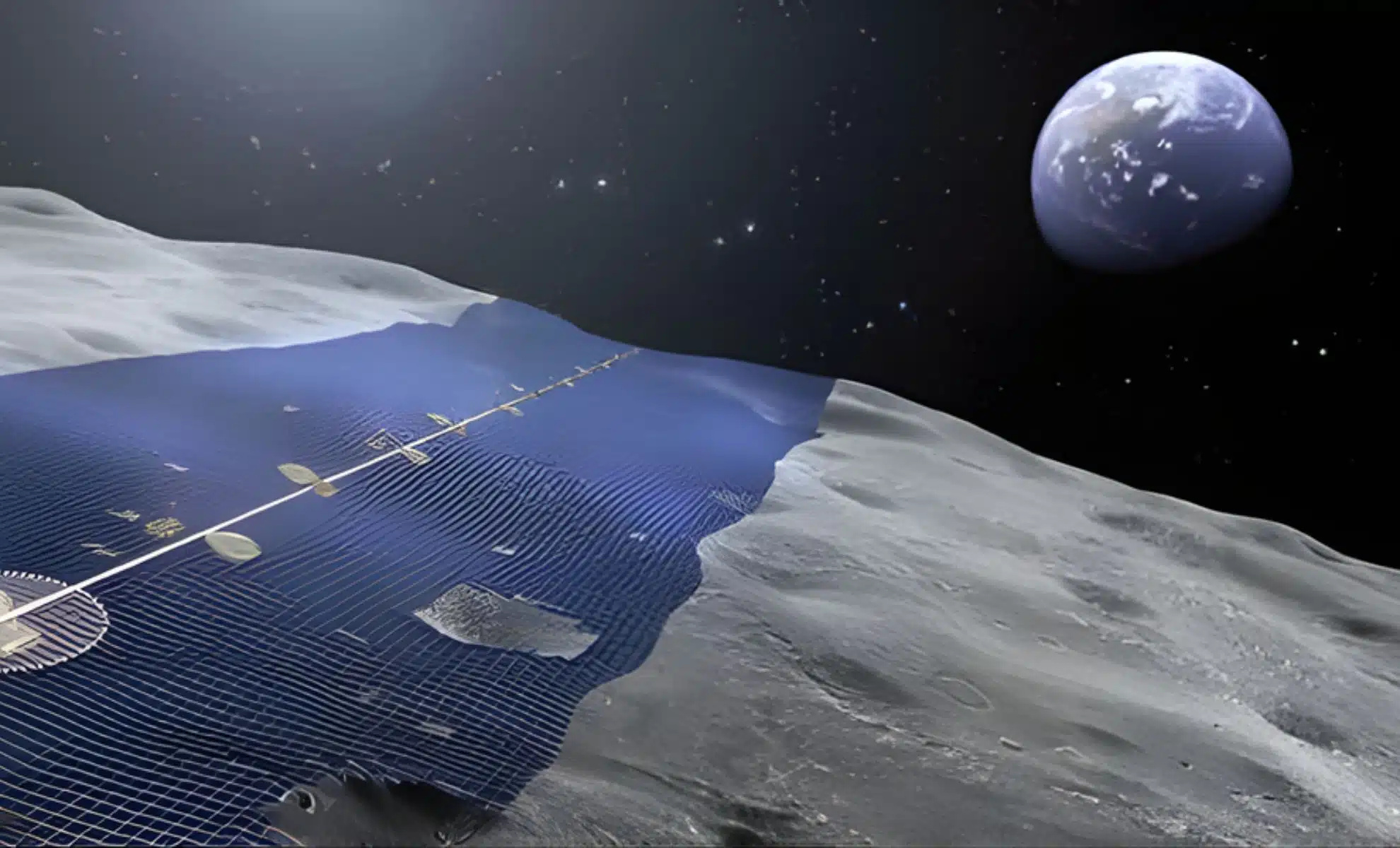
Japan wants to build a solar ring of 10,900 kilometers on the Moon to continuously send energy to Earth.
-
Weighing almost 1 ton, with temperatures of up to 3,000°C, the ability to launch 10,000 fragments within a radius of 1 km, capable of penetrating concrete and melting steel, Turkey’s terrifying bomb emerges as one of the most destructive non-nuclear weapons ever presented.

-
After a submarine disappeared beneath the “Doomsday Glacier,” scientists announce a new monstrous machine capable of operating at 3,000 meters depth to return to the heart of the ice and investigate a threat that could raise sea levels worldwide.


ESA points out that the absence of a magnetosphere may have been a crucial factor in the erosion of the lunar surface and the differences between its composition and that of Earth. The new research suggests that the Moon underwent a process of internal differentiation, where denser elements sank toward the core while lighter materials remained in the lunar crust and mantle.
How Scientists Discovered This?
To reach these conclusions, researchers analyzed seismic data collected during the Apollo missions and utilized advanced computational models to understand the Moon’s internal structure. According to the team from the University of Maryland, which participated in the research, the seismic waves detected by the seismometers installed by NASA in the 1970s indicated variations in the core’s density, which helped differentiate its solid and fluid composition.
Scientists also compared this information with gravitational analyses obtained from NASA’s GRAIL mission, which mapped small gravitational variations on the Moon between 2011 and 2012. The cross-referencing of this information was essential for creating a detailed three-dimensional model of the satellite’s internal structure.
What This Could Change for Future Missions?
The discovery has important implications for future lunar missions, including NASA’s Artemis Program, which aims to send astronauts to explore the Moon’s South Pole later this decade. According to a report released by the space agency itself, understanding the composition of the lunar core can help define safe landing sites and the construction of permanent lunar bases.
Scientists from the European Space Agency (ESA) also emphasize that understanding the Moon’s internal structure can provide insights into the formation of other celestial bodies, such as Mars and the moons of Jupiter and Saturn. The new discoveries will be taken into account in future robotic and crewed missions, which will seek to collect samples from the lunar mantle and core for more detailed analyses.







-

-

2 pessoas reagiram a isso.