





 Portuguese
  English
  Spanish
  6 min of reading
  0 comments


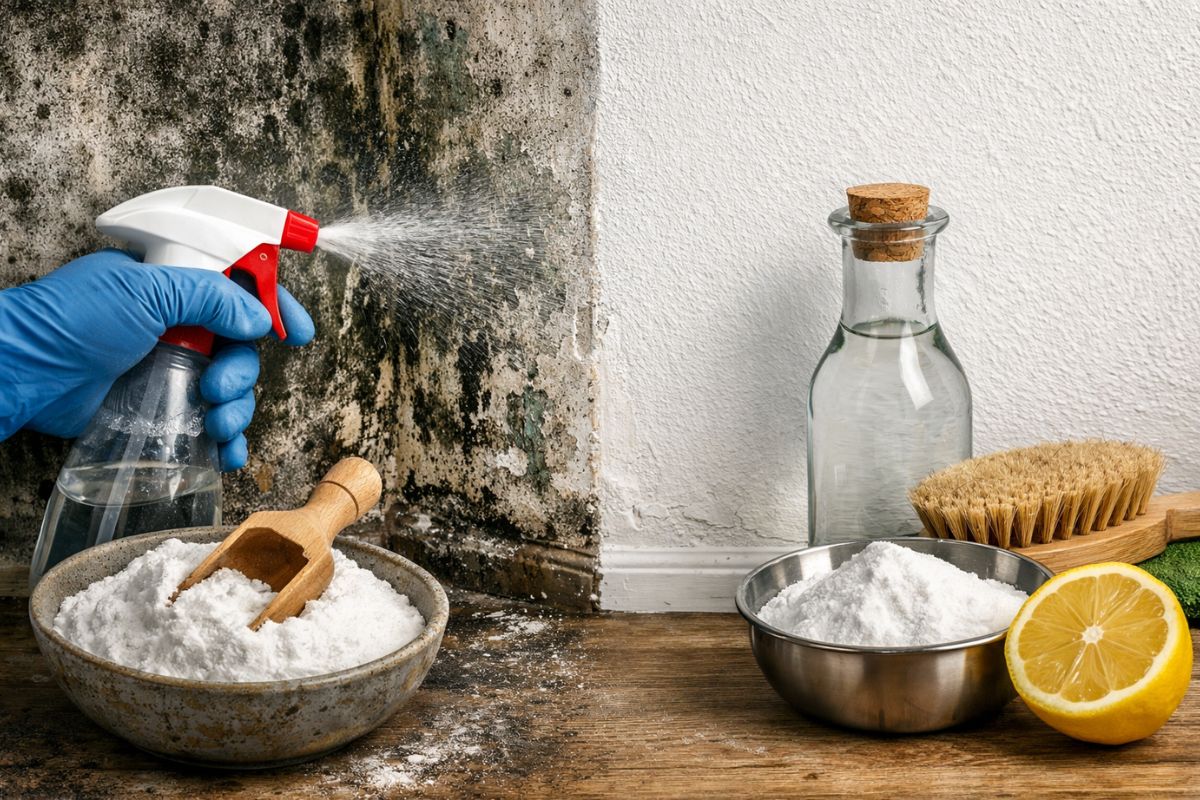
Mold Can Be Attacked With White Vinegar And Baking Soda, A Combination That Generates An Effervescent Reaction, Releases Hyphae Trapped In The Porosity Of The Paint And Cleans The Surface Layer Without Aggressive Sanding. The Technique Is Inexpensive, Improves The Air, And Has Become A Favorite In Home Renovations.
The mold on the walls is a problem that goes far beyond the dark stain that suddenly appears and “ruins” the look of the room. It sets into the porosity of the paint, spreads microorganisms, and worsens indoor air quality, especially when the environment is closed, humid, and poorly ventilated.
To combat mold without spending a fortune, a simple mixture has gained traction in home renovations: white vinegar and baking soda. The combination creates an effervescent reaction capable of releasing fungi trapped in the paint, facilitating the removal of biological debris and promoting efficient visual cleaning without aggressive sanding that compromises the coating.
Why Does Mold Dominate The Wall So Quickly

Mold thrives when the house offers the “perfect combo” for fungi: constant humidity, accumulated vapor, and lack of ventilation.
-
Italian researchers have detected what appears to be a second Sphinx buried under the sands of Egypt, and satellite scans reveal a gigantic underground megastructure hidden beneath the Giza Plateau for over 3,000 years.

-
There are 4,223 drums and 1,343 metal boxes concreted with 50-centimeter walls that store the radioactive waste from Cesium-137 in the worst radiological accident in Brazil, just 23 kilometers from Goiânia, with environmental monitoring every three months.

-
Giant Roman treasure found at the bottom of Lake Neuchâtel in Switzerland reveals an advanced trade system, circulation of goods, and armed escort in the Roman Empire about two thousand years ago.

-
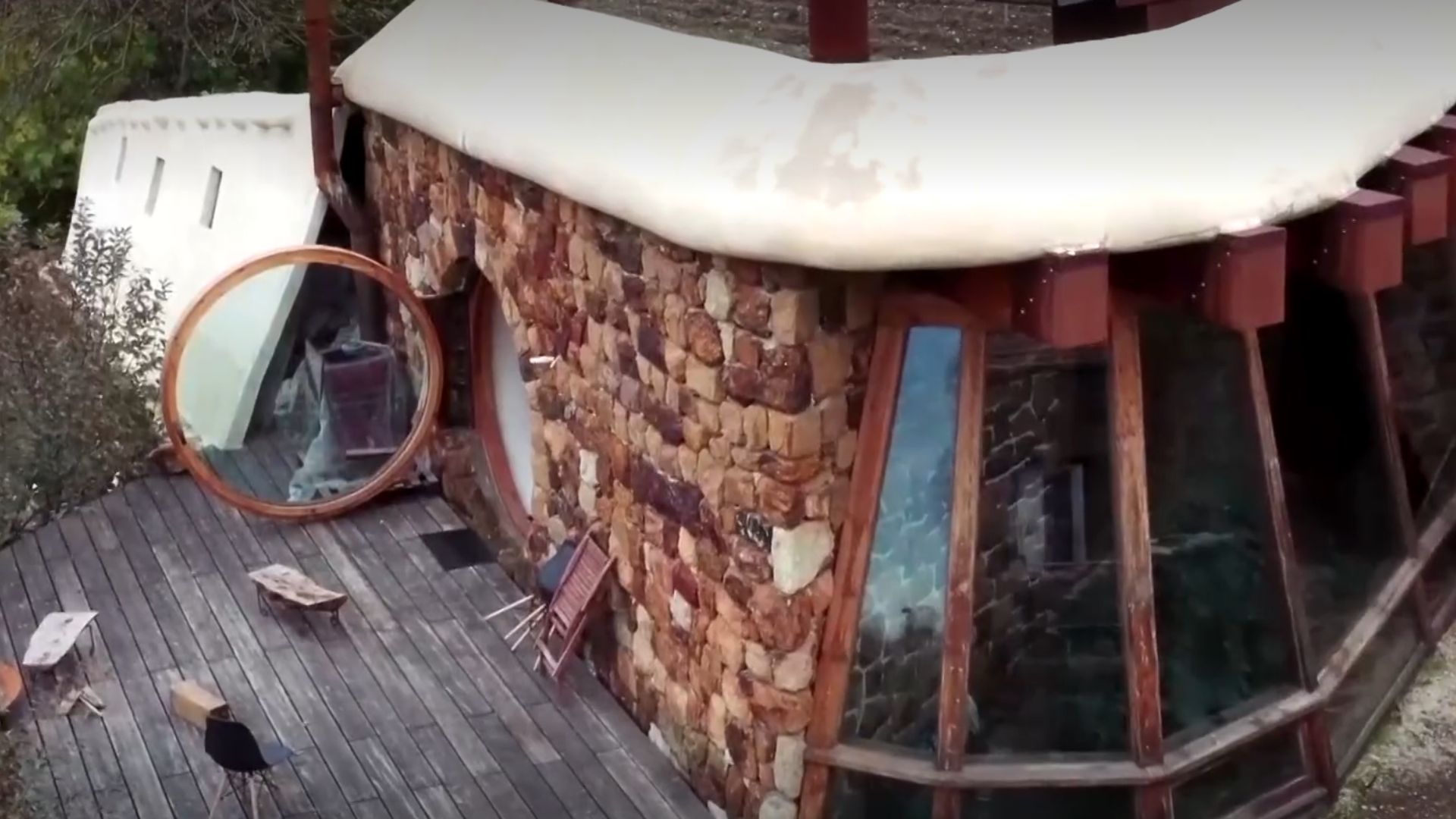
He buried 1,200 old tires in the walls to build his own self-sufficient house in the mountains with glass bottles, rainwater, and an integrated greenhouse.

Closed environments retain vapor and create an ideal microclimate for proliferation. On painted walls, the porosity of the paint serves as an anchoring point, allowing the microscopic structures of the fungi to cling and spread.
The dark stains that appear are the most visible sign, but not the only one. As the colony grows, the environment can feel heavy and poorly renewed air. The problem feeds on humidity, so any point that retains water in the environment increases the chance of new spots appearing quickly.
What The Mixture Does In Practice: Chemical Action And Mechanical Effect At The Same Time
The effectiveness of the method lies in two effects that complement each other in the fight against mold.
First, pure white vinegar serves an important chemical function. It contains acetic acid in a concentration considered ideal for denaturing the proteins of fungi, weakening their structure and reducing the adhesion of these microorganisms to the surface.
Then baking soda comes into play, which, when applied afterward, generates an effervescent reaction upon contact with the vinegar. This effervescence acts as a mechanical action that helps detach the hyphae of the fungi, which become trapped in the porosity of the paint.
In practice, the mixture “loosens” what was stuck, facilitating the removal of residues without damaging the wall with sanding.
Why The Technique Has Become A Favorite In Home Renovations
The main attraction is the combination of low cost with visible results. The method acts directly on the surface layer of the wall, removing dark stains and microorganisms without compromising the coating.
This makes the process appealing for those who want to resolve the visual aspect before repainting, reorganizing a room, or simply restoring the space without hiring labor for heavy work.
Additionally, the procedure is simple, with clear steps, and can be done carefully on different affected surfaces, as long as the action time of the vinegar and complete drying after cleaning are respected.
Step-By-Step Guide To Cleaning Mold With Baking Soda And Vinegar
To remove mold more effectively, the recommended method follows a sequence that takes advantage of the acidic action of the vinegar and the effervescence of the baking soda.
Step 1: Apply Pure White Vinegar
Spray pure white vinegar directly onto the stain. The recommendation is to wait sixty minutes for the acidic action to take effect on the contaminated surface. This period is important for the vinegar to do the work of weakening the fungus.
Step 2: Apply The Baking Soda Paste
After the waiting time, apply a paste made with vinegar and one tablespoon of baking soda on the dark areas that remain. At this stage, the effervescent reaction helps to detach the biological material that remained trapped in the paint.
Step 3: Rest Time For Persistent Stains
When the stain is more stubborn, the direct mixture of one tablespoon of baking soda with vinegar should rest for thirty minutes. This gives time for the effervescence to act and release residues more easily.
Step 4: Careful Scrubbing And Complete Drying
Scrub with soft bristles to avoid damaging the finish. Then, dry completely with a clean cloth. Drying is a critical part, as any residual moisture makes the return of mold easier and reduces the durability of the result.
What This Cleaning Resolves And What It Does Not Resolve
Cleaning with vinegar and baking soda improves the visual aspect and removes a significant amount of superficial mold, but it does not replace the correction of what is keeping the humidity in the environment. If there is infiltration, constant condensation, or poor ventilation, the wall can quickly show stains again.
Therefore, it is important to understand that cleaning is the initial “turning point,” but controlling the environment is what sustains the result.
How To Prevent Mold From Returning: The Real Target Is Humidity
After removing mold, the priority is to prevent humidity from continuing to feed new spots. A central point is to keep the relative humidity of the air below 60 percent, as humid environments accelerate proliferation.
Closed environments accumulate vapor and “hold” humidity, so improving ventilation is part of the solution.
In places with low air circulation, dehumidifiers are recommended to reduce excess humidity, especially in closets and rooms with low external ventilation.
When there is infiltration, the care needs to be deeper. Measures such as waterproofing, ventilation adjustments, and the use of dehumidifiers help, but in structures that require correction, the advice is to consult a mason to assess the origin and necessary repairs.
Once the wall is completely dry, using antifungal paints can prolong the conservation state of the treated area, reducing the chance of mold reappearing in the short term.
Safety Precautions: Why Protection Is Essential In Closed Environments
Removing mold is not just scrubbing and done. Direct contact with spores can cause severe allergic reactions and respiratory issues during handling, especially at the moment of scrubbing, when particles can spread in the air.
To reduce biological risk, some protective items are recommended:
- N95 Respiratory Protection Mask to filter invisible spores during scrubbing
- Durable Rubber Gloves to prevent vinegar’s acidity from coming into contact with the skin
- Side Protection Goggles to prevent splashes from the reaction from reaching the eyes
These physical barriers reduce the chance of suspended particles contacting mucous membranes and make the cleaning process safer.
The Impact on Daily Life: Why Clean Walls Change The Air In The House
Preventive maintenance and proper cleaning immediately transform air quality, especially in environments where mold was already active.
A wall with fungus is not just an aesthetic problem because the continuous presence of microorganisms affects the comfort of the environment and can worsen allergic crises in sensitive people.
In addition to cleaning, continuous care depends on monitoring the signs the wall gives daily and acting before the stain reappears.
Monitoring points of infiltration during intense rain, acting quickly when signs of humidity appear, and not waiting for the stain to “take over” reduces the risk of recurrence. In environments with a history of vapor condensation, applying preventive cleaning solutions can prevent the formation of new mold spots.
Preventive Routine To Maintain The Result Longer
To keep the house free of mold, the logic is to create a simple routine of observation and humidity control.
- Check areas where air circulates little
- Prioritize complete drying of surfaces after cleaning
- Use dehumidifiers in closets and closed rooms
- Reinforce natural ventilation whenever possible
- Observe signs of infiltration, especially during heavy rain
- Consider antifungal paint after complete drying in case of recurrence
This set reduces the chance of return and prevents cleaning from needing to be repeated frequently.
When The Stain Insists: What Mold Is Trying To Warn
When mold reappears shortly after cleaning, there is usually a persistent cause: high humidity, untreated infiltration, or constantly closed environment. In these cases, the wall “warns” that the problem is not just superficial.
Cleaning with baking soda and vinegar remains useful for controlling the appearance and reducing the fungus on the outer layer, but the durability of the result depends on resolving what is feeding the mold. Without this, the cycle repeats.
Have you ever tried this mixture to eliminate mold or are you still stuck in that eternal battle against dark stains in your home?










-

-

-

-

-

12 pessoas reagiram a isso.