





 Portuguese
  English
  Spanish
  5 min of reading
  0 comments


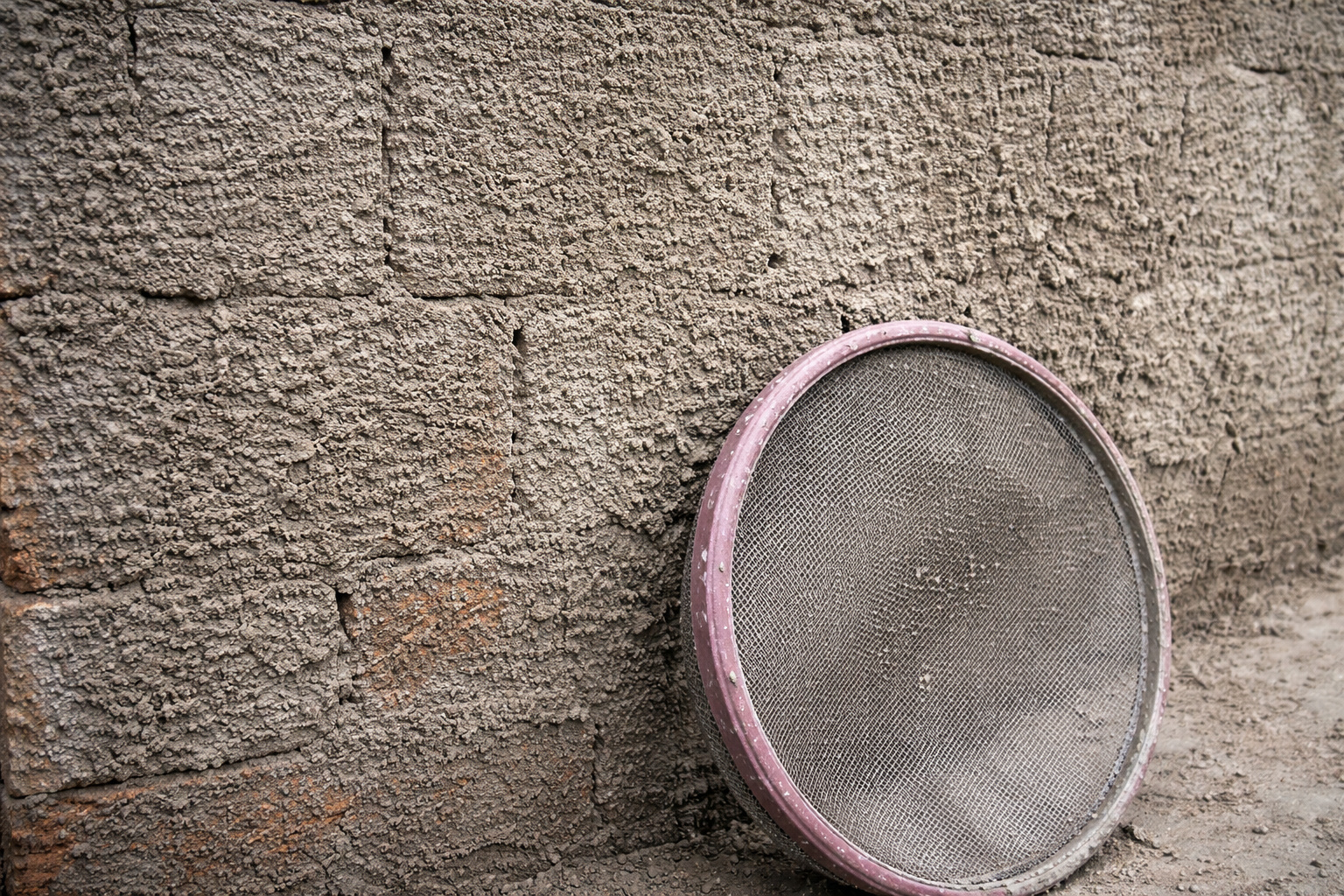
The Spraying Technique with a Sieve Creates Rustic Texture on Walls, Improves Paint Adhesion, and Increases Protection Against Sun and Rain on Facades.
In civil construction, the finishing of external walls usually represents an important stage for both aesthetics and durability of buildings. Among the traditional techniques used in construction and renovation is the spraying applied with a metal sieve, a simple method that creates a rustic texture and improves surface protection. This technique consists of throwing small particles of mortar against the wall, forming an irregular layer that generates a decorative relief similar to natural stone. The method is widely used on the facades of residences, walls, and rural constructions.
In addition to the visual effect, the spraying with a sieve also plays an important technical role: increasing the adhesion of subsequent layers of plaster or paint, reducing the risk of peeling and infiltration. According to technical manuals for construction and civil engineering, spraying is often used as the first layer of surface preparation, especially when the wall is made of brick, block, or concrete.
What Is Spraying and Why Is It Applied to Walls
Spraying is a mixture of cement, sand, and water applied irregularly over the wall surface. Its main function is to create a rough base that allows for better adhesion of other layers of mortar or coating.
-
New CCR concrete paving technology promises roads up to 3x more durable, less maintenance, and cost reduction in Brazil.

-
Made from recycled plastic, plastic wood is gaining space in the construction industry because it does not rot, resists moisture, and reduces maintenance costs over the years.

-
Florianópolis will receive a million-dollar BRT that will begin construction in 2026 with nearly 400 million in funding from the federal government and the Inter-American Development Bank, and the map already shows the routes for the exclusive bus corridors.

-
Without a blueprint, without an engineer, and using scrap from the dump, a father spends 15 years building an 18-room castle for his daughter, featuring tram tracks, 13 fireplaces, and over 700 m², which may now be demolished.

According to technical recommendations for construction, very smooth surfaces can hinder the adhesion of plaster. By applying the spraying, the wall gains micro-reliefs that serve as anchoring points for the subsequent coating. This initial layer also helps to improve the wall’s resistance against:
- moisture
- temperature fluctuations
- direct action of rain
When applied correctly, the spraying can extend the lifespan of the facade finish.
How Spraying Applied with a Metal Sieve Works
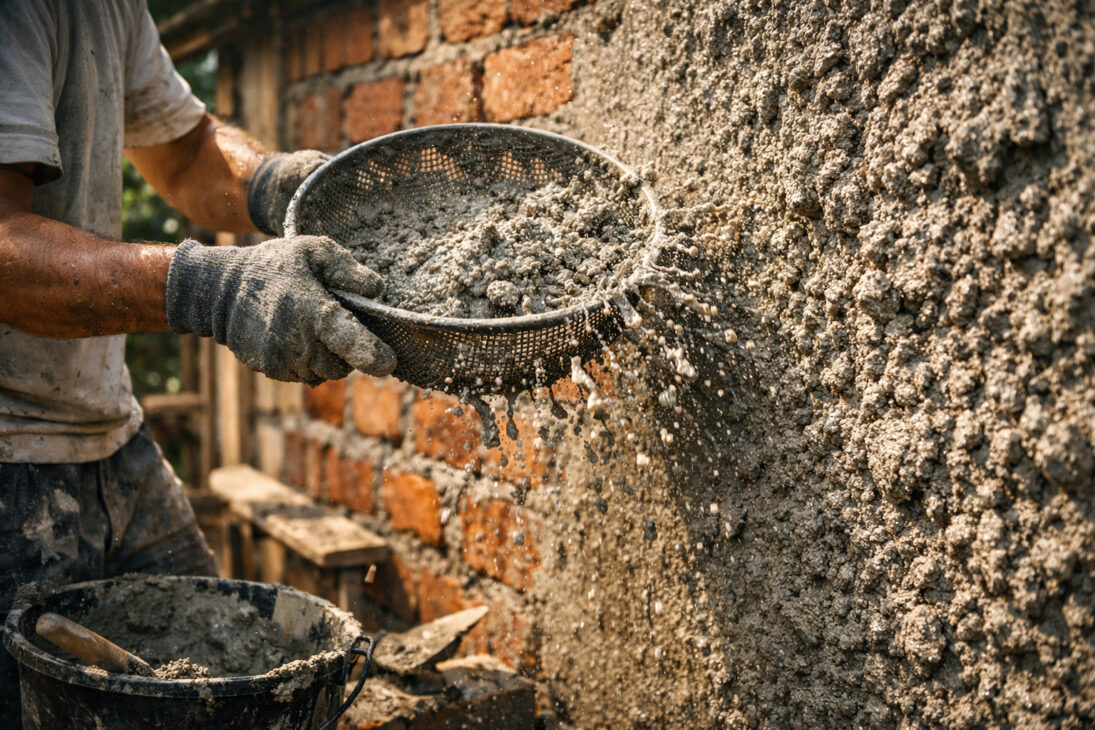
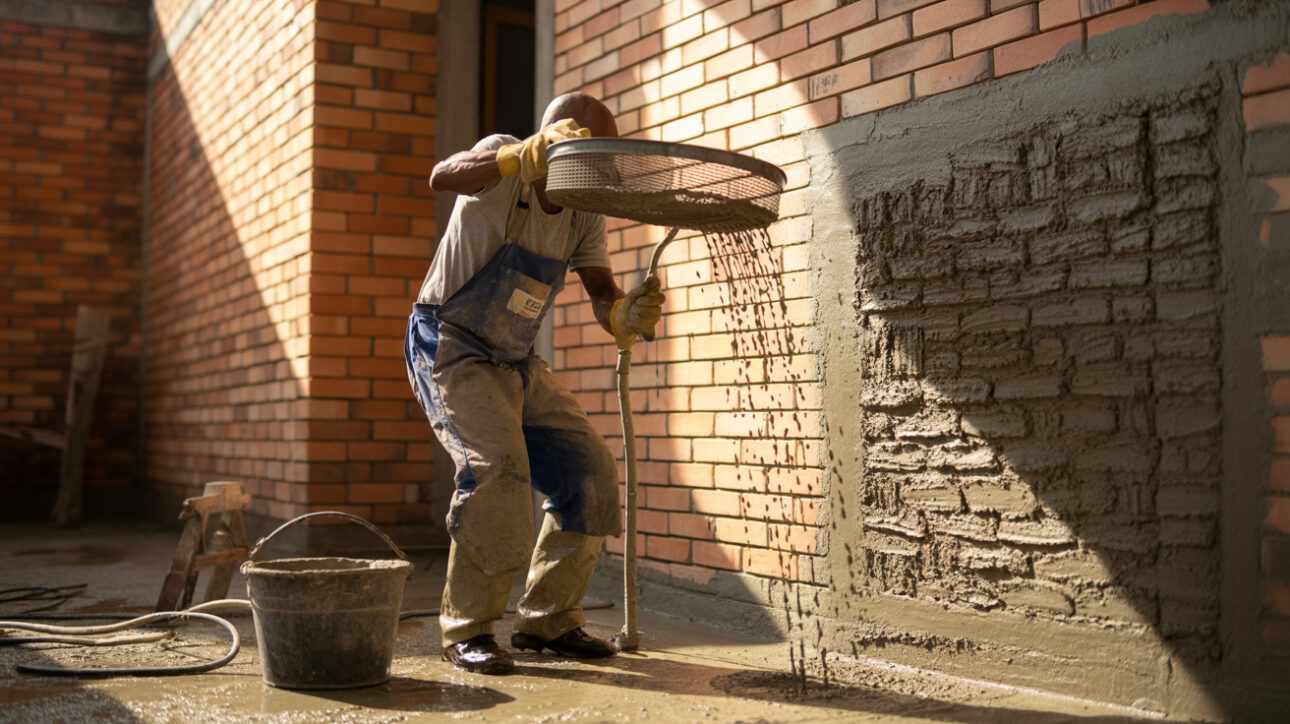
One of the simplest ways to apply the spraying is using a regular metal sieve, a tool commonly used in construction to separate sand or other materials. In this method, the mortar is placed inside the sieve and thrown against the wall with quick movements. The mesh of the sieve breaks the mortar into small particles, which spread across the surface creating the characteristic texture.
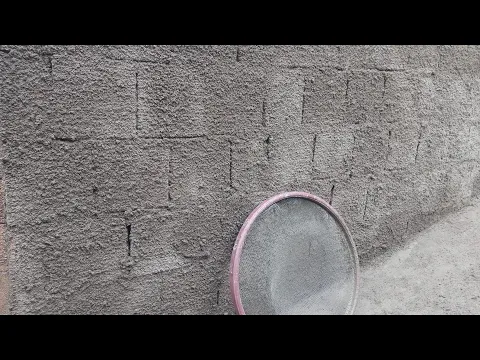

This procedure produces a visual effect similar to that of natural stones or rustic coatings used in architecture.
The result is a surface with small reliefs and irregularities that can be maintained as a final finish or painted later.
Traditional Mixture of Mortar for Spraying with a Sieve
The composition of the mortar used in spraying is relatively simple. One of the most common proportions used in construction is:
- 1 part cement
- 3 parts medium or coarse sand
- sufficient water to form a fluid mixture
In some cases, white glue or acrylic additives can be added, which enhance the adhesion of the mortar to the wall. The consistency of the mixture should be sufficiently liquid to allow the mortar to pass through the sieve, but not so fluid that it runs off the surface.
Preparing the Wall Before Application
Before applying the spraying, the surface needs to be properly prepared. The main precautions include:
- removing dust and debris from the wall
- eliminating loose parts of old plaster
- lightly moistening the surface
This last step is important because very dry walls can quickly absorb the water from the mortar, compromising the adhesion of the spraying. With the surface prepared, application can be carried out directly on brick, block, or concrete.
Step by Step of Applying Spraying with a Sieve
The application of spraying with a sieve follows a relatively simple process. First, the prepared mortar is placed inside the metal sieve.
Next, the sieve is positioned close to the wall and the material is thrown against the surface with quick movements. The aim is to create an irregular layer that covers the entire area without forming concentrated patches.
During application, the worker typically performs repetitive movements to distribute the spraying evenly. After application, the wall should remain undisturbed for a few hours to allow the cement to begin curing.
Decorative Effect Similar to Natural Stone
In addition to its technical function, the spraying with a sieve can also be used as a decorative finish.
When applied in a controlled manner, the relief created by the mortar generates a rustic texture that resembles surfaces of natural stone or mineral coatings used in architecture. This type of finish is common in:
- facades of rural houses
- garden walls
- external areas of residences
- rustic or Mediterranean architectural projects
After full drying, the surface can be painted with acrylic paints or mineral pigments to create different visual effects.
Resistance and Durability of the Spraying Technique with a Sieve
Spraying is considered a highly resistant coating when applied correctly. The rough layer formed by the mortar helps to reduce the direct impact of rainwater on the wall surface.
Moreover, the irregular relief hinders the continuous flow of water, contributing to reduce infiltrations.
Another important factor is the thermal dissipation capacity, as textured surfaces absorb and release heat differently compared to completely smooth walls. These characteristics have led to the technique being used for decades in constructions across different regions.
Common Applications in Civil Construction
The spraying with a sieve can be found in various types of works. Among the most frequent applications are:
- preparing walls for plaster
- coating external facades
- rustic finish on walls and gardens
- base for textured paints
The simplicity of the method also allows it to be applied in small renovations or residential projects.
A Traditional Technique That Is Still in Use
Despite the emergence of new industrialized coatings and textured paints, spraying remains a widely used technique in civil construction. This is because the method combines simplicity, low cost, and technical efficiency, allowing the creation of more resistant and visually interesting surfaces.
The application with a metal sieve represents a simple variation of this traditional technique, capable of generating a uniform texture with basic tools.
With proper surface preparation and correct use of the mortar, spraying can serve both structural and decorative purposes, contributing to the protection and finishing of external walls in buildings.









-

-

-

-

-

-

17 pessoas reagiram a isso.