





 Portuguese
  English
  Spanish
  5 min of reading
  0 comments


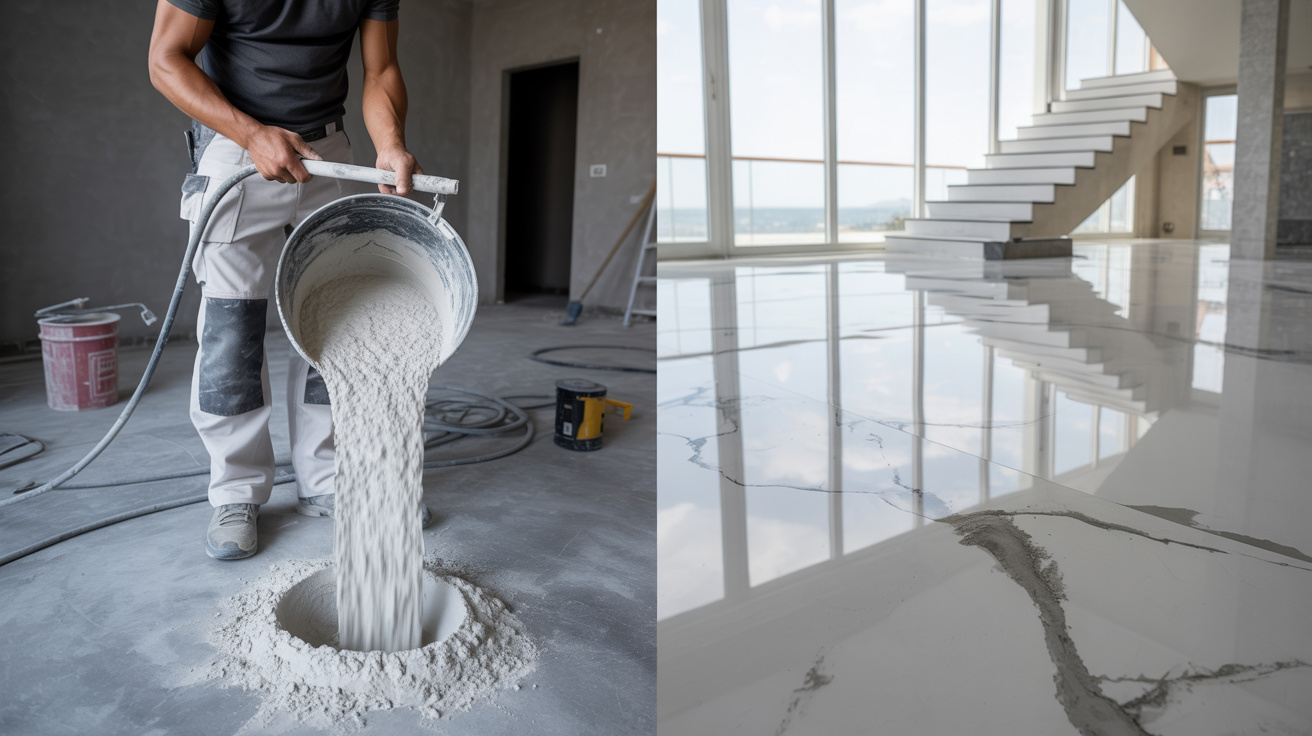
Mixture of Marble Dust with White Cement Creates Durable Floor Similar to Natural Stone, Technique Used in Marble and Decorative Coatings.
Among the techniques used in civil construction finishes, there is a method that combines simplicity and a sophisticated visual effect: the mixture of marble dust with white cement for creating decorative floors. This type of coating is known in many regions as marble, granilite, or terrazzo, depending on its composition and final finish. The technique utilizes simple mineral materials that, after application and polishing, produce a smooth, durable surface that resembles natural stone.
The result can be found in homes, staircases, hallways, and interior areas of buildings. When well-executed, the floor exhibits high durability, low porosity, and a glossy appearance, characteristics that explain why this type of finish has been used for decades in construction. In addition to its visual effect, the system also allows for the creation of different color patterns and textures, depending on the mixture used.
What is the Marble Dust Used in the Floor
Marble dust is a material obtained during the cutting and polishing of ornamental rocks. When blocks of marble are sawn into sheets for coating, a portion of the material is transformed into very fine particles. This mineral waste can be repurposed for various applications in civil construction.
-
Without a blueprint, without an engineer, and using scrap from the dump, a father spends 15 years building an 18-room castle for his daughter, featuring tram tracks, 13 fireplaces, and over 700 m², which may now be demolished.
-
A megaproject worth R$ 89 billion is advancing in Iraq and promises to change the game in global trade by creating a new corridor between Asia and Europe, reducing traditional routes and repositioning the country as a logistics powerhouse.

-
Goodbye bedside table: floating shelves become a trend in 2026 by freeing up space in the bedroom, improving circulation, bringing visual lightness, and integrating technology without taking up floor space.

-
Israel, Greece, and Cyprus signed an agreement in 2020 to transport gas from the Mediterranean to Europe via a 1,872 km pipeline, but Turkey claimed sovereignty over part of the maritime route, and the project never materialized.


Among the most common uses are:
- manufacture of special mortars
- production of granilite and marble
- decorative coatings
- mortar for repairs on stones
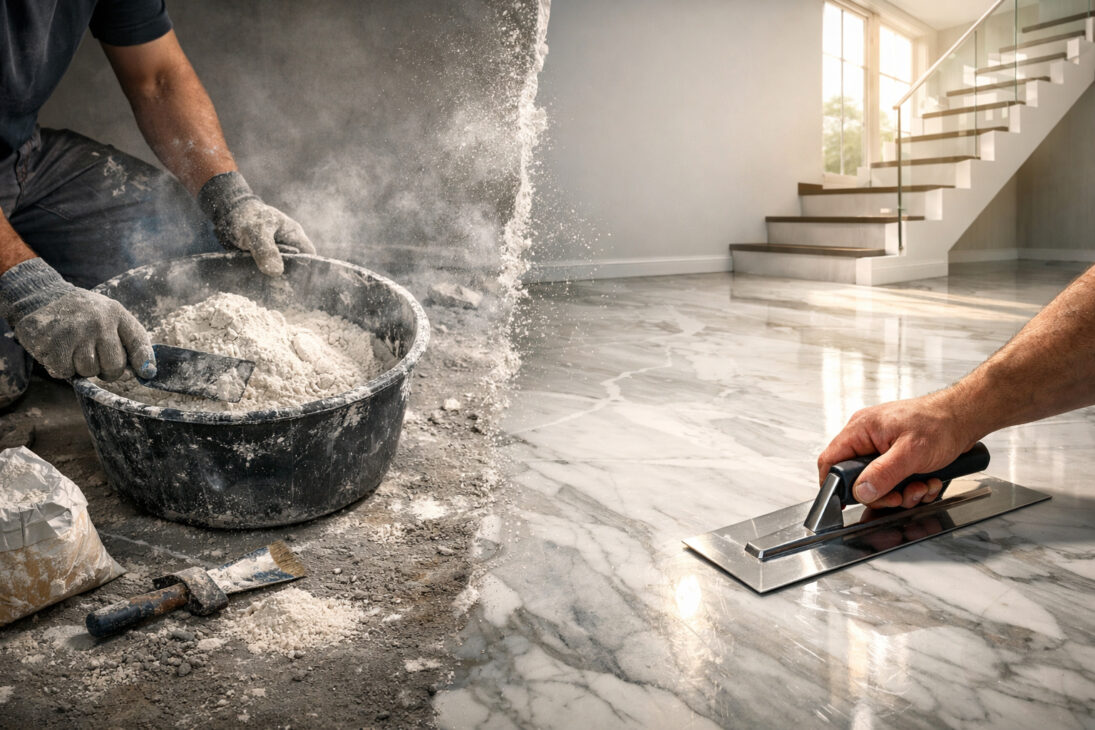
When mixed with white cement, marble dust acts as a fine mineral aggregate, responsible for giving texture and a natural stone-like appearance to the coating.
Why White Cement is Used in This Mixture
White cement is a special type of Portland cement produced with raw materials that contain low levels of iron and manganese. This composition allows the material to have a light color, different from traditional gray cement. This characteristic is important because it allows:
- highlighting the mineral aggregates in the mixture
- facilitating the application of pigments
- creating lighter decorative finishes
By combining white cement with marble dust, the final coating presents a visual appearance similar to that of polished stones, such as marble or granite.
How the Marmorite or Granilite Floor Works
The floor produced with marble dust and white cement follows the same principle as coatings known as granilite or terrazzo. These systems consist of three main stages:
- base preparation
- application of the mineral mortar layer
- sanding and polishing of the surface
After the curing of the cement, the surface is sanded with specific equipment. This process removes the top layer and exposes the mineral particles of the mixture. The result is a smooth and uniform surface with small visible stone points.
This finish creates the characteristic appearance of polished mineral floors.
Typical Composition of the Mixture
Although there are variations depending on the application, a common formulation for this type of floor includes:
- 1 part white cement
- 2 to 3 parts marble dust
- enough water to form a consistent mortar
In some applications, the following may also be added:
- small crushed marble stones
- mineral pigments to create colors
- plasticizers to improve workability
The final mixture should have a consistency similar to that of a mortar used in coatings.
Base Preparation Before the Application of the Mixture of Marble Dust with White Cement
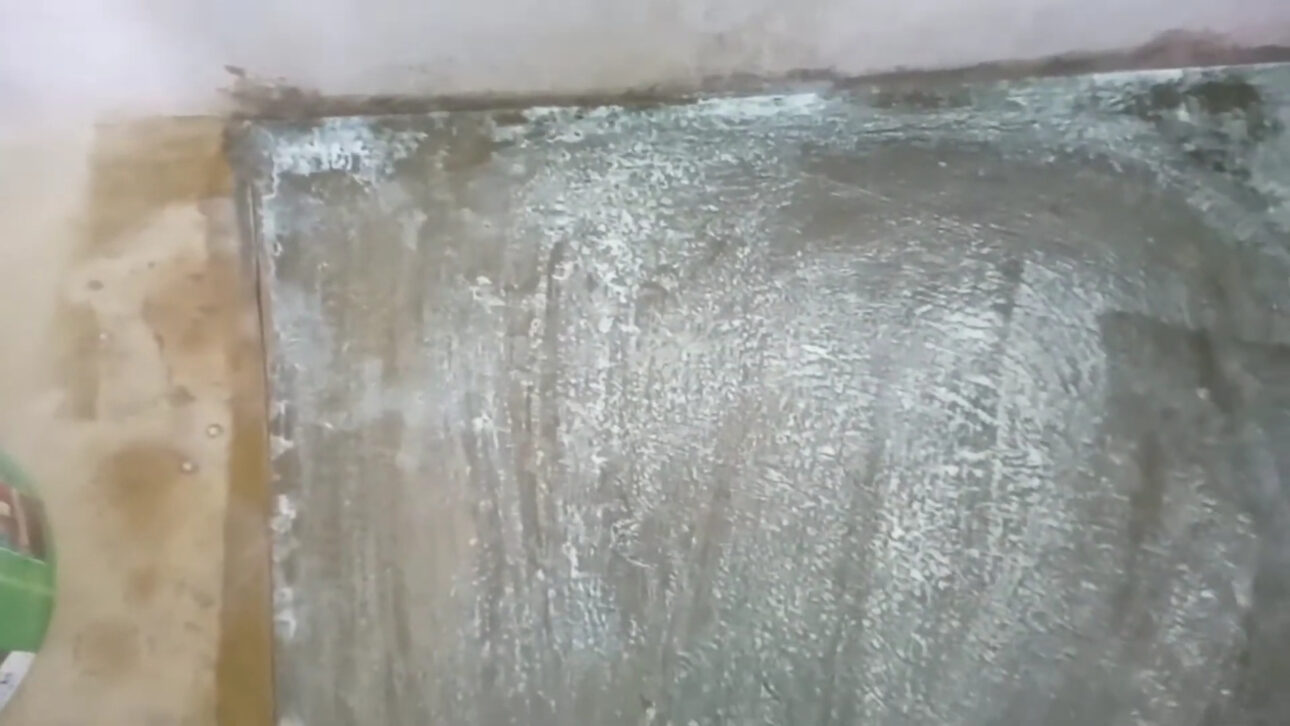
For the floor to exhibit good adhesion and durability, the base surface needs to be properly prepared. Among the procedures normally adopted are:
- complete cleaning of the area
- removal of dust or debris
- leveling of the surface
- application of a leveling layer
In many cases, the floor is applied over a previously cured concrete base. Proper preparation prevents cracks and ensures better adhesion of the coating.
Application of the Coating of Mixture of Marble Dust with White Cement
The prepared mixture is spread over the surface with the help of metal trowels. During this phase, the goal is to create an even layer with sufficient thickness to allow for subsequent polishing.


After application, the floor needs to cure for a few days. This period allows the cement to reach adequate strength.
Only after complete curing is the surface sanding performed.
Sanding and Polishing of the Floor
Sanding is a fundamental step to reveal the decorative effect of the coating. Equipment with abrasive discs is used to remove the superficial layer of the mortar. This process exposes the particles of marble dust and mineral aggregates present in the mixture.
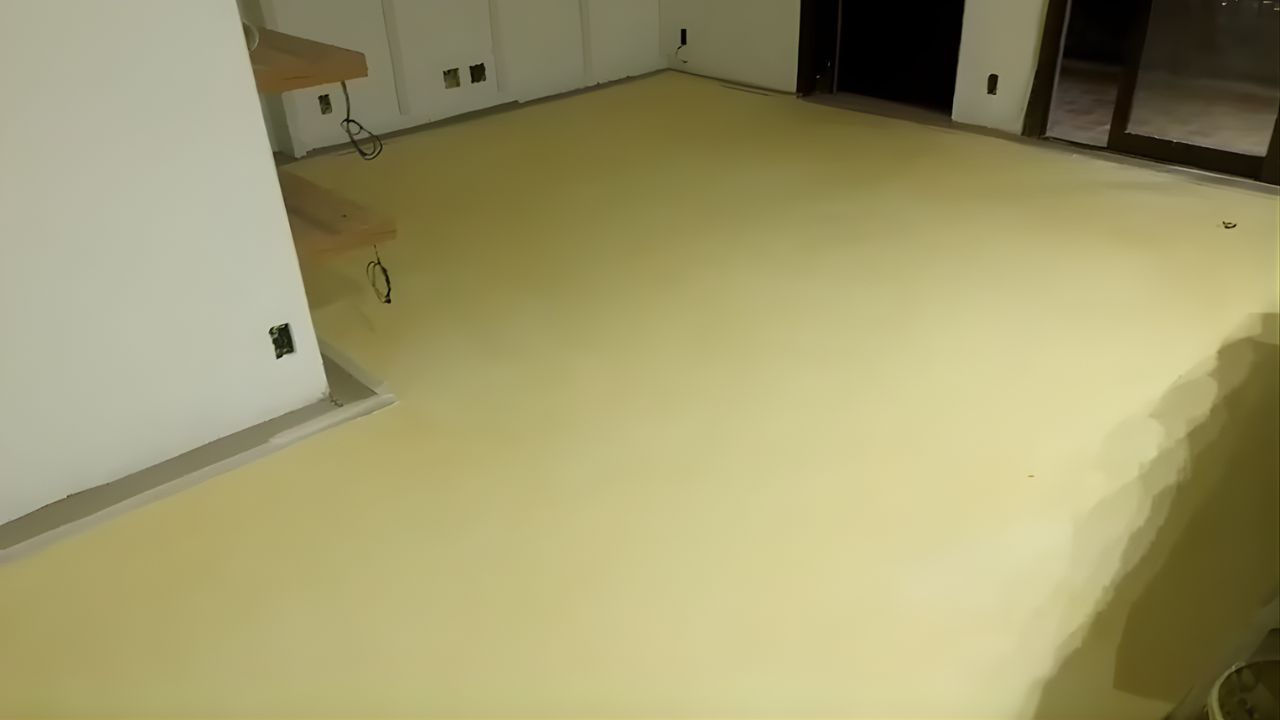
After sanding, the floor can receive additional polishing stages that increase the shine and improve the final finish. Depending on the level of polishing, the floor may acquire an appearance similar to that of polished natural stones.
Durability and Resistance of the Coating That Combines Mixture of Marble Dust with White Cement
One of the reasons explaining the popularity of granilite and other mineral floors is their resistance. When executed correctly, the coating presents:
- high wear resistance
- good durability
- low maintenance requirements
For this reason, this type of floor has been widely used in public buildings, schools, and hospitals throughout the 20th century. In many of these constructions, the floors remain intact even after decades of use.
Common Applications of This Type of Floor

The coating made with white cement and marble dust can be used in various areas. Among the most frequent applications are:
- residential rooms and hallways
- internal staircases
- commercial areas
- entrance halls
- covered balconies
In indoor environments, the final polishing is usually more intense to create shiny surfaces. In external areas, the finish can be less polished to prevent slipping.
A Mineral Finish Used for Decades in Architecture
The technique of floors with mineral aggregates is not recent. Systems similar to granilite have been used in European architecture since the 19th century. With the advancement of polishing techniques and material mixing, this type of coating has become increasingly popular in architectural projects.
Today, the method continues to be applied in different types of construction, especially in projects that seek durability, mineral appearance, and low maintenance costs.
By combining white cement and marble dust, the coating creates a surface that combines structural resistance and aesthetic similarity to natural stone, maintaining a finishing tradition that spans generations in civil construction.









Seja o primeiro a reagir!