





 English
  Francês
  Alemão
  Italiano
  Japonês
  Norueguês
  Portuguese
  Spanish
  3 min of reading
  0 comments


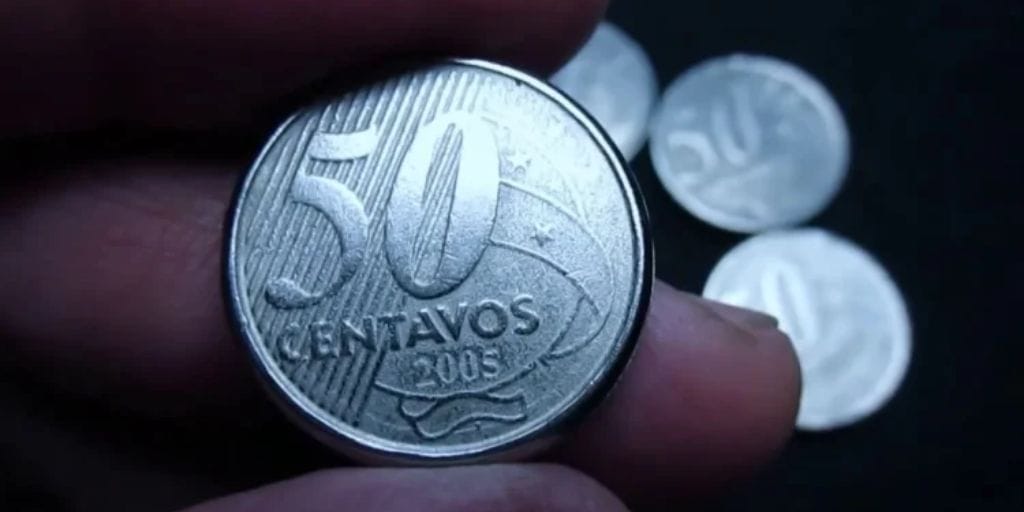
A 50-Cent Coin Sold for R$ 1,8 Thousand? Seems Crazy, But It Isn’t. This Is the Price Charged for a Rare Model of the Coin in Question.
According to information published by the portal “UOL,” the coin in question is known as ‘mula’ or hybrid coin and has this exorbitant value due to an error that caused it to show a 5 instead of 50.
This error was quickly perceived and the coins returned to the coffers of the Central Bank. However, this did not happen with all of them, as several thousand coins entered circulation, thus becoming the desire of many collectors.
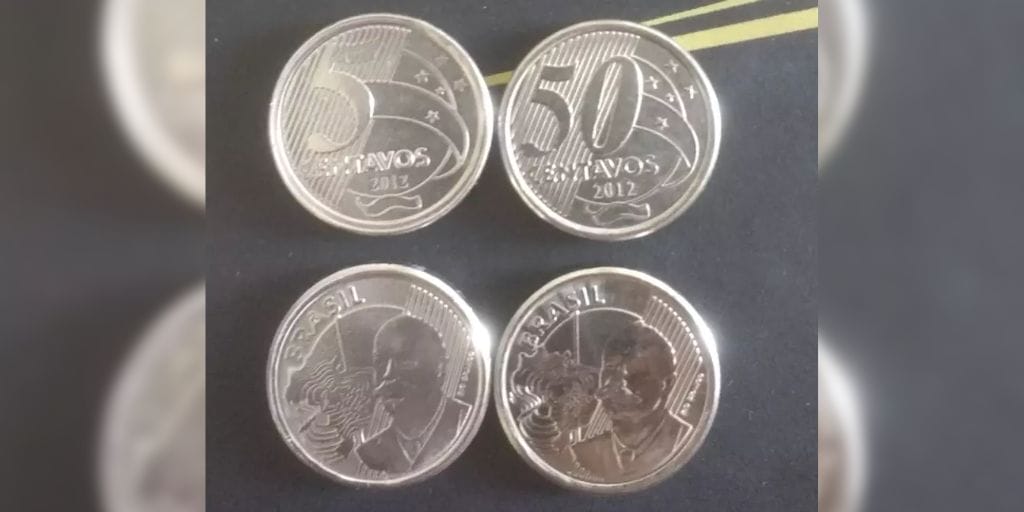
Coins Sold in Brazil
Currently, the coin selling sector has been experiencing a good moment in Brazil, especially after the Rio de Janeiro Olympics. At that time, some commemorative coins were launched, which ended up boosting and popularizing the sale and collection of these items.
-
Unemployment rises again to 5.8% at the beginning of 2026, raising alarms about the end of temporary positions and its impact on the Brazilian job market.

-
Document organization can cut invisible costs in small businesses, a simple step that prevents waste, rework, and losses in daily operations.

-
Chinese giant worth nearly R$ 4 billion that manufactures cables for electric cars, solar energy, and robotics wants to open a factory in SC.

-
Many employers do not know, but the law guarantees domestic workers a 25% increase in salary during trips, 50% for overtime, 20% for night shifts, and 17 additional benefits that can lead to labor lawsuits if not paid.


Classification of a Rare Coin
Also, according to the website mentioned at the beginning of the article, Oswaldo Rodrigues, who is director of communication of the Brazilian Numismatic Society (SNB), reports that to establish the value of a coin, it is necessary to pay attention to various aspects, and it is also important to understand the subject.
In this sense, he states that the classification of valuable coins is made according to the degree of preservation, with a standard to qualify coins into predetermined categories. Here are the categories:
Uncirculated (UC) – here, the coin shows no signs of wear or handling.
Superb (S) – in this case, the coin should show approximately 90% of the details of the original minting.
Very Fine (VF) – this category represents items with approximately 70% of the details of the original minting, but their level of wear must be homogeneous.
Fine (F) – the details of the original minting should appear in approximately 50%, with more details being more apparent in certain areas of the coin than in others, especially in the high details of the minting, letters, and numbers.
Good (G) – here, there should be a minimum of 25% of the details of the original minting, with an irregular distribution of strong handling signs across the field of the coin and its rim.
Fair (F) – finally, in this classification, only the silhouette of the main figure is presented, and the letters of the periphery, when they exist, are almost engulfed by the worn rim. They are not collectible, except in cases of extremely rare coins.
According to the specialist, it is worth noting that the closer a coin is to the moment it left the minting machine, the better it is for a collection. In this sense, he explains that a coin worn from much circulation is not of interest to a collector.
Except in cases where the coin in question falls into the high rarity classification. “Always think in terms of fewer than 100 coins available in the world, never think that a coin is rare when there are 20 million changing hands. An important factor in collectible value is the number of coins that were produced,” he details.







Seja o primeiro a reagir!