





 Portuguese
  English
  Spanish
  6 min of reading
  101 comments


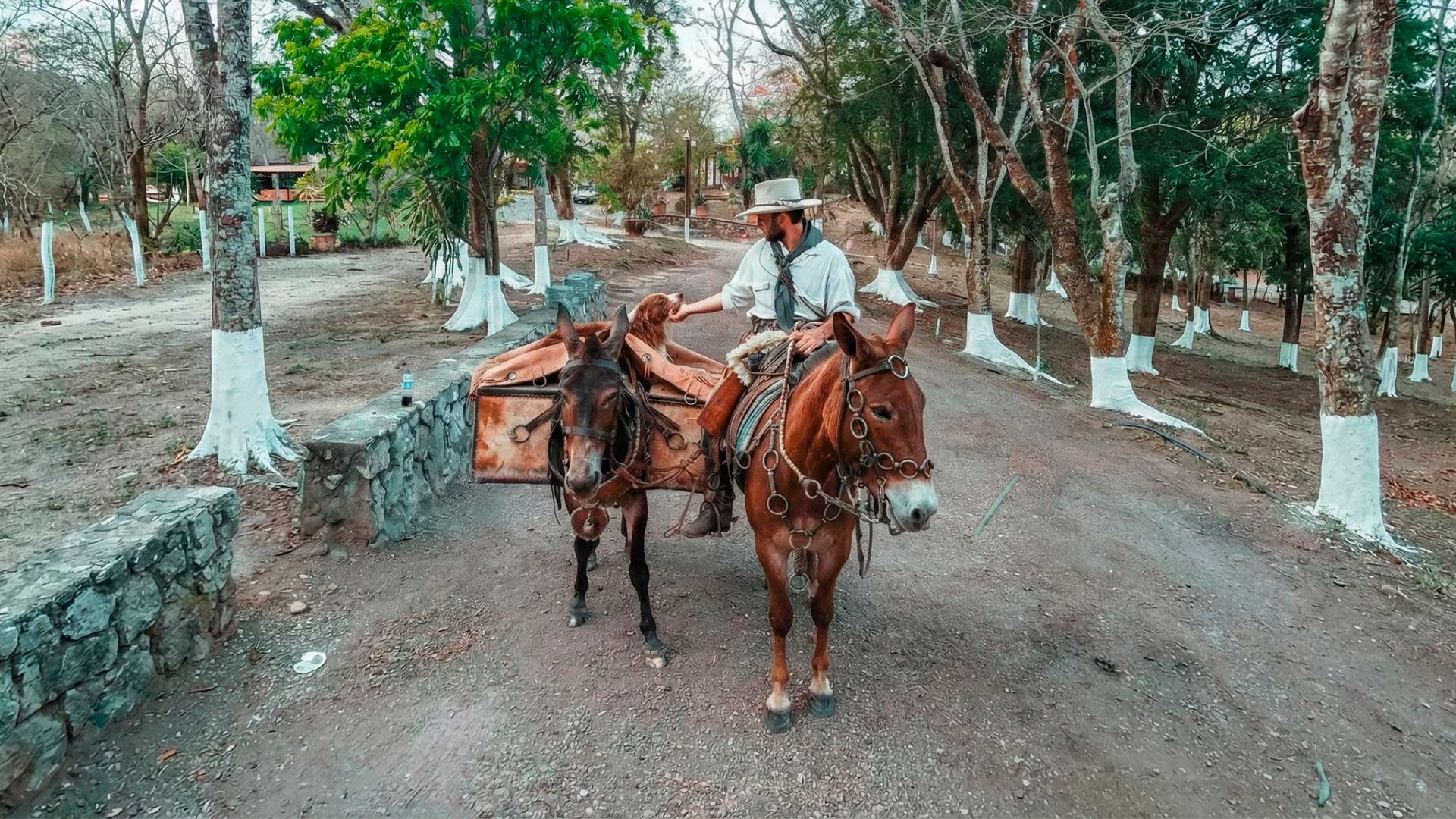


Paulista Engineer, Four-Time Berrante Champion in Barretos, Crosses the Americas on an Expedition of About 10 Thousand Km on Muleback to Return from the United States to Brazil, Bringing the Caipira Culture of Orindiúva to the World and Sparking Debate on the Limits Between Adventure, Faith, and Risk on the Road
Pedro Henrique Biondo, known as Pedro Berranteiro, is in the midst of a journey that seems like a movie script. The civil engineer and berrante competitor decided to return from the United States to Brazil mounted on mules, accompanied by his dog Bastião and a veterinarian who follows in a pickup truck.
The mission is to reach the Festa do Peão de Barretos 2026, the biggest stage for the sertanejo culture in the country.
The expedition, dubbed “Berranteiro das Américas”, started in 2023, when Pedro left Barretos in a F-1000 truck and crossed 16 countries towards the United States. Only after this first leg of the journey did the challenge of returning begin, this time at a slow pace, covering about 10 thousand kilometers of trails and roads on muleback.
-
A rare storm transformed part of the Gulf into an unlikely scene of hail, extreme rain, and tornado risk in the middle of the desert, with volumes that exceeded the annual average in a single day.

-
Brazil catches the world’s attention with ships powered by ethanol and biodiesel that have lower emissions, an unprecedented certification with advantages in chartering, and a revolution in cabotage.

-
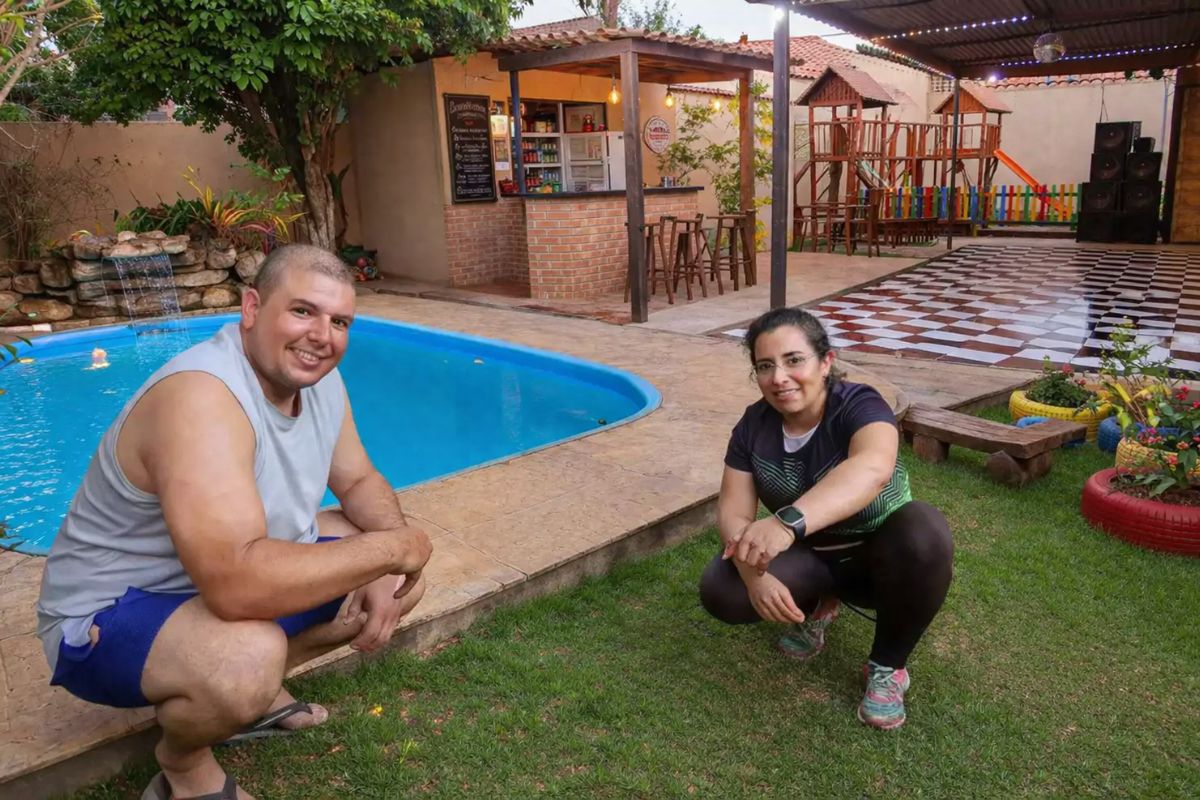
A couple who only has Sundays free has built a hand-dug pool, a hamburger joint, a dance hall, and a playground in their own home without hiring a mason, and even with breaks due to accidents and the pandemic, the work has never truly stopped.
-
Furniture made with aluminum and glass does not warp and has become an alternative to replace MDF in Brazil.

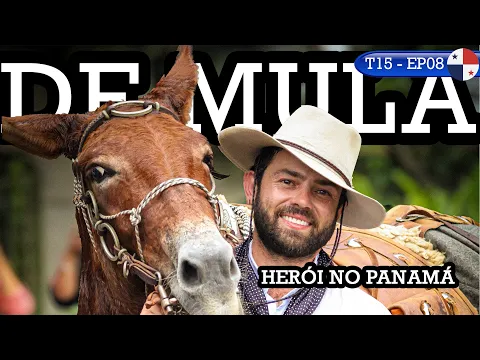
On social media, where he appears as @berranteiro, the paulista shows his routine on the road, cities, landscapes, and families that welcome him along the way. In interviews, he explains that the idea is to document each stretch to highlight the lifestyle of the cowpoke and the caipira culture that shaped him.
The story that now fascinates followers began in childhood. Born in Santo André, in Greater São Paulo, Pedro had serious respiratory problems as a baby.
Due to his health, he was taken at the age of two to Orindiúva, a rural area of São José do Rio Preto, where he lived with his grandparents and discovered the countryside, the berrante, and a lifestyle that now brings him back to Brazil at the pace of a troop.
Fragile Childhood in Santo André and Rebirth in Orindiúva
According to the newspaper Diário da Região, Pedro was born in Santo André and spent his first months between doctors and hospitalizations due to respiratory crises. At the age of two, the family decided to take him to Orindiúva, a rural district of Rio Preto, in search of cleaner air and a milder climate.
Daily contact with animals, land, and a simple life helped improve his health and shaped his bond with the countryside.

It was his grandmother who bought the first berrante to strengthen the boy’s breathing, in a sort of homemade physiotherapy. The instrument that began as treatment quickly became a toy, a pastime, and later his trademark. The sound of the horn echoing through the fields became part of the boy’s routine.
In adolescence, the berrante ceased to be just fun and became a commitment. Pedro began to train more frequently, learned different calls used in cattle herding, and at 19 years old, debuted in the berrante competition in Barretos, finishing in second place.
Today, he holds four championship titles in Barretos, a curriculum that reinforces his authority when discussing sertanejo culture and the traditions of cowboys.
How the Berranteiro das Américas Expedition on Mules Was Born
Even with his civil engineering career underway, Pedro told friends that he felt trapped in a mechanical routine, “on automatic.” According to Diário da Região, it was during this time that he met Filipe Masetti, the “Cavaleiro das Américas”, famous for crossing the continent on horseback from Canada to Barretos. The friendship and road stories sparked his desire to experience something similar, but with his own mark, the berrante.
The trip began to take shape in 2021, with two years of planning, seeking sponsorships, and defining the route.
In August 2023, shortly after participating in the Festa do Peão de Barretos, Pedro left the city in a F-1000 truck, with his dog Bastião, crossing 16 countries to the United States, going through different climates and borders.
The second stage, the most challenging, began in October 2024, leaving from Fort Worth, Texas. There, he received two mules from an American breeder, later named as fundamental parts of the expedition. It took about two months of training and adaptation until the animals were ready to face long daily journeys safely.
Since then, the group averages 25 kilometers per day, a pace considered safe for the animals, according to the traveler himself and the veterinarian accompanying him in a support truck. The route has passed through the United States, Mexico, Guatemala, El Salvador, Honduras, Costa Rica, and Panama, with entry into Colombia officially marking the return to South America.
The goal is to arrive in Barretos in August 2026, during the Festa do Peão, completing approximately 10 thousand kilometers on muleback and traversing over 10 countries.
According to reports from CNN Brasil and agribusiness portals, Pedro dreams of recording the journey in the Guinness World Records, as the first crossing of the Americas entirely done on mules with this extent.
Routine on the Road, Support from Locals, and Care for the Animals
Survival on the journey does not depend only on sponsorships. Pedro shares in interviews and on social media that he has been supported by local residents who welcome him to sleep and feed the animals.
In one of the stages, for example, he reported staying at the home of a resident in Panama while preparing to continue his journey toward Colombia.
In addition to documenting the adventure, the posts also serve to show the care for the mules and Bastião. The pair of animals is rotated, receives constant evaluations from the veterinarian, and has periods of rest.
Pedro states that he prefers to move slowly, with a limited number of kilometers per day, to “enjoy the trip” and preserve the health of the animals, who carry not only the saddles and baggage but also the flag of Brazil that accompanies the entourage.
Symbol of Caipira Culture and Debate on the Risks of Adventure
For experts in sertanejo culture, the berrante and the figure of the cowpoke are part of an immaterial heritage that connects states such as São Paulo, Minas Gerais, Goiás, and Mato Grosso, a region known as Paulistânia.
By taking the instrument and the typical attire to countries across the Americas, Pedro reinforces this identity and helps explain, outside Brazil, the significance of the Festa do Peão de Barretos and the cattle drives.
According to recent reports, the berranteiro states that his dream is to “take the culture of cowboys to the world” and that before the expedition, he felt that he was merely fulfilling daily obligations, without truly living what he desired.
The journey, therefore, is presented by him as a personal turning point, where he exchanges the engineering office for the dust of dirt roads and direct contact with those he meets along the way.
The same journey that captivates thousands of followers also raises questions. Some see the expedition as an extreme endeavor, exposing animals and humans to risks from dangerous roads, sudden climate changes, and lack of infrastructure.
Pedro and his team argue that the slow pace, the constant presence of a veterinarian, and the detailed planning of the route are sufficient to ensure animal welfare and safety. Nevertheless, the balance between adventure, tradition, and responsibility continues to fuel the debate surrounding the project.
The story of the resident of Orindiúva who returns from the USA to Brazil on mules can be seen as inspiration, audacity, or recklessness, depending on the perspective of those following. And you, how do you view this crossing, a necessary act to preserve caipira culture or an exaggerated risk for man and animals? Share your opinion in the comments.





A aventura do Pedro Berranteiro eu considero tranquila, segura e importante para divulgar a nossa cultura. Se alguém não concorda, vamos respeitar a falta de conhecimento em relação a capacidade de um muar bem cuidado.
Acho uma aventura muito arriscada, mas, admiro o espírito corajoso do Pedro. Acredito que vai dar certo.
Fé em Deus e pé na estrada.
Penso o mesmo. Egoísta,imprudente, Sacrificar os animalzinhos em busca de realizar sonho. Tem que ser denunciado por maus tratos e responder criminalmente. Já que é masoquista, vai a pé