





 Portuguese
  English
  Spanish
  4 min of reading
  0 comments


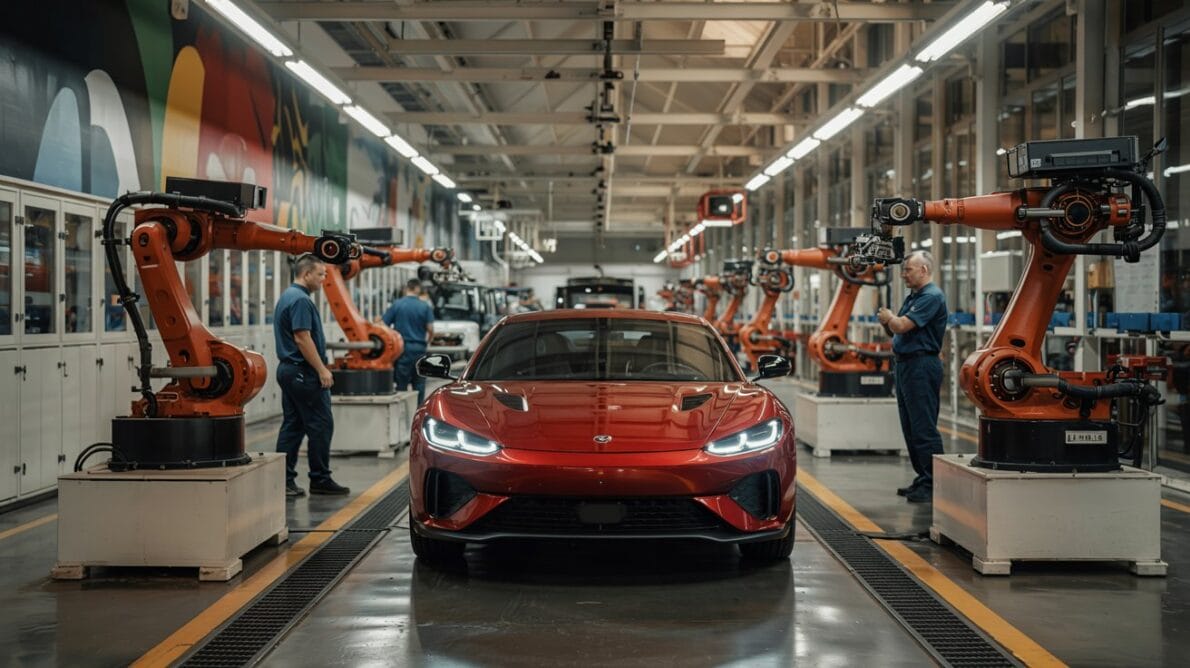
The Brazilian Automotive Sector Prepares For A Revolution, As Industry Giants Join Forces With Chinese Manufacturers. Strategic Alliances Promise A New Chapter, But With Unexpected Challenges For The Future Of The Local Market.
In light of the growing presence of Chinese brands in the Brazilian automotive market, traditional automakers have sought strategic alliances with manufacturers from China to enhance competitiveness, reduce costs, and increase sales in the country.
The movement, which has intensified in recent years, represents an adaptation of companies to a constantly changing global scenario, where supply chains have become increasingly interdependent.
Partnerships like that of CAOA with Chery and the recent agreements signed by Volkswagen and Renault with Chinese automakers illustrate this trend.
-
“No one will make us change the Pix,” says Lula after the US report.

-
Less than a Tera TSI, up to 710 km of range and charging in 9 minutes: the new BYD Song Ultra expands the Chinese brand’s bet on increasingly faster, more technological, and competitively priced electric SUVs.

-
Lula responds directly to Trump and says that Pix is from Brazil and will not change under pressure from anyone, after a report from the United States pointed out the Brazilian payment system as an American trade barrier.

-
Amazon has just announced a new fee on all deliveries, and your online purchases will become more expensive starting April 17, including for those buying from the United States here in Brazil.

With the significant arrival of electric and hybrid vehicles from China — known for offering good quality at affordable prices — established companies in Brazil have begun to rethink their operational strategies.
The search for technological innovation, cost reduction, and access to modern platforms has motivated several manufacturers to strengthen ties with Asian companies.
Alliances Between Brazil And China Gain Strength In The Automotive Sector
One of the first and most emblematic examples of this synergy is the partnership between CAOA and Chery, officially announced at the end of 2017.
Since then, the union has resulted in joint operations in the country, focusing on the production of SUVs from the Tiggo line, assembled at CAOA’s industrial complex in Anápolis (GO).
The brand, which previously faced acceptance difficulties, managed to gain strength in the national market by combining CAOA’s distribution and after-sales expertise with the engineering and design of Chinese models.
Another relevant movement was the recent announcement by Volkswagen, which revealed that the new generation of the Amarok pickup will be built on the platform of the Maxus T90 — a project from SAIC Motors, one of the largest automakers in China.
The choice of the Chinese structure demonstrates not only confidence in Asian technology but also the economic viability of importing projects that have already been tested and approved in other emerging markets.
Renault, for its part, has also joined the movement. The French automaker has formed a strategic alliance with the Chinese giant Geely, seeking to develop and produce hybrid and electric vehicles with greater efficiency and lower costs.
This union should enable new models for markets like Brazil, which is increasingly interested in sustainable automobiles.
Globalization Of Production: A Logic That Strengthens
The partnerships between Brazilian and Chinese automakers reflect a logic that has dominated the global industry for decades: manufacturing where it is most efficient.
With globalization, it has become common practice to distribute stages of production across different countries, considering factors such as labor cost, proximity to raw materials, tax incentives, and technological know-how.
This dynamic contrasts with protectionist proposals, such as those advocated by figures like former U.S. President Donald Trump.
During his term, Trump attempted to promote a policy of “reindustrialization,” pushing for import tariffs and encouraging local production.
However, according to economics experts, this approach ignores the complexities and interdependence of global supply chains.
By trying to break away from this model, there is a risk of dismantling a structure that took decades to build.
Competitiveness, Cost, And Access To Technology
In the Brazilian context, agreements with Chinese companies turn out to be advantageous not only for cost reasons but also for access to cutting-edge technology at a faster pace.
China, which invests heavily in research and development, has become a leader in segments such as batteries for electric vehicles and autonomous driving systems.
By partnering with Chinese automakers, Brazilian companies can launch new models with advanced technologies without having to bear the high development costs alone.
Moreover, these partnerships allow Brazil to remain competitive in a global market increasingly focused on sustainability and innovation.
For consumers, the impact is positive: more options for modern vehicles, with affordable prices and technologies previously restricted to high-value imported models.
This change is likely to raise the standard of the national automotive market, even pressuring premium brands to offer more for less.
Future Scenario: New Agreements And Expansion
The expectation is that new partnerships will continue to be established in the coming years.
The Brazilian government, aware of the potential for foreign investments and the generation of local jobs, has sought to create a favorable environment for the establishment of new factories and distribution centers.
Programs to incentivize electric mobility and bilateral agreements with China should also strengthen this trend.
According to data from the National Association of Motor Vehicle Manufacturers (Anfavea), Brazil recorded an increase of over 30% in the sales of electrified vehicles between 2023 and 2024, with a forecast of continuous growth in 2025.
Brands like BYD, GWM (Great Wall Motors), and Nio have already announced ambitious plans to expand their operations in the country, which should further accelerate partnerships with local manufacturers.
Smart Strategy Or Dependence?
Although the agreements bring evident benefits, some analysts warn of the need for balance to avoid excessive dependence on foreign technology.
For Brazil to not become merely an assembler of imported parts, it is essential to invest in local innovation, skilled labor training, and the development of homegrown solutions.
The relationship with China should be one of cooperation, not subordination.
If well-structured, these partnerships can boost the national industry and position Brazil as a strategic automotive hub in Latin America.
What do you think, are these partnerships between Brazilian and Chinese automakers the right path to boost the automotive sector in the country, or do they represent a risk to industrial autonomy? Comment below and join the conversation!







Seja o primeiro a reagir!