





 Portuguese
  English
  Spanish
  3 min of reading
  0 comments


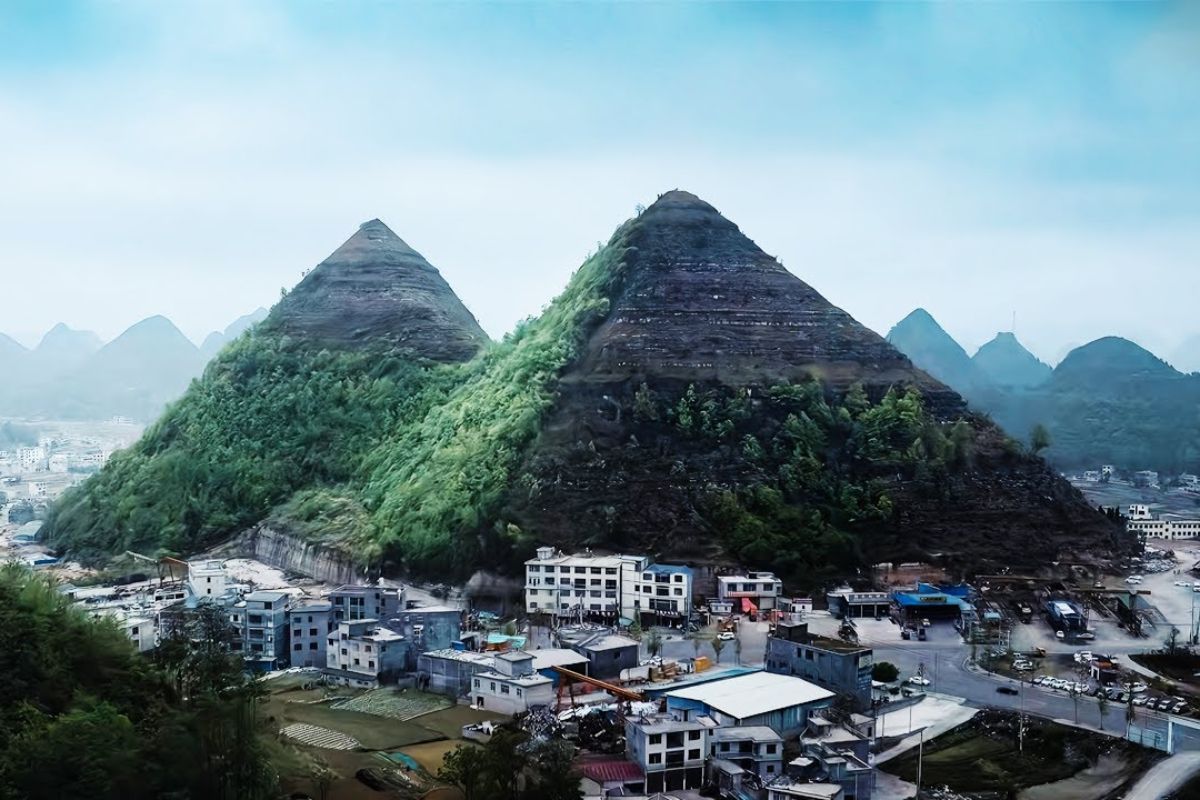
The Pyramid-Shaped Mountains Grab Attention In China For Their Steep Slopes, Almost Geometric Appearance, And Broad Scenery Seen From The Top, Resulting From Natural Rock Formations Shaped By Time And Local Relief
The pyramid-shaped mountains located in a rural area of China have sparked curiosity among visitors and geologists. From afar, their slopes resemble the pyramids of Egypt, with well-defined triangular faces and peaks that rise symmetrically, creating an almost artificial illusion. Even so, it is a completely natural phenomenon, resulting from the combined action of erosion, terrain inclination, and rock composition.
Climbing these mountains requires physical preparation and caution. The paths are steep, slippery, and without official trails, but the effort is rewarded with a panoramic view of rare beauty. From the top, the group of elevations spreads out like a field of stone pyramids, surrounded by green valleys and formations that repeat as far as the eye can see.
The Natural Origin Of Triangular Forms
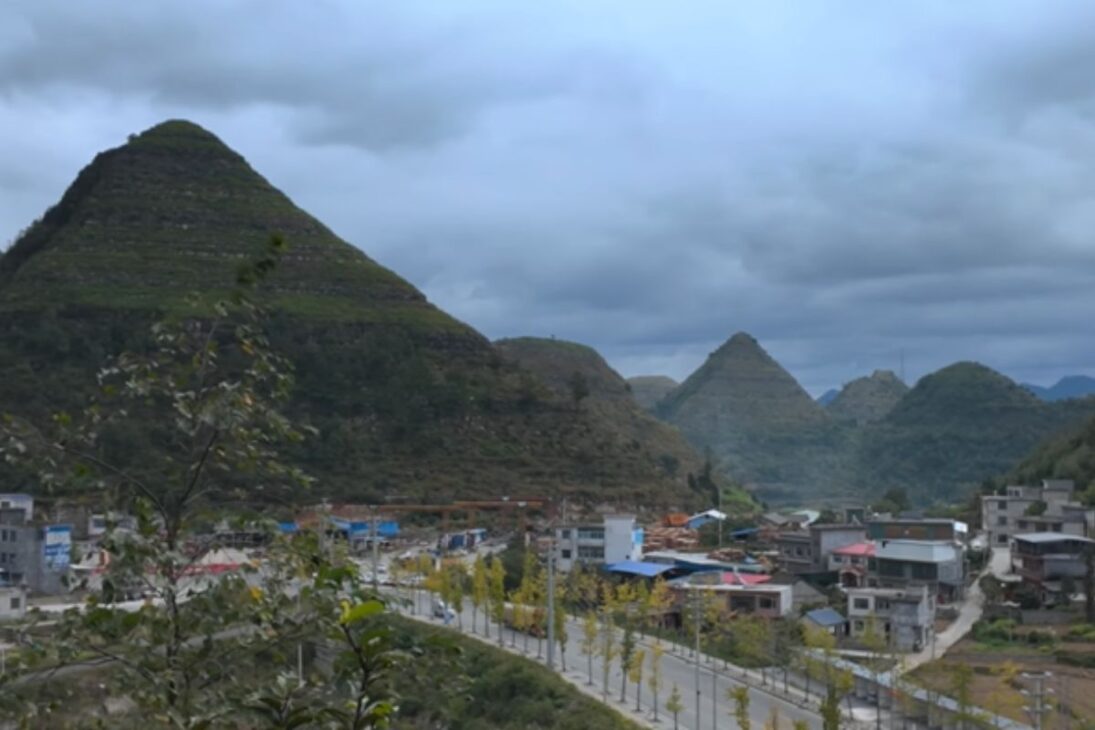
The slopes that resemble pyramids emerged due to differentiated soil erosion over thousands of years. Strong winds, seasonal rains, and the type of local sedimentary rock contributed to the controlled wear of the sides, preserving only the most resistant peaks.
-
More than one million North Americans were ordered to close their windows and stay indoors because the air in the southern United States became so toxic that pollution levels reached 18 times above the World Health Organization’s safety limit.

-
China has accumulated up to 1.4 billion barrels of oil in strategic reserves, invested 25 years in renewable energy, and purchased 80% of cheap Iranian oil: how Beijing has prepared for decades for the crisis that is now shaking the world.

-
A single lake holds 20% of the planet’s non-frozen freshwater and is also the deepest and oldest on Earth.

-
How 5,000 Indian dabbawalas manage to deliver around 200,000 lunchboxes a day in Mumbai for over 130 years using bicycles, crowded trains, and a manual system that continues to operate with impressive accuracy.


The result is a set of pointed summits, which appear to have been manually carved, but are the product of a slow and constant geological process.
This type of relief, although rare, is not exclusive to China. Similar phenomena can be observed in desert and high mountain areas, where extreme climates accelerate erosion.
In the Chinese case, the contrast between the rugged terrain and sparse vegetation enhances the clarity of the shapes, reinforcing the “geometric” aspect that intrigues those who observe from afar.
Challenges And Risks Of Climbing
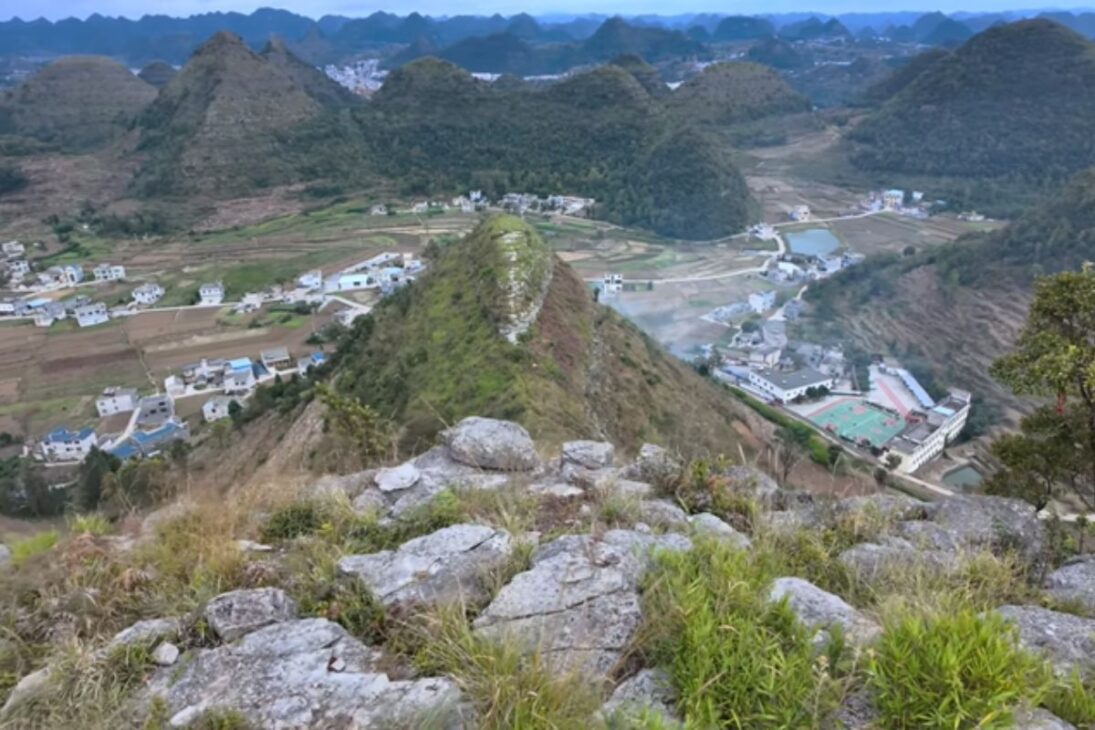
Access to the pyramid-shaped mountains is limited and requires considerable physical effort. The trails are improvised by local residents, often opened between areas of forest and stretches of loose soil.
The absence of tourist infrastructure makes climbing a technical and psychological challenge, especially for those afraid of heights or not accustomed to steep terrains.
During the ascent, visitors need to rely on firm rocks and maintain constant balance. The slope of the hills requires heightened attention, and breaks for rest are inevitable.
Even so, the route reveals wider angles of the landscape—a display of colors and natural volumes that rewards the effort with a 360-degree view of the surroundings.
The View From The Top And The Impact Of Altitude
From the top, the impression is of being on a pyramid carved by nature. The horizon reveals dozens of similar formations, aligned almost symmetrically, which explains why so many visitors describe the place as a “field of natural pyramids.”
The absence of signs of human intervention reinforces the authentic and geological nature of the scenery.
The strong wind and brightness at the top create ideal conditions for photography. On clear days, the light enhances the textures of the rocks and the yellowish tones of the soil, producing images comparable to desert landscapes.
For many visitors, the experience combines physical challenge, contemplation, and a sense of isolation, a direct contact with the natural forces that shaped the region.
Geological Curiosity And Responsible Tourism
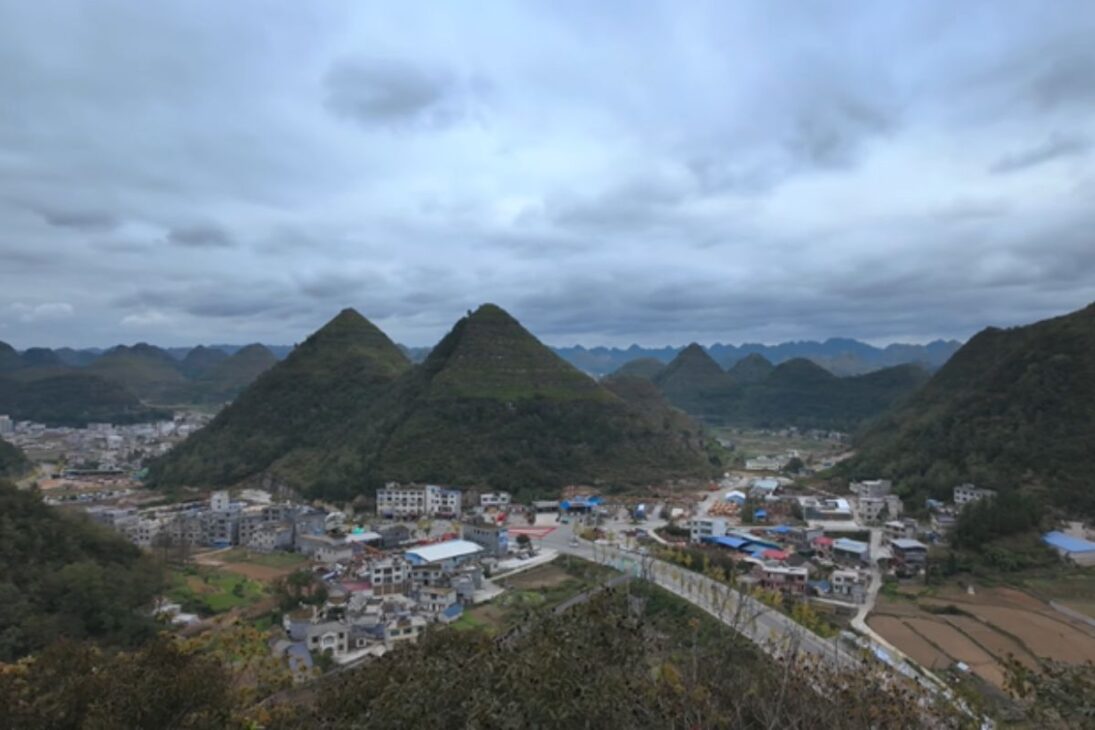
Local researchers explain that the pyramid-shaped mountains help to understand erosion processes and slope stability in mountainous terrains.
The peculiar shape does not represent a risk of collapse, but serves as a visual reference for studies on natural material resistance. The preservation of the site depends on limiting access and raising visitor awareness.
Despite the lack of official routes, the growing flow of curious visitors has increased pressure on the environment. Avoiding stepping on fragile edges and picking up one’s own trash are essential attitudes to maintain the integrity of the landscape.
The regional government is studying the possibility of installing safe observation platforms, ensuring controlled visitation without altering the relief.
Among the pyramid-shaped mountains of China, which part would catch your attention the most: the almost perfect shape of the slopes or the panoramic view from the top?






-

Uma pessoa reagiu a isso.