





 Portuguese
  English
  Spanish
  4 min of reading
  3 comments


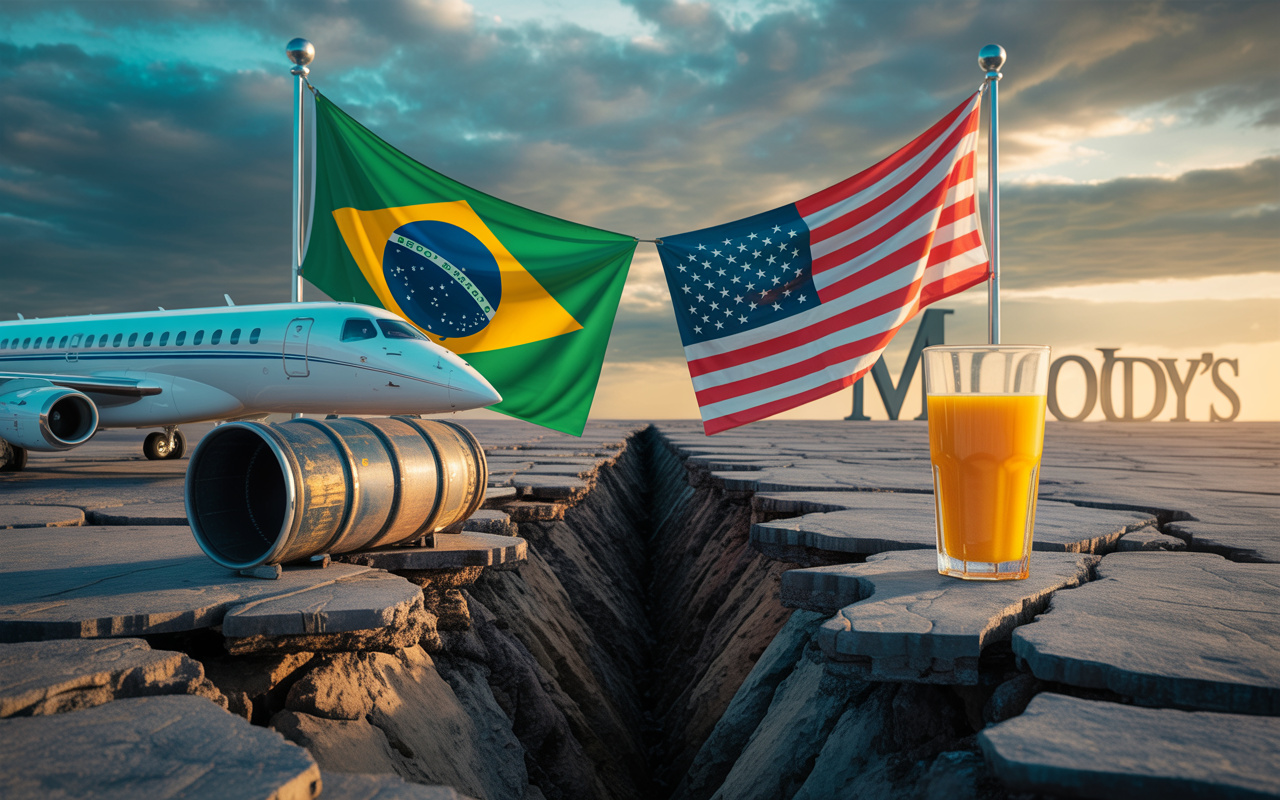


Moody’s Risk Rating Agency Warns That Bolsonaro’s Conviction May Lead U.S. to Reverse Tariff Exemptions for Brazilian Products Such as Oil, Orange Juice, and Aircraft — Billion-Dollar Risk for Exporters.
The trade relationship between Brazil and the United States is at a delicate moment. On one hand, Washington announced a list of tariff exemptions benefiting strategic Brazilian products, such as oil, aircraft, and orange juice. On the other hand, the risk rating agency Moody’s issued a warning that raised red flags in Brasília and in the market: the conviction of former president Jair Bolsonaro by the Supreme Federal Court may act as a political trigger for the U.S. to reconsider these benefits, imposing additional tariffs and creating economic obstacles.
The warning is not just a diplomatic detail — it threatens billion of dollars in Brazilian exports and could compromise the confidence of international investors.
What Is at Stake with the Exemptions List
Currently, the list of Brazilian products that enjoy tariff exemptions in the U.S. includes some of the most important sectors of the national export agenda:
-
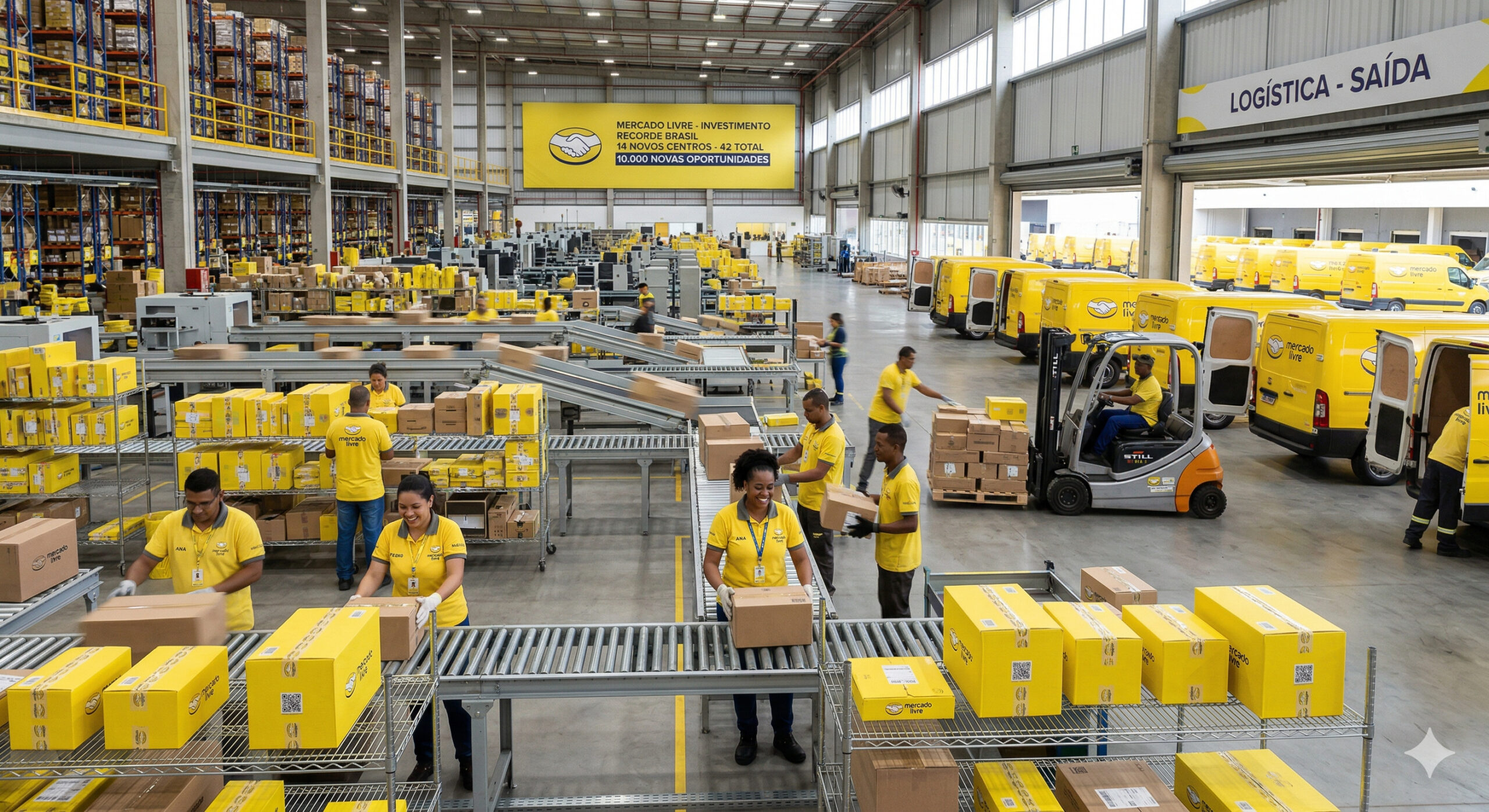
Mercado Livre “opens the vault” and announces a record investment of R$ 57 billion in Brazil in 2026, a value 50% higher than the previous year, with an expansion plan that includes 14 new logistics centers, totaling 42 units in the country and hiring an additional 10,000 employees.
-
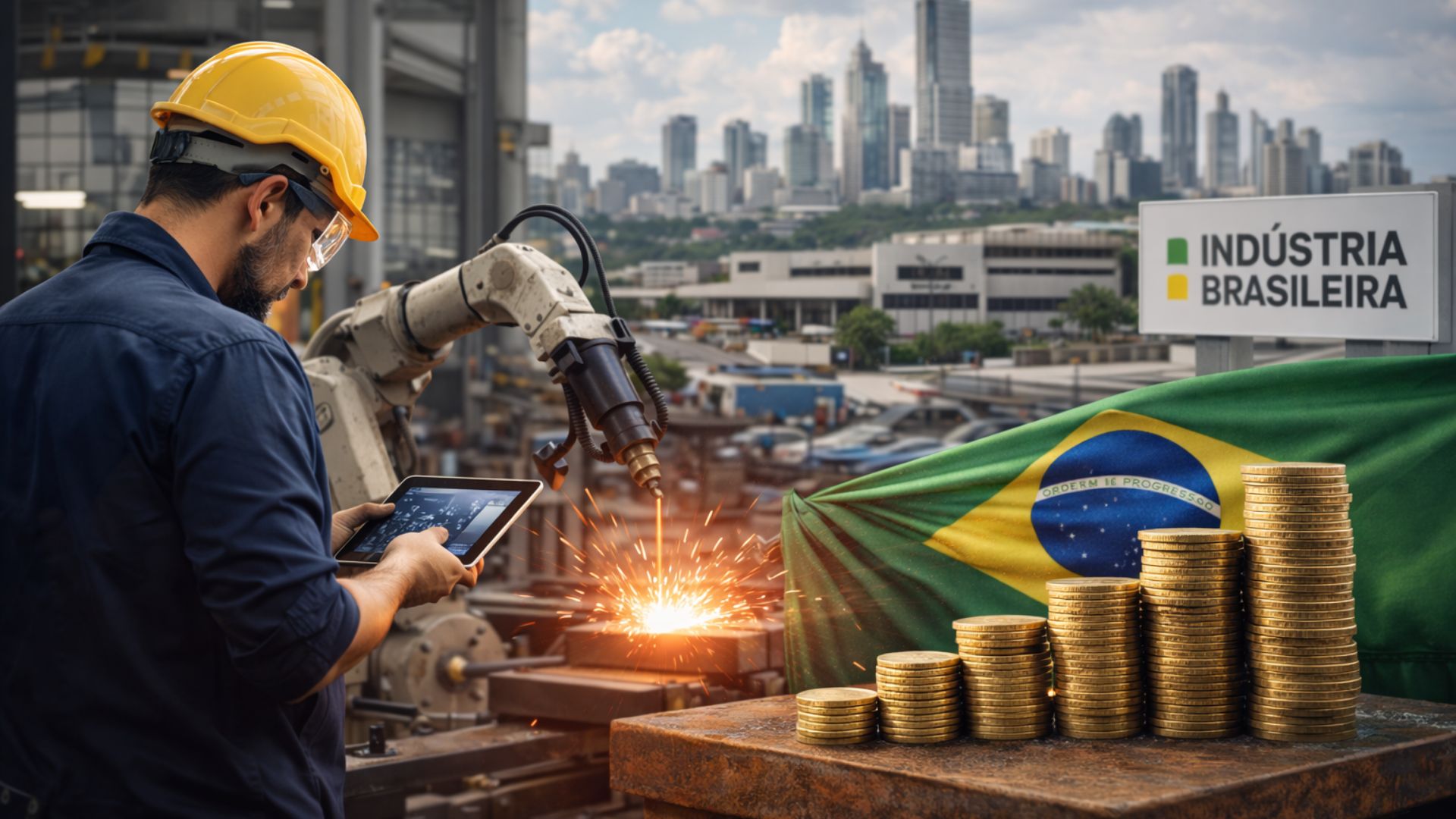
How investment in technology can revolutionize the national economy and enhance industrial gains, according to a study that highlights the direct impact on productivity, innovation, and wealth retention within Brazil.
-
The largest food company on the planet, JBS, has just opened a 4,000 square meter laboratory in Florianópolis to develop customized proteins that modulate muscle mass gain, immune response, and metabolic performance.

-
After nearly 30 bids and competition among industry giants, a Spanish company purchases one of the largest airports in Brazil for almost R$ 3 billion and takes over the management of Galeão in a concession that will last until 2039.


- Aircraft – a segment dominated by Embraer, which counts the U.S. as one of its main consumer markets.
- Crude Oil – an item that accounts for a significant portion of bilateral trade.
- Orange Juice – a product that has a strong presence in the American market, especially in Florida.
- Pulp and Derivatives – used extensively by the paper and packaging industry.
According to Moody’s, any revision of this list would have a direct impact on the Brazilian trade balance and could further weaken the country’s position amid a global tariff war.
The Moody’s Warning
Moody’s analysis was clear: Bolsonaro’s conviction creates a political and institutional risk environment that could be used as a justification for additional pressures on Brazil.
In reports and press releases, the agency highlighted that “institutional instability could affect trade relations and compromise recently obtained benefits.”
This means that, for Moody’s, the legal episode involving Bolsonaro is not limited to the Brazilian internal scenario — it could be used by international partners to reconsider trade privileges or impose sanctions.
The Political Weight of Bolsonaro’s Conviction
The STF’s decision against the former president, considered historic, has already generated international repercussions. In the U.S., lawmakers and analysts are closely monitoring the Brazilian political crisis, and the White House has taken a pragmatic stance: trade benefits depend on political and institutional alignment.
In this context, Bolsonaro’s conviction could be seen by Washington as a sign of instability or even as an opportunity to rebalance interests, pressuring Brasília in future trade negotiations.
Impacts for Brazilian Exporters
If the U.S. decides to reverse the exemptions list, the effects would be immediate:
- Embraer, one of Brazil’s largest exporters, could face tariffs that reduce its competitiveness against manufacturers like Boeing.
- The oil sector would lose important margins, as some of its exports to the U.S. would become more expensive.
- Orange juice, a traditional product in the Brazilian agenda, could be partially or completely replaced by alternative suppliers.
- The paper and pulp industry would incur additional costs, decreasing its presence in the American market.
These changes would mean not only billion-dollar losses for exporters, but also indirect effects on employment, revenue, and investments.
Government and Market Reaction
In Brazil, Moody’s analysis was met with concern. The government fears that the U.S. will use the political episode as an argument to pressure on other negotiation points, such as agricultural tariffs and environmental rules. The financial market is also watching cautiously: foreign investors believe that any loss of predictability in relations with Washington could increase perceptions of risk regarding Brazil.
Analysts highlight that, in a scenario of strong dollar and still high interest rates, reversing trade benefits would have inflationary effects and could hinder growth in 2025.
A Risk That Goes Beyond the Economy
Moody’s warning is not just about tariffs. It indicates that Bolsonaro’s conviction could weaken Brazil’s institutional credibility in the eyes of the world. This means that not only trade but also foreign investments, international financing, and multilateral agreements could be affected.
At a time when Brazil is trying to expand its leadership in BRICS and diversify partners, losing ground with the U.S. could be a long-term strategic defeat.
The Brazilian Dilemma
The situation puts Brazil in front of a dilemma: how to maintain trade benefits with Washington without yielding on sensitive internal issues? Diplomacy will play a crucial role. Itamaraty is already working on dialogues to reduce risks and convey the message that the Brazilian economy remains solid, despite political turmoil.
But the reality is harsh: in a world where politics and trade go hand in hand, any internal crisis can become bargaining chips in international negotiations.







EUA querem uma marionete no poder Bolsonaro e o filhos chupam as bolas do Trump e para conseguirem o que querem ataca o ponto mais vulnerável do país que é a economia e as empresas
Pobre a sua resposta. Apenas o nosso endividamento atual já traria uma resposta. Caso você deseje, poderia experimentar a Venezuela para antecipar logo o seu sofrimento. Que Deus ilumine a sua mente, em Nome do Senhor Jesus.
SEM SABUJICE.O Brasil é soberano, e nao se sujeitará a tutela de gringo