





 Portuguese
  English
  Spanish
 5 min of reading
  1 comment


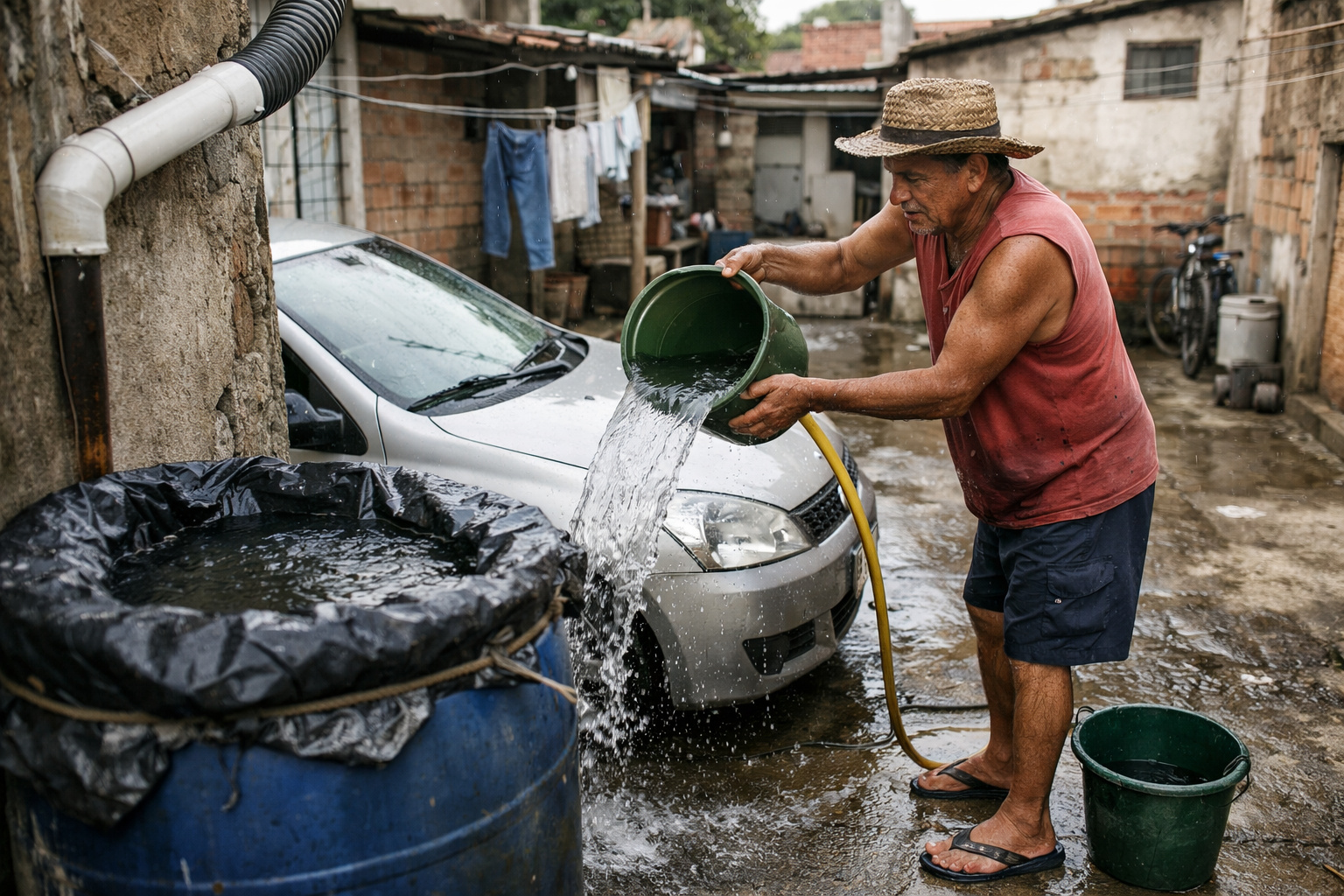


Household Solution Allows Reusing Rainwater to Wash Patio and Car, Generates Real Savings on Monthly Bill and Emerges as Direct Response to Water Crisis in São Paulo
Amid the growing concern about water supply in São Paulo, a simple yet efficient initiative caught attention by showing that household solutions can have a real impact on consumption. In the West Zone of the capital, a resident decided to take action on his own and created a system to reuse rainwater, significantly reducing the monthly bill.
The information was published by G1 São Paulo, according to a report sent by the VC at G1, which presented the story of designer Ronaldo Capuano. According to the publication, the initiative arose from concerns about rationing and the scarcity in the reservoirs that supply Greater São Paulo.
Since then, the system has been collecting water that falls on the roof of the house and directing it to non-potable uses, such as washing the patio, the car, and the garden. As a result, savings reached 52% on the water bill, a significant number in the context of the water crisis.
-
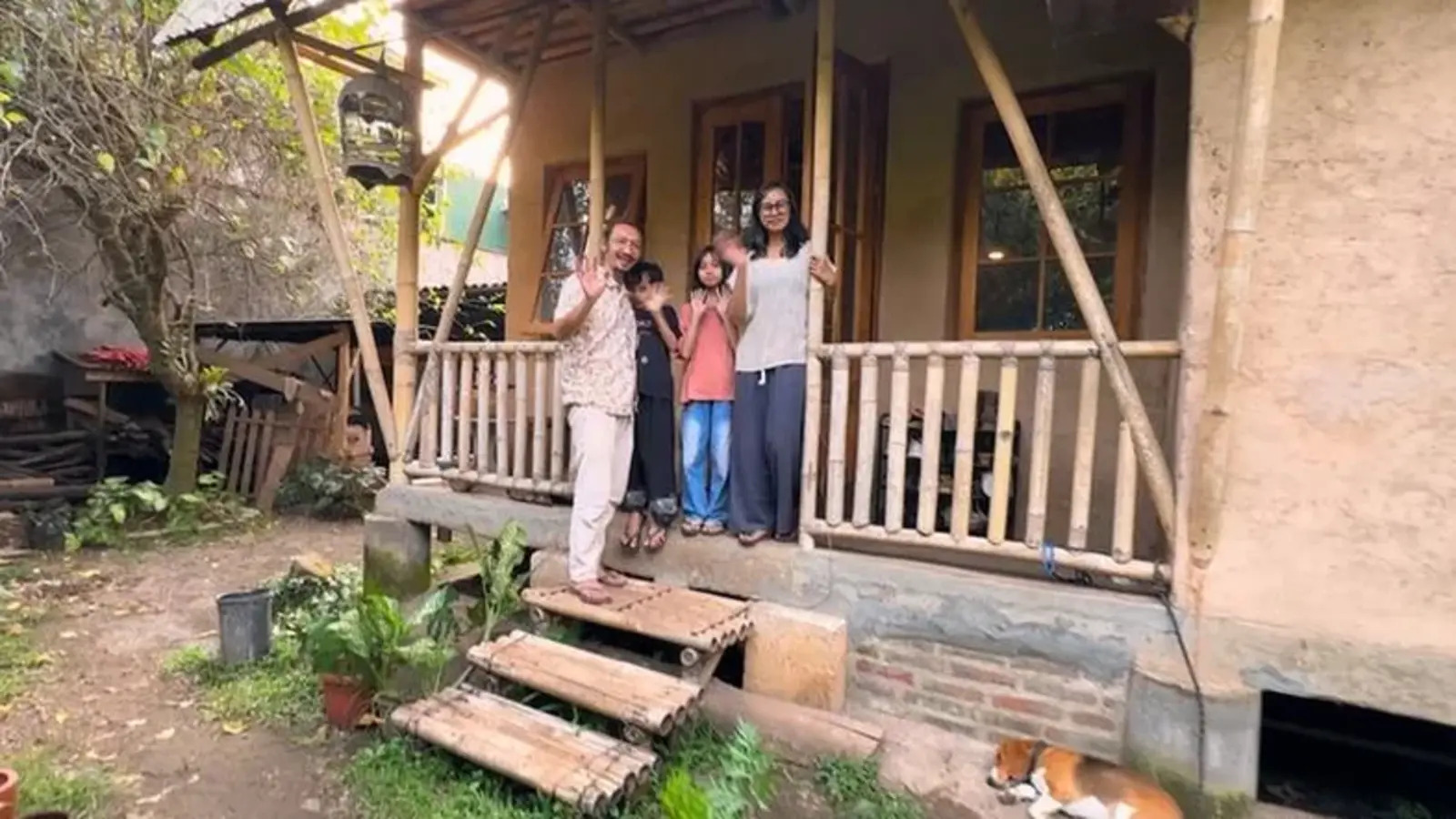
With earth, bamboo, straw, and lime mortar, a specialist builds a house for just over $460 and draws attention for its cost being much lower than traditional construction.
-
Rodrigo de Freitas Lagoon advances in environmental recovery with sanitation, elimination of irregular sewage, and the resumption of water sports in Rio de Janeiro.

-
Sustainable housing gains strength with a nationally awarded project in Campo Grande, highlighting innovative solutions that combine sustainability, urban integration, and efficiency in the use of natural resources.

-
City Where Residents Live Underground to Escape 52°C May Be a Picture of the Future on an Increasingly Hot Planet


Simple System Reuses Roof Water and Reduces Waste
In practice, the system operates straightforwardly and is accessible. Rainwater that falls on the roof flows through a gutter, follows a set of pipes, and reaches a water tank with a capacity of 1,700 liters. This way, the resident can store a significant volume for later use.
Additionally, the system has a filter that blocks the passage of dirt, leaves, and other solid waste. Thus, the collected water remains suitable for domestic tasks that do not require treatment for human consumption.
According to the resident himself, the total investment was between R$ 1,000 and R$ 1,200. Despite the initial cost, the return came quickly. Before the installation, the monthly bill was around R$ 49. After adopting the system, the amount dropped to about R$ 23, proving a reduction of more than half in monthly spending.
Monthly Savings Proves Efficiency of Reuse

Even in a period with little rain, the system has already shown positive results. According to Capuano, after one and a half months of operation, the collection was sufficient to meet the anticipated needs. Although it rained little during that time, he was satisfied with the amount stored.
To make the project viable, the resident needed to adapt the house structure. He reported that he dismantled the roof and built a slab with an inclination of about 20%, facilitating the drainage of rainwater toward the collection system.
As a result, activities that previously consumed water from the public supply came to exclusively use the stored water. According to Capuano, washing the patio and the car with reused water already represents a significant savings throughout the month.
Environmental Awareness Motivated the Creation of the System
The motivation to create the system went beyond financial savings. The designer stated that he decided to act after following news about the reduction of reservoirs and the impact of the lack of rain. According to him, the idea arose as a way to contribute to rationing.
“I always watch the reports and see that the reservoirs are drying up. Therefore, I try to do my part,” said the resident in the report.
The initiative also received approval at home. Housewife Rita Capuano, Ronaldo’s wife, praised the solution. According to her, reusing water facilitated the domestic routine. “I use a lot of water. I’m allergic and can’t stand dirt,” she said, highlighting the practical usefulness of the system in daily life.
Water Crisis Pressures Supply Systems in São Paulo
The case gained even more relevance as it occurred at a critical moment for the supply in São Paulo. At the time of the report, the Cantareira System was operating at only 18% of its capacity. Other systems were also facing difficulties.
The Alto Tietê System, for example, was operating at 23.9% capacity, according to data released at the time. Given this scenario, the concessionaire already admitted the possibility of using the so-called dead volume in these reservoirs as well.
Furthermore, the state government was seeking alternatives to reduce consumption. Since April 1, consumers in 31 cities in the São Paulo Metropolitan Area started receiving a bounty if they saved water. Those who reduced consumption by 20%, compared to the monthly average, would receive a 30% discount on the bill.
Government Measures Try to Contain the Advancement of Scarcity
While individual initiatives emerge as practical alternatives, the public power also tries to minimize the impacts of the water crisis. The state government sought to integrate different supply systems, allowing regions served by Cantareira to receive water from other sources.
According to Paulo Masato, director of Sabesp, the company carried out interventions to take advantage of new volumes both in the Cantareira System and the Alto Tietê. According to him, there were still technical reserves available for emergency use.
On the other hand, the then governor Geraldo Alckmin stated he did not see the need to impose fines on residents who consumed water excessively, despite previous discussions about the measure. Thus, the focus shifted to encouraging voluntary conservation.
Domestic Initiative Becomes Example of Accessible Solution
The case of Ronaldo Capuano shows that simple solutions can directly contribute to reducing treated water consumption. By reusing rainwater, the resident lowered expenses, reduced pressure on the public system, and adopted a more sustainable posture.
In a scenario of increasing scarcity, initiatives like this gain importance not only for their financial impact but also for the example they offer. Small actions, when replicated, can help face a collective problem that affects millions of people.
Would you invest in a simple rainwater reuse system to reduce your bill and help save water?










É melhor não ficar divulgando essa matéria
O governo já está controlando água de poço, eles vão querer cobrar água da chuva também