





 Portuguese
  English
  Spanish
  5 min of reading
  2 comments


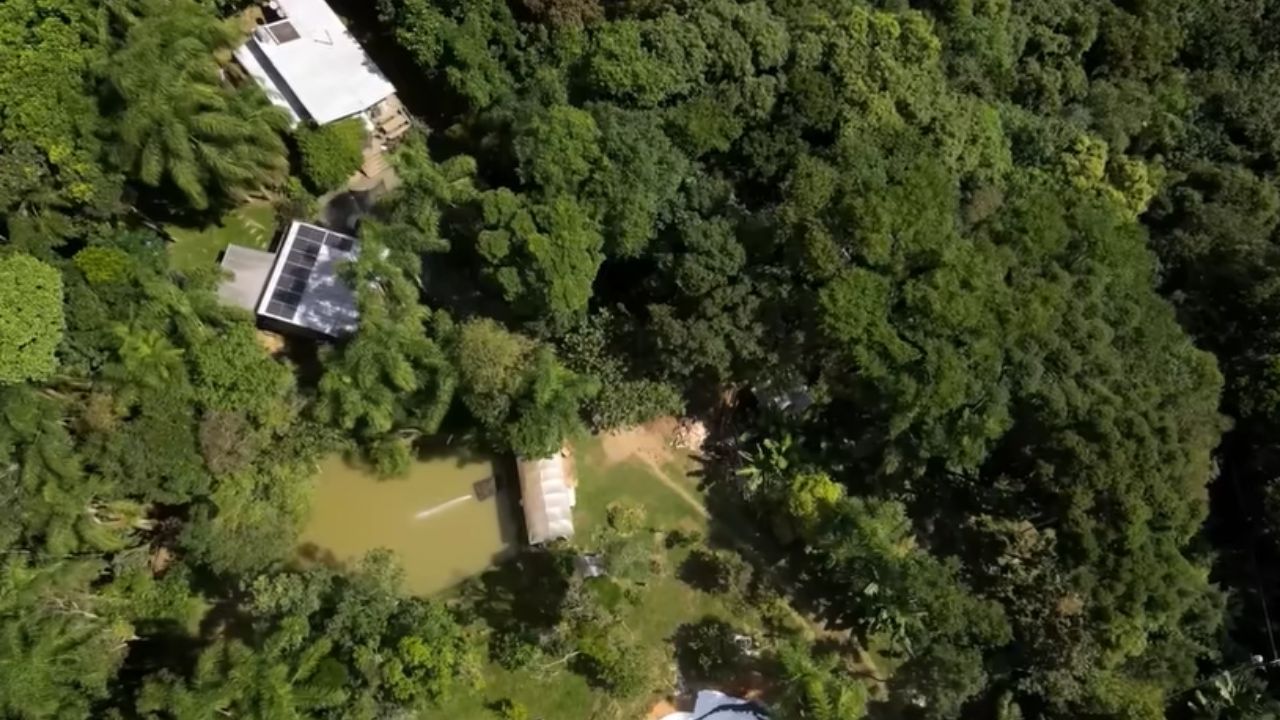


The Self-Sufficient Life Away From The City Takes Shape In Santa Catarina With A Resident Who Produces His Own Energy, Grows Coffee In A Preserved Area, Distills Cachaça And Maintains A Bunker With Grains And Seeds For Long Periods Of Isolation.
The self-sufficient life away from the city did not begin as a trend or a social media challenge. For Sandro, 52, it was a strategic choice to reduce contact with the outside world, depend less on expensive structures, and gain control over the basics: energy, food, water, and routine.
At the last property on a dead-end street, he has built a survivalist lifestyle with solar energy stored in batteries, satellite internet, a bioconstruction house, and a bunker where he keeps food and supplies to weather crises and stay isolated for a long time.
Who Is The Man Behind The Self-Sufficient Life Away From The City
Sandro describes himself as someone who “thinks differently from the crowd.” Throughout life, he has engaged in various activities, including physical education teacher and adventure tourism instructor, until he started working with licensed pruning and cutting of trees in at-risk areas.
-
Friends have been building a small “town” for 30 years to grow old together, with compact houses, a common area, nature surrounding it, and a collective life project designed for friendship, coexistence, and simplicity.

-
This small town in Germany created its own currency 24 years ago, today it circulates millions per year, is accepted in over 300 stores, and the German government allowed all of this to happen under one condition.

-
Curitiba is shrinking and is expected to lose 97,000 residents by 2050, while inland cities in Paraná such as Sarandi, Araucária, and Toledo are experiencing accelerated growth that is changing the entire state’s map.

-
Tourists were poisoned on Everest in a million-dollar fraud scheme involving helicopters that diverted over $19 million and shocked international authorities.


The place where he lives was not chosen at random. For him, the less contact with the outside world, the better, and the property serves as a base for a self-sufficient life away from the city built with planning and practical routine.
Own Energy And Real Autonomy In Daily Life
The heart of autonomy is energy generation. Sandro maintains a system with panels and an inverter, stores energy in batteries, and uses this reserve to perform daily tasks, such as pumping and oxygenating a tank.
He also keeps a generator for emergencies but emphasizes that the goal is to depend as little as possible. In practice, the self-sufficient life away from the city begins when the essentials of the home do not collapse due to a lack of power or external instability.
The House, Bioconstruction, And The Choice Of Simple Materials

The property stands out for its bioconstruction mainly made of wood and clay. One of the structures was planned to be an underground house but became a large hall built with superadobe, a technique that uses filled and compacted bags to form walls.
The proposal is not luxury; it is functionality. He talks about plaster with clay and the use of plant fibers to allow the construction to “breathe.”
This logic is repeated throughout the property: less appearance and more utility, a constant pillar of the self-sufficient life away from the city.
Coffee Hidden In The Woods And A Stock That Lasts For Years
Among the most curious choices is the coffee grown within the preserved woods, with planting tests in the shade and in the sun. He shows the still green coffee, talks about harvesting, and explains ways to store the dry beans for long periods.
The coffee routine serves as a symbol of independence: producing, harvesting, and storing. For him, the self-sufficient life away from the city also involves understanding the food, knowing the process, and not relying on what arrives ready-made.
The Bunker: Food, Seeds, And The Logic Of The “Prepared”

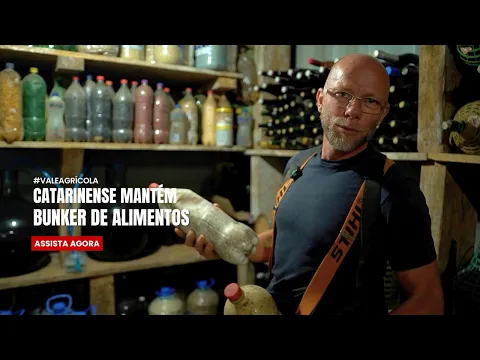
The most emblematic part is the bunker made with a container and drainage systems, with a stable temperature.
There, he stores rice, beans, pasta, wheat, salt, and other basic items, in addition to what he considers most important: seeds of various types, thinking about a restart in case of a collapse.
He claims he can stay isolated for more than a year without going to the city.
He also advocates that storing food works as savings and protection for times of unemployment, floods, and supply disruptions. The self-sufficient life away from the city is not theory here: it is organized stock and a risk-aware vision.
Cachaça, Distiller, And Home Production Of Beverages
In the shed, he keeps a 200-liter distiller and explains the process in detail, including temperature separation and a second stage that would result in a cleaner cachaça.
He mentions producing grape and corn cachaça, as well as other beverages prepared in the bunker due to thermal stability.
This productive aspect shows that the self-sufficient life away from the city is not just about surviving but creating a domestic production chain that reduces dependencies and expands alternatives.
Natural Remedies, Tinctures, And Colloidal Silver
In addition to food and energy, the bunker holds solutions for health and self-care. Sandro talks about herb tinctures, the use of propolis, and the preparation of colloidal silver with distilled water and silver electrodes, describing how it serves as an antibiotic resource.
Here, the emphasis is not on miraculous promises, but rather on the mindset of having alternatives. In practice, he tries to cover what he considers essential for a self-sufficient life away from the city: food, energy, hygiene, and some level of basic care.
Recycling, Containers, And The House Made “With What Came”

The house was also made with containers and many reused materials, such as tiles discarded due to minor defects and used windows donated by acquaintances.
He emphasizes that he did most of the work himself and that the distance makes it difficult to find specialized labor.
This part closes the circle: the self-sufficient life away from the city relies on reuse, practical execution, and a philosophy of reducing fixed costs to minimize dependence.
Would You Have The Courage To Seek A Self-Sufficient Life Away From The City With Food Stock, Own Energy, And A Production Routine, Or Do You Think This Only Works For Those Who Already Live With A Survivalist Mindset?









Eu teria
Meu Pai Eterno que ideia maravilhosa para tempos difíceis que virão. Parabéns