





 Portuguese
  English
  Spanish
  4 min of reading
  0 comments


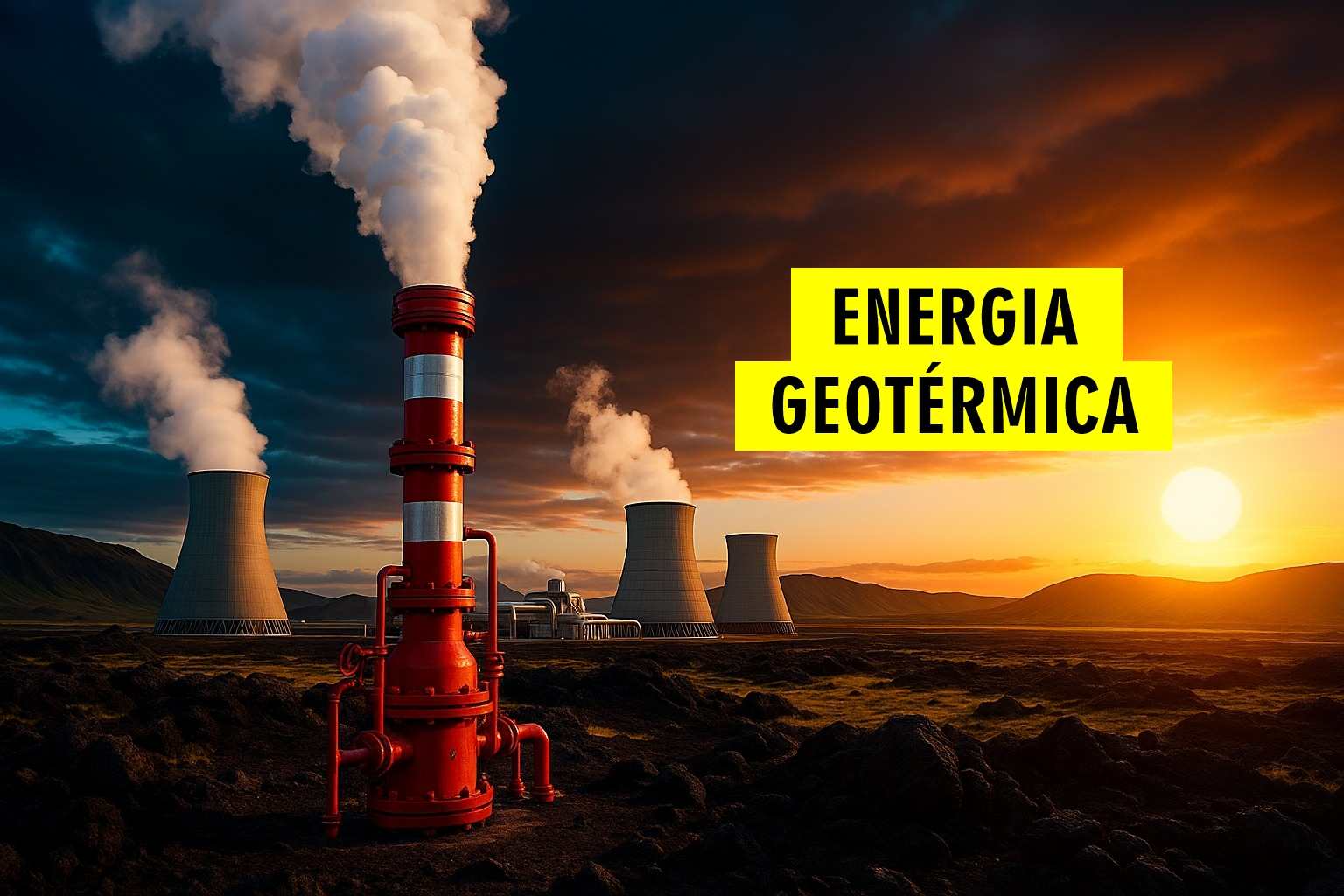
Thanks to Advanced Drilling Technologies and Closed-Loop Systems, Geothermal Energy Is Becoming Less Limited to Specific Regions and Transforming into a Global Solution Capable of Generating Constant Electricity and Supplying 15% of Global Demand by 2050.
Geothermal energy, obtained directly from the heat present within the Earth’s crust, is moving from a distant promise to becoming one of the most solid pillars of future energy engineering.
Resulting from the slow decomposition of radioactive particles in rocks, this natural resource has always been considered expensive and restricted to specific regions.
However, recent advancements in drilling and closed-loop systems are transforming the sector, revealing immense potential for clean and continuous generation, with capacity factors that frequently exceed 90%.
-
Researchers in the U.S. have created a flying robot that transforms into a land vehicle while still in the air. The technology, based on aerodynamic transition, converts landing into a scene worthy of Transformers and redefines mobility between sky and ground.

-
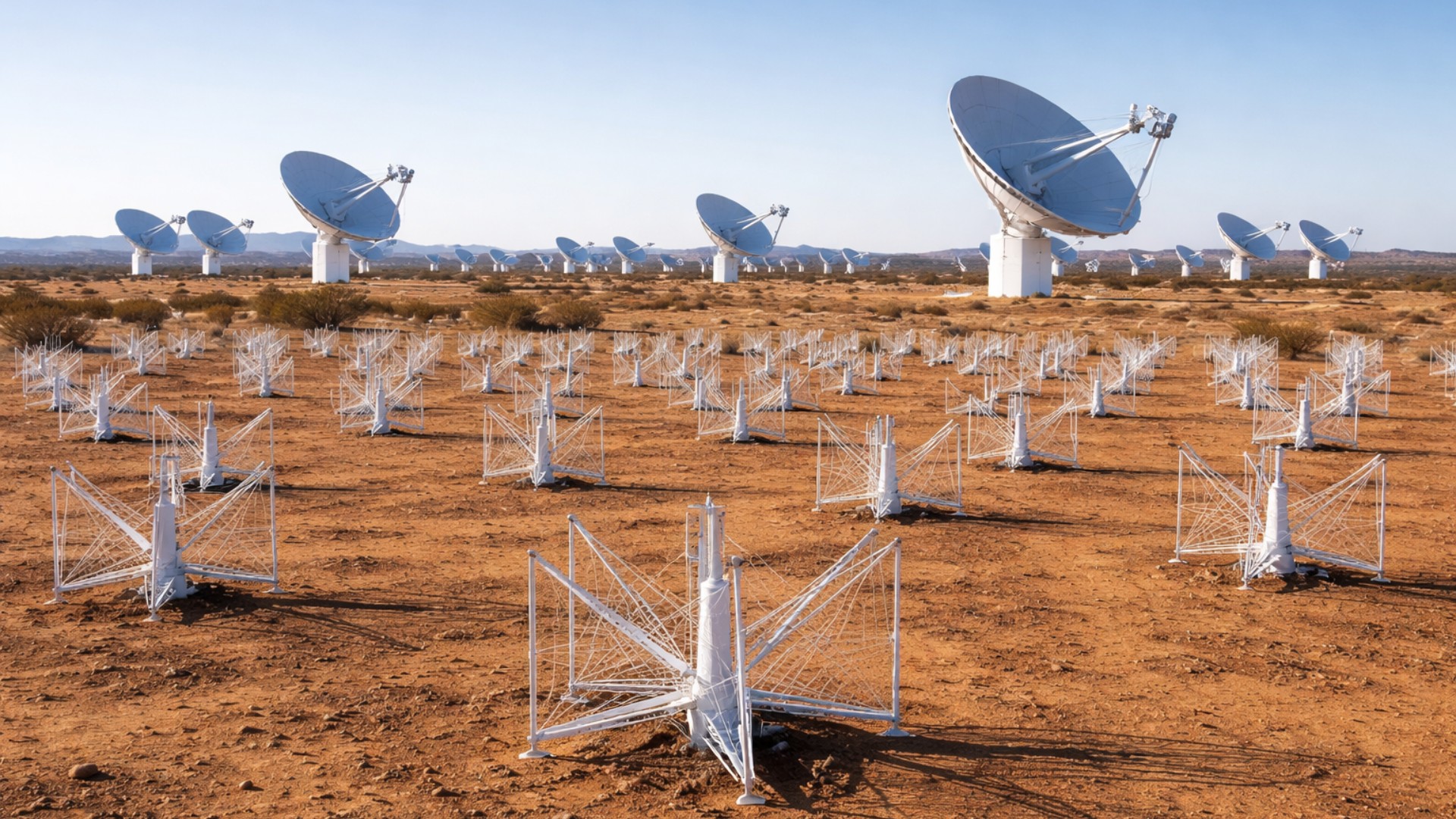
Spread across two continents, with 197 parabolic antennas in South Africa, 131,000 2-meter antennas in Australia, and a range of up to 150 km, the SKA begins to “listen” to the Universe on an unprecedented scale and accelerates the search for black holes, primitive galaxies, and nearly invisible radio signals.
-
Goodbye batteries: a new sensor created by Japanese scientists uses sweat as an energy source and points to a promising path for more sustainable devices, with greater autonomy and less need for frequent recharging.

-
The Brazilian Army inaugurated the assembly line for the Guaicurus armored vehicle with a contract for 420 units by 2033, and the same vehicle has already been tested in combat in Afghanistan and Lebanon by European armies.


Experts estimate that, with this performance, geothermal energy could supply up to 15% of global electricity demand by 2050.
How Geothermal Energy Works
Below the Earth’s crust, a layer of magma at extremely high temperatures continually releases heat through the decomposition of elements like uranium and potassium.
This heat migrates to the upper rock layers and can be captured by drilling wells that reach hot water, steam, or dry rock formations.
Engineers utilize this heat to move turbines and generate electricity, as well as apply it directly in heating systems for buildings, greenhouses, and industrial processes.
As a natural resource in constant regeneration, geothermal energy is considered sustainable and virtually inexhaustible. Scientific estimates indicate that just in the first 10 kilometers below the surface, there is 50,000 times more energy than all global oil and gas reserves combined.
Carlos Araque, CEO and co-founder of the American company Quaise Energy, summarizes this magnitude: “If we add up all the fossil fuels, nuclear energy, and other renewable sources, we don’t even reach one millionth of the thermal potential beneath the surface of the Earth.
And to reach it, we need to drill between two and 12 miles. It’s like being just a few steps away from an infinite source of clean energy.”
Advantages of a Continuous and Clean Source
Geothermal energy not only surpasses fossil sources in environmental terms but also stands out as one of the most sustainable and reliable options available.
It produces minimal emissions and, unlike solar and wind energy, does not depend on weather conditions or daylight. This stability ensures a continuous and predictable supply of electricity.
Another advantage is the absence of fuel, which reduces costs and impacts related to resource extraction. Additionally, geothermal systems can provide heating and cooling efficiently through underground heat pumps.
Geothermal plants exhibit remarkable efficiency rates, converting over 90% of extracted heat into usable energy. They also occupy less space than solar or wind farms, making them ideal in regions with limited space or sensitive ecosystems.
Challenges That Still Need to Be Overcome
Despite the numerous benefits, geothermal energy faces challenges that limit its global expansion. Although it emits far fewer pollutants than fossil fuels, drilling can release underground gases, generating environmental impacts.
Enhanced geothermal systems can also trigger small seismic shocks by altering underground pressure during water injection into rock layers.
Another significant obstacle is the high initial costs. Drilling deep wells and constructing specialized infrastructure require substantial investments, although long-term operational costs are low.
Additionally, the sustainability of the system depends on careful management of underground reservoirs.
It is necessary to reinject fluids quickly enough to prevent depletion and ensure the continued viability of the operation.
Innovations That Are Changing the Game
To overcome these challenges, engineers have developed technologies that broaden access to geothermal energy, reduce costs, and minimize environmental impacts.
Quaise Energy, for example, has created a millimeter-wave drilling technology capable of vaporizing rocks using high-frequency electromagnetic waves, eliminating conventional drill bits.
Adapted from research on nuclear fusion at MIT, this approach can reach geothermal sources more than 12 miles deep, where temperatures exceed 500 °C. In a recent test, the company drilled 118 meters of solid granite without physical contact.
Fervo Energy, based in Texas, introduced horizontal drilling techniques and fiber-optic sensors, originally used in the gas industry.
Their pilot project in Nevada allowed real-time monitoring of underground conditions, enabling the optimization of fluid flow and energy production with high precision.
The Canadian company Eavor Technologies has developed a closed-loop geothermal system that eliminates the need to inject water into fractured rocks. The method circulates a thermal fluid in a sealed underground circuit, functioning as a “giant radiator” beneath the earth.
Perspectives for the Future of Geothermal Energy
Geothermal energy is rapidly establishing itself as a key component of the global energy transition. With new technologies capable of exploring heat at depths greater than 8,000 meters, global geothermal potential could reach nearly 600 terawatts of capacity — enough energy to supply global demand 140 times.
If costs continue to decline, geothermal energy could achieve 800 gigawatts of installed capacity and generate about 6,000 terawatt-hours per year by 2050, covering 15% of projected global demand.
With capacity factors above 75%, it represents one of the most stable and controllable renewable sources available.
Strategic investments, estimated at $2.5 trillion by mid-century, and support from the oil and gas industry should further drive this sector.
The global geothermal energy market, valued at $7.45 billion in 2023, is expected to grow to $9.22 billion by 2030, driven by technological advancements and global clean energy targets.
With this scenario, geothermal energy moves beyond being just an alternative and positions itself as one of the most scalable and cost-effective solutions for achieving zero-emission energy systems in the future.









Seja o primeiro a reagir!