





 Portuguese
  English
  Spanish
  5 min of reading
  0 comments


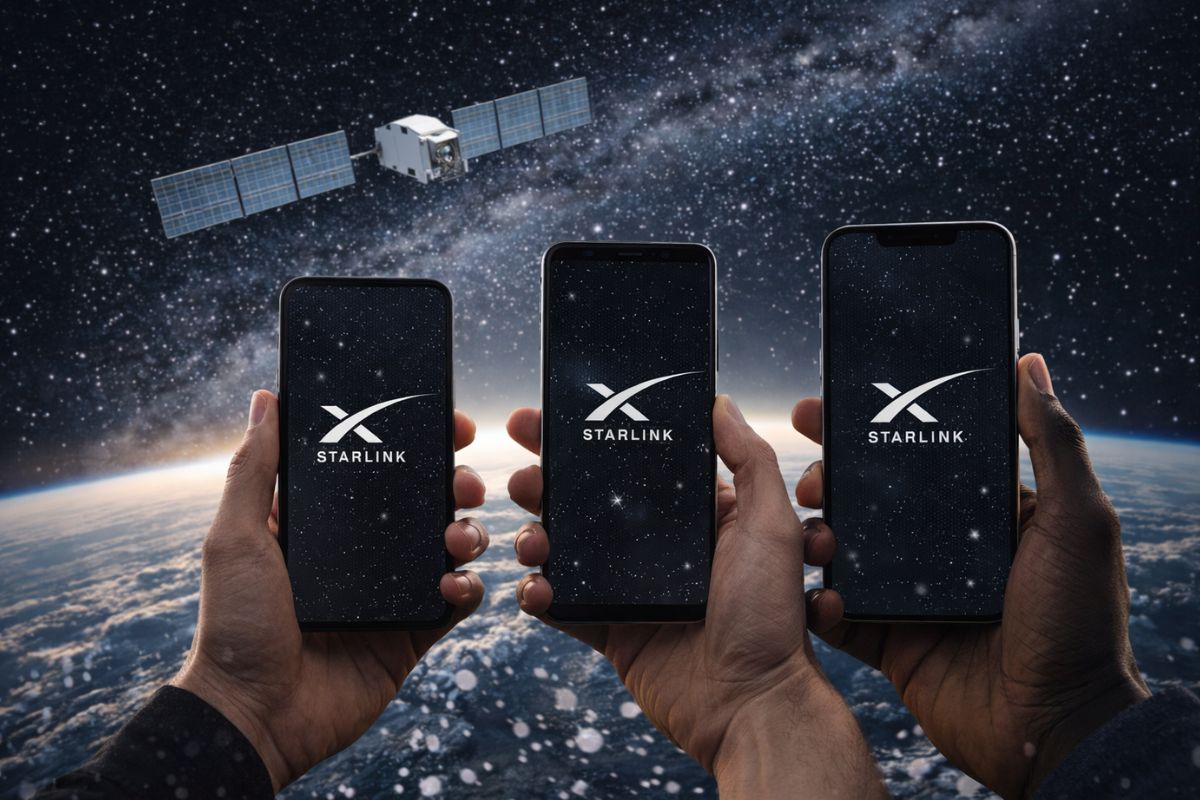
Starlink already has more than 50 mobile phones compatible with its direct satellite connection technology, including iPhone, Samsung, and Motorola models sold in Brazil, but the service still depends on agreements with national operators to start functioning in the country.
The promise of never being without cell signal anywhere on the planet is getting closer to becoming a reality. Starlink, SpaceX’s satellite company, has developed technology that allows smartphones to connect directly to low Earth orbit satellites, without the need for ground antennas, extra equipment, or any modifications to the device. More than 50 mobile phone models are already officially compatible with the service, including popular devices sold in Brazil such as iPhone 14 and later, Samsung Galaxy starting from the S21, and various Motorola models.
However, enthusiasm needs a reality check for those living in Brazil. Starlink only works when a local operator signs an agreement to offer the service to its customers, and so far, no Brazilian operator has signed a contract with Starlink or any competitor to provide this extra coverage. The devices are ready, the satellites are in space, but the bridge between technology and the Brazilian consumer still depends on a negotiation that has no scheduled date.
How Starlink without an antenna works in practice
According to CanalTech, the technology is surprisingly straightforward. SpaceX’s satellites operate in low orbit and emit signals compatible with the internal antennas of regular mobile phones, essentially functioning like phone towers in space.
-
An extratropical cyclone with winds exceeding 100 kilometers per hour and a risk of hail is forming between Rio Grande do Sul and Santa Catarina this week, and a cold front will advance over the entire Southeast shortly thereafter.

-
Brazil has a laboratory with more lethal viruses and operates with restricted access and strict protocols.

-
Scientists use fungi to create plant flour with a meat-like smell from waste such as potato peels and açaí, a solvent-free technology from Unicamp that increases protein, generates vitamin D, and has a patent pending.

-
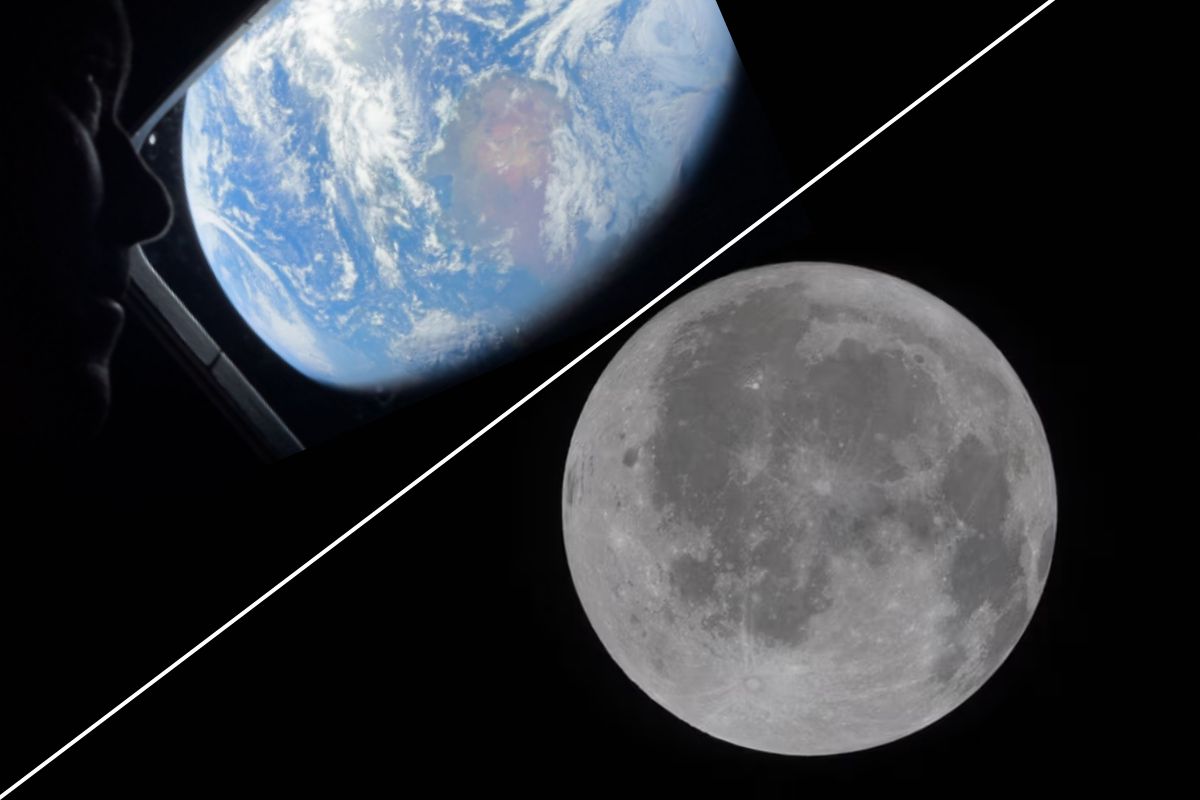
Artemis II photographs the Moon and shows an area never seen by human eyes: part of the Orientale Basin appears in the image, while Orion approaches the flyby this Monday (6) after passing the halfway point.
When the device loses the signal from the ground operator, it can automatically seek the Starlink satellite network, especially in remote areas where mountains, forests, and distances make traditional coverage unfeasible.
At the current stage, the Starlink system only allows for text message exchanges and emergency alerts. Voice calls and internet data packages are still in development and are expected to be released in the future.
The secret to the connection lies in the advanced antennas of the satellites and the modern chips of recent mobile phones, which are designed to capture signals from specific frequencies used by this new generation of satellites. Starlink’s ultimate goal is to eliminate all dead zones of phone signal in the world.
Which mobile phones sold in Brazil are already compatible with Starlink
The official list exceeds 50 models and includes devices from three major manufacturers present in the Brazilian market.
Among the iPhones compatible with Starlink are all models from iPhone 14 onwards, including iPhone 14, 14 Plus, 14 Pro, and 14 Pro Max, the entire iPhone 15 line, iPhone 16 in all variants, iPhone 17, and even the iPhone Air. Estimated prices range from R$ 2,899 for the iPhone 14 to R$ 8,999 for the iPhone 17 Pro Max.
For Samsung, compatibility with Starlink starts with the Galaxy S21 line and extends to the most recent models. Galaxy S22, S23, S24, and S25 in all versions, as well as the Galaxy A line (from A14 to A56), Galaxy Z Flip (from Flip3 to Flip7), and Galaxy Z Fold (from Fold3 to Fold7) are on the list.
For Motorola, models from the Moto G 5G line manufactured from 2024, Moto Edge from 2022, and the entire recent Razr line are also compatible. Starlink covers devices with prices ranging from R$ 799 to nearly R$ 10,000, covering almost all market segments.
Why Starlink still doesn’t work for Brazilians
The hardware is ready, but commercial bureaucracy remains pending. For Starlink to work in any country, local operators must sign partnership contracts that integrate satellite coverage with the existing mobile phone service.
In other countries, operators like T-Mobile in the United States have already signed this type of agreement. In Brazil, none of the major operators have announced a partnership so far.
This means that even those who already have a mobile phone compatible with Starlink cannot access the service in Brazil. The device recognizes that it can connect to the satellite, but without the commercial link between the operator and SpaceX, the connection is not activated.
There is no official date for this to change, although market expectations are that negotiations will progress throughout 2026. For Brazilians who hike in parks like Tijuca Forest or Serra dos Órgãos National Park and find themselves without signal, the wait continues.
For whom Starlink without an antenna makes the most difference in practice
The technology was not designed to replace conventional urban coverage.
The audience that benefits the most from Starlink without an antenna are people who frequent or live in remote areas, where phone towers do not reach: farmers in the countryside, fishermen at sea, adventure sports enthusiasts, workers in mining fields, and residents of rural communities far from urban centers.
At the current stage, the most relevant feature of Starlink is sending emergency messages in areas without coverage. Imagine being on a trail in Serra dos Órgãos and having an accident without cell signal.
With Starlink technology activated, the device could send an emergency alert via satellite even without connection to any ground tower. For those living in large cities and already having 4G or 5G signal functioning normally, Starlink will not change daily life. But for those who need signal where there is none, the difference could be between being able to call for help or not.
What is needed for Starlink to work in Brazil and what to expect going forward
In addition to agreements with operators, Starlink needs regulatory approval from Anatel to operate the direct mobile connection service in Brazil. The company already has authorization to provide internet via satellite with fixed antennas, but the direct service to smartphones is a different modality that has not yet been regulated in the country.
The expectation is that the process will advance as global demand for the technology increases and more countries approve the service.
In the meantime, those who have a compatible mobile phone can at least know that their device is ready for the future. When Brazilian operators sign agreements and Anatel approves the operation, activation should be automatic or require only a software update.
Starlink is building the orbital infrastructure for a world without dead signal zones. The remaining question is when, and not if, this reality will reach Brazil.
Is your phone on the list of those compatible with Starlink? What do you think of a technology that promises to eliminate signal dead zones using satellites instead of towers? Share in the comments. This is the kind of innovation that divides opinions between enthusiasts and skeptics, and the conversation is lively.






Seja o primeiro a reagir!