





 Portuguese
  English
  Spanish
  5 min of reading
  0 comments


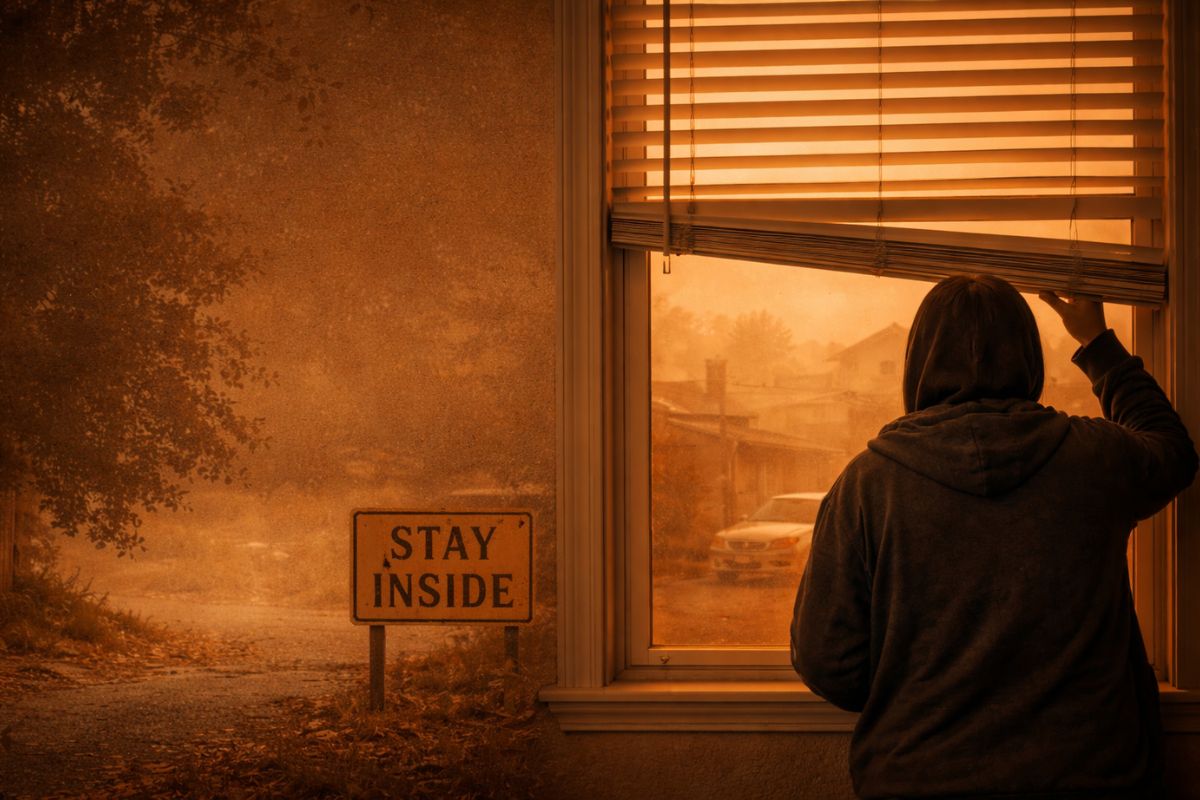
The United States Environmental Protection Agency (EPA) issued a warning for about 1.3 million Americans in Texas and New Mexico after fine particulate matter levels reached the most severe classification on the scale, with monitoring stations in Odessa recording PM2.5 concentrations that exceeded the World Health Organization’s recommended safety limits by 18 times
More than a million Americans were ordered to close windows, avoid any outdoor activities, and wear masks if they needed to leave their homes. The United States Environmental Protection Agency (EPA) issued a widespread alert covering two vast areas in Texas and New Mexico after the air in the region reached levels classified as dangerous to human health. In Odessa, Texas, IQAir monitoring stations recorded PM2.5 particle levels that were over 18 times above the safety limits recommended by the World Health Organization.
The two pollution clouds extended approximately 320 kilometers each along the southern border of the United States. Major cities like El Paso, Lubbock, Midland, and Odessa in Texas, and Hobbs, Carlsbad, and Deming in New Mexico were engulfed by the toxic air. The EPA classified air quality in several areas as hazardous, the worst possible rating on the agency’s scale, directly affecting the daily lives of 1.3 million Americans living in the region.
What are the PM2.5 particles that are threatening the health of millions of Americans
Fine particulate matter, known as PM2.5, is made up of microscopic particles smaller than 2.5 micrometers in diameter, much finer than a human hair.
-
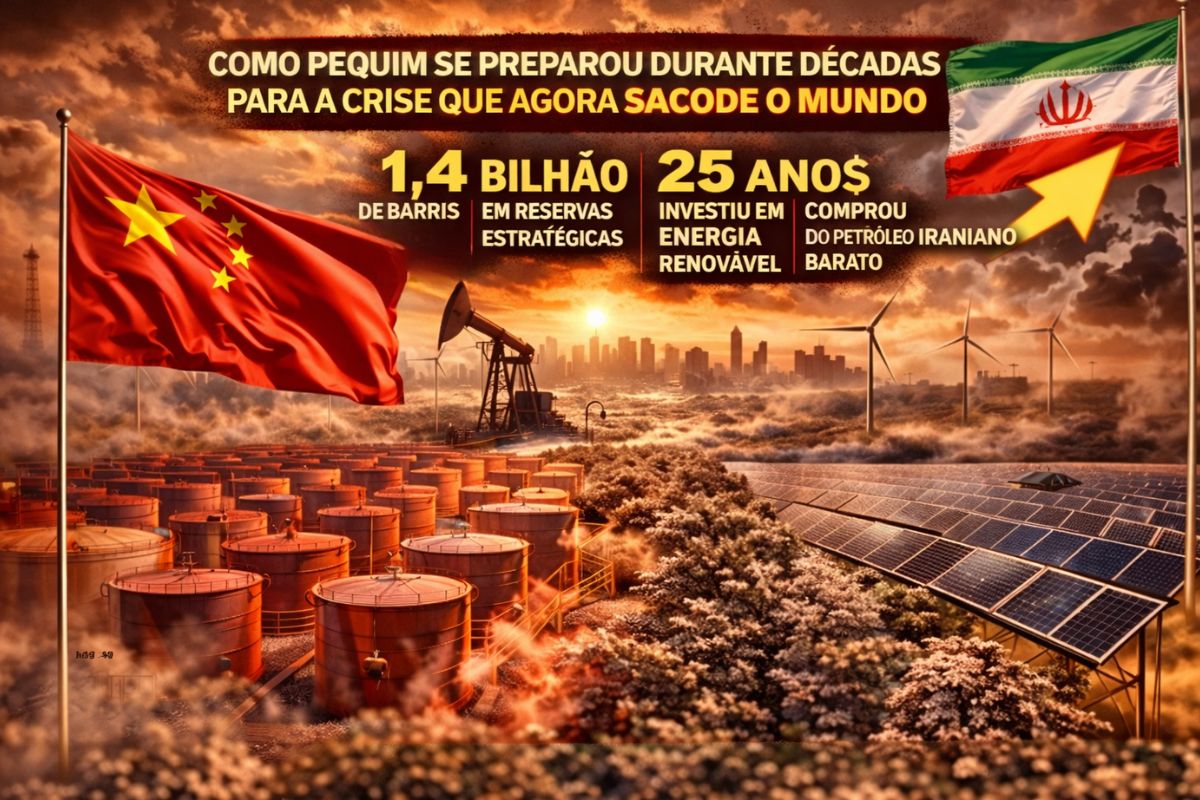
China has accumulated up to 1.4 billion barrels of oil in strategic reserves, invested 25 years in renewable energy, and purchased 80% of cheap Iranian oil: how Beijing has prepared for decades for the crisis that is now shaking the world.
-
A single lake holds 20% of the planet’s non-frozen freshwater and is also the deepest and oldest on Earth.

-
How 5,000 Indian dabbawalas manage to deliver around 200,000 lunchboxes a day in Mumbai for over 130 years using bicycles, crowded trains, and a manual system that continues to operate with impressive accuracy.

-
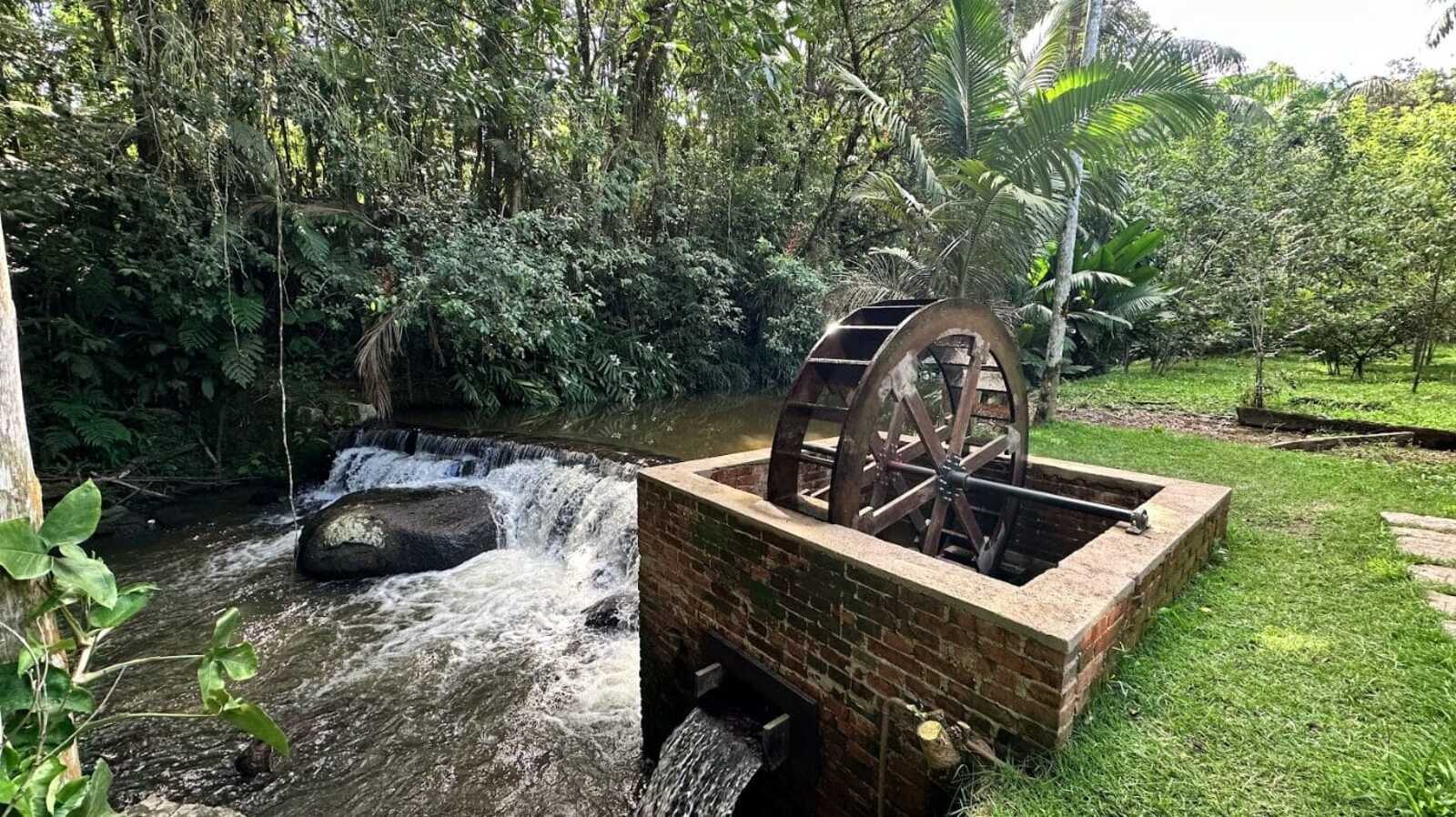
While restoring a historic mansion from 1910, a brick structure with an old turbine that generated energy from the Rio do Testo emerged, along with a hidden door and a rare floor concealed under layers of wax.

These particles are small enough to penetrate deep into the lungs and even enter the bloodstream, causing inflammation, respiratory difficulties, worsening asthma, and contributing to heart attacks and strokes. It is this type of pollution that is affecting Americans in the southern part of the country.
In addition to PM2.5, the Texas Commission on Environmental Quality also warned that PM10 levels reached harmful health levels in El Paso.
PM10 consists of larger particles, up to 10 micrometers, typically coming from construction dust, smoke, soot, and industrial emissions.
In the neighboring city of Sunland Park, New Mexico, PM2.5 levels rose to more than four times the safety limits recommended by the WHO, demonstrating that the contamination was not limited to a single point but covered a wide area where Americans and Mexicans live.
Where did the pollution that forced Americans to lock themselves indoors come from
The air quality crisis in the southern United States had two main origins. The first is the natural geography of the region: the Chihuahua Desert, which stretches between Mexico and the United States, produces dust storms that carry particles northward, covering entire cities.
These dust storms are a recurring phenomenon in the region, but the intensity this time was exceptionally high, contributing to pollution levels exceeding the WHO limits by 18 times.
The second origin is the Mexican city of Ciudad Juárez, neighboring El Paso, with a population of over 1.6 million people and rapidly growing.
Dense smoke from vehicles, trucks, and factories in Juárez crossed the border and combined with desert dust, creating a mixture of pollutants that made the air unbreathable for Americans on the other side.
Several fires in the vicinity of Odessa were also reported, with wind patterns pushing harmful particles northward, expanding the affected area.
Which cities were affected and how many Americans are in the danger zone
The EPA identified two major areas of contaminated air in the southern United States. The first, to the east, extended nearly 500 kilometers between Fort Stockton to the south and the city of Friona to the north in Texas, covering more than 600,000 Americans.
Cities like Odessa, Midland, and Lubbock fell within this range, with residents advised to stay indoors and use air purifiers.
The second, more dangerous pollution cloud formed to the west and concentrated along the border between the United States and Mexico, near El Paso, a city with nearly 700,000 inhabitants.
The air quality index in the region reached 174 on the IQAir scale, where any value above 150 is classified as harmful to health for the entire population.
In total, about 1.3 million Americans were under direct alert from the EPA, with recommendations to close windows, avoid outdoor exercise, and wear masks if they needed to go out.
El Paso: the city that has already received an F grade in pollution and now faces dangerous air
The air quality crisis in El Paso is not an isolated event. The American Lung Association gave the city an F grade for ozone pollution in 2025, the worst possible rating.
El Paso is trapped between the Chihuahua Desert to the south and Ciudad Juárez just a few meters from the border, which causes the city to absorb both natural dust and industrial and vehicular pollution from the neighboring Mexican metropolis.
For the nearly 700,000 Americans living in El Paso, episodes like this are becoming increasingly frequent.
The geography of the region acts as a pollution trap: desert winds bring dust from the south, emissions from Juárez cross the border, and the local topography prevents the rapid dispersion of pollutants.
The result is that Americans in El Paso live with air quality that regularly exceeds safety standards, and each new episode exacerbates chronic respiratory problems that already affect the population.
When breathing becomes a risk and closing the window becomes a matter of survival
More than a million Americans were ordered to lock themselves indoors because the air outside could cause heart attacks, strokes, and respiratory crises.
Pollution levels reached 18 times the WHO limit, two toxic clouds covered hundreds of kilometers in Texas and New Mexico, and the EPA classified the air as dangerous.
This episode shows that air quality in the southern United States is a structural problem that is increasingly recurring and affects the health of Americans who have no way to escape the geography where they live.
Did you know that American cities face pollution at this level? Do you think proximity to Mexico exacerbates the problem or is the responsibility shared? Have you ever experienced a situation where the air became so bad that you had to close everything and stay home? Leave your comments and share this article with those who follow public health and environmental issues.







Seja o primeiro a reagir!