





 Portuguese
  English
  Spanish
 4 min of reading
  0 comments


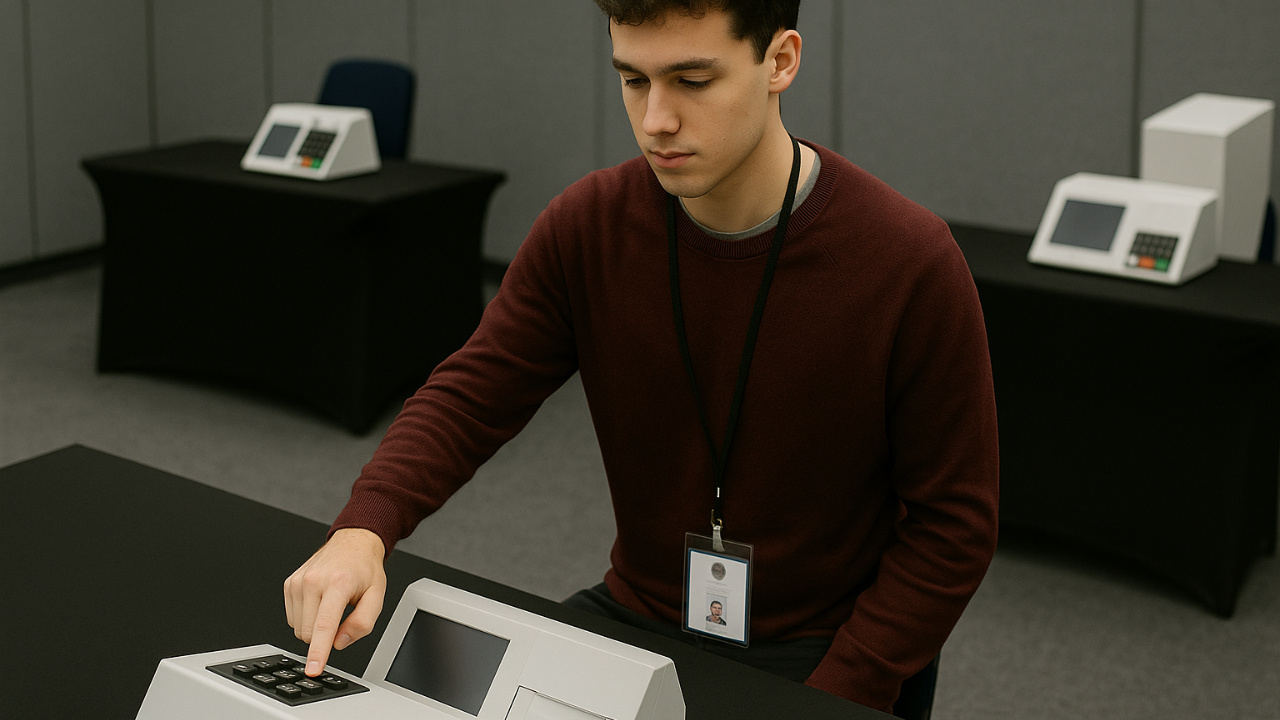
At TSE, An 18-Year-Old Student Participates in the Electronic Voting Machine Security Test and Discoveres How the System Protects the Vote in Practice.
Brasília this week hosted a group of young specialists in technology participating in the Public Security Test (TPS) of the electronic voting machines, and one of them stood out for his enthusiasm.
What is happening? An 18-year-old student is part of the new generation of investigators analyzing the security of the electoral system.
Who is participating? The gaucho Ricardo Calderam Zanandrea, a Computer Science student.
-
While the world looks at oil, the war with Iran is already disrupting helium supply from Qatar, affecting car and iPhone chips, threatening AI expansion, and putting pressure on aluminum packaging at the highest value in four years.

-
Global warming will expose a treasure hidden under the ice of Antarctica and may spark an international dispute over gold and valuable minerals.

-
A street vendor from Praia Grande built a robot made of scrap from scooters and washing machines that pulls his popcorn cart on the beach, emits sounds, and interacts with customers, becoming an attraction on the coast of São Paulo.

-
The specifications of the Xiaomi 18 Pro Max have been leaked, and the highlight is a dual 200 MP camera with a new 22-nanometer technology that promises to consume less energy and capture details in shadows and bright areas using LOFIC HDR.


When and where? Since Monday (1st), at the Superior Electoral Court.
How? He is involved in developing tools and scripts used to identify vulnerabilities.
Why? Because, according to him, the experience in the TPS offers a unique learning opportunity and reinforces his confidence in the protection of the digital vote.
With this participation, the student embodies the trend that characterized the eighth edition of the program: the growing presence of young researchers motivated by professors, technical curiosity, and the social relevance of the project.
Young Student Motivated by Professor Takes Center Stage in Security Tests
The keyword Motivated by the professor, an 18-year-old tests the electronic voting machine security: ‘Learning That Gives You Extra Confidence’ manifests in Ricardo’s story.
He recalls that it all started when Professor Marcos introduced the event to the class.
“My motivation started from the first semester, ever since I entered college.
Our Professor Marcos talked to us about the event, which had already come here twice, and sparked a great interest in me regarding cybersecurity,” he told Terra.
From there, his interest became a goal. Ricardo waited two years until he had the age and knowledge necessary to apply, emphasizing the pedagogical impact that external activities can have on the training of a future professional.
Cooperative and High-Complexity Environment Marks the TPS
In this environment, the investigators work in groups dividing into different fronts: code analysis, hardware evaluation, script creation, and execution of controlled attacks.
Thus, each participant experiences a realistic snapshot of the multiple layers that compose the architecture of the voting machines.
Ricardo took on the role of developing tools and scripts used to explore possible flaws. Although each group has its role, he highlights the collaborative spirit.
“We are divided into groups and everything, but everyone is helping each other.
We divide ourselves between those who will work with hardware and those who will work with code. I am more in charge of the general part and the scripts,” he stated.
Technical Learning Surpasses the Classroom and Strengthens Security Awareness
The student emphasizes that participating in the TPS exposes investigators to processes and structures that would be difficult to study in depth only at the university.
The practical experience that includes testing, failing, correcting, and trying again broadens his understanding of cybersecurity.
“I would say that it will definitely add a lot, especially this physical part. We see how the voting machine is built, the whole system, how it is programmed.
The experience of trying, failing, and correcting makes you learn much more,” he evaluated.
Furthermore, by applying controlled attacks, the young participants perceive the limitations imposed by the very design of the electoral system.
Thus, direct contact with technical restrictions reinforces their confidence in the robustness of the voting machines.
“We already thought it would be difficult, but it ended up being three times harder, because there are so many limitations. We don’t have access to the wifi on the machine and everything. It’s very hard and complicated to tamper with and hack,” he stated.
This practical perception confirms the essence of the key phrase: Motivated by the professor, an 18-year-old tests the electronic voting machine security: ‘Learning That Gives You Extra Confidence’, highlighting that technical experience generates convictions that do not come merely from theory.
Record Number of Applications Demonstrates Growing Interest in Electoral Security
This year’s edition reached unprecedented numbers: 122 test plans proposed by 149 applicants. After analysis, 38 plans were approved, but with dropouts, 27 investigators are participating in person.
Almost half of them are between 18 and 25 years old, revealing the advancement of a new generation that sees the TPS as an opportunity for learning, academic prestige, and social contribution.
TPS Reinforces Public Commitment to the Transparency of Digital Voting
Created by TSE Resolution No. 23,444/2015, the Public Security Test is part of the Democratic Transparency Cycle.
It occurs every year before elections and is open to anyone over 18, as long as they propose a plausible test plan.
More than evaluating vulnerabilities, the event serves as a public audit, strengthening trust in the security, verifiability, and transparency of the voting process—values that motivate young individuals like Ricardo to continue pursuing the path of cybersecurity.








-

Uma pessoa reagiu a isso.