





 Portuguese
  English
  Spanish
  4 min of reading
  0 comments


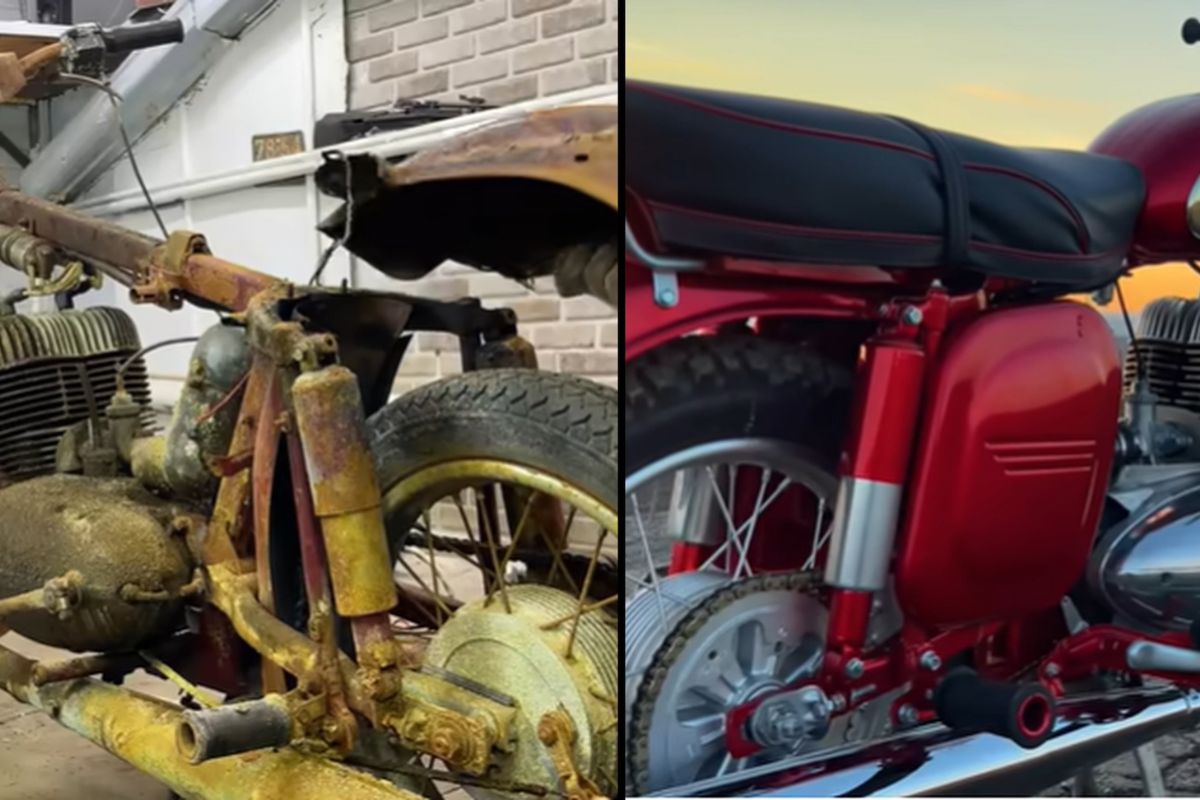
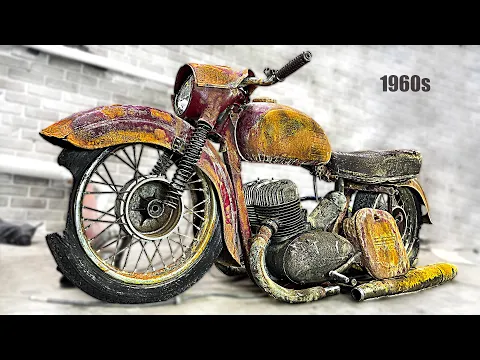
An Abandoned 1960s JAWA Motorcycle Was Found in An Advanced State of Deterioration, Covered in Rust, Dust, and Clear Signs of Abandonment. Despite Decades of Visible Wear, the Vehicle Still Preserved Its Basic Structure.
The abandoned JAWA motorcycle had virtually all its components compromised. The gas tank was taken over by deep corrosion, various chrome parts had lost their original shine, and the seat showed tears and deterioration. The tires were dry and deformed, while the handlebars and other metal parts displayed strong oxidation. Still, the mechanical assembly indicated that the motorcycle could come back to life with careful restoration work.
Complete Disassembly of the Abandoned Motorcycle

The project began with the complete disassembly of the abandoned 1960s JAWA motorcycle. Each component was removed manually, piece by piece, as many screws were stuck due to rust accumulated over decades.
The seat was removed first, followed by the gas tank, exhaust, wheels, handlebars, suspension, headlight, and electrical system. All parts were organized on a workbench for detailed analysis.
-
The Argentine government celebrates the lowest poverty rate in 7 years, but experts warn that the methodology has changed, real wages have fallen, unemployment has risen, and the number of people on the streets of Buenos Aires has increased by 57% since Milei took office.

-
7.8 magnitude earthquake in Indonesia frightens the population, triggers tsunami alert, and hits an island with over 200,000 inhabitants this Thursday.

-
Google will finally let you change that embarrassing Gmail address you created in your teenage years without losing any accounts, logins, or old emails: the feature is already available in the United States.

-
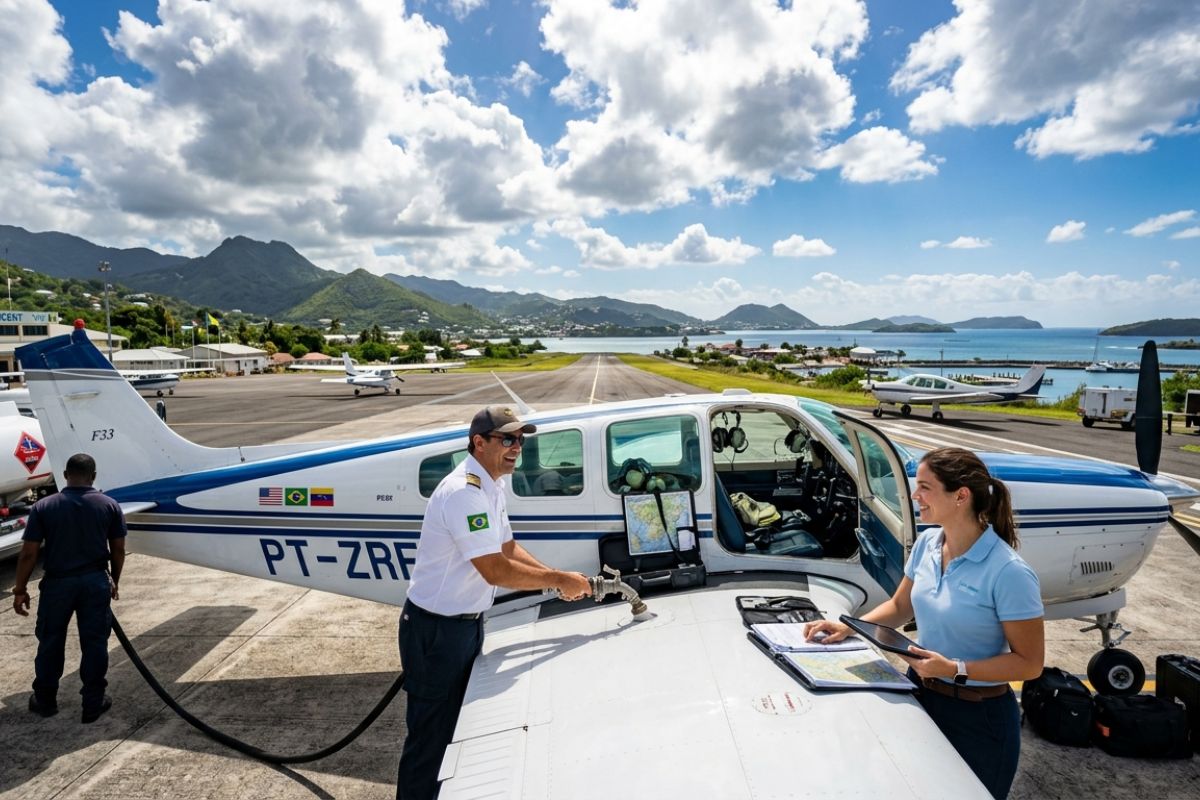
Heading to Brazil in a Bonanza F33 single-engine aircraft: a couple departs from Florida on a visual flight, makes technical stops in the Caribbean to refuel and organize paperwork, and begins the staged crossing until they reach the country.

Removal of the Two-Stroke Engine
One of the most important steps was removing the two-stroke engine from the abandoned JAWA motorcycle. The engine was secured to the frame by several mounting points and required care to be removed without causing further damage.
After removing each connection, the engine was separated from the frame, revealing an intense level of oxidation on almost all metal components of the structure.
Detailed Assessment of the Parts
With the motorcycle completely disassembled, a meticulous assessment phase began. Each part of the abandoned 1960s JAWA motorcycle was examined to identify cracks, gear wear, compromised bearings, and possible structural deformations.
Some parts could be recovered after deep cleaning, while others would need to be replaced to ensure the motorcycle’s safe operation.
Deep Cleaning Removes Decades of Rust

The cleaning process was intense. Various metal components underwent brushing with specific tools and chemical treatments to remove accumulated rust.
In many cases, it was also necessary to perform manual sanding and polishing. Gradually, parts that were completely covered in corrosion began to reveal the original metal again.
Recovery of the JAWA Motorcycle Engine
The two-stroke engine of the abandoned JAWA motorcycle was also completely disassembled for internal inspection. The restorer removed the piston, cylinder, crankshaft, gears, and clutch components.
Each part was carefully cleaned and analyzed. Usable parts were refurbished and adjusted, while heavily worn components were replaced.
After cleaning and recovering the internal parts, the engine began to be reassembled. The piston, cylinder, and rings received special attention to ensure proper compression and correct operation.
Slowly, the mechanical assembly began to form again, turning the engine of the abandoned 1960s JAWA motorcycle back into a functional system.
Restoration of the Frame and Painting
Meanwhile, the motorcycle frame also underwent a complete restoration process. All rust was removed from the metal surface, and the structure received anti-corrosive treatment, primer application, and new paint.
The result restored the classic look characteristic of the 1960s JAWA motorcycle.
Recovery of the Wheels and Components
The wheels also underwent detailed restoration. The old tires were discarded and replaced with new ones.
Spokes were refurbished or replaced, and the wheel hubs received polishing. This work restored stability and safety to the abandoned JAWA motorcycle, in addition to recovering its original appearance.
Smaller parts, such as the headlight, speedometer, handlebars, pedals, and levers, were also restored or replaced. Many chrome components were polished to regain the characteristic shine of classic motorcycles of the era.
Reassembly and Final Result of the Restoration

After months of work, the most awaited stage of the project began: reassembly. The restored engine was installed back into the newly painted frame of the abandoned 1960s JAWA motorcycle.
Next, wheels, suspension, handlebars, exhaust, gas tank, and electrical system were reattached.
With the full structure reassembled, the final adjustments were made. Cables were regulated, screws tightened, and the fuel system checked to ensure the engine could operate correctly.
The final result is impressive. The abandoned JAWA motorcycle, which at first seemed like just a piece of scrap covered in rust, now boasts bright paint, restored chrome, new wheels, and a recovered two-stroke engine.
The transformation demonstrates how a seemingly lost classic vehicle can come back to life when it receives a complete restoration process, combining total disassembly, technical cleaning, mechanical recovery, and detailed finishing.
And you, do you believe that an abandoned motorcycle like this 1960s JAWA can really look like a brand new bike?








-

-

-

-

5 pessoas reagiram a isso.