





 Portuguese
  English
  Spanish
  3 min of reading
  0 comments


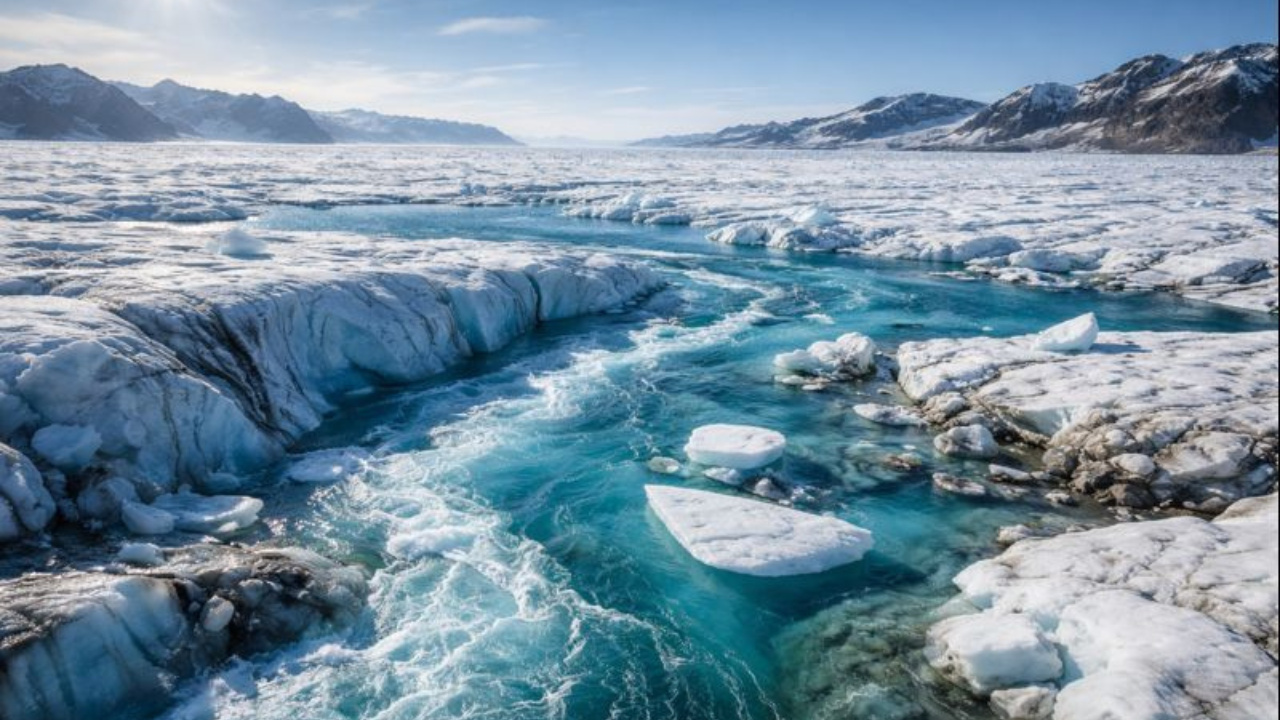
Study Shows That Greenland Is Suffering Geological Displacement Caused by Arctic Melting, Climate Change, and Glacial Isostatic Adjustment.
The Greenland, the largest island on the planet, is literally changing its location.
Researchers have identified that the territory is shifting about two centimeters per year, while the ground rises, sinks, and deforms in different regions.
The phenomenon is currently happening, has been observed in Greenland, involves international scientists, and occurs as a combined result of climate change, Arctic melting, and ancient geological processes, bringing direct impacts to maps, navigation, and projections about sea level.
-
With earth, bamboo, straw, and lime mortar, a specialist builds a house for just over $460 and draws attention for its cost being much lower than traditional construction.

-
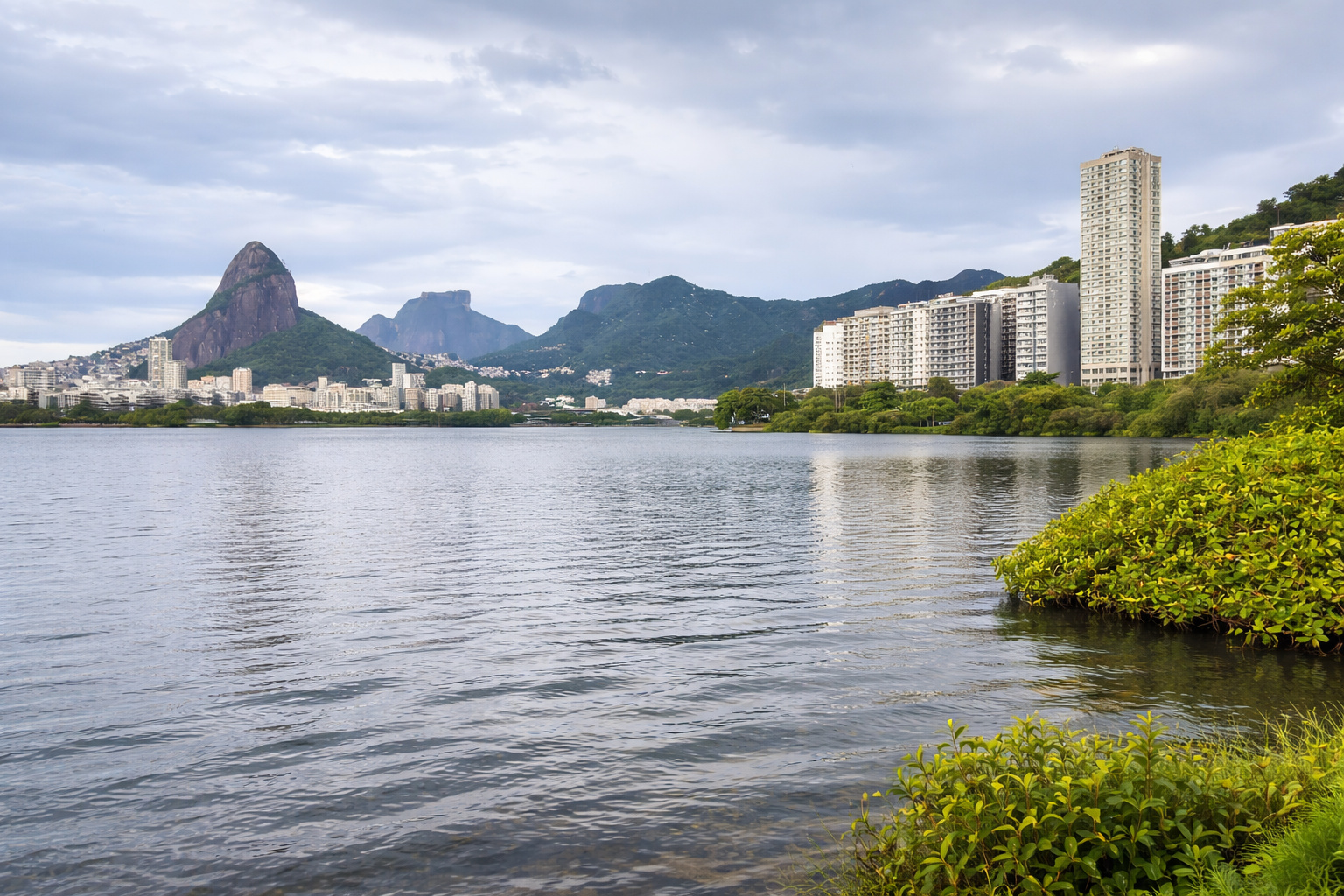
Rodrigo de Freitas Lagoon advances in environmental recovery with sanitation, elimination of irregular sewage, and the resumption of water sports in Rio de Janeiro.
-
Sustainable housing gains strength with a nationally awarded project in Campo Grande, highlighting innovative solutions that combine sustainability, urban integration, and efficiency in the use of natural resources.

-
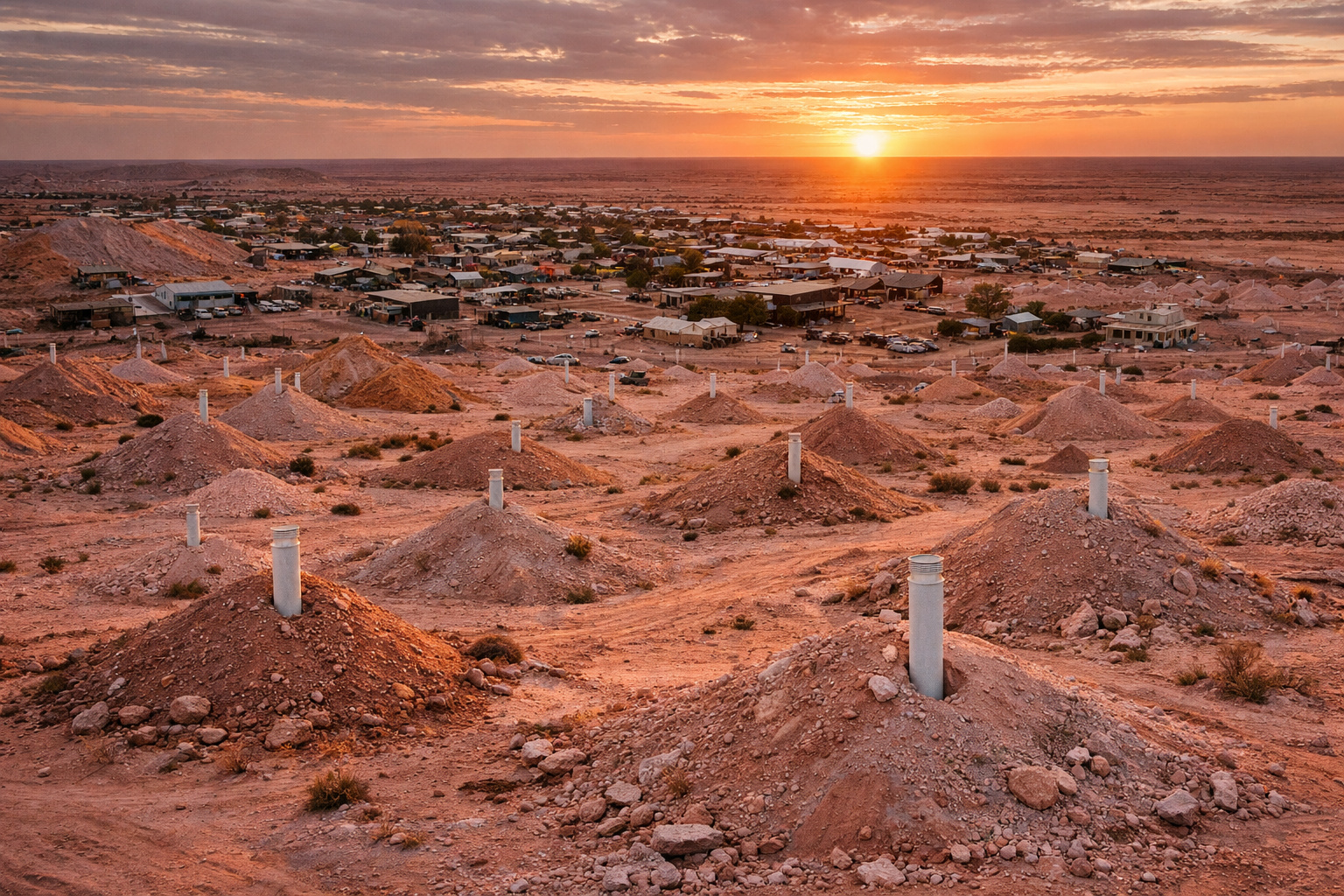
City Where Residents Live Underground to Escape 52°C May Be a Picture of the Future on an Increasingly Hot Planet
The conclusions are part of a study conducted by researchers from the Technical University of Denmark, who analyzed two decades of high-precision measurements.
The work shows that the territory’s response to climate change is more complex and intense than previously thought, reinforcing the importance of glacial isostatic adjustment to understand the future of the Arctic.
Geological Displacement Surprises Scientists
The data reveals that Greenland exhibits an average lateral geological displacement of about two centimeters per year, primarily toward the northwest.
Additionally, there are significant vertical variations, with areas where the ground rises rapidly and others where gradual sinking occurs.
To reach these conclusions, scientists analyzed information collected from 58 permanent GNSS stations, a system similar to GPS, distributed across the island.
The dataset covers approximately 20 years of continuous observations, offering an unprecedented level of accuracy.
“Until now, there have been no such precise measurements of how Greenland is moving,” said Danjal Longfors Berg, a postdoctoral researcher and lead author of the study published in the Journal of Geophysical Research: Solid Earth.
Ground Rises, Sinks, and Deforms Unequally
One of the most relevant findings is that the behavior of the ground does not occur uniformly.
In areas where the Arctic melting is more intense, the earth’s crust tends to rise, relieved from the weight of the thick layer of ice that covered the region for millennia.
On the other hand, there are zones where the land is slowly sinking.
This movement is associated with the redistribution of the Earth’s mantle and pressures accumulated over thousands of years, creating a true mosaic of microdeformations.
According to Berg, the initial expectation was to observe only territorial expansion caused by recent melting.
“But to our surprise, we found large areas where Greenland is being ‘pulled inward’ or shrinking,” he explained.
Climate Change and Legacy of the Ice Age
The study identified that three main forces are simultaneously acting on Greenland. The first is the natural movement of tectonic plates.
The second is directly linked to climate change, with the accelerated melting of the ice cap reducing the weight on the crust.
The third force is the so-called glacial isostatic adjustment, a slow process that began about 20,000 years ago, at the end of the last Ice Age.
Even with the ground rising in some regions, this ancient adjustment causes a gradual contraction of the crust, influencing the current geological displacement of the island.
Meanwhile, global warming intensifies Arctic melting, altering the balance between these forces. Thus, past and present combine to shape the physical behavior of the territory.
Practical Impacts Go Beyond Science
Understanding this geological displacement is not just an academic issue.
The deformations of the ground directly affect navigation maps, positioning systems, and models that estimate sea level rise.
Moreover, the results have implications for planning future infrastructure in the Arctic, such as ports, research bases, and shipping routes.
Ignoring these movements can lead to significant errors in projections and strategic decisions.
Therefore, by revealing how Greenland reacts to Arctic melting and climate change, the study enhances understanding of Earth dynamics and underscores the urgency of accurately monitoring one of the planet’s most sensitive territories.









Seja o primeiro a reagir!