





 English
  Francês
  Alemão
  Italiano
  Japonês
  Norueguês
  Portuguese
  Spanish
  4 min of reading
  45 comments


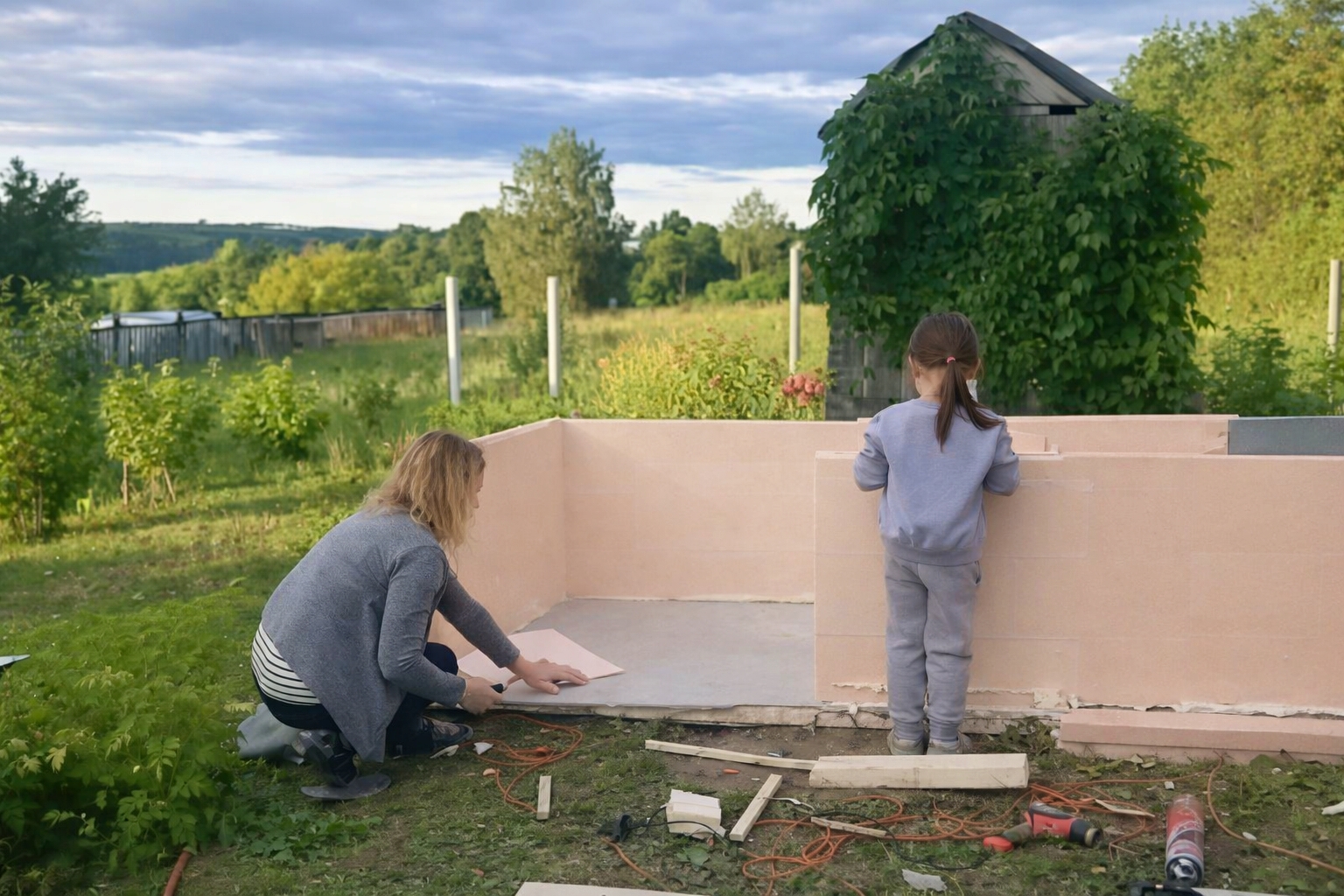


Woman Builds House Alone With Foam Blocks, Gypsum And Simple Structural Reinforcement; Artisanal Project Raises Debate About Low-Cost Innovation In Civil Engineering
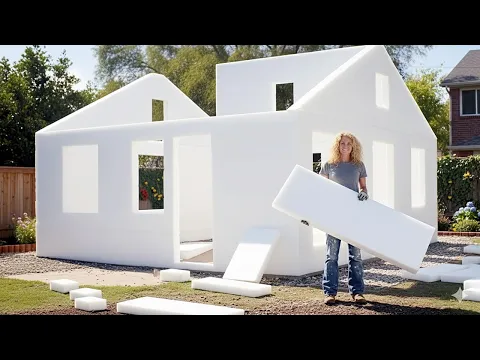
A small construction in the backyard raised a big question in civil engineering: can a house made of expanded polystyrene really withstand the elements? Without heavy machinery, a crew, or traditional reinforced concrete, a woman builds a house alone and decided to prove, with her own hands, that lightweight and accessible materials can also support functional structures.
What seemed fragile at first sight gained shape, rigidity, and a finish similar to concrete. And this has implications that go beyond a simple domestic shelter.

The Challenge That Put Foam Against Traditional Concrete
The construction began from scratch. Level ground, marked area, and a simple foundation defined manually.
-
Spain surprises the world by erecting 62 artificial dunes, mixing sand with natural remains of posidonia, and causing the structure to lose only 1.4% of its volume in 1 year.

-
With 16 Bulava missiles, improvements in acoustic stealth, and a design focused on silent patrols, Russia’s nuclear submarine was born to ensure Moscow’s invisible retaliation and has become one of the pillars of its maritime strength.

-
‘Populous’ city in Rio among the worst in Brazil in national ranking and exposes silent development crisis.

-
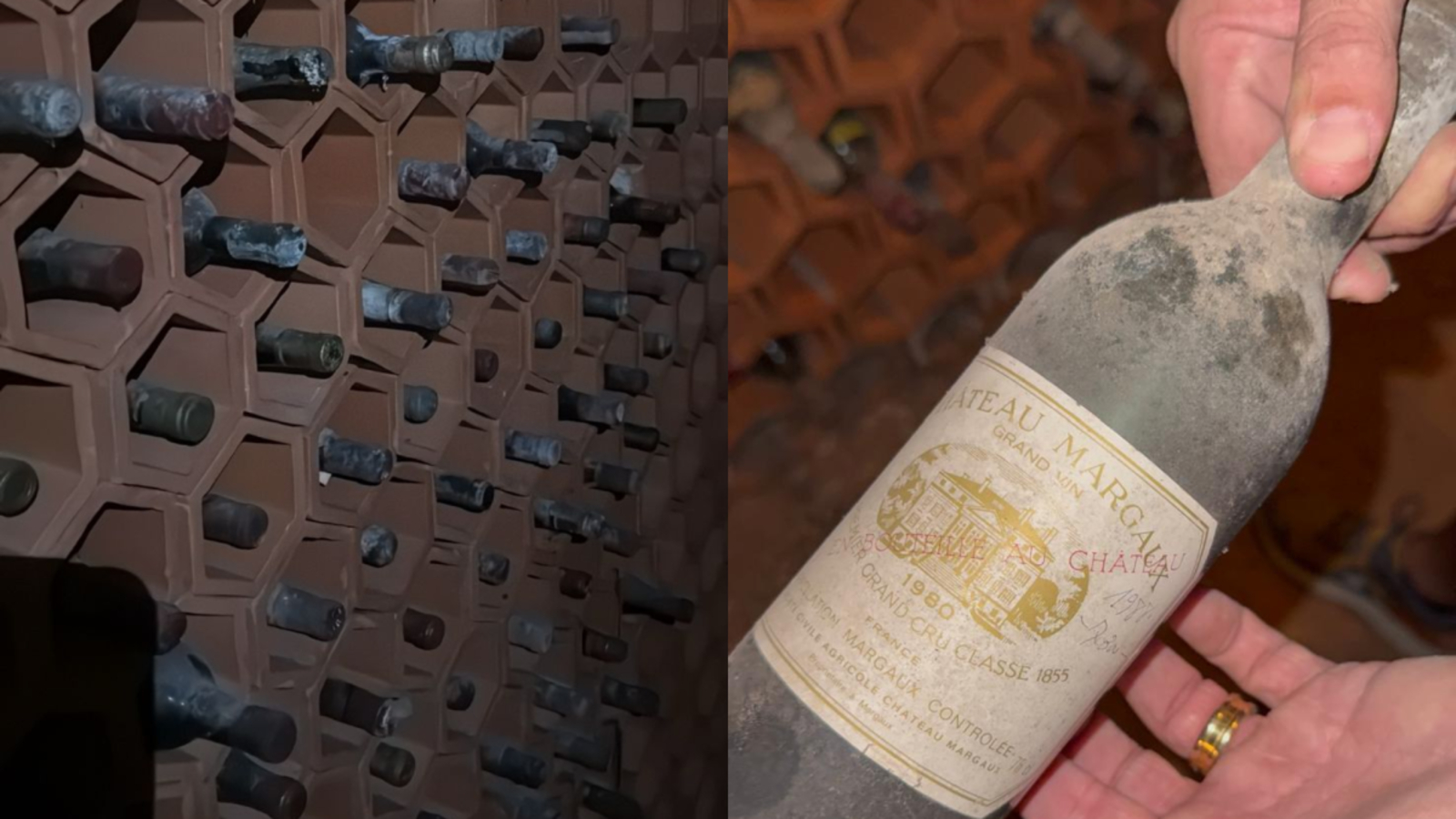
Couple buys house in the South Zone of São Paulo, opens a hidden door in the garage, and finds a secret wine cellar with dozens of old wines forgotten since the 1970s.

Instead of ceramic blocks or structural concrete, expanded polystyrene panels entered the scene. Lightweight enough to be transported effortlessly, but positioned with millimetric precision.
The doubt was inevitable: would it withstand rain? Intense sun? Constant humidity?
The answer began to appear as the walls rose, fitting together like pieces of a technical puzzle.

The Structural Secret That Transformed Lightweight Material Into Rigid Wall
The turning point was not just the foam, but the coating.
After each row was installed, the exterior received a layer of reinforced gypsum. In strategic areas, a structural mesh was applied to prevent future cracks.
This reinforcement creates additional rigidity and protects against external impacts.
The plaster also acts as a barrier against solar radiation and infiltrations, two of the main factors that degrade polystyrene over time.
According to experts, properly insulated and protected foam can perform satisfactorily in small-scale structures.
And the appearance is surprising. After the second coat of gypsum, the walls start to resemble conventional concrete.

Woman Builds From Roof To Door And Every Detail Reinforces The Technical Proposal
The roof required special attention.
The structure was prepared to support the roof before the installation of the upper foam panels. This is because direct exposure to sun and rain can compromise the material if it is not protected.
The door followed the same construction logic. It was shaped from foam but received a lightweight metal frame around it, ensuring stability and allowing for the installation of the hinges.
Internally, the walls were plastered and smoothed. The bathroom received an extra layer of protection against moisture. The paint used was water-based exterior paint, compatible with foam and gypsum surfaces, offering additional protection against the elements.
Even the floor received ceramic finishing, with each piece positioned manually.
Nothing was improvised. Everything was planned within the material’s limitations.

The Low-Cost Innovation That Draws Attention In Rural And Modular Construction
The impact of this type of method goes beyond the backyard.
Foam panels are easy to transport, require less physical effort, and reduce the need for intensive labor. For small warehouses, compact offices, or temporary housing in rural areas, the solution proves attractive.
Estimates indicate that constructions with lightweight materials can reduce execution time compared to conventional methods.
There is also an important domino effect. If alternative building systems gain scale, the traditional materials market may face competitive pressure.
This is not about replacing structural concrete in large construction projects. But rather, creating space for complementary solutions in smaller projects.
What This Experience Reveals About The Future Of Accessible Engineering

The construction was completed after days of intense manual work.
The small space gained a functional kitchen, organized bathroom, and an exterior finish that does not reveal, at first glance, the material used as a base.
Each wall carries the mark of persistence and a method that challenges standards.
The initial question remains provocative, but now with evidence: with the right technique and proper protection, foam can support more than many imagined.
This story draws attention because it touches on a sensitive point of current engineering: cost, efficiency, and adaptation to different economic realities.
Would you bet on such a structure for a specific project? Leave your opinion in the comments and join the discussion.








Mas vc é um gênio na minha opiniao
A preocupação é…a segurança c paredes tão fracas
Quem quer fazer , não espera aconter, parabéns, isso pode mudar o conceito de muito ,vc é um gênio