





 Portuguese
  English
  Spanish
  3 min of reading
  1 comment


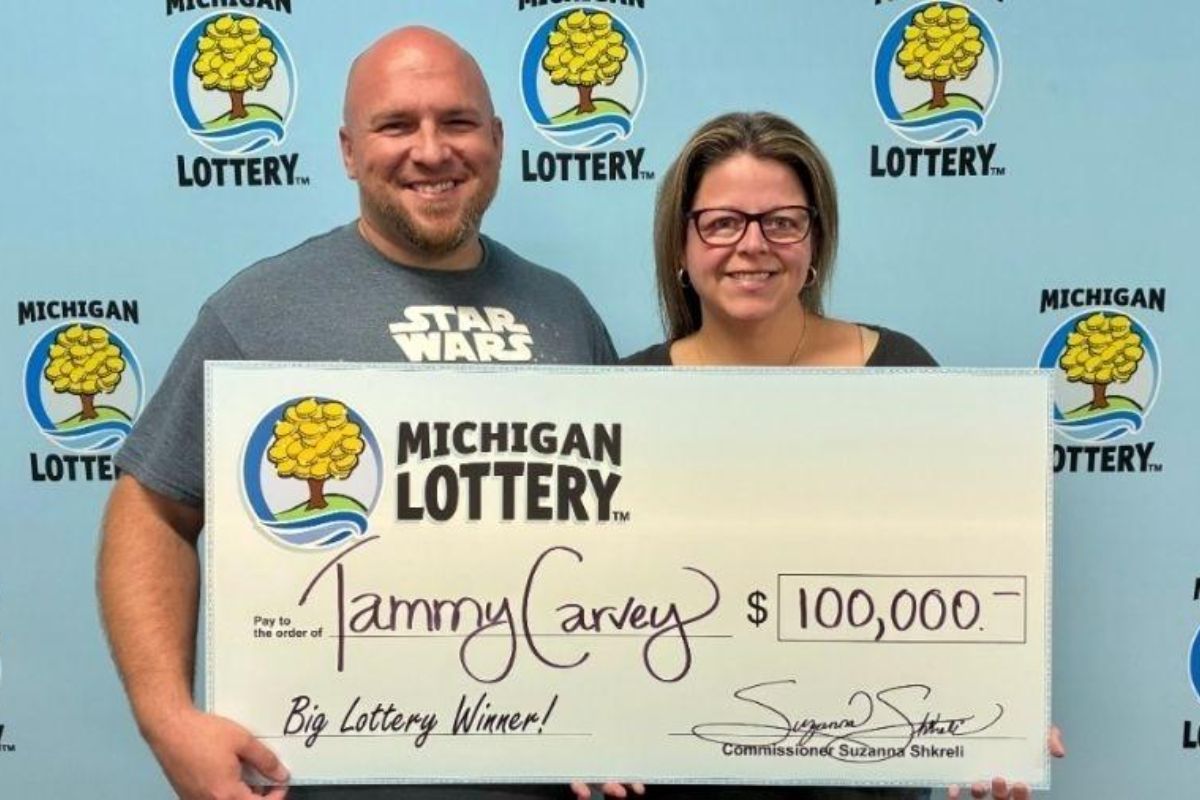

Michigan Player Wins R$ 540K in Lottery After Asking ChatGPT to Generate Powerball Numbers, Reigniting Debate About the Role of Artificial Intelligence in Gambling and Random Draws.
The story of Tammy Carvey, 45, became a highlight in the United States after she won R$ 540K in the lottery with a bet generated by ChatGPT. The resident of Wyandotte, in the state of Michigan, decided to ask the artificial intelligence to choose a sequence of numbers for the Powerball draw and, to her surprise, the ticket was a winner.
Carvey matched four main numbers and the Powerball, securing US$ 50,000, an amount that was automatically doubled to US$ 100,000 due to the Power Play feature, according to the Michigan Lottery. The interesting thing is that the prize attracted more attention for the method used than for the amount received.
How ChatGPT Entered the Bet
Tammy said that the idea of using the AI tool came from curiosity.
-
It seems to have come out of a science fiction movie: A Brazilian city where it rains almost every day, recording over 4,000 mm per year, driven by climatic factors — a direct result of its strategic location in the Amazon.

-
The water crisis that could change everything this year has already begun; it’s not just about the climate, it affects technology, raises product prices, and can halt entire companies without warning.

-
A Japanese mason transforms raw granite into small cups and handcrafted utensils, collects giant stones, cuts with precision, and impresses with detailed manufacturing and finishing.

-
With 1,066 acrylic panels, the building known as the friendly alien is supported by a steel skeleton, has a façade that functions as a giant screen, and impresses the world without any internal columns.


She asked ChatGPT to generate a random set of numbers to play in the Powerball, not really believing that it could influence the outcome.
However, the same numbers appeared among those drawn in the September 6 edition.
“I asked ChatGPT for a set of Powerball numbers, and those were the numbers I played on my ticket,” said Carvey.
Upon checking the results in her Michigan Lottery account, she realized she had accidentally activated Power Play and, therefore, the prize had doubled.
“My husband and I were in total disbelief,” she said.
Similar Cases and the Curious Trend
Tammy’s case is not isolated. In September, Carrie Edwards from Virginia also reported using ChatGPT to generate winning numbers, taking home US$ 150,000.
These episodes show a curious pattern: players are turning to artificial intelligence as part of their ritual for luck, even knowing that there is no relationship between language algorithms and random outcomes.
Experts highlight that ChatGPT does not predict numerical patterns nor manipulate draws.
What happens is a phenomenon of “reinforced coincidence effect”, in which the natural randomness of the lottery is interpreted as the result of a rational choice.
The Position of the Michigan Lottery and the Real Role of AI
In a statement, the Michigan Lottery confirmed the prize and emphasized that Powerball results remain entirely random.
The agency also reminded that artificial intelligence is used in the sector only to enhance security, detect fraud, and monitor systems, not to generate winning combinations.
The technology thus operates in the management of games, not in predicting outcomes.
Still, the episode raises discussions about the growing use of AI in activities previously associated with chance, an example of how digital tools are being integrated into everyday life, even in unpredictable contexts.
The Thin Line Between Luck and Technology
The case reignites an old question: the line between statistics and luck.
Although Tammy Carvey’s bet was successful, mathematicians remind us that the odds of winning the Powerball remain around one in 292 million.
That is, using AI does not change the mathematical probability but reinforces the human fascination with the idea of controlling the unpredictable.
Tammy herself acknowledged that she intends to keep playing, but with her feet on the ground.
“I don’t believe AI has power over chance, but it’s fun to imagine that it can bring luck,” she joked.
The victory of R$ 540K in the lottery reignited the debate about how people use technology in situations of pure randomness.
The bet made with the help of ChatGPT reveals more about the human relationship with hope and innovation than about any real capacity to predict the future.
And you? Do you believe that technology can actually influence luck, or do you see cases like this only as happy coincidences? Share your opinion in the comments and tell if you have ever used artificial intelligence in any unusual daily context.






Que matéria maravilhosa, estou há 2 anos estudando resultados lotéricos mundiais, e acredito sim que a IA consegue aumentar significativamente as chances na hora das escolhas das dezenas premiadas, consegui criar códigos e analisar dados das principais e o resultado é fantástico, estou buscando parceiros para explorar um negócio envolvendo dicas, informações e os melhores palpites das loterias mundiais…