





 Portuguese
  English
  Spanish
  6 min of reading
  6 comments


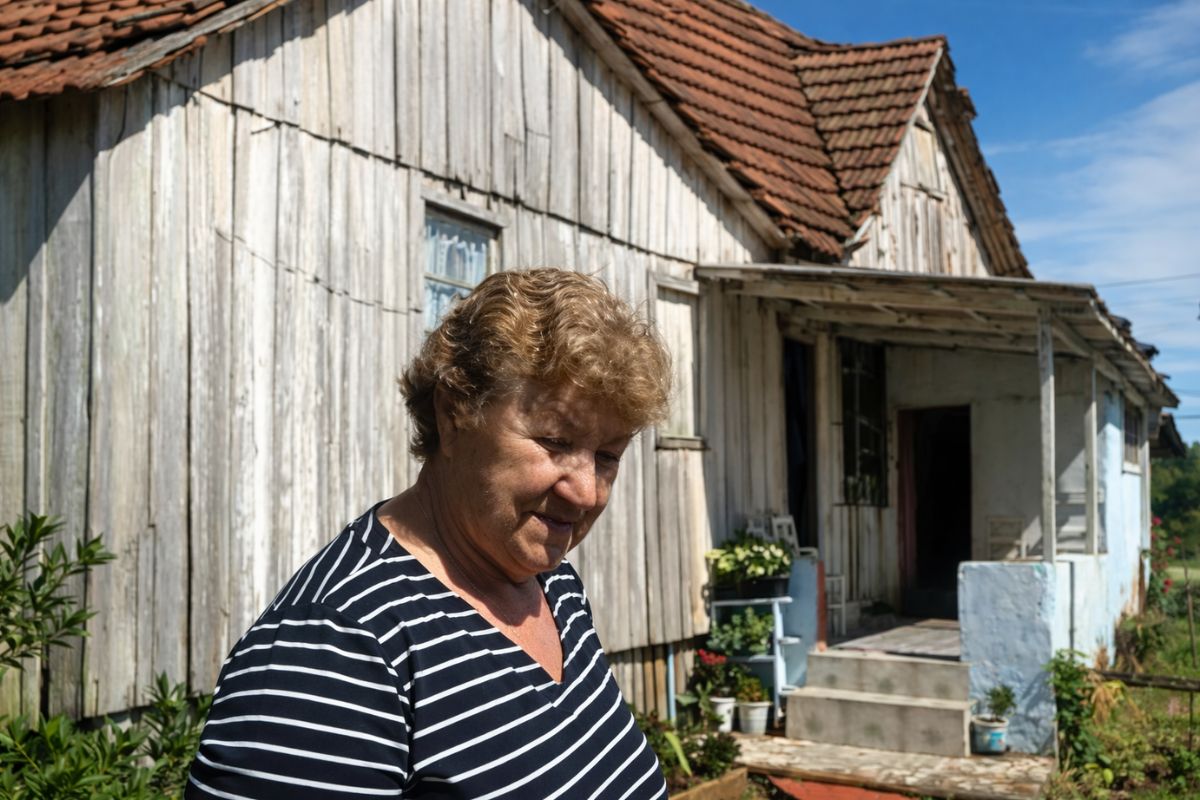


In The Serra Catarinense, A Woman Lives Alone On Her Family Farm, Cares For The Old House, The Fields, And The Animals After Losing Her Parents And Husband, And Transforms Her Faith Into Strength To Move Forward.
On a piece of land in the countryside of São José do Cerrito, in the Serra Catarinense, a woman lives alone on the farm where she was born and raised. About to turn 64, Dona Nadir continues to live in the same house where she spent her childhood, surrounded by a garden, trees, animals, and memories of a family that has always relied on its own labor in the fields.
Between tending to the backyard, the flowers, the cattle, and the vegetable garden, this woman lives alone today after losing her parents and husband, but she has not lost her direction.
She keeps the old house, the land, the animals, and a faith that spans generations, turning grief into routine, silence into prayer, and longing into a legacy for her children and grandchildren.
-
Italian researchers have detected what appears to be a second Sphinx buried under the sands of Egypt, and satellite scans reveal a gigantic underground megastructure hidden beneath the Giza Plateau for over 3,000 years.

-
There are 4,223 drums and 1,343 metal boxes concreted with 50-centimeter walls that store the radioactive waste from Cesium-137 in the worst radiological accident in Brazil, just 23 kilometers from Goiânia, with environmental monitoring every three months.

-
Giant Roman treasure found at the bottom of Lake Neuchâtel in Switzerland reveals an advanced trade system, circulation of goods, and armed escort in the Roman Empire about two thousand years ago.

-
He buried 1,200 old tires in the walls to build his own self-sufficient house in the mountains with glass bottles, rainwater, and an integrated greenhouse.

A Lifetime Rooted In The Same Farm
Dona Nadir recounts that she was born and raised on that farm. Her parents lived there, worked the land, planted wheat and tobacco, raised pigs, and made that land their family’s livelihood. Over time, they grew old, got sick, and passed away.
When her mother needed care, she returned to stay. Later, her mother passed away, her father had already left, and much later, her husband too.
Since then, the woman has lived alone on the property, surrounded by memories and responsibilities. Her daughter lives nearby, but the daily routine, the decisions, and the weight of the land are hers.
Even so, she speaks of the farm with pride. She says it is “in her blood,” that her parents taught her to cultivate, plant, and care for the animals, and that this root cannot be taken away.
The old house, the wooden partitions, the room that belonged to her parents, and the girls’ room at the top of the stairs tell a story that remains alive every time she opens the door in the morning.
Old House, Well-Kept Garden, And Memories In Every Detail

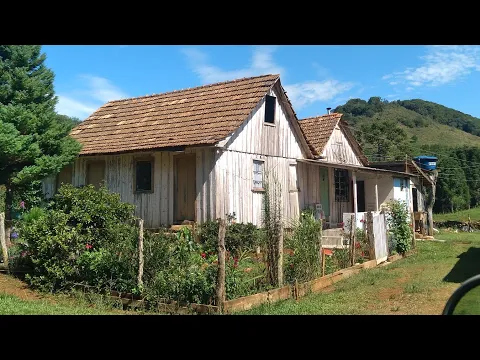
On the outside, the scene is like a postcard: a simple, old house, but very well-kept, a blooming garden, a painted sidewalk, pots, repurposed tires with plants, succulents, 11-hour flowers, azaleas, Christmas flowers, Japanese quince, and many other species she cares for with love.
Inside the house, the woman lives alone, but she is never completely alone. The old furniture, the sewing machine that reminds many of childhood, the wood box for the stove, wooden cabinets, glasses, and dishes that have been in the family for decades are there.
In one of the rooms, there are images of saints, rosaries, blessed foliage, medals, and memories of her parents and husband, Francisco.
Every corner holds a piece of history. The room that belonged to her parents is now hers. The stairs leading to the girls’ room still hold the common tradition in the countryside: passing through the parents’ room to go upstairs.
The old pigpen, the stone water trough, the dirt road in front, and the view of the cornfields complete the picture of a rural Brazil that endures.
Faith, Devotion, And A Routine Marked By Prayer
If the woman lives alone for most of the day, her faith is her constant companion. Dona Nadir speaks of God naturally and often repeats that “the first thing is to have faith in God and try to do the right things”.
Every year she prays the rosary for Saint Anthony, lights a fire, and asks for blessings for the house, the land, the family, and for abundance.
On Palm Sunday, she takes branches to bless, brings the leaves back, and keeps them for times of trouble.
When a strong storm approaches, she places the blessed branch in the fire and prays, an old practice taught by the elders.
These traditions, for her, are not superstition; they are a living memory of her parents and the way her family learned to face time and fears.
In her calm speech, she repeats that she is alone, but she is at peace. She says she prays, works, tries to do everything right, leaving the inheritance divided, the things organized for her children and grandchildren. Faith organizes the mind, the heart, and even the succession of the land.
Grief, Work, And The Strength Of A Woman Living Alone

A few years ago, her husband, Francisco, died of cancer at 57. He was younger than her, known in the community as a hard-working, beloved man, who helped at parties, cut meat, and was always willing to lend a hand.
The loss was hard, the illness was long, and she says that “she suffered along with him.”
Even so, the woman lives alone today, continuing what they built together. She works the fields, builds fences, cares for the cows, learns to vaccinate, and oversees the livestock, managing the routine as someone who knows she cannot stop.
There is no room for victimhood in her speech: she acknowledges the pain but does not let it define who she is.
When she talks about widowhood, she summarizes her choice to move forward with simplicity. She says she is happy because she does what she loves: working the land, caring for what is left, helping her children, being close to her grandchildren, and keeping the house ready to welcome the family.
It is a silent strength, from someone who faces solitude with work, faith, and her head held high.
Roots, Example, And The Message For Children, Grandchildren, And Those Who Listen
When asked to give advice, she does not speak of money, success, or big cities. She speaks of roots, honesty, and example.
She says that a person cannot “walk without origin,” that it is important to remember how one was raised and how parents taught them to live.
For her, honesty is the first thing. She wants to be remembered as someone who did the right things, who divided the inheritance fairly, who cared for what she received from her parents and what she built with her husband.
She wants her children and grandchildren to be able to say that their mother and grandmother set a good example, more than material possessions.
The woman lives alone on the farm, but she constantly thinks about those who come after her. She shares that she organized documents, divided rights, and discusses everything with her children.
In her mind, leaving a legacy is not just leaving land; it is leaving history, values, and a good name in the community.
When The Past Teaches The Future
Dona Nadir’s words remind one of what many would hear from their grandparents: the elders may not have studied in books, but they learned through time, practice, and by observing the moons, the rain, and the planting.
She believes that ancient traditions have a foundation of truth, whether in the way of planting or in the way of raising children.
Anyone who hears this story realizes that when a woman lives alone and decides to remain on the land, she is also defending a way of life.
She protects the memory of a generation that planted without manuals, built homes without architects, and raised children without the internet, but with a firm clarity about respect, work, and faith.
In the end, the story of this woman who was born and raised on the farm, lost her parents and husband, but keeps the house, the fields, the animals, and her faith alive, is a portrait of rural resistance in a country that is changing too fast.
She shows that not everyone wants to leave, that there are still those who see themselves in the dirt of the backyard, in the smell of the wood stove, in the herd of cows in the pasture, and in the rosary recited in front of a simple altar.
And you, do you know any stories of women living alone in the countryside, holding on to their homes, fields, and almost entire families, that deserve to be told to the world as well?









Bonita história de dignidade,simplicidade, e fé.
Linda história… Exemplo de vida simples e honesta, de gente que valoriza a maior e mais importante instituição, a FAMÍLIA… O legado deixado pelos pais👏👏👏Deus continue abençoando a dona Nair e toda a sua família… Deus, pátria e família 🙏🙏🙏🤝
Sei não… pra mim (veja bem … pra mim) isso é uma vida desperdiçada. Infelizmente. Muita resiliência. Faltando um pouco de “loucura”.