





 Portuguese
  English
  Spanish
  4 min of reading
  468 comments


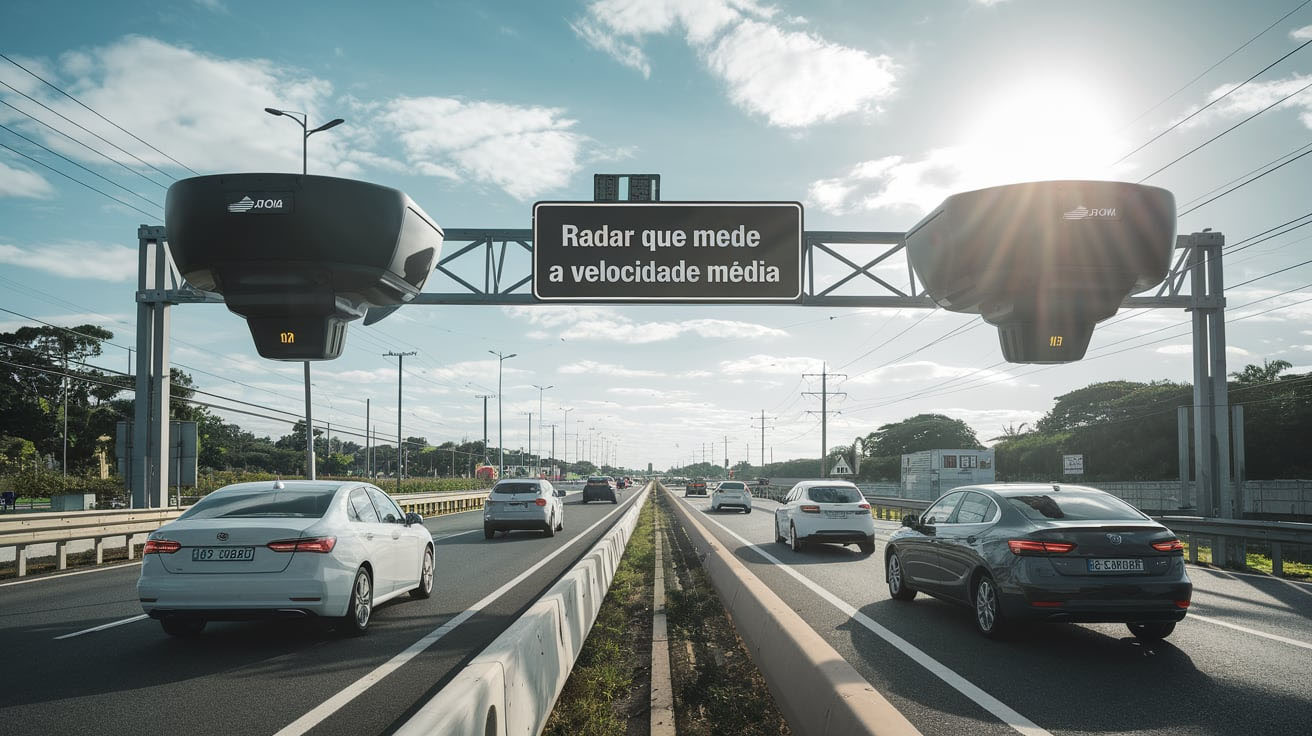


Speed Cameras Could Revolutionize Traffic in Brazil. In Experimental Phase, the Technology Has Already Reduced Accidents Abroad and Promises Greater Road Safety. Will It Be the End of Recklessness on Highways?
Imagine driving on a road, thinking the cameras are just monitoring your momentary speed.
However, at the end of the journey, you find out that the total time of the trip was calculated to determine your average speed.
This technology is already a reality in countries like Italy and is starting to take its first steps in Brazil, promising to change the way violations are enforced and increase safety on the highways.
-
The government requests the Federal Revenue Service for a new system to automate the income tax declaration, reducing errors, time, and bureaucracy for millions of Brazilians.

-
Pix in installments, international Pix, and contactless payment without internet: the Central Bank revealed the new features coming to the tool that is already used by almost every adult in Brazil.

-
A French brand placed a car on four huge red balloons to prove that its suspension made the vehicle “float,” and the surreal scene became one of the most iconic and unusual images in automotive history.

-
Mercado Livre has just started selling medications with delivery in up to three hours to your door, and this move could completely change the way Brazilians buy medicines on a daily basis.


But are Brazilian drivers already being fined?
According to the Ministry of Transport, the installation of the so-called average speed cameras began as an experimental measure.
The first device was put into operation on BR-050, in Uberaba (MG). Despite a viral video on TikTok suggesting that fines are already being issued, this information is false.
The technology is still in testing phase and follows strict regulations set by Resolution No. 798 of the National Traffic Council (Contran).
How Average Speed Cameras Work
Average speed cameras do not work alone.
The system requires at least two devices installed at different points on the road. When the vehicle passes the first camera, its speed is recorded.
Then, upon crossing the second, the system calculates the total time spent on the journey between the two points. This time is used to determine the vehicle’s average speed.
The formula used, well-known to those who studied basic physics, is Vm = ΔS/Δt. This means that the average speed (Vm) is calculated by dividing the distance traveled (ΔS) by the time taken (Δt).
If the driver has exceeded the average speed limit, they may be fined.
It is important to highlight that the Contran regulations require that a series of data be recorded to validate a citation.
Among these criteria are the image of the vehicle’s license plate, the speed measured at the time of the violation, the considered speed (after deducting the margin of error), the location and time of the violation, as well as details about the equipment used.
These devices also need to be approved by Inmetro, which monitors and performs annual maintenance.
The Impact of Speed Cameras on Road Safety
While in Brazil the implementation of average speed cameras is still experimental, countries like Italy and the Netherlands have been using this technology for years, with significant results.
A study conducted in the Netherlands indicated that the use of this system reduced accidents by 19%.
The effectiveness is directly related to the way drivers adjust their behavior to avoid fines, resulting in more responsible driving.
In Brazil, the need for measures like this is urgent.
Data from Infosiga, commissioned by TV Globo, revealed that, only in the State of São Paulo, seven people die daily in road accidents.
Between January and October 2024, thousands of lives were lost in accidents that could have been avoided with more efficient enforcement.
When Will Speed Cameras Start to Fine?
According to the Ministry of Transport, there is still no forecast for when average speed cameras will begin to issue fines.
The current phase serves to evaluate the performance of the equipment and its viability.
Therefore, for now, Brazilian drivers will not be fined based on average speed.
However, experts point out that the use of this technology is an inevitable trend, especially given the positive results observed abroad.
The introduction of this type of enforcement could mark a turning point in Brazilian traffic safety, combating recklessness and reducing the number of victims on the roads.
How to Avoid Fines with This Technology?
A common practice among drivers is to drastically reduce speed when approaching a fixed camera and then speed up again immediately afterward.
With average speed cameras, this strategy loses effectiveness.
To avoid fines in the future, it will be necessary to maintain a constant speed within the permitted limit throughout the monitored route.
Additionally, driver awareness will be crucial for the success of this new technology.
After all, the main goal of the cameras is not to fine but to promote safer traffic and reduce the alarming rates of accidents in the country.
And you, do you believe that average speed cameras can really change the behavior of Brazilian drivers and save lives? Share your opinion in the comments!








País de ****,com Leis de Metda que se **** os Tranalhadores. Carro com impostos mais altos do mundo, ipva e agora essa armadilha a mais prabfufer com o motorista, as rodovias uma mera isso ninguém falar
Será que instalarão estes equipamentos na BR 324, entre Salvador e Feira de Santana? Conhecida também como: “O QUEIJO SUÍÇO DO NORDESTE”.
Sinto-me assaltado toda vez que passo pelas praças de pedágio desta rodovia, que, sem sombra de dúvidas, é uma vergonha estadual/nacional.
Na prática reduz sim, mas pode encarecer a viagem, visto que, diminuindo o fluxo quantitativo de veículos, diminuirá a arrecadação nos pedágio, de forma que para não perderem receita, certamente o preço do pedágio subirá.